

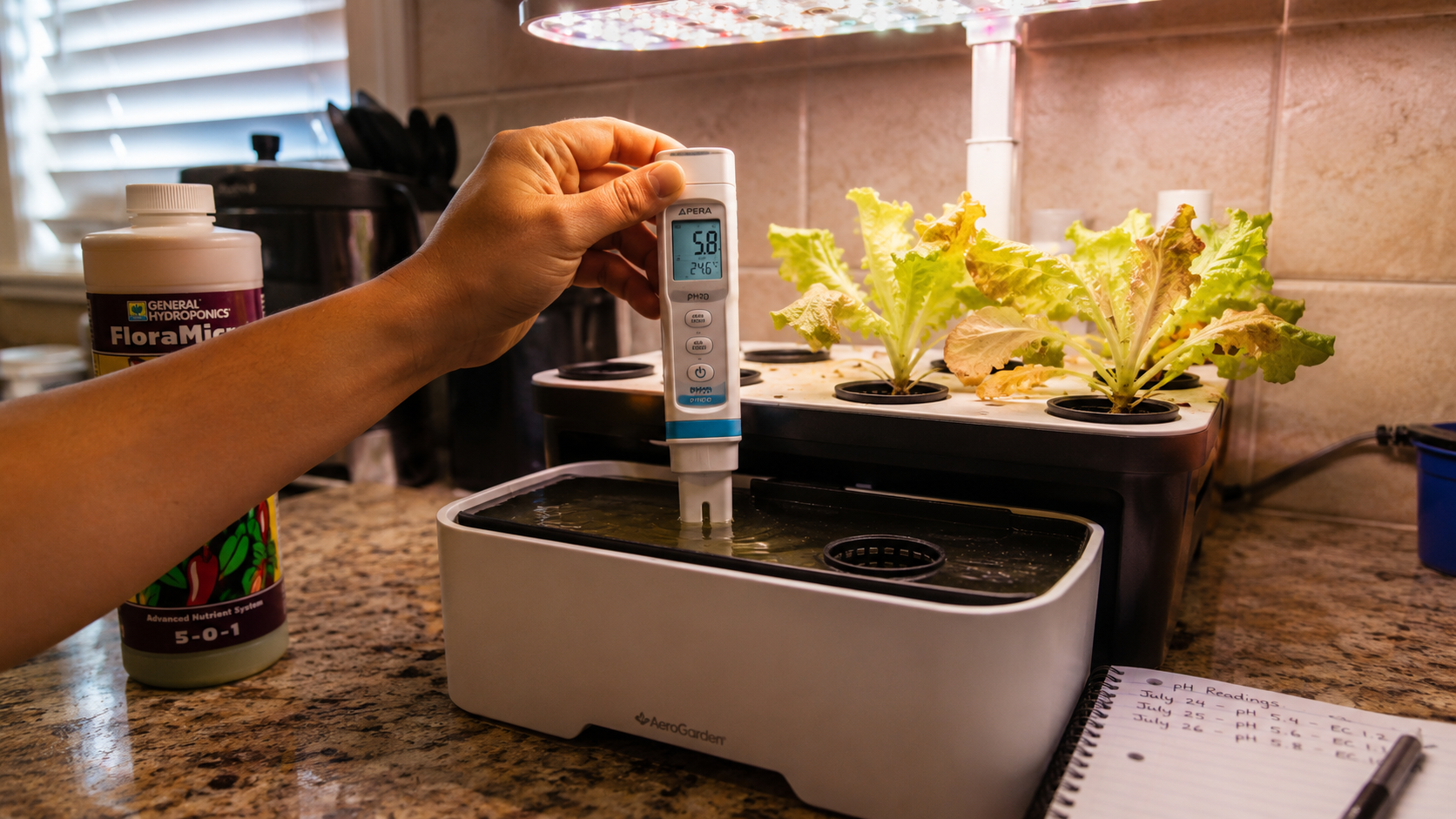
If your lettuce looked great for ten days and then just… stopped, you’re not doing anything unusually wrong. You’re doing what almost every new grower does. Hydroponics rewards precision, and precision is the one thing nobody has on their first system.
This guide walks through the hydroponics beginner mistakes that actually show up most in the first month or two of growing — not the textbook version, the real one, including which mistakes you can fix today and which ones are quietly killing your plants while you’re not looking. Grow With Hydroponics has spent years helping new growers untangle exactly this kind of thing, so we’re not guessing here.
You’ll learn what the most common mistakes are, how to tell how serious each one is, which mistakes are specific to your system type, and where to go when you need a real diagnosis instead of another generic checklist.
Quick answer: The most common hydroponics beginner mistakes are overfeeding nutrients, letting pH drift unchecked, poor root oxygenation, bad light distance, and picking a system that’s more complex than a first grow needs. Most are fixable within a day or two if caught early — the danger is letting more than one stack up at once, since combined stress is what actually kills plants.
What Counts as a “Beginner Mistake” in Hydroponics?
A beginner mistake, in this context, is any input error — nutrient strength, pH, oxygen, light, or system choice — that a plant can’t compensate for the way it might in soil. Soil has buffering capacity: microbes, organic matter, and mineral reserves that smooth out small errors. Hydroponic systems have none of that. Whatever you put in the reservoir is exactly what the roots get, good or bad.
That’s not a design flaw. It’s the whole reason hydroponic plants can grow so fast — but it also means mistakes show up faster and more visibly than they would in a garden bed. A pH swing that a soil plant might shrug off can lock out nutrients in a hydroponic reservoir within 24 hours.
The Most Common Hydroponics Beginner Mistakes
1. Overfeeding Nutrients
New growers consistently assume stronger nutrient solution means faster growth. It doesn’t — past a certain point, it means nutrient burn. Excess salts in the reservoir raise the electrical conductivity (EC) beyond what roots can handle, and the plant actually struggles to take up water, mimicking drought stress even while sitting in liquid.
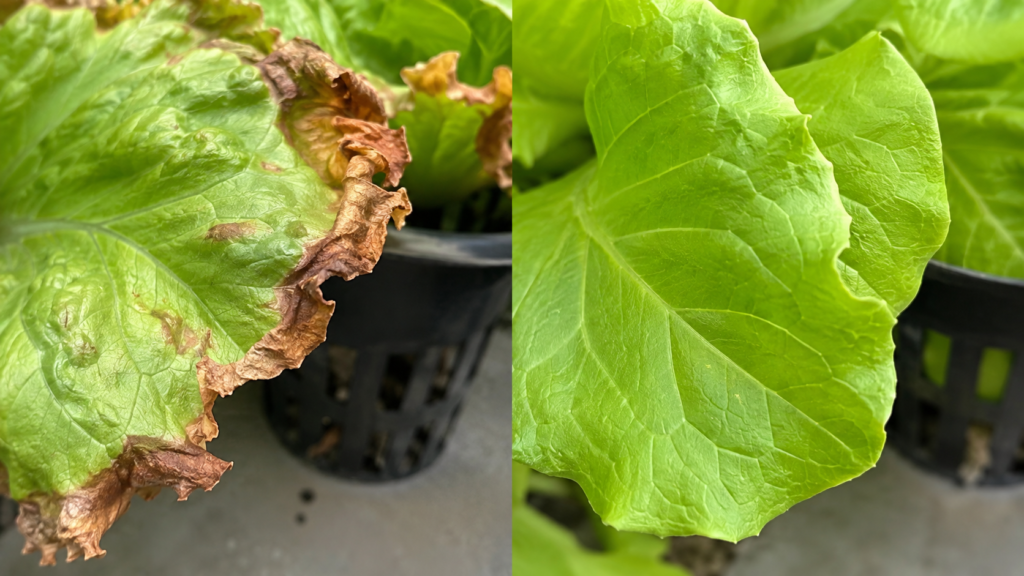
What it looks like: crispy brown leaf tips, dark green curling leaves, stunted new growth. Fix: Mix at half the label-recommended strength for your first two weeks, then work up. If the numbers on your meter still feel like a foreign language, our EC to PPM guide explains what they actually mean, and a tool like the site’s EC to PPM Converter takes the guesswork out of matching your reading to the right target for your crop.
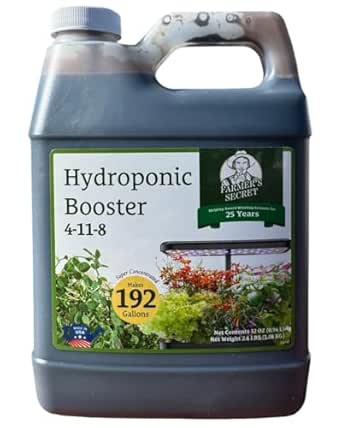
Nutrients Built for Predictable Feeding
Skip the guesswork on strength and ratios — these nutrient lines are designed to make hitting your target EC straightforward instead of a math problem.


2. Ignoring pH Drift
pH controls whether roots can absorb nutrients at all, regardless of how correctly you mixed the solution. Most hydroponic crops want a pH between 5.5 and 6.5; outside that band, specific nutrients — iron and calcium especially — become chemically unavailable even though they’re sitting right there in the water.
What it looks like: yellowing between leaf veins, slow overall growth with no obvious cause. Fix: Check pH daily for the first month, since new systems drift faster than established ones. Don’t chase small swings — adjust only once pH moves outside your target range, and adjust gradually.
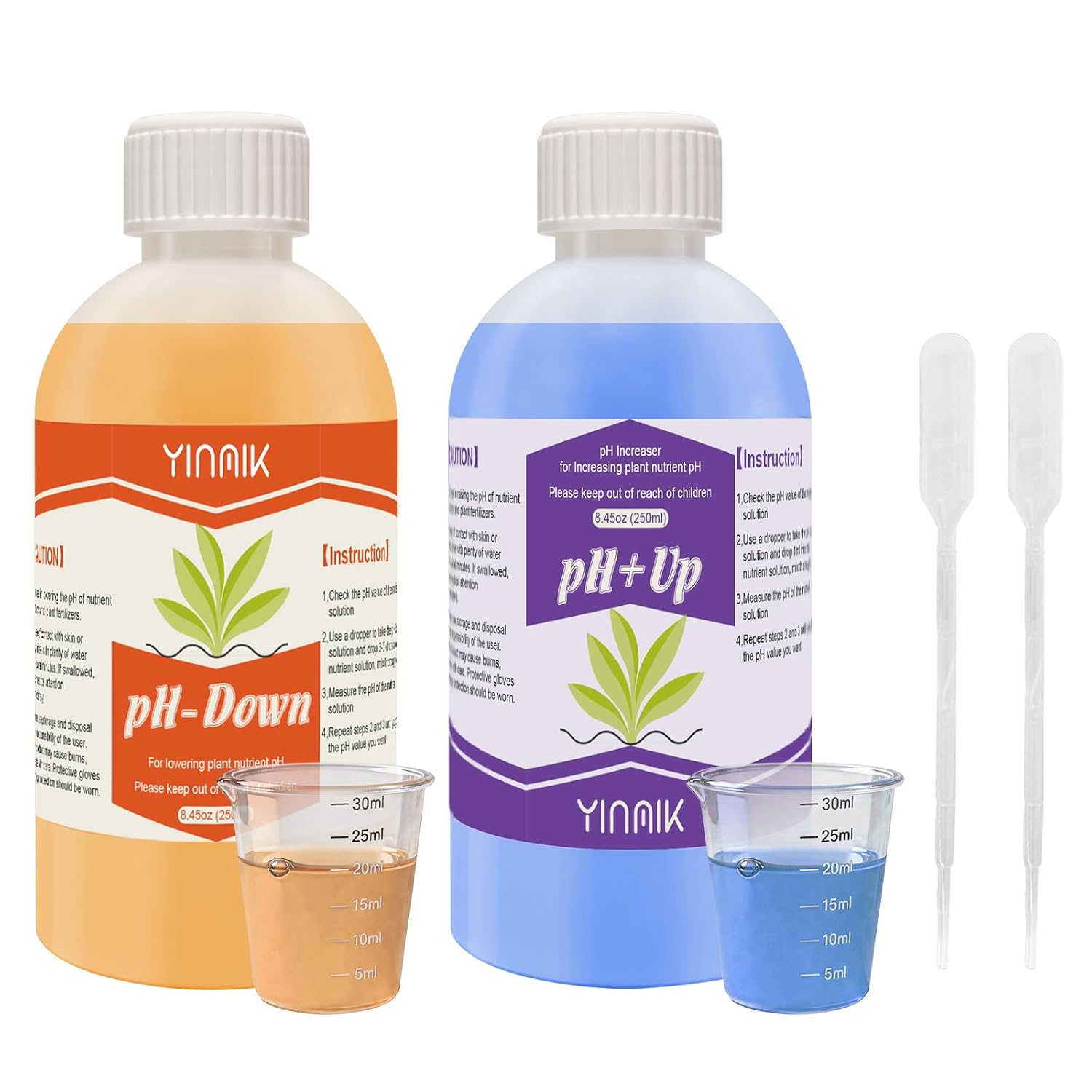
Get a pH Reading You Can Trust
A meter that drifts out of calibration will send you chasing a problem that isn’t real. These are the pH testing tools growers actually rely on to keep readings honest.


3. Skipping Root Oxygenation
Roots breathe. In soil, air pockets handle it. In water, you have to add it — usually with an air pump and air stone. Skip this in a Deep Water Culture setup and roots sit in stagnant, oxygen-poor water, which is exactly the condition root rot pathogens like Pythium prefer.
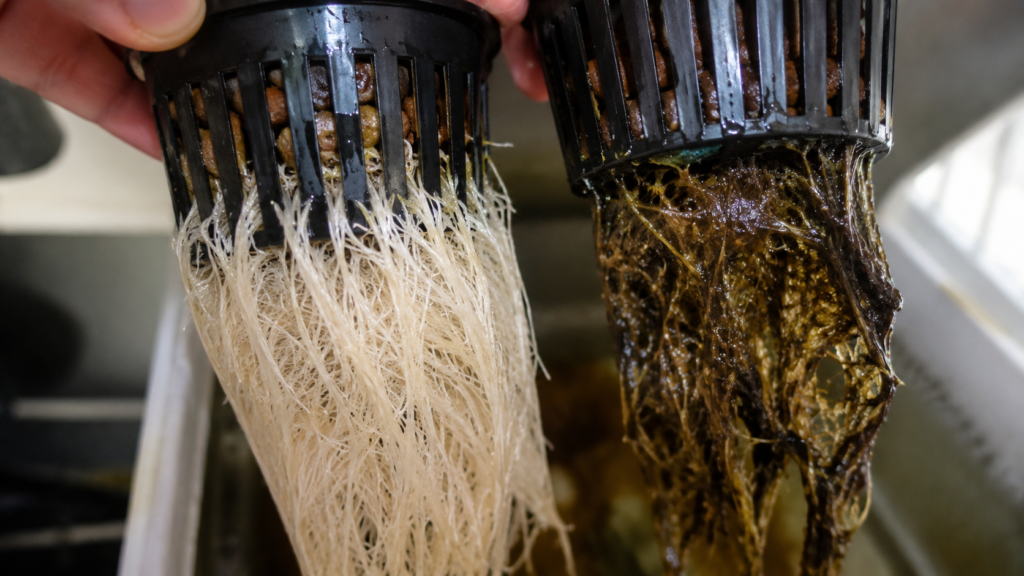
What it looks like: roots turning brown or slimy instead of white and firm, a sour smell from the reservoir. Fix: Run an air pump continuously in any standing-water system. It’s a five-dollar part that prevents one of the most common early-grow failures.
4. Getting Light Distance Wrong
New growers tend to buy the brightest light available, then either hang it too far away out of caution or too close out of impatience. Light intensity falls off fast with distance — physics, not opinion — so a few extra inches can mean the difference between healthy growth and stretched, leggy plants.
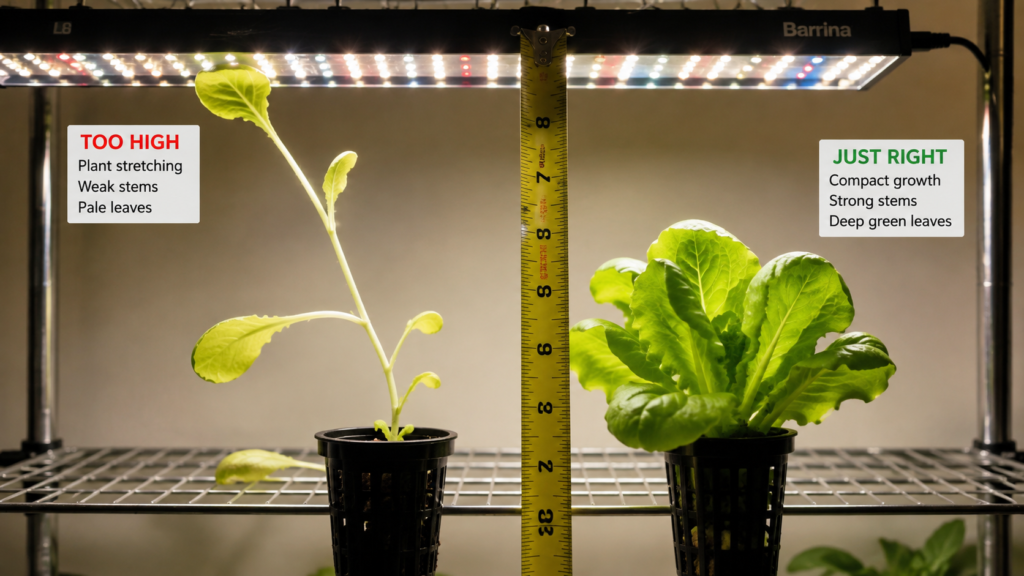
What it looks like: pale, thin stems reaching toward the light; or bleached, curling leaf edges if the light sits too close. Fix: Follow the manufacturer’s recommended hanging height for your light’s wattage and adjust as plants grow taller, keeping the canopy within range rather than guessing.
5. Choosing a System That’s More Complex Than You Need
This one doesn’t show up in most competitor lists, but it’s a real pattern: beginners jump straight to Nutrient Film Technique (NFT) or ebb-and-flow because it looks more “serious,” then spend their first month fighting clogged emitters and timer failures instead of learning how plants actually respond to nutrients and light.
What it looks like: frustration with equipment rather than plants; troubleshooting pumps instead of learning the basics. Fix: Start with Kratky or Deep Water Culture. Fewer moving parts means fewer places for a beginner mistake to hide. Our Kratky vs. DWC comparison breaks down which one fits your first grow.
6. Ignoring Reservoir Temperature
Nutrient solution that runs too warm — above roughly 75°F (24°C) — holds less dissolved oxygen and becomes a much friendlier environment for root-rot pathogens. Too cold, and nutrient uptake slows down regardless of how correct your EC and pH are.
What it looks like: healthy-looking leaves paired with weak, browning roots. Fix: Keep reservoirs out of direct light and heat sources; an opaque container and a shaded spot solve most of this without any added equipment.
7. Letting Algae Take Over
Algae needs light, water, and nutrients — exactly what’s sitting in an exposed reservoir or clear net pot. It’s not directly toxic to most crops, but it competes for oxygen and nutrients and can clog air stones and pump intakes.
What it looks like: green film on the reservoir walls or growing medium surface. Fix: Use opaque containers and cover any exposed nutrient solution. If it’s already established, a full clean with a diluted food-safe sanitizer between grows stops it from coming back immediately.
8. Transplanting Seedlings at the Wrong Time
Move a seedling into the system too early, before real roots have developed past the seed’s stored energy reserves, and it stalls from stress. Wait too long, and you risk tangled or damaged roots during the move.
What it looks like: transplant shock — wilting or stalled growth for several days after moving seedlings. Fix: Transplant once roots are visibly reaching past the starter cube, usually 1–2 weeks after germination for fast growers like lettuce and basil.
9. Not Tracking Anything
This is the mistake underneath most of the others. Without a simple log of pH, EC, and reservoir changes, it’s nearly impossible to tell what actually caused a problem when one shows up — and even harder to repeat a successful grow.
What it looks like: repeating the same unexplained failure grow after grow. Fix: A basic notebook or spreadsheet with date, pH, EC, and any changes made is enough. It turns guessing into pattern recognition.
Mistake Severity Matrix: What Needs Fixing Today vs. This Week
Not every mistake is equally urgent. This is the kind of triage most beginner guides skip entirely.
| Mistake | Speed of Damage | Reversible? | Fix Difficulty |
|---|---|---|---|
| Overfeeding nutrients | Fast (1–3 days) | Yes, with a reservoir flush | Easy |
| pH drift | Fast (24–48 hrs) | Yes, if caught early | Easy |
| Poor oxygenation | Moderate (3–7 days) | Sometimes — root rot can be permanent | Moderate |
| Wrong light distance | Slow (1–2 weeks) | Yes | Easy |
| Overcomplicated system choice | Ongoing frustration | N/A — a system swap, not a fix | Moderate |
| Reservoir too warm | Moderate (days) | Yes, before rot sets in | Easy |
| Algae buildup | Slow | Yes, with cleaning | Easy |
| Bad transplant timing | One-time stress event | Usually, plant recovers | Easy |
| No tracking | Cumulative | N/A — a habit, not a fix | Easy |
Mistakes by System Type
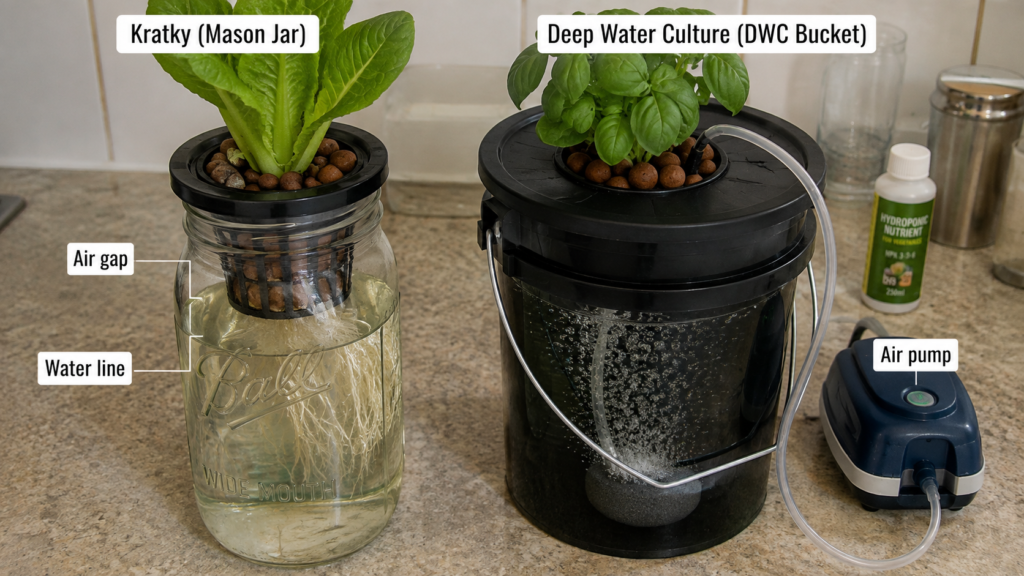
Kratky Method
The most common Kratky-specific mistake is topping off the reservoir instead of letting the water level drop naturally. The whole method depends on that shrinking air gap to oxygenate the roots — refilling too soon suffocates them.
Deep Water Culture (DWC)
Beyond skipping the air pump, DWC growers commonly let the nutrient solution sit unchanged for too long. Unlike Kratky, DWC is an active system meant to be refreshed every 1–2 weeks, not left to run indefinitely.
NFT (Nutrient Film Technique)
NFT’s failure mode is almost always the pump or channel slope. A clogged emitter or a channel that isn’t angled correctly leaves roots high and dry within hours, which is far faster and less forgiving than a Kratky or DWC mistake.
Growing Media for a More Forgiving Setup
The right net pots and growing medium make oxygenation and root support easier to get right from day one, especially if you’re moving between system types.


Common Myths That Make Beginner Mistakes Worse
- “More nutrients always means faster growth.” False — past the target EC range, it causes burn and lockout, not extra growth.
- “You have to change the nutrient solution every week no matter what, on a fixed schedule.” Change frequency depends on system type and reservoir size; Kratky is designed to run without changes, while active systems need more frequent refreshes.
- “Tap water is always bad for hydroponics.” Most tap water is fine once dechlorinated by sitting out 24 hours — very hard water is the actual concern, not tap water itself. Our tap water vs. RO water guide covers when filtering is actually worth it.
- “If one plant is struggling, the whole system is failing.” Often it’s a single stressed plant — root damage from transplant, a bad seedling — rather than a systemic reservoir problem.
Buying and Setup Tips to Avoid Repeating These Mistakes
A cheap pH meter that drifts out of calibration will cause more problems than it solves — you’ll be “fixing” a pH that was never actually off. The same goes for undersized air pumps that can’t keep a full reservoir oxygenated. When you Shop Smart for a starter pH and EC meter, prioritize ones with calibration solution included over ones that are simply cheapest — recalibrating monthly matters more than the brand.
If you’re not sure what’s actually wrong with a struggling plant, the Hydroponic Plant Health Diagnosis Tool walks through symptoms — leaf color, root appearance, growth pattern — and narrows down the likely cause instead of leaving you to guess between five possibilities at once.
Symptom-to-Cause Quick Reference
| Symptom | Most Likely Cause | Fastest First Check |
|---|---|---|
| Brown, crispy leaf tips | Overfeeding | Test EC against target range |
| Yellowing between veins | pH drift | Test and adjust pH |
| Slimy or brown roots | Low oxygen / root rot | Check air pump, reservoir temp |
| Leggy, pale stems | Light too far away | Measure and adjust hanging height |
| Wilting after transplant | Transplant timing/damage | Check root development stage |
| Green film in reservoir | Algae | Cover/shade the nutrient solution |
Frequently Asked Questions
What is the most common mistake beginners make in hydroponics? Overfeeding nutrients is the single most common hydroponics beginner mistake. New growers assume more nutrient concentration equals faster growth, but it typically causes nutrient burn, leaf damage, and stunted growth instead.
Why do my hydroponic plants keep dying even though I’m watering them? “Watering” isn’t really the issue in hydroponics — the reservoir’s pH, nutrient strength, and oxygen level matter far more than volume. A plant can sit in plenty of water and still fail if the pH has locked out nutrients or the roots aren’t getting oxygen.
How do I know if I’m overfeeding my hydroponic plants? Check your solution’s EC or PPM against the target range for your crop’s growth stage using a meter. Crispy leaf tips and dark, curling new growth are visual signs, but a meter reading is the reliable way to confirm it.
Is it normal to make mistakes when starting hydroponics? Yes — nearly every hydroponic grower’s first system runs into at least one of these issues. The goal isn’t a mistake-free first grow; it’s catching problems early enough that they’re still reversible.
Can hydroponic mistakes be fixed once plants are already stressed? Often, yes. pH swings, overfeeding, and light distance issues are usually reversible if corrected within a few days. Root damage from prolonged low oxygen or advanced root rot is harder to reverse and sometimes means starting the plant over.
Keep Building From Here
Every one of these mistakes is normal, fixable, and part of how growers actually learn this. The difference between a frustrating first grow and a good one usually isn’t talent — it’s catching the small stuff before it stacks up.
If you’re just getting your first system running, our complete beginner’s guide is the place to start before you hit any of these issues. And once your system is up, Grow With Hydroponics has the calculators and diagnosis tools to keep you from guessing your way through the next one.
A note on freshness: nutrient product formulations, meter models, and pricing mentioned or linked here change over time — double-check current specs before buying.
