

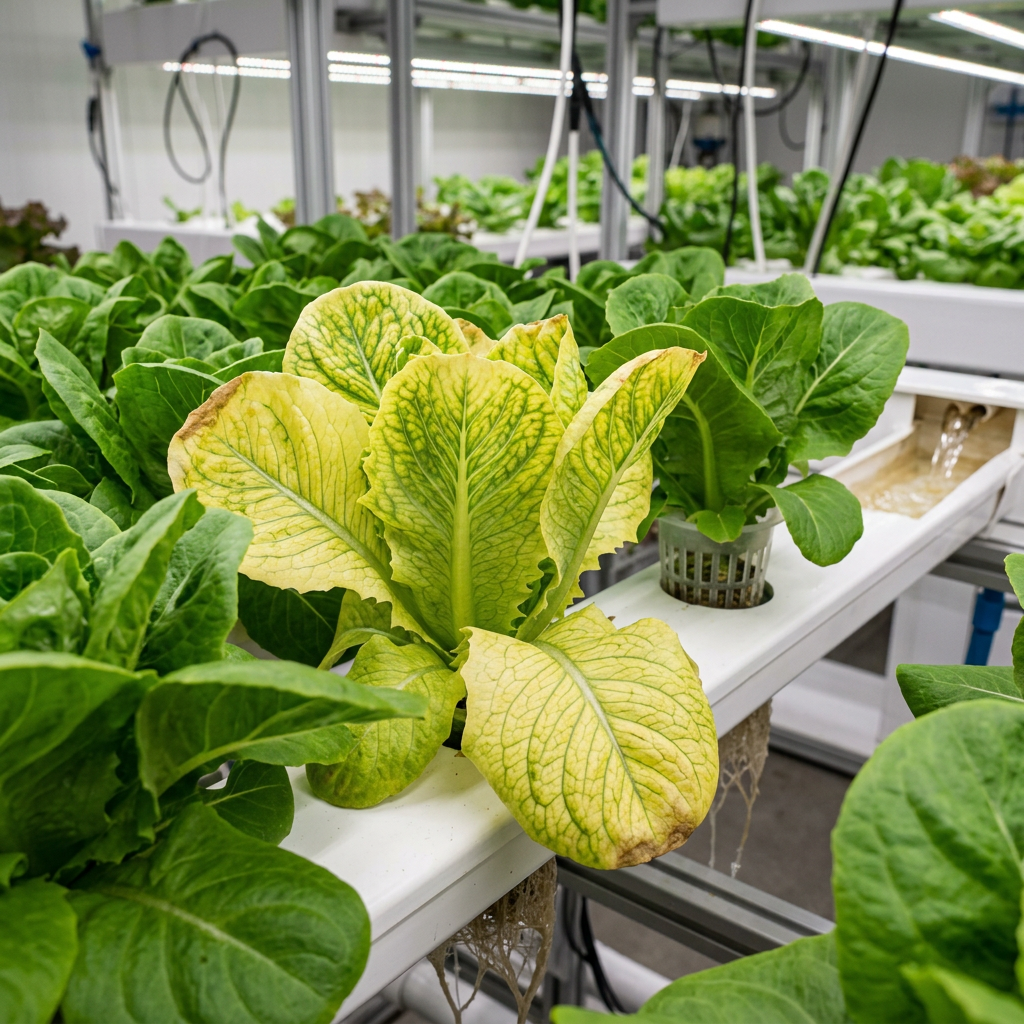
Yellow leaves at 11 PM. You’ve checked the pH. You’ve checked the EC. Everything looks right on paper, but something is clearly wrong—and you’ve been staring at the same three forum posts for the past forty minutes, still not sure which of the eight possible nitrogen issues you’re dealing with.
Most growers don’t lose crops because they stop caring. They lose crops because they diagnose too late, guess wrong, or fix the wrong problem first. Hydroponic systems move fast. A small pH drift today becomes stunted growth by Thursday. A missed early calcium deficiency becomes widespread tip burn before the next harvest.
At Grow With Hydroponics, we’ve seen this pattern repeatedly—across DWC, NFT, Dutch bucket, and vertical systems. The problem almost never starts with the nutrient bottle. It starts with not knowing what you’re actually looking at. That’s the real skill gap.
In this guide, you’ll learn how to read plant symptoms accurately, understand the logic behind proper hydroponic plant problem diagnosis, and use our free Plant Health Diagnosis Tool to get actionable answers in under two minutes—without the guesswork spiral.
Why Diagnosing Hydroponic Plant Problems Is Harder Than It Looks
Soil gives plants a buffer. If the pH drifts a little, the organic matter in the growing medium acts as a stabilising force. Hydroponics offers no such forgiveness. Your roots are sitting directly in the solution, and whatever’s in that reservoir—correct or not—is what the plant gets.
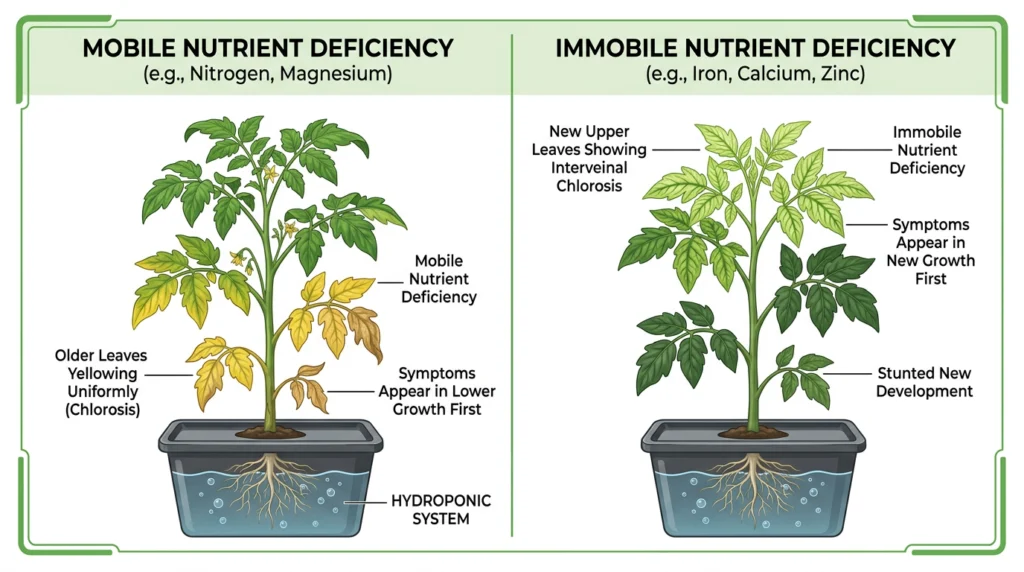
The challenge is that many deficiency symptoms look identical on the surface. Interveinal chlorosis can point to iron deficiency, manganese deficiency, or magnesium deficiency—depending almost entirely on which leaves are affected. Older leaves affected first? You’re likely looking at a mobile nutrient issue (nitrogen, magnesium, potassium, phosphorus). New growth affected first? That’s typically an immobile nutrient—calcium, iron, boron, zinc.
Get that distinction wrong, and you’ll dose magnesium into a system that’s actually got a pH problem at 7.0 and can’t absorb anything properly. You’ll spend a week “fixing” something that wasn’t broken while the real issue compounds.
The Three Most Common Misdiagnoses in Hydroponics
Frankly, these three cause more failed grows than almost anything else:
1. Treating pH lockout as a deficiency. Plants show classic nitrogen or iron deficiency symptoms. The grower adds more nutrients. EC climbs. Plants get worse. The actual problem? pH was sitting at 6.8, and nothing was getting absorbed at all. Check pH first. Always.
2. Confusing heat stress with calcium deficiency. Both cause upward leaf curl and tip burn. But one needs a temperature and VPD correction; the other needs a nutrient adjustment. Treating heat stress with calcium won’t help—and if your reservoir temperature is 27°C, root rot is already knocking.
3. Mistaking early Pythium for overwatering. Wilting plants despite a full, wet reservoir. Beginners increase watering frequency. The roots are actually rotting and can’t absorb water regardless of how much is there. The fix is oxygen levels, water temperature, and potentially a UV sterilizer—not more water.
What a Good Plant Health Diagnosis Tool Actually Does
The old approach to diagnosing hydroponic problems is a symptom-matching exercise. You open a deficiency chart, find a leaf picture that looks roughly like yours, and act on that guess. It works occasionally. Mostly, it sends you in circles.
A proper plant health diagnosis tool works differently. It cross-references multiple symptoms simultaneously, weighs severity, accounts for crop-specific sensitivities, and rules out the improbable—returning a ranked list of likely causes rather than a single guess.
Think of it the way a good grower actually thinks: “New growth is yellowing between the veins. Old leaves look fine. The plant’s in week three of veg. EC is 2.1, and pH has been stable at 5.9. Given all of that—what’s the probability this is iron versus manganese versus sulfur?”
That’s what a diagnostic system does. It weighs the evidence. And when you input severity levels alongside symptoms, it prioritises what to address first—which is exactly what you need at 11 PM when you don’t want to read twelve articles.
What Makes the Grow With Hydroponics Plant Health Diagnosis Tool Different
Our Plant Health Diagnosis Tool is built as an expert system — meaning it uses structured rules modelled on real agronomic logic, not just keyword matching. Here’s how it works in practice:
- Crop-specific logic. Basil isn’t lettuce. Tomatoes behave differently from cucumbers under the same solution conditions. The tool adjusts its sensitivity thresholds based on your crop selection.
- Confidence scoring. Every result comes with a confidence percentage. An 85% calcium diagnosis gets your attention first. A 40% disease flag means keep watching. You get a prioritised list, not an overwhelming menu.
- Actionable outputs. The tool doesn’t just name the problem. It tells you what to check, what to adjust, and in what order. That’s the difference between a diagnosis and a solution path.
How to Use the Plant Health Diagnosis Tool: Step-by-Step
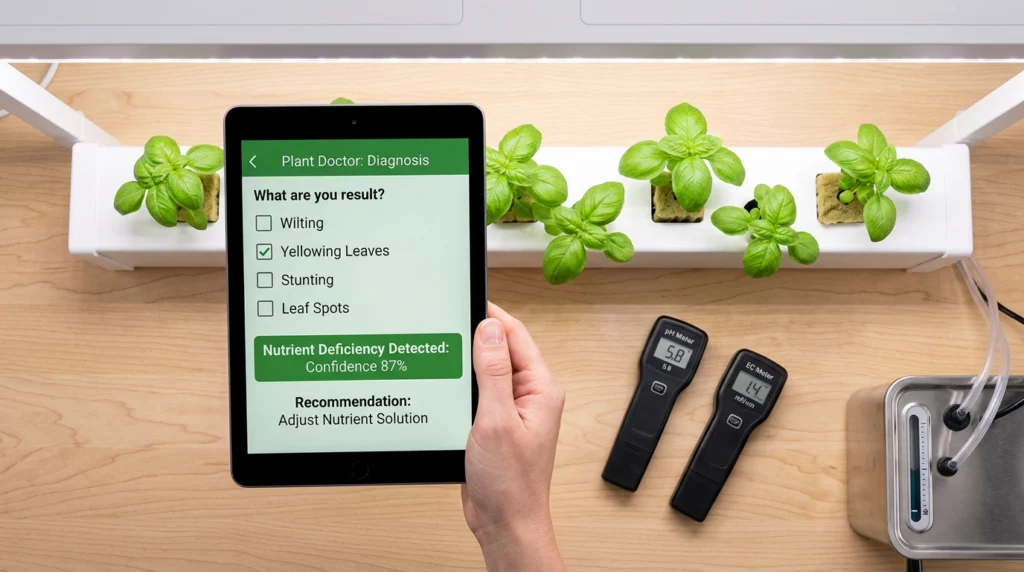
Getting accurate results takes about two minutes if you observe properly before you start. Here’s how to approach it:
Step 1: Inspect Before You Input
Don’t guess. Get close. Check both the upper and lower leaf surfaces. Note whether symptoms are affecting new growth at the top of the plant or old growth at the bottom. Check stem colour. Look at root colour if accessible—white and firm is healthy, brown and slimy is not. The quality of your diagnosis depends entirely on the quality of your observation.
Step 2: Select Your Crop
This matters more than most growers realise. The tool adjusts its diagnostic logic based on the crop you’re growing. Lettuce and leafy greens have different calcium sensitivity and typical EC ranges than tomatoes or strawberries. Selecting the correct crop means the recommendations you receive are actually calibrated to what you’re growing.
Step 3: Select Symptoms Accurately
Symptoms are grouped into four categories: leaf symptoms, stem and root symptoms, growth and development, and overall plant appearance. Be specific. “Yellowing leaves” tells the system almost nothing. “Interveinal chlorosis on new growth, moderate severity”—that”‘s a diagnosis.
Rate the severity honestly: mild, moderate, or severe. A severe symptom carries more diagnostic weight than a mild one, and the confidence scoring reflects this.
Step 4: Review Your Confidence-Ranked Results
High confidence (70–100%) results are your immediate priority. Medium confidence (50–69%) results are worth investigating after you’ve addressed the primary issue. Low confidence results are possibilities to keep in mind if symptoms persist after you’ve corrected the more likely causes.
Step 5: Act on the Recommendations—One Variable at a Time
This is where discipline matters. Fix the highest-confidence issue first. Wait 48–72 hours and observe the plant’s response. Then make the next adjustment if needed. Changing pH, EC, temperature, and nutrient formula simultaneously might fix the plant, but you’ll never know what actually worked — and you’ll repeat the same diagnostic chaos next time.
Reading Symptoms Like an Experienced Grower
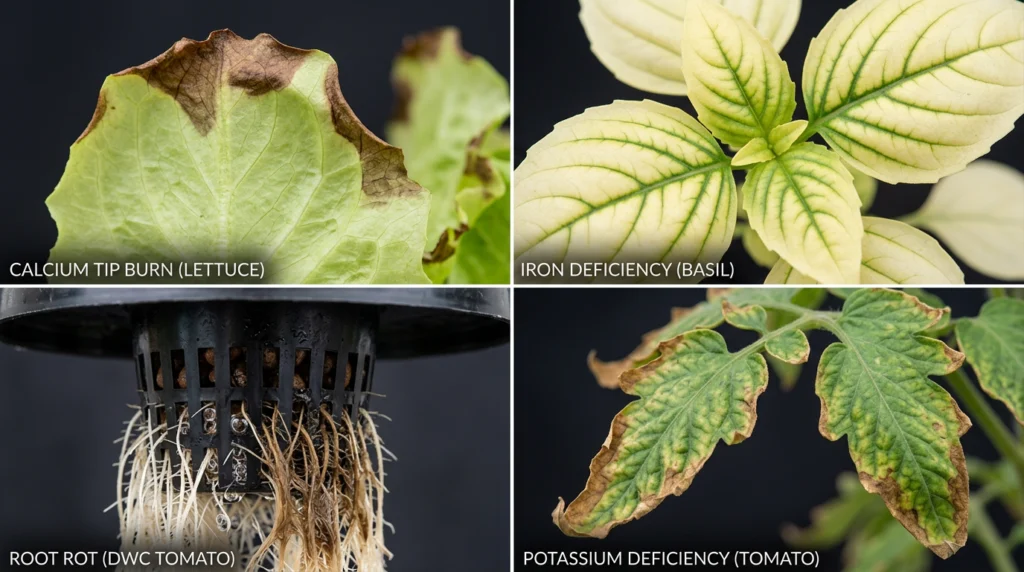
The table below covers the most common hydroponic plant problems, the symptoms that distinguish them, and the first action to take. This is the kind of reference that saves thirty minutes of forum searching.
| Problem | Primary Symptom | Leaf Location | First Action |
|---|---|---|---|
| Nitrogen deficiency | Uniform pale yellowing | Older/lower leaves | Check EC; increase nitrogen |
| Calcium deficiency | Tip burn, distorted new growth | New/upper leaves | Check pH (target 5.8–6.2); check VPD |
| Iron deficiency | Interveinal chlorosis (veins green) | New/upper leaves | Adjust pH down to 5.5–6.0 |
| Magnesium deficiency | Interveinal chlorosis | Older/lower leaves | Add Epsom salt; check EC |
| pH lockout | Multiple simultaneous deficiencies | Mixed (old and new) | Adjust pH first before adding nutrients |
| Root rot (Pythium) | Wilting despite wet roots | Whole plant | Lower water temp; check DO levels |
| Heat stress | Upward leaf curl, crispy edges | Upper canopy | Reduce temperature; check VPD |
| Potassium deficiency | Scorched/brown leaf margins | Older/lower leaves | Check EC; adjust K in solution |
Common Mistakes That Make Plant Diagnosis Harder
Adding nutrients before fixing pH. This is the single most common error. If your pH is outside the optimal range (5.5–6.2 for most hydroponic crops), nutrients in your solution become unavailable regardless of concentration. More fertiliser into a locked-out system just raises EC stress.
Diagnosing based on one symptom only. Yellow leaves is not a diagnosis. Yellow leaves on old growth, appearing progressively from bottom to top, with the rest of the plant looking healthy, in a plant at week two of growth, with EC at 1.2—that’s a diagnosis. Context is everything.
Reacting too quickly. New symptoms after a reservoir change often reflect the transition, not a new problem. Give plants 24–48 hours before adjusting again. Overcorrecting creates chemical stress that looks identical to deficiency symptoms.
Ignoring the environment. Many “nutrient” problems are actually VPD problems. If your temperature is 30°C and humidity is 30%, the plant has closed its stomata. Nutrient uptake via the transpiration stream stops. You can have a perfect solution in the reservoir and still see deficiency symptoms. Check your environment before blaming the nutrients.
Advanced Tips: Catching Problems Before They’re Visible
By the time leaves show symptoms, the deficiency has usually been developing for several days. Experienced growers catch problems earlier using these approaches:
Daily EC and pH logging. A 0.2 drop in EC overnight in a DWC system means plants are feeding aggressively—usually a signal that one nutrient is being consumed faster than others. Consistent logging reveals these patterns before they become visible deficiencies.
Root zone inspection as part of weekly maintenance. Healthy roots are white, firm, and slightly fuzzy. Early root rot starts with a faint brown tinge and a mild odor—easy to miss if you’re not looking. Catching it at that stage is entirely manageable. Catching it when the whole root mass is brown and slimy is a different problem.
VPD monitoring alongside symptom tracking. Several nutrient-looking problems are environmental. Calcium deficiency in particular is strongly linked to low VPD—slow transpiration means calcium (which travels with the transpiration stream) doesn’t reach new growth. If you’re seeing persistent tip burn despite adequate calcium in solution, the answer might be in your humidity readings, not your nutrient formula.
If you’re not already tracking VPD, the VPD Calculator on this site takes your temperature and humidity readings and shows you exactly where your grow environment sits—and what adjustment will bring you into optimal range.
Shop Smart: What to Have Ready When Diagnosis Points to Action
A diagnosis is only useful if you can act on it. These are the physical tools that close the gap between what the diagnostic tool identifies and what you can actually correct:
- A calibrated pH meter—not a cheap colour-drop test kit. pH swings of 0.3 are invisible to colour tests and significant to plants.
- A reliable EC/TDS meter—to confirm your nutrient concentration matches crop-specific targets.
- A dissolved oxygen meter or air pump setup—essential if root rot is recurring or suspected.
- A thermo-hygrometer—to cross-check VPD when environmental stress symptoms appear.
Browse the Shop Smart section for curated pH and EC equipment that integrates directly with what you’re doing.
Frequently Asked Questions About Hydroponic Plant Health Diagnosis
How accurate is a plant health diagnosis tool for hydroponics?
Accuracy depends on the quality of your symptom inputs. The tool uses expert-system logic—structured rules built on established plant science — so results are reliable when observations are specific. For the vast majority of home and boutique grow issues, it will identify the primary cause correctly. For commercial operations dealing with unusual pathogens or systemic issues, it works best as a first-line triage tool before consulting a specialist.
Can I use this tool for any hydroponic system type?
Yes. The diagnostic logic covers all major system types—DWC, NFT, Dutch bucket, drip systems, aeroponics, and vertical towers. System type influences certain symptoms (biofilm in NFT channels, salt accumulation in drip systems, oxygen levels in DWC), and the tool factors these patterns into its recommendations.
What’s the difference between nutrient deficiency and nutrient lockout?
Deficiency means the nutrient isn’t present in sufficient quantity in your solution. Lockout means the nutrient is present but unavailable because pH is outside the absorption range. Both produce similar visible symptoms, but the fix is entirely different. Lockout requires a pH correction first. Adding more nutrients to a locked-out system makes the situation worse by raising EC stress.
How often should I use a plant health diagnosis tool?
Make it part of your weekly visual inspection—not just when things go wrong. Running a quick check during a normal monitoring session helps you catch patterns early. Growers who use it proactively tend to catch issues in the mild stage rather than the severe stage.
Why do my plants show deficiency symptoms even when EC and pH look correct?
Several reasons are possible. Environment is the most common: low VPD restricts transpiration, which slows calcium and other nutrient uptake even with a perfect solution. Water temperature also matters — at 24°C and above, dissolved oxygen drops and root function declines. Finally, sensor calibration drift is often overlooked. An uncalibrated pH meter reading 6.0 might actually be measuring 6.5, which is enough to cause iron and phosphorus issues.
Stop Reacting, Start Diagnosing
The best hydroponic growers aren’t the ones who react fastest when something goes wrong. They’re the ones who rarely get surprised in the first place—because they understand what they’re looking at, and they act on evidence rather than gut reactions.
Symptom recognition is a learnable skill. Mobile versus immobile nutrients, pH lockout versus true deficiency, environmental stress versus nutrient imbalance—these distinctions become second nature with practice. And with the right tools, you close the gap between “something looks wrong” and “here’s what I’m going to do about it” in minutes rather than hours.
The Plant Health Diagnosis Tool is free, crops-specific, and built on the same logic experienced growers use when they walk down a row and immediately know something’s off. Use it. Log what you find. Build the habit.
Grow With Hydroponics exists to help you move past guesswork—whether that’s through practical guides like this one or the diagnostic tools we’ve built for growers at every level. Your plants are communicating constantly. The goal is to get better at listening.
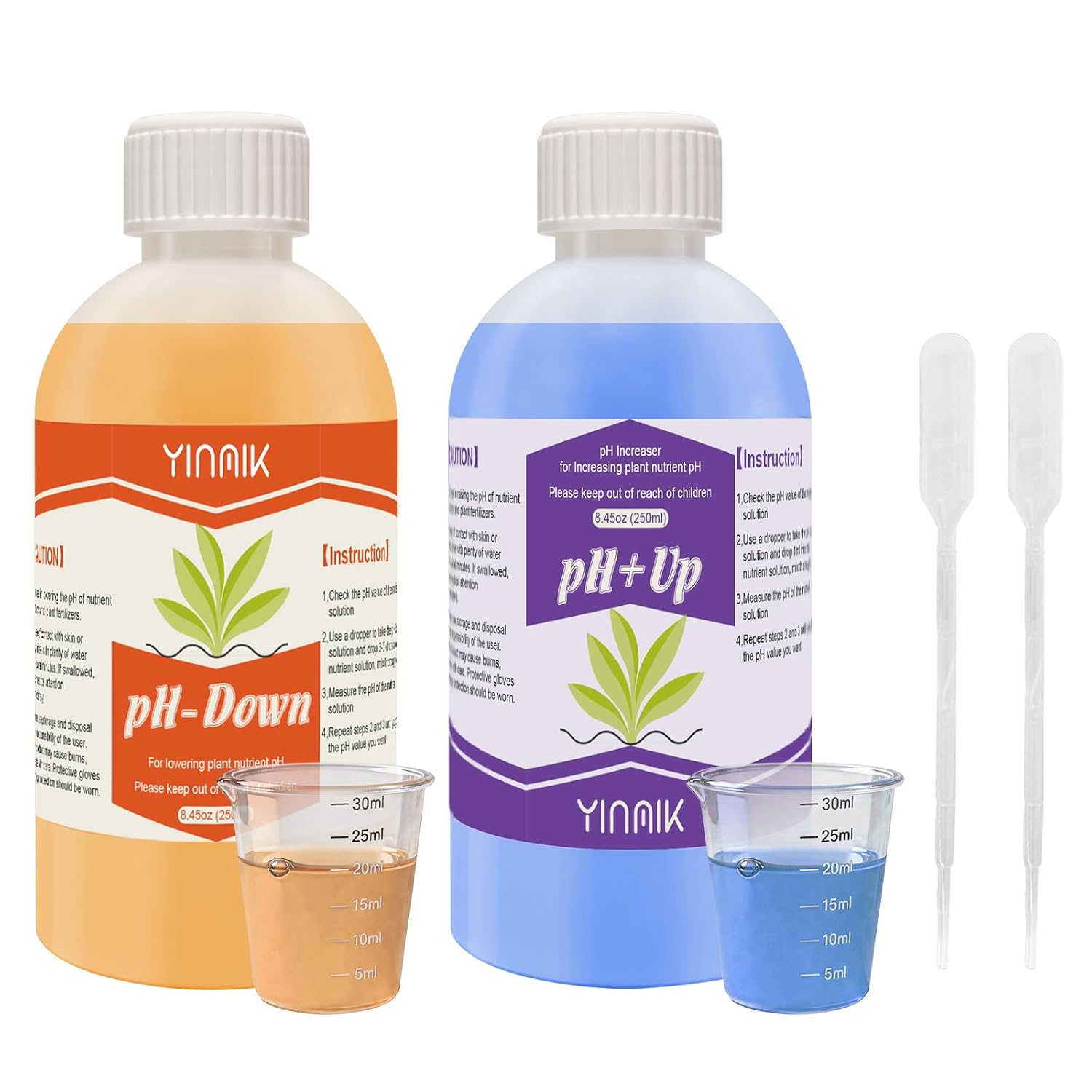
Recommended pH & EC Equipment
A correct diagnosis needs correct data. These meters are the first thing to check when symptoms don’t match expectations.
Calibration drift in cheap meters is responsible for more phantom “deficiencies” than most growers realise. Invest once in accurate instruments and eliminate one of the most common root causes from your troubleshooting list.



Complete Hydroponic Growing Kits
If you’re building or upgrading your system and want everything set up for easier monitoring and problem prevention from day one:
Start with a system designed for straightforward management. Better system design means fewer variables to troubleshoot when symptoms appear.


