
Planning Multiple Crops Together Without Wrecking Your Yield
Run more than one crop in the same hydroponic system and you're juggling several sets of requirements at once — pH, EC (electrical conductivity, a measure of nutrient strength), light hours, and harvest timing all have to line up, or one crop quietly starves while another gets overfed. The Hydroponic Multi Crop Planner from Grow With Hydroponics exists to catch that mismatch before you plant, not after the harvest comes up short.
Quick Answer: The Hydroponic Multi Crop Planner checks up to three hydroponic crops against each other for pH, EC, and light-hour compatibility, then suggests a space-efficient layout based on your grow area's dimensions — so you catch nutrient or lighting conflicts before you plant, not after.
Enter dimensions in metres — use your usable channel or tray area, not the footprint of the whole room.
Your shared-solution window pH · EC (mS/cm) · DLI (mol/m²/day) · days to harvest
Canopy stratification
Your layout & plant count
| Crop | Typical density | Allocated area | Plants |
|---|
Notes for your combination
What Does the Multi Crop Planner Actually Check?
The tool compares your selected crops against three core variables that determine whether they can share a reservoir and a light schedule without one of them suffering.
- pH range overlap — most leafy greens sit around 5.5–6.5, while fruiting crops like tomatoes prefer closer to 6.0–6.5. A wide gap between selected crops gets flagged.
- EC (nutrient strength) compatibility — lettuce and herbs typically run a lower EC than fruiting crops. Combine them at the wrong strength and one crop is underfed while the other is stressed. If you're unsure where your reservoir currently sits, the EC to PPM Calculator converts your meter reading into a usable target.
- Light-hour requirements — some crops flower under shorter photoperiods; mismatched light schedules can stall growth or trigger early flowering in the wrong crop. The DLI Calculator is useful here if you want to check whether your current lighting setup actually delivers enough daily light for each crop you're combining.
Where crops don't line up cleanly, the tool doesn't just block the combination — it flags the specific conflict so you can decide whether to compromise (say, splitting the difference on EC) or swap one crop out.
How the Layout Suggestion Works
Once you enter your grow area's length and width, the planner calculates how many plants of each selected crop fit without crowding, and suggests a spatial arrangement based on plant height and light needs — taller crops like tomatoes toward the back or center, shorter crops like lettuce along the edges where they won't get shaded out.
Get the Nutrient Mix Right for Every Crop You're Combining Different crops, different appetites. Here are nutrient formulas sized for the EC ranges we just covered — worth checking before you dose a shared reservoir. See how your current mix measures up with the EC to PPM Calculator.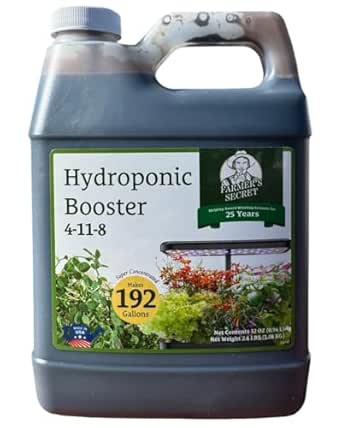


Common Multi-Crop Mistakes This Tool Catches
A few mistakes come up often enough with multi-crop hydroponic setups that they're worth naming directly:
- Pairing a heavy feeder with a light feeder at one EC setting. Tomatoes and lettuce in the same reservoir at lettuce-strength nutrients will leave the tomatoes deficient by week four or five.
- Ignoring photoperiod conflicts. Mixing a long-day crop with a short-day crop under one light schedule can push one of them into premature flowering.
- Overcrowding a small grow space. Three crops squeezed into a footprint sized for one leads to shading, poor airflow, and higher disease risk — this is where the space calculation matters as much as the compatibility check.
If you ignore these mismatches, the usual result isn't total crop failure — it's a slow yield drag that's hard to diagnose until harvest, because nothing looks obviously wrong week to week. Beginners often assume a nutrient problem is a dosing error rather than a compatibility issue between the crops they've combined; experienced growers tend to test single-crop performance first, then add a second or third crop once the baseline is dialed in.
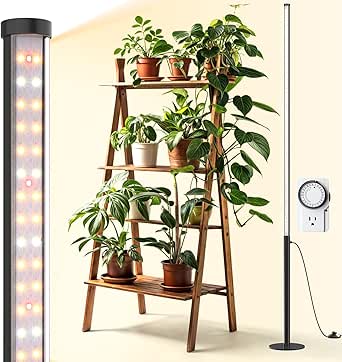
Fix Photoperiod Conflicts with the Right Light Setup If you're mixing crops with different light-hour needs, an adjustable-schedule grow light solves most of it. Here's what's worth a look.


Who This Tool Is (and Isn't) For
The planner works with any hydroponic system type — NFT, DWC, Kratky, ebb and flow — since the underlying compatibility logic (pH, EC, light, space) applies regardless of setup. It's built to be usable on a first try for someone new to hydroponics, while still giving a commercial grower a fast way to sanity-check a layout before committing bench space to it.
Where it adds less value: a hobbyist running a single crop — one lettuce variety in one system — doesn't need a compatibility check, since there's nothing to compare it against. That grower is better served by the Hydroponic Grow Space Planner, which focuses purely on layout and space use for a single crop. For anyone running two or more crops in shared infrastructure, though, checking compatibility before planting is a lot cheaper than finding out mid-cycle.
Shop Smart for pH meters, EC meters, and grow lights that make it easier to hit the targets this planner recommends.
How we score compatibility: a five-variable group intersection, not a pairwise average
pH window
The pH band common to every crop you selected. Your reservoir can only hold one pH at a time, so this is the first thing we check.
EC target
The EC band common to every crop — the single strongest predictor of a workable shared setpoint in our model.
Light (DLI)
The Daily Light Integral window your crops have in common. Fruiting crops typically need far more light than leafy greens.
Canopy height
How spread out your selection is across height categories. A wide spread means shading unless you zone the layout.
Life cycle
How much your crops' days-to-harvest windows overlap. Crops that mature together are far easier to manage in one system than ones on wildly different clocks.
intersection.low = max(crop1.low, crop2.low, crop3.low)
intersection.high = min(crop1.high, crop2.high, crop3.high)
If intersection.high < intersection.low → zero overlap → metric score = 0
metric.score = (intersection.high − intersection.low) / min(each crop's own range width) × 100
Our crop reference table — 25 crops
| Crop | Type | pH | EC (mS/cm) | DLI (mol/m²/d) | Height | Days to harvest | Density |
|---|
Primary source: Dunn, B. & Singh, H. Electrical Conductivity and pH Guide for Hydroponics, Oklahoma State University Extension, HLA-6722 (2017).
Frequently asked questions about our multi-crop planner
What does this planner actually check?
We find the true intersection — not a pairwise average — of pH, EC, Daily Light Integral, and days-to-harvest across every crop you select, plus a canopy-height spread check. Then we size a layout for your grow area using published planting densities for each crop, so you leave with a plant count, not just a compatibility score.
Why does a three-way intersection matter more than checking pairs?
With three crops, pairwise checks can each look fine while no single window fits all three at once. If crop A and B share pH 5.5–6.5, and B and C share pH 6.0–7.0, a pairwise check passes both — but A and C might only truly agree at 6.0–6.5, or not at all. We work out that shared window directly instead of averaging pairs, so the number you see is one your whole system can actually run on.
Why is life cycle part of the score?
Crops with very different days-to-harvest force you to disturb the whole reservoir to pull one crop while the others are mid-cycle, then restart a setpoint compromise with each replanting. Crops that mature on a similar timeline let you manage — and eventually replant — your system as a single batch, which is why we weight it into the overall score.
Can I really grow different crops in one hydroponic system?
Yes, but only within the intersection of their pH and EC tolerances, because every plant in your shared reservoir is exposed to the same solution at the same time. A combination with a wide shared window tolerates a compromise setpoint comfortably; a combination with little or no overlap means at least one crop will sit permanently outside its optimum, which is exactly what we flag for you.
Do I need special equipment for multi-crop hydroponics?
No dedicated hardware — NFT, DWC, and Kratky all work for mixed plantings. What changes is management: set your pH and EC to the intersection window we give you, not the average of your crops' individual targets, and monitor more closely, since a compromise setpoint leaves less margin for drift.