🌱 Future of Indoor Hydroponic Farming

Grow Faster, Grow Smarter
with Indoor Hydroponics Tools & Grow Guides

Discover modern hydroponics with efficient water use, healthier indoor growing conditions, and smart planning tools designed to help you grow with more control and confidence.

Indoor gardening has quietly become something much bigger than a hobby. People come to it for fresh herbs and salad greens, yes—but also for the satisfaction of watching something grow in a space that wasn’t built for growing. If you’ve ever squeezed a pot into a sunny window and watched the leaves fade anyway, you already know how much traditional gardening fights you. Indoor hydroponic farming removes that fight entirely.

Instead of depending on weather, soil quality, or lucky sunlight, you’re giving plants exactly what they need—stable light, balanced nutrients, and consistent water—in a system you control. A corner of an apartment, a kitchen shelf, or a spare bedroom: any of it can become a productive grow space when the setup is right. The size of the space almost never matters. What matters is understanding how the variables work together.

Here’s what most beginners don’t realise: hydroponics isn’t complicated. It just looks that way from the outside. Once you understand that plants respond predictably to light, nutrients, humidity, and CO₂—and that each one can be measured and adjusted—the whole process clicks. Small tweaks like dialing in your VPD, keeping your DLI consistent, or adjusting nutrient concentration by growth stage can completely change what you harvest.

That’s exactly what this site is built for. Our free suite of hydroponic calculators and grow tools takes the guesswork out of every decision—from planning your light schedule to mixing your nutrient solution. Over a decade of growing experience went into building them. They exist so you don’t have to learn everything the hard way.

1.7M+
Growers helped
12
Free grow tools
110+
Grow guides
5+
Years growing
Dr. Awais Yousaf
PhD · Founded by a real grower

Grow With Hydroponics
Ecosystem

Smart Tools Designed for Indoor Hydroponics

Indoor Hydroponics Tools: Data Is Useless Without Direction


Our Indoor Hydroponics Tools Suite helps you diagnose, adjust, and grow—without drowning in numbers.

The problem with most tool suites in this industry? They are built by people who love spreadsheets more than sprouts. They give you a hundred data points and then leave you in the dark about what to actually do. It’s frustrating—and frankly, a waste of your time. So, let’s talk about our Hydroponic Tools Suite differently. Think about the daily decisions you make. Is that leaf curl a deficiency or a pH issue? Our Plant Health Diagnosis Tool is built to help you ask the right questions, not just spit out an answer. Wondering if that new LED is actually enough? The Indoor Plant Sunlight Analysis System cuts through the marketing specs to show you what’s really hitting your canopy.

Then we get into the nitty-gritty—the math that separates a good harvest from a great one. Our Hydroponic Nutrient CalculatorHydroponic Nutrient Optimizer, and EC ↔ PPM Hydroponics Calculator aren’t just calculators. They’re translators, turning chemistry into clear instructions. And because the environment is everything, we built tools for DLI, VPD, and CO₂ flux calculations. Not as academic exercises, but as practical levers you can pull to fine-tune your grow room. These tools are related to each other. Dialing in nutrients affects your VPD. Your DLI dictates your CO₂ needs. That’s why they’re a connected system. It’s about giving you a cohesive view of your operation, whether you’re planning grow spaces or managing multiple crops.

Transform Your Home into a Thriving Indoor Hydroponics Garden


Hydroponic success starts with knowledge and action. Plan your space, optimize your setup, and watch your garden flourish!

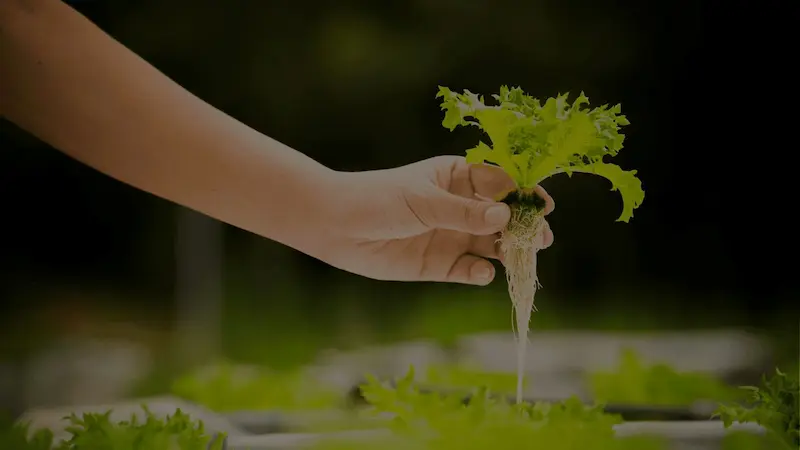
Just think for a while that you’re cultivating your own herbs, veggies, and fruits in your apartment or tiny space all year round. With indoor hydroponic farming, it’s never been easier: no soil needed, less water used, and rapid growth. Grow smarter with hydroponics—studies show this method can boost productivity and use up to 90% less water than conventional gardening. (Source: Int. J. Environ. Res. Public Health, link). From beginner to professional gardener, hydroponics is an economical and straightforward way to grow your favorite fruits and vegetables anywhere you want, with the added benefit of rapid growth. Start to learn the indoor hydroponic farming journey at your convenience, anytime and anywhere. With this innovative method, you’re in control of your growing environment.


Grow With Hydroponics

Your Step-by-Step Guide to Smarter Indoor Hydroponic Farming​

Latest articles ​

From the Blog Posts​

Think of your grow room as a living, breathing system. Every detail—the light, the air, the water—impacts the others. It’s not just about fixing problems. It’s about finding the rhythm. Our latest piece isn’t a manual. It’s a conversation on how to listen to what your plants are telling you, connect the dots between your tools, and find that sweet spot where everything just… works. Ready to move from reacting to orchestrating? Let’s begin.

Got Questions?

Everything Beginners Ask About
Indoor Hydroponics

Straight answers to the questions that come up most — no fluff, no jargon.

What is the best hydroponic system for beginners?

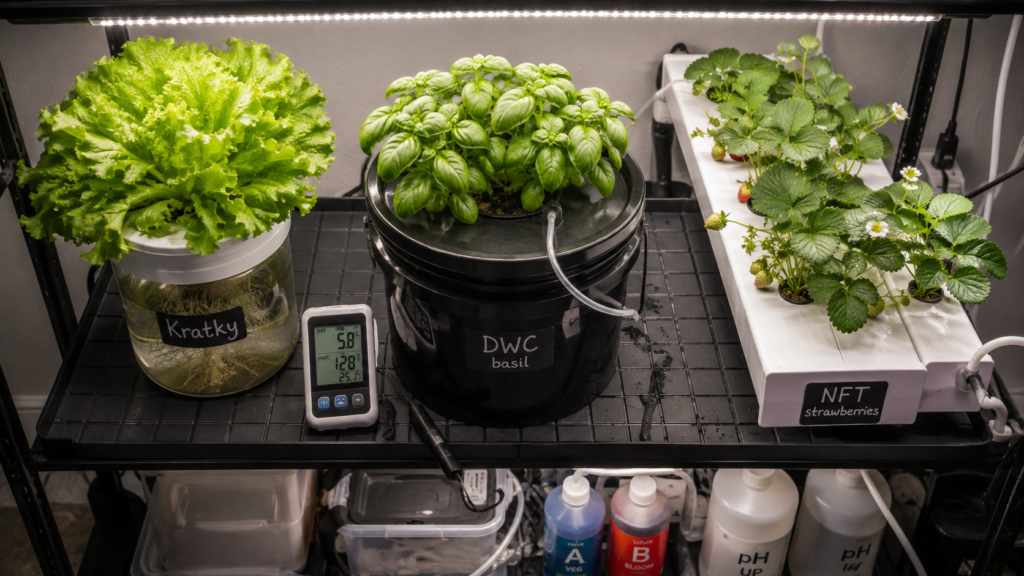
The Kratky method is the most beginner-friendly option — it's a passive, no-pump system where plants sit in a nutrient solution that they gradually consume. There's nothing to maintain between top-ups, no electricity needed for water circulation, and very little that can go wrong. It works especially well for leafy greens like lettuce, spinach, and herbs.

If you want something slightly more productive with still manageable complexity, a Deep Water Culture (DWC) setup is the next step up. A small air pump oxygenates the reservoir, plants grow fast, and the system is easy to monitor and adjust.

Not sure which system fits your space and goals? Use our free Grow Space Planner to map out your setup before you buy anything.

How much does a hydroponic setup cost to get started?

A basic Kratky or DWC setup for growing herbs and lettuce can be put together for $30–$80 — a food-grade container, net pots, a basic nutrient solution, and a small grow light is genuinely all you need to start. Many growers use repurposed buckets or storage totes for their first system.

A more complete beginner kit with a quality LED grow light, pH meter, and nutrient starter pack typically runs $100–$200. At the higher end, a properly lit 2×4 tent setup with a full-spectrum LED and automated watering can cost $400–$800, but that level of investment makes sense once you're committed to the hobby.

The honest advice: start small, learn the fundamentals, then scale. The most expensive mistake in hydroponics is overbuilding before you understand the basics.

What plants grow best in a hydroponic system indoors?

Leafy greens and herbs are the easiest and fastest crops for indoor hydroponics — lettuce, basil, spinach, kale, mint, and cilantro can go from seed to harvest in 3–5 weeks and thrive in low-maintenance systems like Kratky or NFT. They also require less light than fruiting plants, which keeps electricity costs low.

Fruiting plants like tomatoes, peppers, cucumbers, and strawberries are absolutely possible hydroponically — they just need more light, more space, and more attention to nutrient balance and training (pruning, supporting vines). For beginners, start with greens and graduate to fruiting crops once you're confident with your system.

Microgreens are also worth mentioning — they're one of the highest-value crops per square foot you can grow indoors, with a 7–14 day harvest cycle and no specialist equipment needed beyond a tray and grow lights.

How often should I change the water in my hydroponic system?

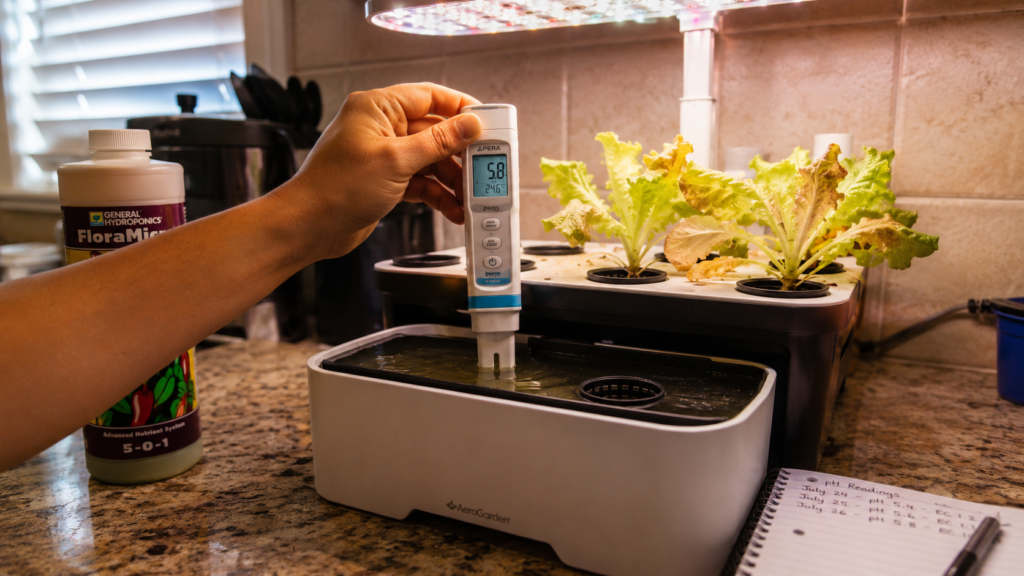
For most systems, a full reservoir change every 1–2 weeks is the right baseline. Between changes, top up with plain pH-adjusted water when the level drops, and check your EC (nutrient concentration) and pH every 2–3 days. If pH drifts outside 5.5–6.5 or EC climbs or falls significantly, adjust before the next scheduled change.

In warmer environments or during fast growth stages, plants consume water more quickly and nutrient imbalances can build up faster — weekly changes make more sense in those conditions. In cooler, slower-growing setups, you can safely stretch to 14 days.

The clearest signal you need a change? Slimy roots, an off smell from the reservoir, or pH that won't hold steady. These mean the solution has broken down and needs replacing. Use our Nutrient Calculator to mix a fresh solution correctly every time.

Is hydroponics actually better than growing in soil?

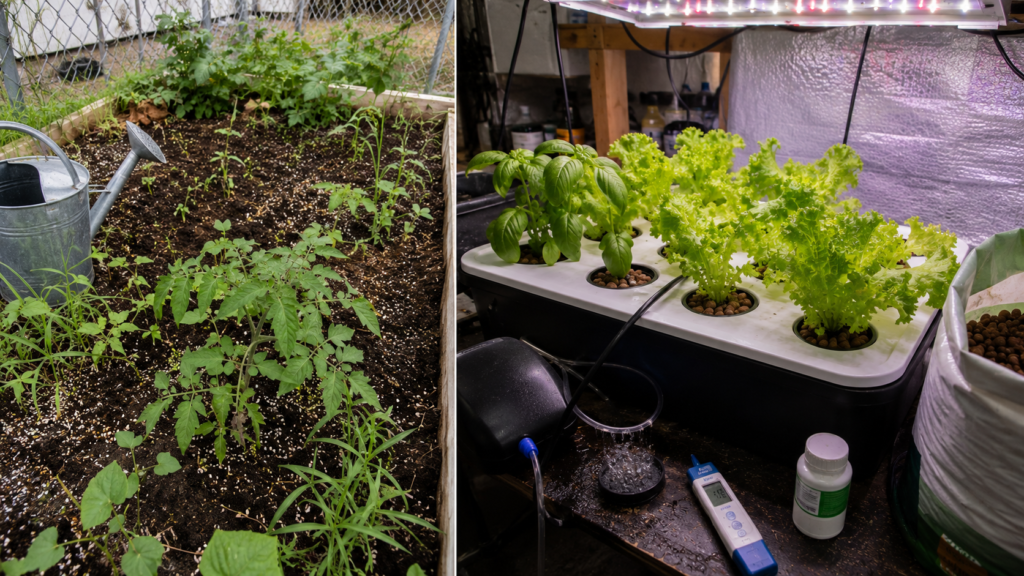
For indoor growing specifically, hydroponics wins on most measurable factors. Plants typically grow 30–50% faster than in soil because nutrients are delivered directly to the roots with no conversion needed. Water use is up to 90% lower because it's recirculated rather than lost to drainage and evaporation. And because there's no soil, there's no soil-borne disease, no weeds, and no inconsistent pH from changing organic matter.

Where soil still has an edge: it's more forgiving of beginner mistakes, it buffers pH naturally, and it supports a wider range of plants without careful monitoring. For someone with an outdoor garden who's happy to work with the seasons, soil is perfectly fine.

But for anyone growing indoors year-round in a limited space, the control and efficiency of hydroponics is hard to match. The data consistently supports it — see our citation from Int. J. Environ. Res. Public Health for the research behind the numbers.

What tools do I need to monitor and manage a hydroponic system?

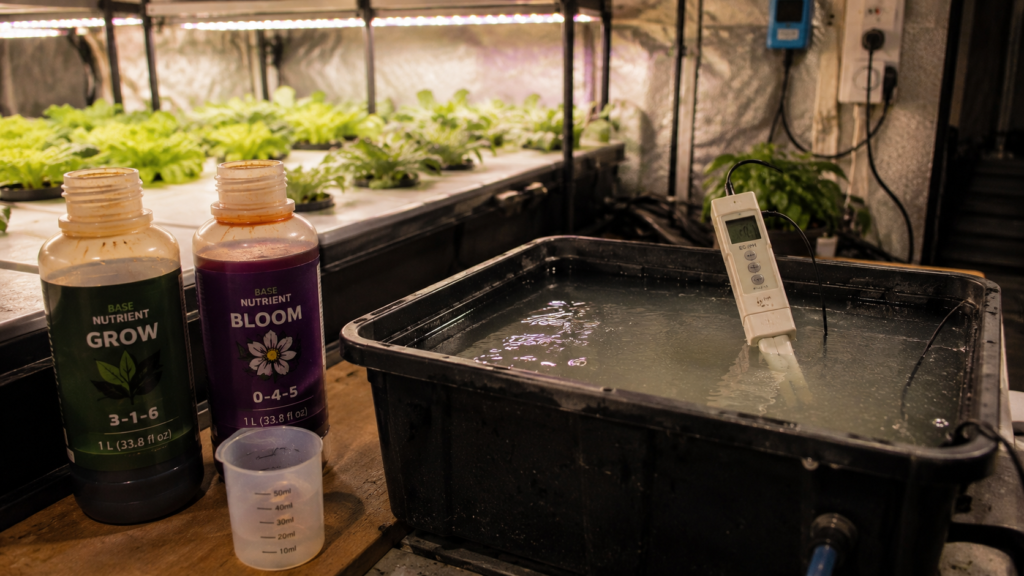
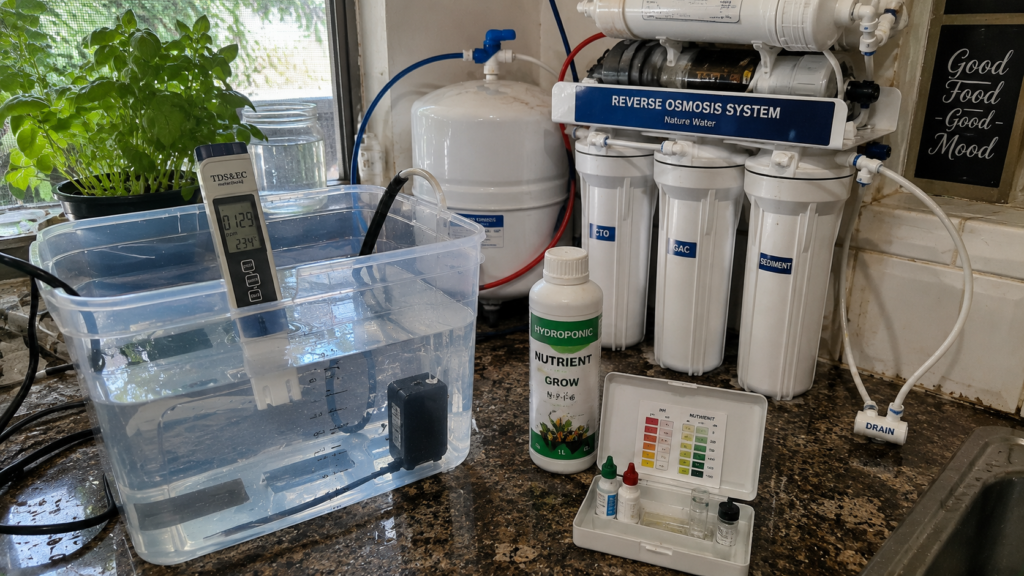
The three physical tools every hydroponic grower needs are a pH meter, an EC/TDS meter, and a basic thermometer. These let you monitor the three variables that matter most: nutrient solution acidity, nutrient concentration, and temperature. Budget around $30–$60 for decent versions of all three.

Beyond physical tools, knowing your target numbers is just as important as having the equipment to measure them. What DLI does your crop need? What VPD range keeps transpiration healthy? How much nutrient solution should you mix for your reservoir size? These calculations are where most beginners lose time.

That's why we built the Hydroponic Tools Suite — 12 free calculators covering DLI, VPD, CO₂, nutrients, EC conversion, grow space planning, and plant health diagnosis. No spreadsheets, no guesswork. Just the number you need and what to do with it.

Still have a question we didn't cover?

Ask Us Directly →
Scroll to Top