
How we calculate your indoor Daily Light Integral
We don’t estimate your light from a lookup table of “north-facing = low light.” We compute the sun’s actual position for your coordinates, minute by minute across a full day, using the same solar-position math used in solar-energy modeling. From there we work out how much of that outdoor light physically makes it through your specific window and into the room your plants sit in.
Five factors shape the number we give you:
- Solar geometry — your latitude, longitude, and the date determine the sun’s altitude and azimuth throughout the day, which we recompute for every month of the year.
- Window orientation — the angle between the sun and your window’s facing direction determines how much light strikes the glass versus grazing past it.
- Glazing transmission — single, double, low-E, and triple-pane glass each pass a different share of usable light through; we apply real transmission and reflectance physics, not a flat discount.
- Distance from the window — light falls off the further back into the room a plant sits, and we model that attenuation along with any boost from reflective wall color.
- Floor level and obstructions — higher floors and unobstructed sightlines change how much of the sky your window can actually see.
We combine all of that into your Daily Light Integral (DLI) — the total number of plant-usable photons your space receives in a day, in mol/m²/day — plus your average and peak PPFD (the instantaneous photon flux), your usable sunlight hours, and an indoor temperature estimate. We compare all of it against the DLI and temperature range your chosen crop actually needs, month by month, so you can see where your space is strong and where it falls short. Our DLI and PPFD crop targets align with ranges published by university extension programs such as Iowa State University Extension, which have documented lux-to-PPFD and DLI relationships for both natural sunlight and indoor lighting. Actual plant response still varies by cultivar and growing conditions — treat these as calibrated starting points, not guarantees.
Don’t have a PAR meter? A basic light-meter phone app can give you a rough lux reading to sanity-check our estimate — it won’t match a proper quantum sensor, but it can flag if a spot is far dimmer than expected.
Your DLI Score: What It Means for Your Plants
So you’ve got your DLI number. Now what? Think of this as your plant’s daily energy budget—the total amount of usable light hitting each square meter of your growing space. Here’s how to read that number and know exactly what it means for your next harvest.
| DLI Range | What It Means | What Grows Here | What To Do |
|---|---|---|---|
| 0–5 | Very low light | Only the most shade-tolerant plants (some ferns, snake plants) can survive here | Supplemental lighting is essential for any edible crops |
| 5–8 | Marginal conditions | Microgreens may grow slowly; leafy greens will struggle | Start with low-light varieties and consider a small grow light |
| 8–12 | Adequate for greens | Lettuce, kale, spinach, arugula can grow—but slowly | Good for beginners; expect slower growth in winter months |
| 12–15 | Solid herb territory | Basil, parsley, cilantro, mint will do well | You’re in a good spot for kitchen herbs |
| 15–20 | Fruiting range | Cherry tomatoes, peppers, strawberries can thrive | Ideal for most hydroponic hobbyists |
| 20–25 | High production | Cucumbers, eggplants, full-sized tomatoes | Excellent light levels—watch for heat stress in summer |
| 25+ | Very intense | Fast growth for heat-loving crops | Monitor temperature and airflow; some plants may need shade |
DLI Requirements for Common Plants
Use this table to match your light level to the right crops. If your DLI falls below the “optimal” range, don’t worry—you can still grow successfully with a few adjustments.
| Crop | Optimal DLI | Minimum DLI | Notes |
|---|---|---|---|
| Lettuce & leafy greens | 12–17 | 8 | Very forgiving; good for beginners |
| Basil & culinary herbs | 12–20 | 10 | Thrives with consistent light |
| Kale & spinach | 12–18 | 8 | Cool-season crops that tolerate lower light |
| Microgreens | 6–12 | 5 | Quick harvests work well in marginal light |
| Strawberries | 15–22 | 12 | Needs good light for sweet fruit |
| Tomatoes & peppers | 15–25 | 12 | Fruiting requires higher energy input |
| Cucumbers | 20–30 | 15 | Heavy feeders; need strong light for good yields |
Not sure which crops match your space? Use the calculator above to find your DLI, then come back here to see what thrives in your conditions.
Practical Ways to Improve Low Light Conditions
Found your DLI is lower than you’d like? These three strategies have helped thousands of indoor growers turn marginal spaces into productive gardens. Pick the ones that fit your situation.
1. Add Supplemental LED Lighting
This is the most direct solution when your DLI falls short. You don’t need an expensive commercial setup—even a modest LED grow light can bridge the gap.
A simple rule of thumb: If your DLI is 5 points below your target, adding a basic full-spectrum LED for about 14 hours a day will typically get you there. For example, if your space gets 10 DLI but you want to grow basil (needs 15+), a small grow light can cover that 5-point gap.
Getting started: Look for “full spectrum” LED panels—they’re energy-efficient and mimic natural sunlight. Start with a small unit and observe how your plants respond over a few weeks.
One more thing worth knowing before you buy: many grow-light listings state PPFD measured just a couple of inches from the fixture, which can overstate real output at typical plant height by 30–50%. Look for manufacturers who publish a PAR map at realistic mounting distances rather than a single best-case number.
2. Use Reflective Surfaces (A Surprisingly Easy Win)
Here’s something many growers overlook: light that hits a dark wall is essentially wasted. Light that hits a reflective surface gets a second chance to reach your plants.
What works:
White walls or white paint (reflects about 70–80% of light)
Mylar film (reflects 90%+)
Even simple white poster board or emergency blankets can help
The impact: Growers typically see a 15–25% boost in effective light levels using reflective surfaces. That’s like getting extra light without any electricity cost.
Shop Smart:
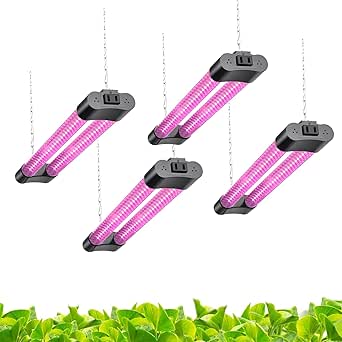
If your window is falling short, look for a compact full-spectrum LED with a published PAR map rather than a bare wattage claim. Browse recommended grow lights in the Grow With Hydroponics shop.


3. Plan for Seasonal Changes
This is where many indoor gardeners get caught off guard. Your winter light levels can drop by 70–90% compared to summer—even in the same window.
A seasonal approach that works:
Summer: Maximum natural light; watch for overheating near windows
Fall: Light declines gradually; start supplementing before plants show stress
Winter: Heavy reliance on artificial lighting; adjust expectations for slower growth
Spring: Natural light returns; you can gradually reduce supplemental lighting
The growers who succeed year-round aren’t the ones with perfect setups—they’re the ones who anticipate these seasonal shifts and adjust accordingly.
Real-World Example: From Low Light to Thriving Plants
Sometimes seeing how others solved a problem makes all the difference. Here’s a story we hear often—and it might sound familiar.
The situation: A home grower wanted to grow basil in what seemed like a bright apartment. The kitchen windows faced south, and during the day, the space felt sunny. But the basil plants kept coming out pale, leggy, and slow-growing. From a human perspective, everything looked fine. But plants don’t “see” light the way we do.
What the numbers showed: After running the analysis, the real issue became clear. During winter months, that “bright” space was actually receiving only 4–5 DLI—far below the 12+ DLI that basil needs for healthy growth.
The fix: Instead of guessing again, the grower added a small full-spectrum LED light and extended the daily photoperiod. This brought the DLI into the optimal range—simple, data-driven, and effective.
The result: Within weeks, the difference was obvious—stronger stems, deeper color, faster growth. Over time, that single basil plant expanded into a full herb garden, all thriving under controlled light conditions.
The takeaway: What looks “bright enough” to us is often insufficient for plants. When you measure light correctly, you stop guessing and start getting consistent results.
Ready to Improve Your Indoor Growing?
You now have the knowledge that many growers never take the time to learn. Instead of guessing, you can measure. Instead of trial and error, you can make informed decisions.
Here’s what to do next:
If you haven’t already, scroll up and run the calculator for your space
Check your DLI against the tables above
Pick one of the three improvement strategies that fits your situation
Start with one small change and observe what happens
Better light doesn’t just mean better growth—it means fewer frustrations, more consistent harvests, and the satisfaction of knowing exactly what your plants need.
Have questions about your specific setup? The calculator above will give you personalized recommendations based on your location and window configuration.
Frequently asked questions about indoor light for plants
What is Daily Light Integral (DLI) and why does it matter more than “bright light” labels?
DLI measures the total amount of usable light your plant receives over a full day, not just the intensity at one moment. Two spots can both look “bright” at noon and still deliver very different DLI, because one gets six hours of that brightness and the other gets two. We calculate your actual DLI so you can compare your window against a crop’s real published requirement instead of a vague label.
Why does window direction matter so much?
A south-facing window (in the northern hemisphere) tracks the sun’s arc for most of the day and delivers far more light than a north-facing one, which mostly receives indirect sky light. East- and west-facing windows split the difference, favoring morning or afternoon sun respectively. We calculate the angle between the sun’s position and your window’s azimuth for every daylight minute, so the direction you enter directly changes your DLI result.
How much light does glass actually block?
It depends on the glazing. Single-pane glass passes the most light through; double-pane, low-E coatings, and triple-pane glass each trade some light transmission for better insulation. We apply the transmission rate for your specific glazing choice, plus the physical reflectance that happens at the angle your sunlight actually hits the glass, rather than a single blanket estimate.
My DLI is too low for my plant — what should I do?
When your window can’t supply enough DLI for your crop, we calculate exactly how much supplemental LED lighting closes the gap — the PPFD you need, how many hours to run it, and roughly what fixture intensity that calls for. That way you’re sizing a grow light against a real number instead of buying based on marketing claims.
Does this account for seasonal changes in light?
Yes — we run the full calculation for every month of the year, because the sun’s angle, day length, and your window’s effective light delivery all shift with the seasons. A window that’s excellent in June can be marginal in December, and our monthly breakdown, chart, and table are built to show you that shift rather than a single average figure.
Our DLI and PPFD targets by crop type (leafy greens, herbs, fruiting crops, flowering plants, and succulents) reflect standard ranges used in controlled-environment and greenhouse horticulture. Actual plant response varies by cultivar, growth stage, and CO₂ and nutrient availability — use our results as a starting point for placement and supplemental lighting decisions, then adjust based on how your plants respond.