The dream of walking to your kitchen for fresh basil isn’t new. What is new is that you no longer need a backyard, perfect sunlight, or even a green thumb to pull it off. Whether you’re in a studio apartment or a rented room with one sad window, indoor hydroponic herb systems are the quiet revolution making it possible. At Grow With Hydroponics, we’ve seen it transform blank walls and empty counters into the most productive part of someone’s home.
This isn’t about recreating a farm. It’s about unlocking flavor on demand with a fraction of the mess and guesswork of dirt. If you’re wondering where to start in the crowded market of kits and gadgets, you’re in the right place. Check out our Herb Gardening Guide: Indoor & Hydroponic Herb Growing. Consider this your no-nonsense roadmap.
Why This Makes Sense for the Space-Strapped
Traditional gardening has… baggage. Soil brings pests. Outdoor space is a luxury. Seasons are a constraint. Hydroponics strips all that away. You’re left with a simple equation: water, nutrients, light, and roots. Herbs—leafy, fast-growing, and relatively forgiving—are the perfect candidates. They thrive on consistency, something a well-set-up indoor system delivers in spades.
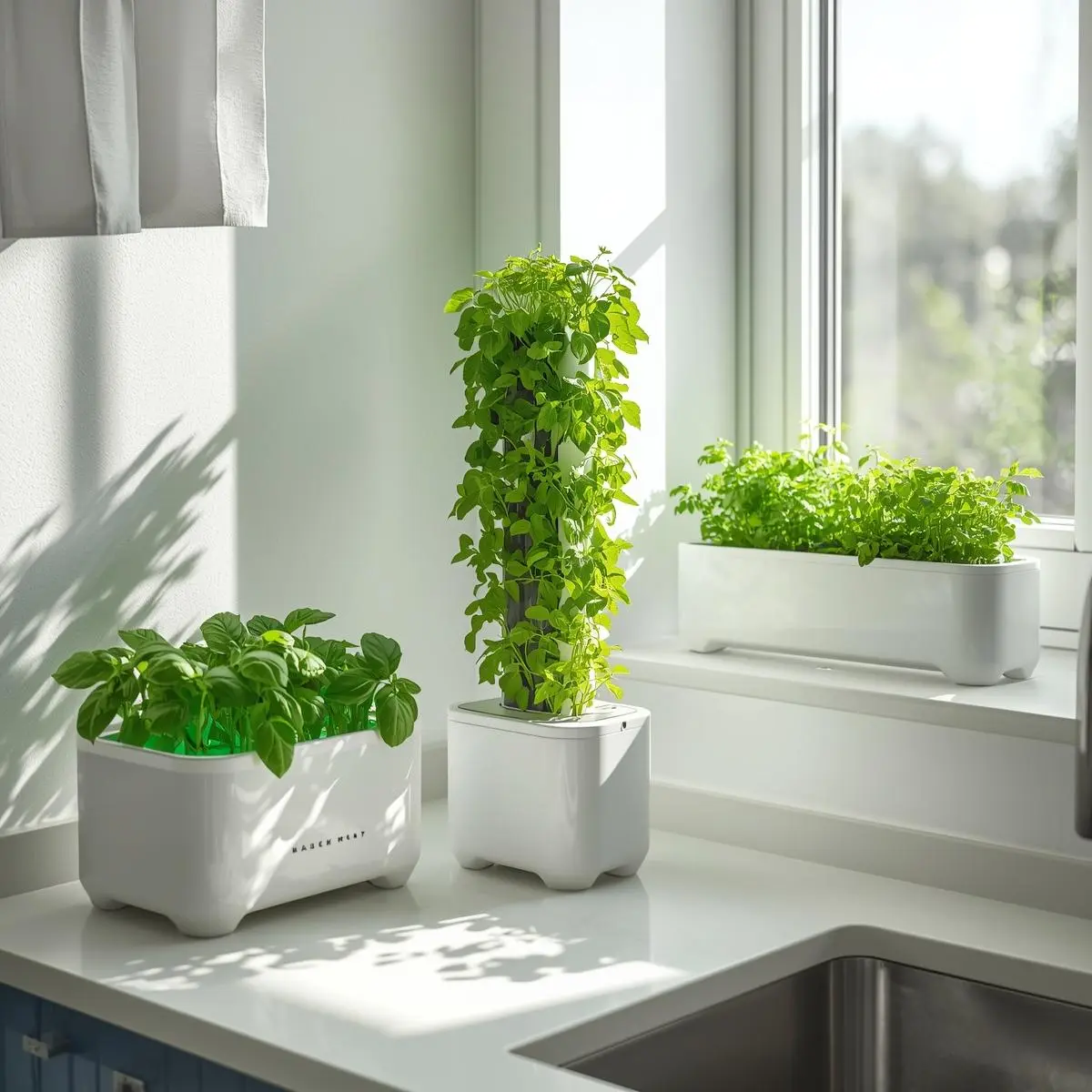
But let’s define “small space” practically. We’re talking kitchen counters, windowsills, that awkward vertical strip next to the fridge, or even a repurposed closet. The real genius of these systems isn’t just their size; it’s how they turn dead zones into productive ones.
The Contenders: Finding Your Best Fit
You don’t need the biggest or shiniest system. You need the right one. Here’s how the best options break down for real life.
1. The Countertop Appliance
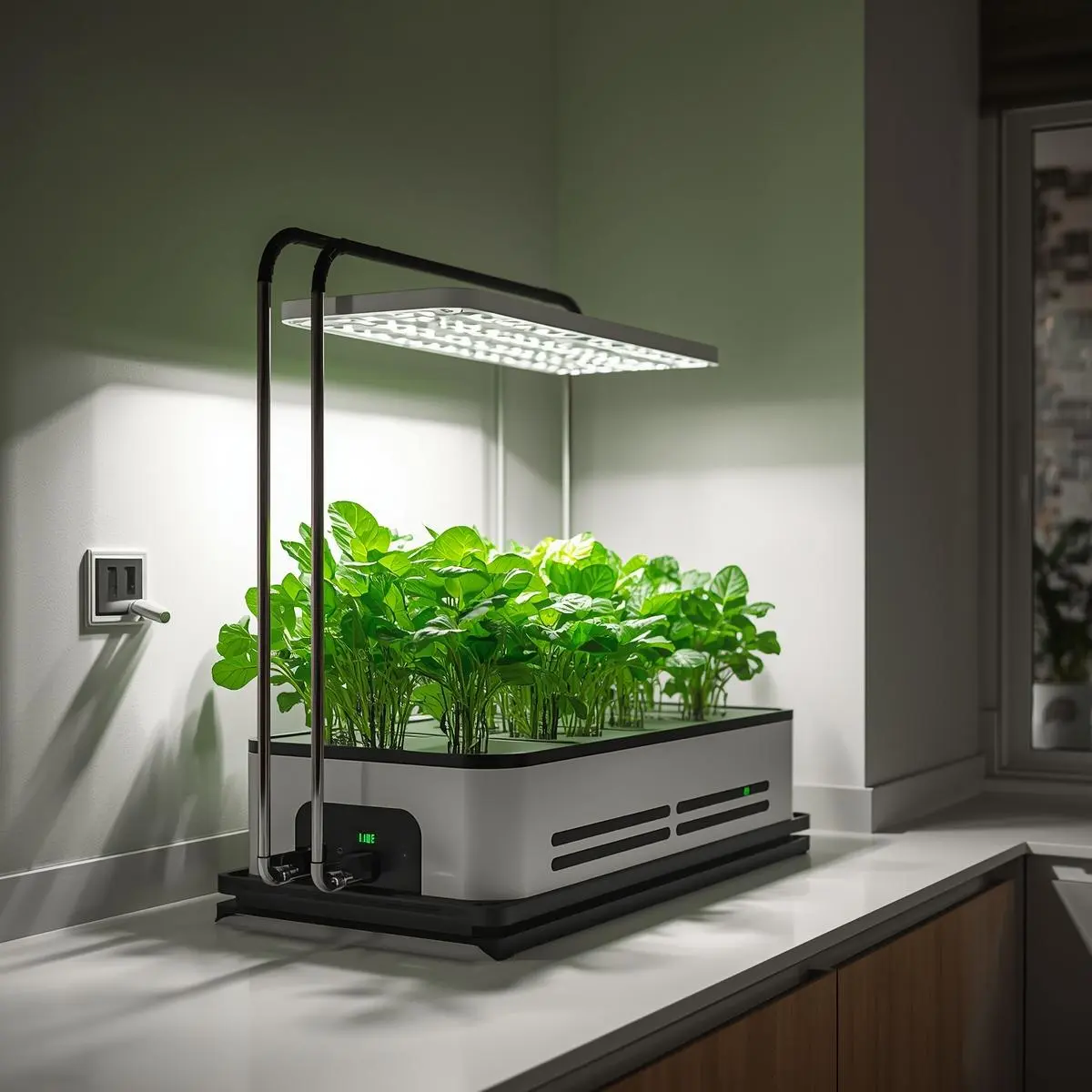
Think of this as your coffee maker for greens. It’s a sleek, all-in-one unit with built-in LEDs and a hidden reservoir. Perfect for a half-dozen herbs right where you cook.
The Vibe: “Plug-and-play” that actually works.
Ideal For: The beginner who values aesthetics and simplicity. You want basil for tonight’s pasta, not a new hobby.
Pro Tip: When you Shop Smart for one of these, don’t just look at the specs. Use our DLI Calculator to cross-check the manufacturer’s light claims against what your chosen herbs actually need. It prevents that classic disappointment of leggy, pale plants.
2. The Vertical Tower
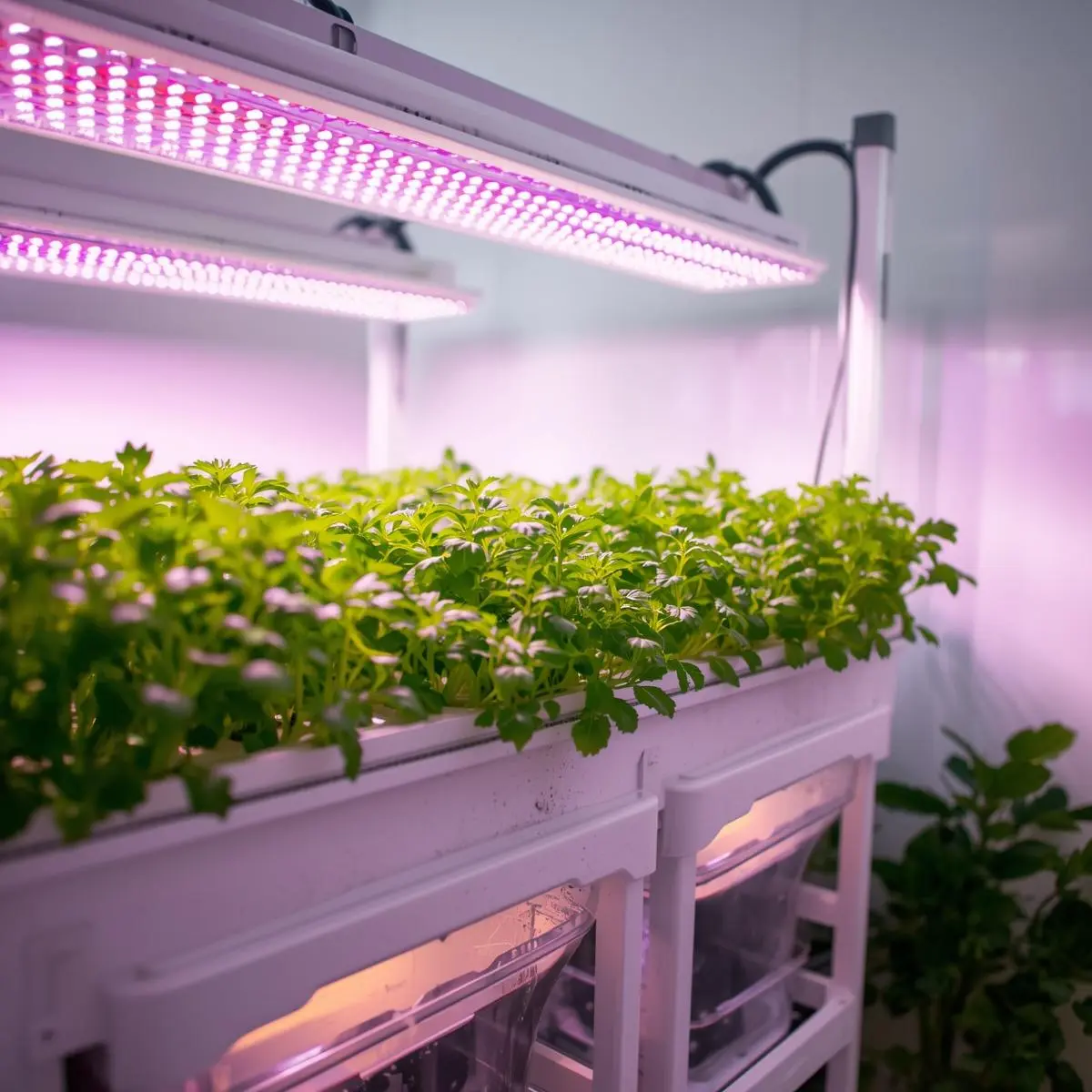
This is for when you catch the bug and want to scale. Towers use height, not footprint, letting you grow 20+ plants in a corner.
The Vibe: A compact, high-impact indoor garden.
Ideal For: Anyone with “more ambition than square footage.” It turns a living room corner into a conversation piece and a larder.
Pro Tip: Planning is everything here. Before you buy, sketch it out in our Grow Space Planner. You need to ensure light reaches the lower levels and that you can actually access the reservoir for maintenance. For a deep dive on vertical growing, check out Maximizing Vertical Space.
3. The Humble Tray (Kratky Method)
No pumps, no timers, no electricity. Just a container, a lid, some net pots, and nutrient solution. Often the most affordable entry point.
The Vibe: Elegant, silent simplicity.
Ideal For: The purist, the renter, or the curious tester. It’s hands-off in daily care but requires a nuanced understanding of water chemistry.
Pro Tip: This method lives or dies by your nutrient mix. Our Nutrient Calculator takes the chemistry-set anxiety out of the equation, giving you a precise, herb-friendly recipe.
Moving from Buying to Growing
Choosing a system is step one. Setting it up for success is where the work—and joy—happens. Location is non-negotiable: near an outlet, away from drafts. Lighting is your foundation; LEDs are the unanimous recommended choice for their cool efficiency.
But here’s the thing beginners miss: the environment is a system. Temperature and humidity talk to each other. Get it wrong, and you invite mold or stunt growth. That’s where a tool like our VPD Calculator earns its keep, helping you optimize those two factors in tandem. It’s the kind of pro move that separates a thriving garden from a struggling one.
Weekly, check your pH and EC (a measure of nutrient strength). If unit conversion makes your eyes glaze, our EC ↔ PPM Converter is your quick fix. Monthly, do the unglamorous work: dump the old solution, scrub the reservoir, and inspect roots. This routine is less about effort and more about preventing disasters.
When Things Get Messy (Because They Will)
You’ll see slow growth—usually a light issue. Yellow leaves? That’s often a nutrient plea. Before you start randomly adding supplements, pause. Our Deficiency Calculator is a brilliant first responder, helping you diagnose from the symptoms so you can apply the right fix, fast. See common issues in action in Diagnosing Plant Problems.
The Upgrade Path
You might start with a pod of basil. But success is contagious. Soon, you’re eyeing that empty wall, thinking about cilantro, dill, and maybe some strawberries. Before you invest in new hardware, play with possibilities in our Grow Space Simulator. It lets you model light spread and layout virtually—a surefire way to compare options without buyer’s remorse.
The team at Grow With Hydroponics built these calculators and planners for precisely this journey—to give you the clarity we wished we’d had starting out. Your herbs shouldn’t be a hopeful experiment. They should be a reliable, delicious fact of your daily life.
Now go grow something.