

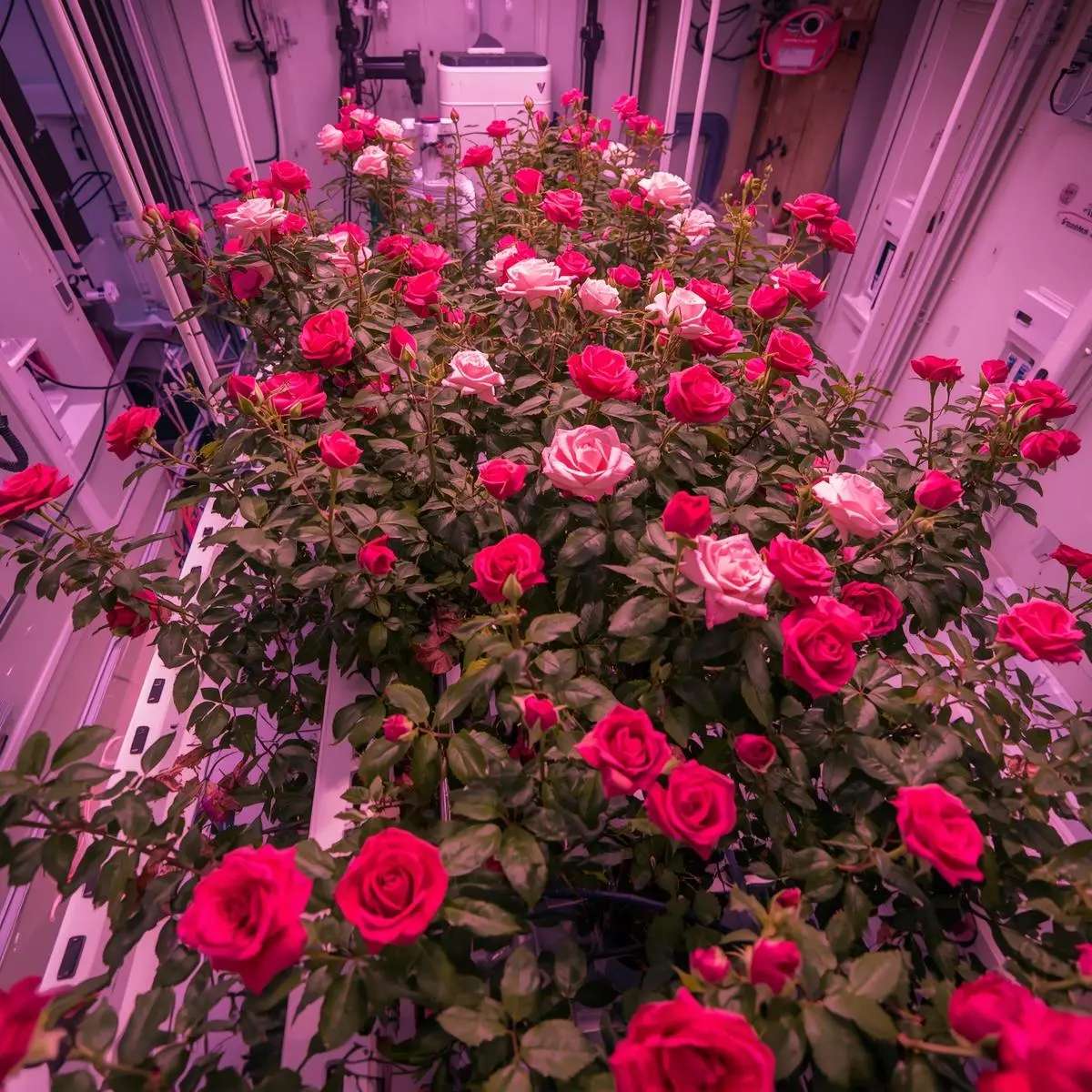
Growing roses hydroponically is one of the most rewarding—and visually stunning—projects in indoor gardening. When you finally get the lighting, nutrients, and environment to click, the payoff is hard to beat: faster growth, stems that don’t flop, and blooms that look like they belong on a magazine cover.
But then comes the question that trips up nearly every grower at some point:
How often should you feed roses hydroponically?
Most people want a simple, one-size-fits-all answer. “Feed every three days.” “Change the water weekly.” But if you’ve been at this for a while, you know that hydroponics doesn’t work that way.
Roses don’t read calendars. They respond to growth cycles, nutrient concentration, and the subtle signals they send through their leaves and stems.
In this guide, we’ll walk through why a rigid feeding schedule is the fastest way to run into trouble, how to read what your plants are actually telling you, and how to build a rhythm that keeps your roses thriving. Here at Grow With Hydroponics, we’ve seen that understanding this rhythm—moving from calendar-watching to plant-observing—is one of the biggest breakthroughs a grower can have.
Why Hydroponic Roses Don’t Follow a Fixed Feeding Schedule
In soil gardening, nutrients are stored in the soil matrix and released slowly as the plant roots and water interact with them. Hydroponics works very differently from soil gardening.
In a hydroponic system, nutrients are delivered directly to the roots via the water solution. The plant is essentially “feeding” continuously.
Your job isn’t to decide when to feed, but to manage the concentration and balance of that food source.
So, instead of asking, “How often should I feed my roses?” the smarter question is:
“How often should I refresh or adjust the nutrient solution?”
Your hydroponic roses will tell you when they need a change based on three main factors:
Plant growth stage
Water consumption rate
Nutrient concentration (EC or PPM)
Get these three variables in sync, and your roses will pull exactly what they need, when they need it.
Understanding Hydroponic Feeding Cycles for Roses
Vegetative Stage: Consistent Nutrient Availability
When your roses are in the vegetative stage, they’re all about building infrastructure—leaves, stems, and a robust root system.
During this phase:
Plants drink water at a steady, predictable pace.
Nitrogen demand is higher to support leafy growth.
Nutrient uptake is moderate but consistent.
A typical vegetative feeding cycle looks less like a schedule and more like maintenance:
Keep a stable nutrient reservoir.
Check EC/PPM every 2–3 days. I’ve found that if I let it slide for four days, the levels can drift more than I’d like.
Top off with fresh, pH-balanced nutrient solution when water levels drop.
Most experienced growers top up the reservoir during this phase and perform a complete system flush and nutrient change every 10–14 days. This keeps the nutrient profile stable without the shock of a sudden, complete change.
Blooming Stage: Higher Nutrient Demand
Once your roses shift to forming buds and blooms, their feeding behavior changes noticeably. They get thirstier and pickier.
Blooming roses require:
Higher phosphorus and potassium for flower development.
Slightly reduced nitrogen (too much here gives you lush leaves but few blooms).
Increased water uptake.
During flowering, your roses may drain the reservoir faster than you expect. You might notice:
The water level dropping noticeably day-to-day.
EC values swinging more widely.
Plants looking a bit “hungry” even after a recent top-off.
At this stage, many growers tighten the cycle, shifting to a complete nutrient refresh every 7–10 days instead of two weeks.
Monitoring nutrient concentration becomes critical here. If you’re used to measuring in one unit but your nutrient calculator or a friend’s guide uses another, tools like the EC ↔ PPM Converter at Grow With Hydroponics make it easy to translate readings without the math headache.
Signs Your Roses Need Nutrient Adjustment
Plants are surprisingly good communicators—if you know what to look for.
Early Signs of Underfeeding
A rose lacking nutrients isn’t subtle. Look for:
Pale or yellowing leaves, starting with the older growth.
Slower, weaker stem growth that seems to take forever to thicken up.
Small, weak flower buds that don’t seem to want to open.
These symptoms usually mean the overall nutrient levels in the reservoir have dropped too low for the plant’s current needs.
Signs of Overfeeding
Frankly, overfeeding is more common in hydroponics than underfeeding. We think we’re helping, but we’re actually just stressing the plant.
Watch for:
Burnt, crispy leaf tips.
Dark, overly lush, almost “greasy” looking foliage.
Visible nutrient salt buildup (white crust) around the reservoir edges or grow media.
Stunted or deformed blooms.
This usually happens when growers keep adding nutrients to maintain water levels, instead of just topping off with plain water. You’re concentrating the solution, not feeding the plant.
The goal isn’t constant feeding—it’s balanced availability.
A Practical Rhythm to Feed Roses Hydroponically
Forget the calendar. Use a monitoring cycle. Here’s a routine that works, whether you’re growing one rose in a cabinet or a dozen in a tent.
| Growth Stage | EC Range |
|---|---|
| Vegetative | 1.2 – 1.6 |
| Early Bloom | 1.6 – 1.9 |
| Full Bloom | 1.8 – 2.2 |
Daily Quick Checks (60 seconds)
Just glance at the system each day. Observe:
Reservoir water level: Is it dropping faster than yesterday?
Overall plant appearance: Any drooping or perking up?
Leaf color and firmness: Still that deep, healthy green?
These quick checks prevent 90% of problems before they start.
Every 2–3 Days (The Data Check)
Grab your meter and measure:
EC or PPM levels: Is it stable, rising, or falling?
pH balance: Has it drifted outside the 5.5–6.5 range?
Adjustments are simple:
If EC is too high, add plain water.
If EC is too low, add a little concentrated nutrient solution.
Every 7–14 Days (The Deep Clean)
Perform a complete nutrient solution change. Drain the system, rinse the reservoir, and mix a fresh batch. This reset prevents:
Nutrient imbalances from selective uptake.
Salt buildup that can burn roots.
Microbial or algae issues in stagnant water.
Your exact interval depends on plant size and system volume. A single rose in a 5-gallon bucket can go longer between changes than several mature plants in a 2-gallon system.
How Lighting Affects Hydroponic Feeding Frequency
This is where a lot of growers get tripped up. Light intensity directly drives nutrient consumption.
Stronger lighting ramps up photosynthesis, which means plants grow faster—and drink and eat more. Under high-intensity LED grow lights, your roses may:
Absorb water much more quickly.
Draw down nutrient levels faster.
Require more frequent reservoir top-offs and adjustments.
When you Shop Smart for grow lights, it’s worth matching your lighting intensity to your plants’ nutritional needs. Buying a fixture that’s too powerful without understanding how it affects your feeding schedule is a common rookie mistake.
Pair your lighting choice with our DLI Calculator at Grow With Hydroponics to determine the exact light exposure your plants get daily. Once your lighting is optimized, your feeding patterns become surprisingly predictable.
Water Quality Matters More Than Most Growers Think
Feeding frequency isn’t just about the nutrients. It’s the canvas you paint them on.
Poor water quality can throw your nutrient balance off within hours. If your tap water is hard or has unstable pH, you’ll be constantly chasing your tail.
Ideal hydroponic water should be:
Low in dissolved minerals (low EC).
Free of chlorine and chloramines.
Stable in pH.
Many experienced growers prefer filtered water or reverse osmosis (RO) water. It gives you a blank slate, allowing precise control over nutrient levels without mystery minerals interfering.
Can I Use Tap Water for Hydroponic Roses?
Yes, you can, but proceed with caution. Tap water often contains calcium, magnesium, and chlorine or chloramine. If you’re on a municipal supply, let the water sit out for 24 hours to allow chlorine to dissipate (this won’t work for chloramine). Then, always test the EC of the plain tap water to know your starting mineral load before adding any nutrients.
Common Feeding Mistakes With Hydroponic Roses
Even after a decade of this, I occasionally catch myself makiCommon Mistakes When You Feed Roses Hydroponicallyng a foolish mistake. Here are the big ones to avoid:
Overcorrecting EC levels too quickly: If EC drifts up, add water. If it drops, add nutrients. Don’t dump half the reservoir because the reading was off by 0.2.
Changing nutrient formulas too frequently: Stick with one brand and formula for a full cycle. Switching mid-stream confuses the plant.
Ignoring reservoir temperature: If the water gets above 75°F (24°C), you’re asking for root rot and nutrient uptake issues.
Skipping full nutrient changes: Topping off forever leads to “old” water with unbalanced ratios. A full change resets the system.
Hydroponic systems thrive on consistency, not constant adjustment.Think of your nutrient reservoir like a carefully balanced aquarium—small, gradual corrections keep everything stable.
Advanced Tip: Match Feeding to Plant Behavior
One of the most powerful techniques is moving to plant-driven feeding. Instead of forcing nutrients on a schedule, just watch:
Water uptake patterns: Is the reservoir dropping an inch a day or three inches?
Growth speed: Are new leaves emerging every day, or has growth stalled?
Leaf structure and color: Are they perky and vibrant, or dull and droopy?
Flower formation: Are buds swelling nicely, or are they struggling?
When plants drink heavily, nutrient demand rises. When growth slows in response to environmental changes, feeding demand drops. Over time, you’ll start recognizing these patterns instinctively.
And once you do, feeding roses hydroponically becomes much more intuitive—and a lot less like following a recipe.
The Real Secret: Feed the System, Not the Calendar
So, how often should you feed roses hydroponically?
The honest, slightly unsatisfying but completely accurate answer is: Feed roses hydroponically as often as your system and plants require.
Hydroponic feeding works best when it follows plant cycles instead of calendar dates. Focus on monitoring nutrient concentration, refreshing the reservoir regularly, and observing plant signals. Once you develop this rhythm, hydroponic rose care becomes surprisingly simple.
At Grow With Hydroponics, we believe successful growers aren’t just following instructions—they’re learning how plants communicate. When you start recognizing those signals, your roses will reward you with stronger growth, healthier foliage, and spectacular blooms.
And honestly, there’s nothing quite like seeing a perfect rose bloom in a system you’ve truly mastered.
Internal Learning Resources
If you want to dive deeper into optimizing hydroponic nutrition, these guides can help:
- How to Grow Roses Hydroponically: Science-Backed Complete Guide.
- Nutrient Deficiency Symptoms in Roses: Hydroponic Fixes for Healthy Growth.
- Boost Your Hydroponic Roses: Exact pH & EC Levels for Bigger Blooms.
FAQ: Feeding Hydroponic Roses
Q: My rose leaves are yellowing, but the EC in my reservoir seems fine. What’s wrong?
A: EC measures total salts, not specific nutrients. You could have plenty of “food” in the water, but a lockout due to incorrect pH might be blocking nitrogen uptake. Check your pH first. If it’s out of the 5.5–6.5 range, adjust that before adding more nutrients.
Q: Can I just leave my roses alone for a week on vacation?
A: It depends on your system size and plant maturity. A large reservoir with a single plant might be fine. A small system with several thirsty blooming roses will likely run dry or suffer from nutrient imbalance. An auto-top off system or asking a friend to check water levels is safer.
Q: Should I change the nutrient recipe between veg and bloom?
A: Yes. Using a bloom-specific formula with higher phosphorus and potassium is standard practice. Just make the switch during a full reservoir change to avoid mixing incompatible formulas.
Q: Why are my roses’ leaf tips turning brown and crispy?
A: That’s the classic sign of nutrient burn from overfeeding or salt buildup. Flush your system with plain pH-balanced water for a few hours, then refill with a slightly weaker nutrient solution.

Dr. Awais Yousaf
Algorithm Specialist and Associate Professor leading R&D at Grow With Hydroponics. With 5+ years of hands-on experience in smart hydroponic systems, deep learning, and sustainable AgriTech, he is passionate about turning small spaces into high-yield indoor farms. Connect at awais.yousaf@iub.edu.pk