

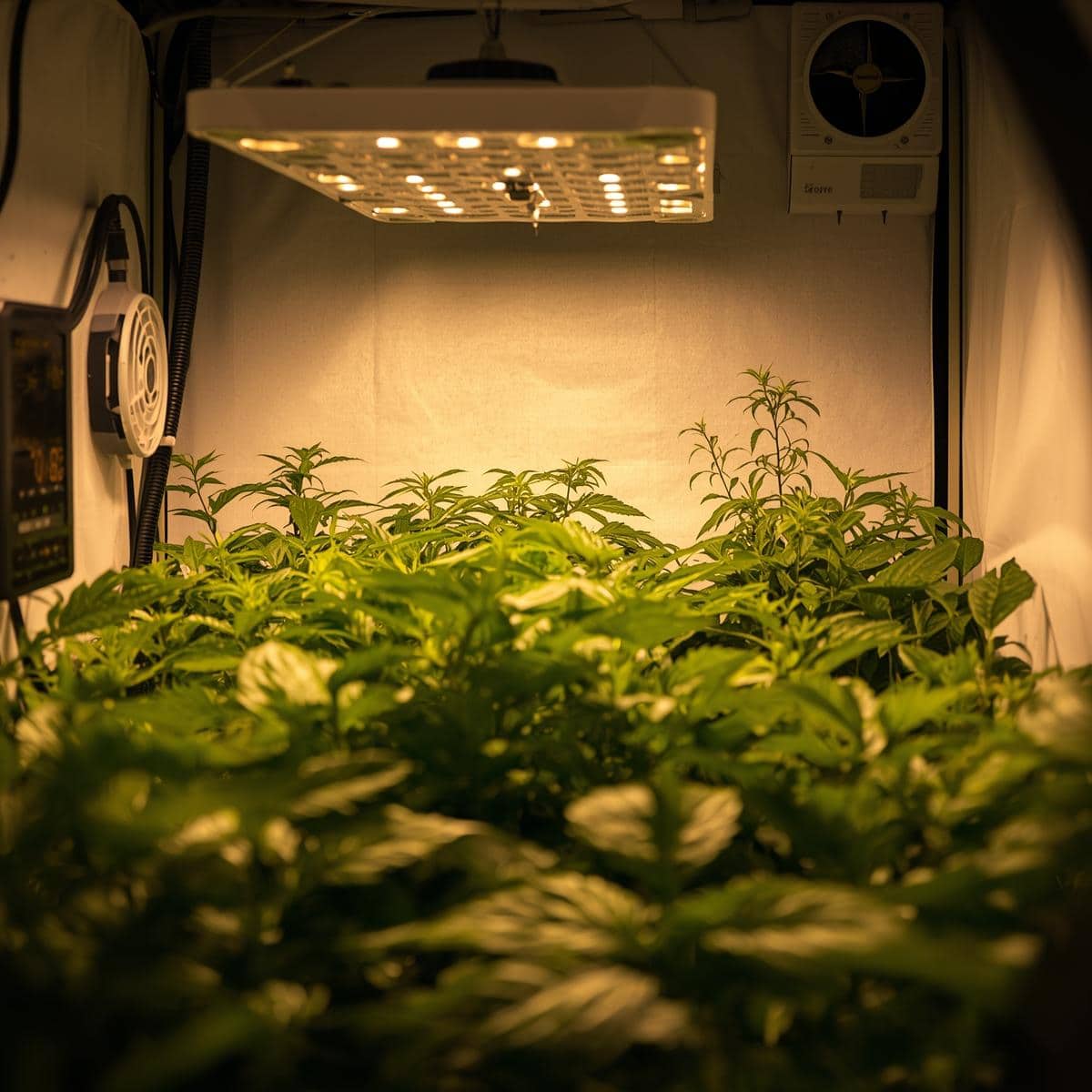
Let’s dispense with the romanticism right away. Indoor gardening isn’t about having a “green thumb”—that mythical, innate gift. It’s about engineering. It’s the deliberate construction of a miniature, optimized biome in the space you’ve got, whether that’s a sunny apartment corner, a repurposed basement, or a dedicated grow room. The appeal is obvious: year-round harvests, purity of produce, and the profound satisfaction of short-circuiting the industrial food chain. But the path to success isn’t paved with good intentions. It’s built on a trinity of non-negotiable factors: light, timing, and environment.
Master these, and you’re not just keeping plants alive; you’re compelling them to thrive with an efficiency that would make nature blush. This guide isn’t about listing products. It’s about building a framework—the why behind the what—so you can make decisions that actually matter.
Why LED Grow Lights Are the Only Logical Choice
Here’s the unvarnished truth about lighting: it is the single greatest point of failure and the most powerful lever for success in indoor gardening. Photosynthesis isn’t a suggestion; it’s the entire metabolic engine of your garden. For decades, we made do with bulky, hot, inefficient technology. LED grow lights didn’t just improve the game; they rewrote the rules.
Energy Efficiency translates directly to your monthly bill and your conscience. Running a 600W LED versus a 600W HID light isn’t a comparison of wattage; it’s a comparison of photon delivery per watt. The LED wins, hands down. You’re paying for light the plant uses, not waste heat.
Long Lifespan is about predictability. A quality fixture rated for 50,000 hours is a five-year asset, not a recurring expense. It removes a variable.
Adjustable Spectrum is where it gets interesting. The old debate of “blue for veg, red for flower” is simplistic. Full-spectrum whites with targeted peaks are now the standard. The real advantage is the ability to fine-tune—to dial in a spectrum that reduces internodal stretching for herbs or boosts terpene production for flowers. It’s control.
Low Heat Output is a spatial superpower. It means you can place lights closer to the canopy without scorching, maximizing light intensity (your Daily Light Integral or DLI) in tight spaces. This alone makes LED grow lights the default for any enclosed space like a grow tent.
Choosing the Right LED: Cutting Through the Marketing Fog
The models you mentioned—VIPARSPECTRA, Mars Hydro, and Spider Farmer—are the Hondas and Toyotas of the space: reliable, proven, and representing solid value at their respective price points. But choosing isn’t about brand names. It’s about matching specs to your reality.
Coverage Area, Not Wattage: Ignore the “600W” in the name if it’s an extrapolated number. Look for the manufacturer’s actual recommended coverage area for vegetative and flowering stages. A light that perfectly covers a 2’x2’ tent will drown seedlings and underwhelm a 4’x4’ canopy.
Driver Quality: Is the driver (the power supply) Mean Well or equivalent? This is the heart of the fixture. A cheap driver fails, flickers, and can be a fire risk.
PPFD Map: Reputable brands provide a Photon Flux Density map. This shows you how many usable photons (in µmol/m²/s) hit the canopy at various points. You want an even spread, not a hot spot in the center. This is where using our DLI Calculator is crucial. You take that PPFD number, input your desired light hours, and it tells you if your plants are getting the total daily light they need to explode with growth or merely survive.
Tip: For that spare bedroom grow room? Don’t cheap out on the light. It’s your sun. Buy for the space you want to fill, not the one you’re starting with.
The Unsung Hero: Why a LED Grow Light Timer Isn’t Optional
If light is the fuel, then the grow light timer is the fuel injection computer. Consistency is everything. Plants are circadian organisms; they set their hormonal clocks—germination, vegetative growth, and flowering—by the photoperiod. Manually flipping switches is a guarantee you’ll forget, be late, or be inconsistent. That stress ripples through your garden.
Mechanical Timers are fine for a simple, single light in a small setup. They’re the blunt instrument.
Digital Timers offer precision and often multiple outlets with separate programs. Need your circulation fan on 24/7 but your lights on an 18/6 schedule? Digital handles it.
Intelligent/Smart Timers are the gateway to true environmental integration. The ability to simulate sunrise/sunset ramps, to have different schedules for different zones, or to connect to a master controller? That’s moving from automation to optimization.
Pro Tip: That “16-18 hours for veg” rule is a starting line. Some leafy greens will bolt if they don’t get a dark period. Some ornamentals need specific night lengths to trigger blooms. The timer gives you the sovereignty to experiment. But you must observe. Which brings us to the stage itself.
Building the Stage: Grow Tent Accessories as Environmental Choreography
A grow tent is a brilliant invention: a portable, light-tight, reflective chamber. But it’s just an empty box. The accessories are what turn it into a controlled environment. This is where indoor gardening separates the dabblers from the cultivators. You’re not just adding gadgets; you’re building feedback loops.
The Non-Negotiable Core:
Ventilation Fan + Carbon Filter (if needed): This is your lung. It exchanges air, removes heat and humidity, and strengthens stems by creating airflow. An inline fan sized for your tent’s volume is the first thing you should buy after the light and timer.
Oscillating Circulation Fans: These are the capillaries. They prevent microclimates—stagnant, humid pockets where powdery mildew throws its first spore party. Gentle, constant movement is key.
Temperature and Humidity Monitor: Not a cheap analog dial. A digital hygrometer/thermometer with a memory for highs and lows. Data is everything.
The Advanced Instrumentation:
Humidity Controllers/Dehumidifiers: When your tent hits 70% RH in late flower, you’ll understand this isn’t a luxury. It’s a mold-prevention device.
Air Conditioning/Heating: Temperature control is stability. Plants metabolize within a range. Stray outside it, and growth stalls, nutrients lock out, and stress mounts.
Think of it this way: your perfect LED grow light gives the plant the energy to drink and eat. But the environment—the temperature and humidity—dictates how it drinks (transpiration). This relationship is quantified by Vapor Pressure Deficit (VPD). Getting your VPD in the sweet spot (which our VPD Calculator makes trivial) is the difference between a plant that efficiently processes nutrients and one that’s constantly on the brink of stress. It’s the master dial for plant physiology.
Reflective material is already in your tent. Heat mats are brilliant for germination. Plant hangers manage the canopy. But never forget: the core function of all these grow tent accessories is to create and maintain a stable, optimal environment. Fluctuations are the enemy.
The Hydroponic Precipice: Where Precision is Paramount
Hydroponic systems are the ultimate expression of controlled environment agriculture. With soil removed from the equation, you are the sole provider. This means imbalances in light, timing, or environment are amplified, not buffered.
Monitor Nutrients Carefully: This goes beyond a pH pen. Electrical Conductivity (EC) tells you the strength of your nutrient solution. Our Nutrient Calculator and EC ↔ PPM Converter exist because guessing here burns roots or starves plants. It’s basic chemistry, not magic.
Light Penetration & Canopy Management: In a dense hydroponic garden, lower leaves can be shaded. Dimmable LEDs allow you to crank intensity as the canopy closes in, ensuring even the lower sites get enough PPFD to contribute to yield.
Automate Relentlessly: In hydroponics, a missed watering cycle or a pH drift can cause damage in hours, not days. Smart timers driving pumps and sensors monitoring reservoir conditions are your safety net.
Synthesis: The Gardener as Conductor
Success in indoor gardening isn’t found in any single component. It emerges from the synergy of the system. The LED grow light provides the score. The grow light timer provides the rhythm. The grow tent accessories—the fans, the controllers—are the orchestra, playing in tune to maintain the perfect temperature and humidity.
This is where you move from following instructions to developing intuition. You’ll start to see how a slight rise in leaf temperature might mean the light is too close, or how slower growth might coincide with a VPD that’s too high. You’ll use tools not as crutches, but as extensions of your perception.
For the Ambitious: This framework scales. Vertical hydroponics is just the spatial application of these principles. CO₂ enrichment only works when light and environment are already maxed out. Light spectrum tweaking is a refinement, not a foundation.
Tools, Planning, and Obsession
Indoor gardening is a science that feels like an art when it’s working. It demands planning, rewards precision, and frankly, requires a mild obsession with details. The “right tools” aren’t about the most expensive brands; they’re about the right type of tool for the job: a light that delivers measurable photons, a timer that guarantees consistency, and accessories that create stability.
For anyone who wants to move beyond the basics and really understand what their light is doing—spectrum science, PPFD distribution, the whole picture—head over to The Ultimate LED Grow Light Guide: Science-Backed Indoor Setup (2026). It’s the resource I wish I’d had when I started.
Because the goal isn’t just to grow plants indoors. It’s to build a system so dialed-in, so responsive, that it feels less like gardening and more like conducting a silent, verdant symphony. You provide the parameters. The plants provide the proof.
Shop Smart. Build with understanding. Grow with confidence.

Dr. Awais Yousaf
Algorithm Specialist and Associate Professor leading R&D at Grow With Hydroponics. With 5+ years of hands-on experience in smart hydroponic systems, deep learning, and sustainable AgriTech, he is passionate about turning small spaces into high-yield indoor farms. Connect at awais.yousaf@iub.edu.pk