

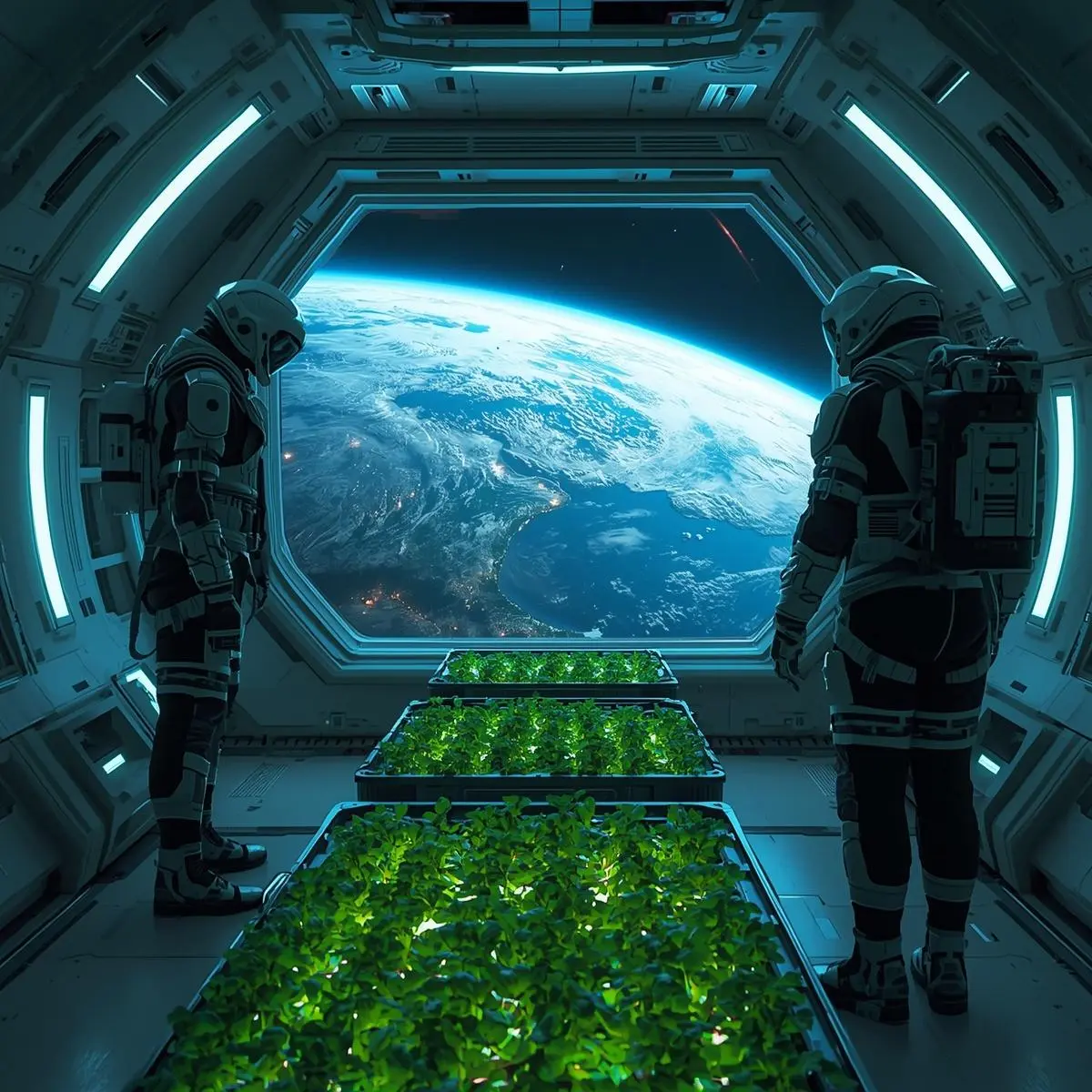
Picture a seedling’s roots wrapped in a floating blob of water that won’t drain and won’t sink. That’s not a sci-fi visual — it’s a real engineering headache NASA has spent a decade solving. Hydroponics in space sounds like the soil-free growing most of us do in a closet or spare bedroom, but it’s a genuinely different beast. Here at Grow With Hydroponics, we get asked whether lessons from orbit apply to a grow tent on Earth. Short answer: yes, more than you’d guess. This guide breaks down how hydroponics in space works, the hardware NASA runs on the ISS, and what it means for your own setup.
Quick Answer: Hydroponics in space is growing plants without soil aboard spacecraft like the ISS, where gravity can’t pull water downward. Systems like NASA’s Veggie and Advanced Plant Habitat instead use surface tension and engineered channels to deliver water, nutrients, and oxygen to roots. NASA has grown lettuce, mustard greens, and even chile peppers in orbit since 2014, using the same precision-over-guesswork approach that makes hydroponic growing more productive on Earth.
What Is Hydroponics in Space?
Hydroponics in space is growing plants in a nutrient solution instead of soil on a spacecraft where gravity isn’t there to do half the work it does on Earth. That’s the simple version. The complicated version means rethinking nearly every assumption a terrestrial grower takes for granted.
On Earth, hydroponic systems quietly lean on gravity. Water drains downward, bubbles rise out of a line on their own, and roots grow down without encouragement. Take gravity away, and none of that happens automatically.
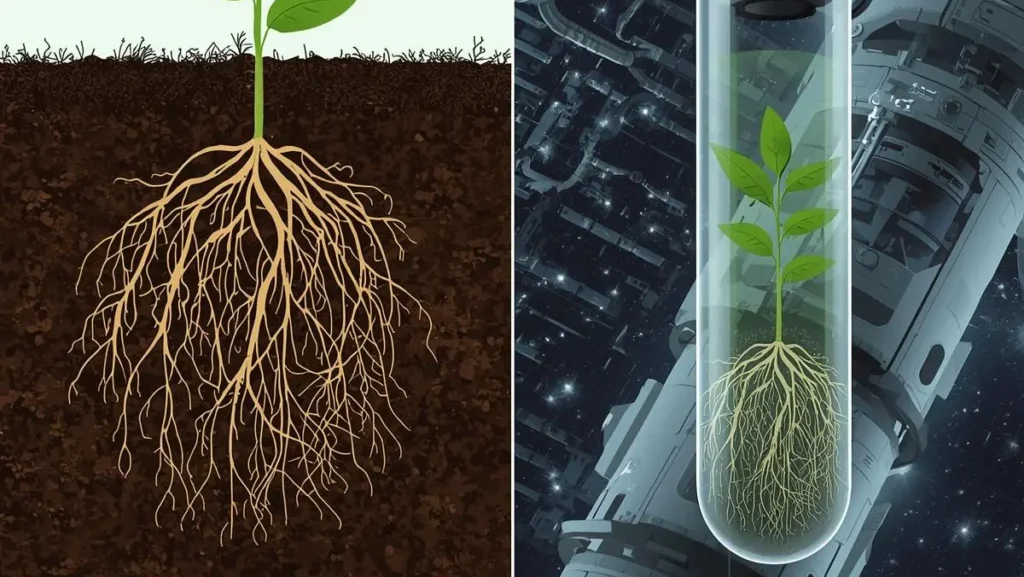
How Is Hydroponics in Space Different From a Grow Tent on Earth?
In microgravity, water doesn’t flow — it floats in wobbling blobs that cling to surfaces through surface tension alone. Bubbles that would rise and escape a nutrient line on Earth get trapped instead, right where they can cut off a root zone.
Roots behave strangely too. Without gravity as a directional cue, root growth in microgravity tends to be unregulated — researchers studying plants aboard the station have documented roots growing sideways, occasionally in the same direction as the shoots above them. That finding overturned a long-standing assumption about how plants sense which way is “down.” NASA’s workaround relies on capillary action, the same physics that pulls water up a paper towel, channeled through carefully shaped hardware instead of left to gravity.
Why Does NASA Bother With Hydroponics in Space at All?
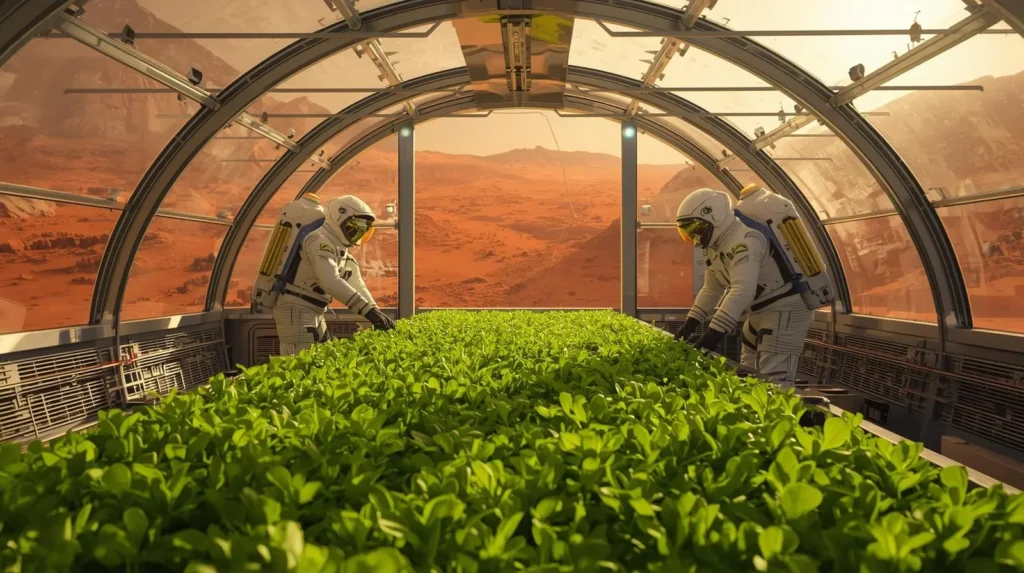
A trip to Mars isn’t a long weekend. Factor in transit time and the wait for a return launch window, and mission timelines stretch into years. Hauling every calorie of food for that from Earth adds weight, and weight is the most expensive thing you can put on a rocket.
So NASA treats hydroponics in space as a survival requirement, not a side experiment:
- Cut reliance on resupply missions that can’t always arrive on schedule
- Add fresh, nutrient-dense produce to a diet that’s otherwise packaged and freeze-dried
- Support crew mental health, since tending a living plant matters more than most people expect
NASA’s Artemis III mission plans to grow plant species inside a small climate chamber on the lunar surface, in an experiment called LEAF. NASA’s CHAPEA Mars analog missions, separately, are testing whether crews can supplement packaged meals with crops they grow themselves.
How Does Hydroponics in Space Actually Work?
NASA replaces gravity with surface tension, engineered channels, and controlled LED lighting, automating as much daily upkeep as possible. A space hydroponic system has four jobs to handle without gravity’s help.
How Is Water Delivered Without Gravity?
NASA’s Plant Water Management research applies microgravity capillary fluidics to the unglamorous challenge of watering plants in orbit, since low-gravity growth is often hampered by uneven aeration and waterlogged roots. Instead of pumps pushing water downward, engineers shape channels — often wedge-shaped — so capillary pressure alone pulls water along a predictable path. Microscopic plumbing built around surface tension instead of pressure. Not glamorous. Very effective.
How Are Nutrients Distributed in Hydroponics in Space?
Plants still need nitrogen, potassium, and calcium. Delivering them evenly without gravity to mix things is the hard part, since settled nutrients and trapped air bubbles can block a line completely. NASA leans on precision pumps and bubble-separation hardware that pulls trapped gas out before it causes a blockage. A bubble in your drip line at home is a five-minute annoyance; in orbit, it can choke an entire root zone.
How Does Lighting Work for Hydroponics in Space?
There’s no sunrise inside a spacecraft, so artificial light is the entire light source. NASA’s Veggie system runs 132 red, 32 green, and 32 blue LEDs, with green added mostly so plants don’t look gray-purple to the humans about to eat them. The newer Advanced Plant Habitat adds white and infrared diodes, roughly four times the light output of Veggie.
Ready to Upgrade Your Grow Light?
NASA doesn’t guess at light intensity, and you shouldn’t either. Here’s a shortlist of grow lights worth comparing before you commit.

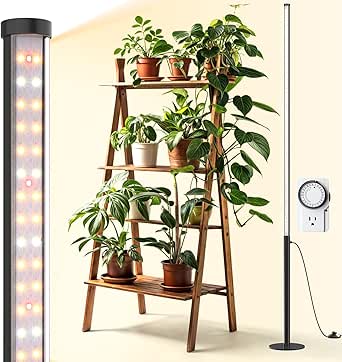


Shop Smart Tip: Don’t grab the brightest fixture you can find for your tent either. Match light intensity to your crop’s actual needs using our DLI Calculator—the same right-sized-light thinking NASA applies when every watt aboard a spacecraft is rationed.
How Do Roots Get Oxygen Without Gravity?
On Earth, roots pull oxygen from air pockets in a growing medium. In microgravity, water can fully envelop roots with no air pocket in sight, risking suffocation. NASA’s fix combines aerated nutrient solutions, the same bubble-separation hardware, and gentle airflow across the root zone.
What Real NASA Systems Use Hydroponics in Space?
Two pieces of hardware do most of the heavy lifting aboard the ISS, alongside ongoing research into the next generation of space-ready hydroponics.
What Is the Veggie System?
Veggie first flew to the ISS in 2014, and after a 2015 safety review, astronauts ate fresh, space-grown produce for the first time ever. Astronaut Scott Kelly compared that first red romaine lettuce harvest to arugula—plants under mild stress produce more bitter compounds, which didn’t surprise NASA’s project scientist. Crops grown in Veggie since then include Chinese cabbage, mizuna mustard, several lettuce varieties, wasabi mustard, bok choy, and zinnias for crew morale.
What Is the Advanced Plant Habitat?
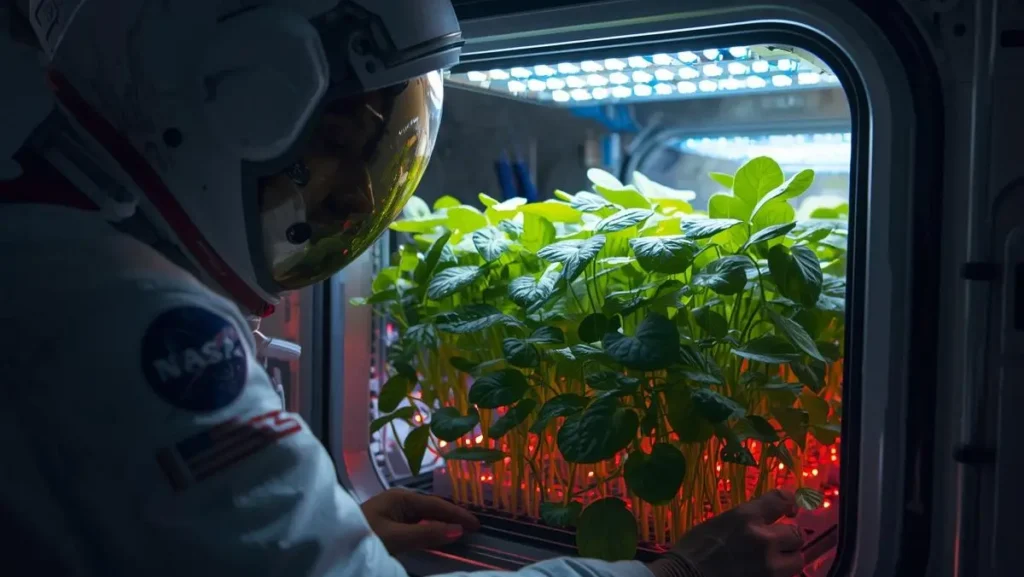
Unlike Veggie, the Advanced Plant Habitat is fully enclosed and automated, watched by more than 180 sensors in contact with a ground team at Kennedy Space Center. It’s also the hardware behind Plant Habitat-04, which grew the first widely recognized fruiting crop in orbit — a dwarfed hybrid Hatch chile pepper, a feat that took roughly two years since peppers require pollination before fruit forms.
What Is Plant Water Management?
This research line tackles the plumbing problem directly. NASA’s Plant Water Management experiments, running since 2021, test capillary hydroponic hardware aboard the ISS, working toward a fully automated system reliable enough for a years-long trip to Mars.
What Are the Biggest Challenges of Hydroponics in Space?
Unpredictable water, randomly oriented roots, and zero tolerance for equipment failure are the three biggest hurdles, each with its own NASA workaround:
- Water: Without gravity, it clings to surfaces in floating blobs instead of pooling—capillary channel design uses surface tension to do gravity’s old job
- Root growth: microgravity removes the directional cue roots rely on, so they often wave and skew based on light position instead, a pattern leafy greens have adapted to well
- Reliability: there’s no hardware store on the ISS, so equipment is built to be low-maintenance, redundant, and as light as possible
Hydroponics has an edge here too: fewer moving parts than soil-based growing, no tilling, and no heavy bags of media to ship up on a resupply rocket.
What Can Hydroponics in Space Teach Indoor Growers?
The same three things NASA had to nail to survive in orbit—efficiency, lighting precision, and environmental control—separate a frustrating grow from a consistently productive one.
Lesson 1: Waste Nothing
Space systems can’t afford to waste a drop of water or a stray photon. Borrow that mindset by recirculating your nutrient solution instead of dumping it, and checking EC and pH on a schedule instead of guessing. Our guide to mixing hydroponic nutrients correctly walks through the basics. It sounds like homework at first, but once it’s routine, you’ll burn through less solution and get more consistent yields.
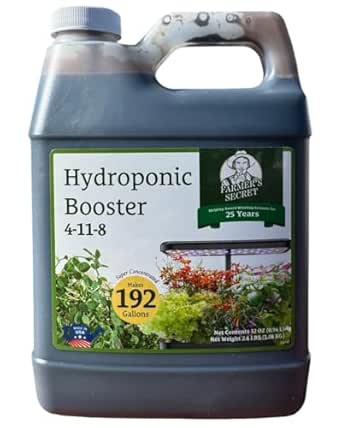
Dial In Your Nutrients
Recirculating your solution only pays off if what’s in it is actually balanced. These are worth a look if you’re tired of guessing.


Lesson 2: Light Is the Engine, Not Decoration
In space, light equals survival, and NASA measures it instead of eyeballing it. Apply the same logic at home with a VPD Calculator for climate balance and a DLI Calculator for light intensity. When plants underperform, check the lighting setup before touching anything else. Our full guide to setting up grow lights for hydroponics covers spectrum, intensity, and positioning in more depth.
Lesson 3: Environment Beats Almost Everything Else
NASA controls temperature, humidity, and airflow down to fine margins because plant stress in a sealed habitat is a mission risk, not a minor inconvenience. The stakes are lower at home, but the principle holds: dial in your environment and growth speeds up with fewer disease issues.
NASA’s Approach vs. What You Can Apply at Home
| System Aspect | NASA’s Space Approach | What You Can Do at Home |
|---|---|---|
| Water delivery | Capillary channels, passive fluid control | Closed-loop hydroponic systems with reliable pumps |
| Nutrients | Automated, precision dosing | Daily EC and pH checks with a Nutrient Calculator |
| Lighting | Tailored LED spectra, measured light output | Match spectrum and intensity to crop stage with a DLI Calculator |
| Environment | Tight temperature and humidity control | Balance conditions with a VPD Calculator |
| Reliability | Redundant, low-maintenance hardware | Quality gear plus backup parts for critical components |
Can You Replicate Hydroponics in Space at Home?
Partially, yes. You won’t deal with floating water blobs, but the underlying mindset of precision, efficiency, and reliability transfers directly:
- Choose a closed hydroponic system that recirculates water instead of dumping it
- Control light and climate with measured precision rather than guesswork
- Automate nutrient dosing wherever your budget allows
If you’re just starting out, The Complete Beginner’s Guide is a solid place to build the foundation first. None of this requires a NASA budget—just treating your tent more like a system and less like a houseplant.
FAQ: Hydroponics in Space
Is the hydroponic hardware NASA uses on the ISS available for home growers?
Not directly. Veggie and the Advanced Plant Habitat are custom-built for microgravity, but the underlying principles, like LED lighting and closed-loop water delivery, show up in many home kits, just scaled down with gravity helping for free.
Does food grown in space taste different?
A little, sometimes. Mild plant stress in orbit can increase bitter compounds called sesquiterpene lactones, which is likely why astronaut Scott Kelly compared the station’s first lettuce harvest to arugula.
Can I copy NASA’s lighting setup for my own indoor garden?
Up to a point. NASA leans on red and blue LEDs for efficiency, but full-spectrum white LEDs often work better at home since plant problems are easier to spot. Either way, measuring light output beats guessing.
What crops have actually been grown using hydroponics in space?
Leafy greens lead the list, since they’re fast and don’t need pollination. NASA’s Plant Habitat-04 experiment also produced the first widely recognized fruiting crop grown in orbit, a dwarfed Hatch chile pepper.
Is hydroponics in space actually part of NASA’s Mars plans?
Yes. NASA’s CHAPEA Mars analog missions specifically test whether crews can grow some of their own crops to supplement packaged meals, treating space farming as core mission infrastructure.
Hydroponics in Space
Hydroponics in space started as a survival problem and turned into one of the more useful case studies in what controlled-environment agriculture can pull off. NASA never had the luxury of guessing—every drop of water, every photon, and every gram of hardware had to earn its place on that rocket.
That’s the real takeaway for anyone growing indoors on Earth. At Grow With Hydroponics, we think the next wave of productive growers will borrow that mindset: measured, deliberate, and a lot less reliant on guesswork. You don’t need a spaceship or a NASA budget to get started—just your light, your nutrients, and your environment, dialed in.
