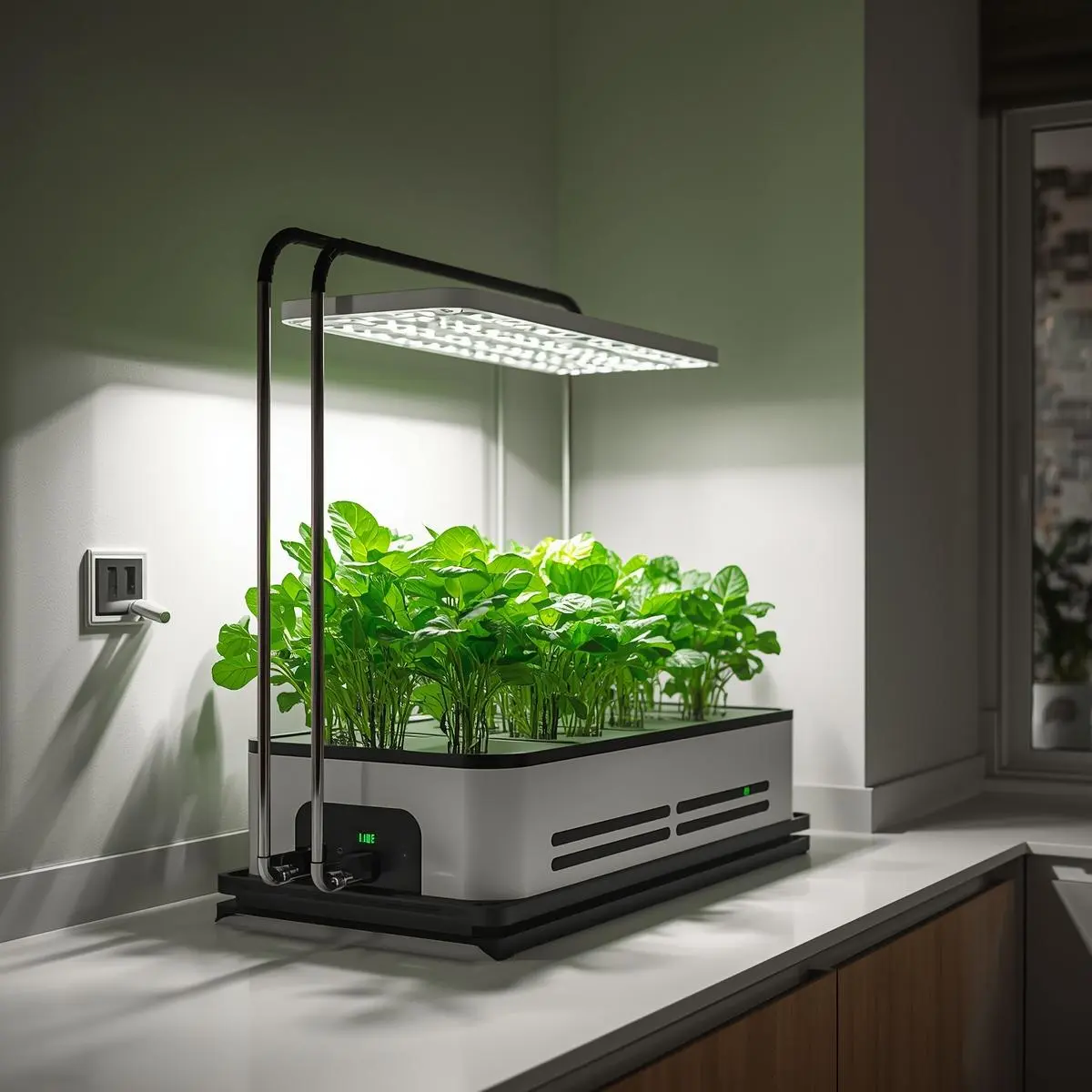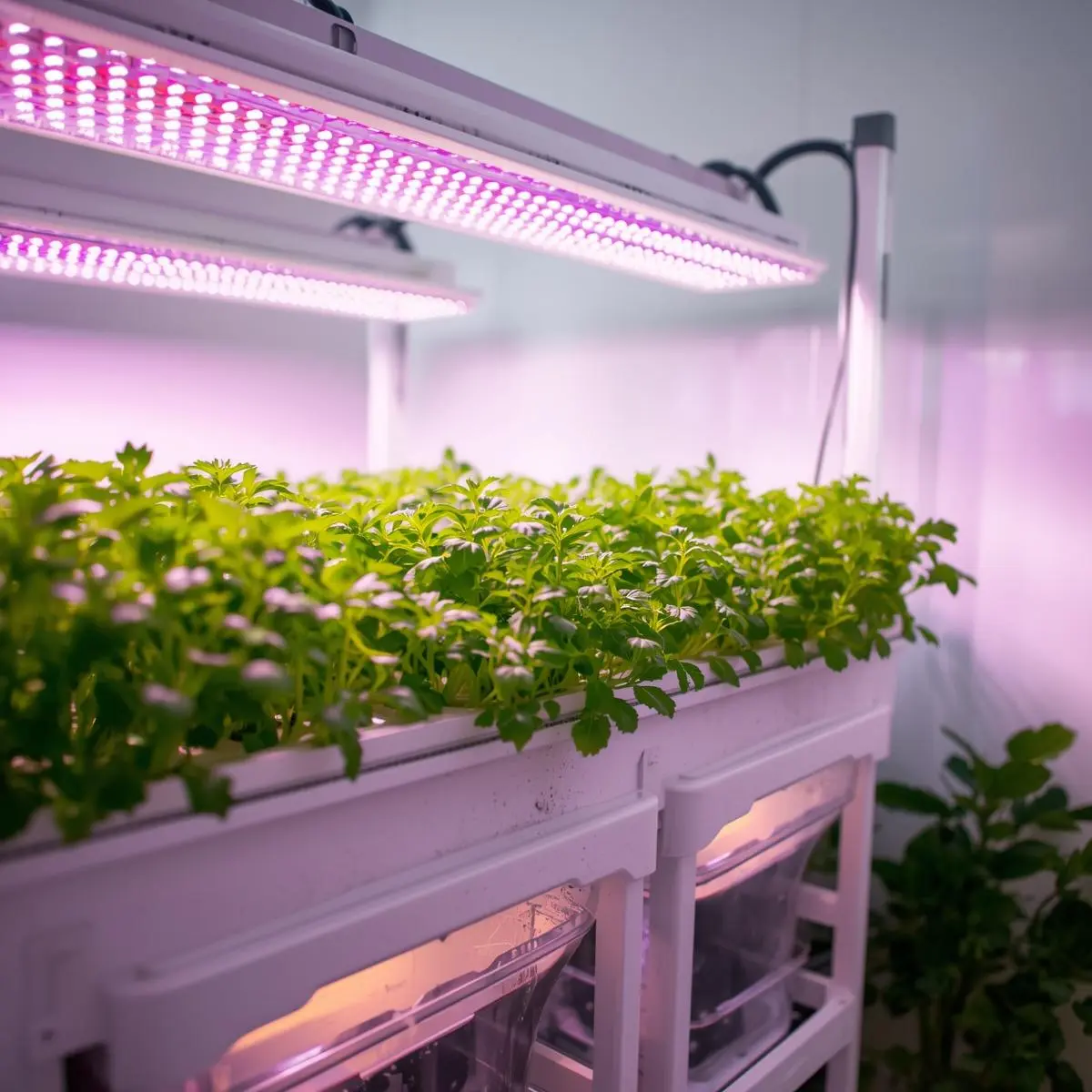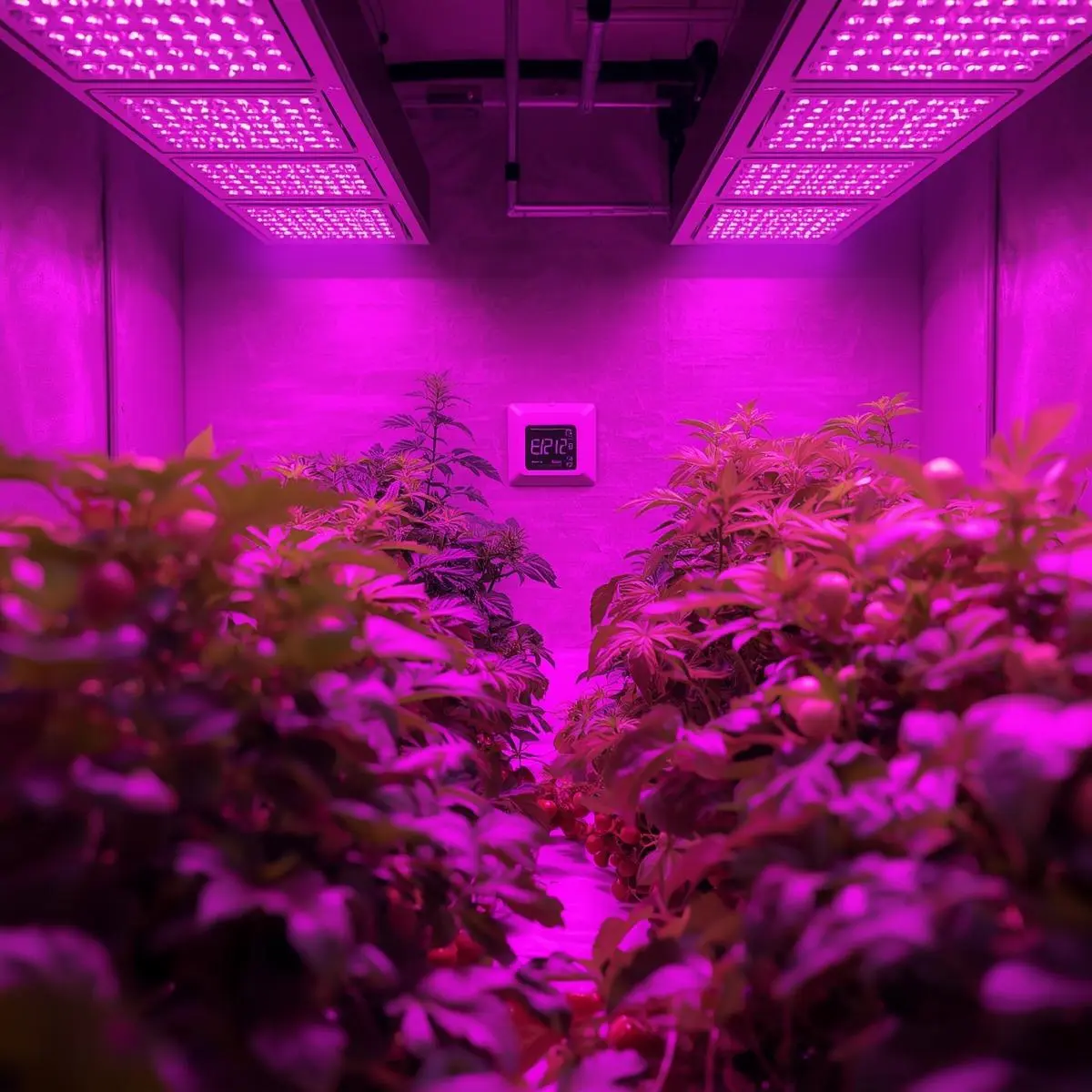
Let me tell you something I wish someone had told me ten years ago: You don’t need to become a lighting engineer to grow great plants indoors. I spent my first year obsessing over micromoles and spectrum charts like I was studying for a physics final. I’d lie awake at night wondering if 2.7 µmol/J was really efficient enough. I nearly quit.
Then I met a commercial grower in Colorado who grew flawless tomatoes under fixtures he’d built from repurposed street LED boards. His advice? “Plants aren’t computers. They’re forgiving. You just have to stop guessing.” That’s what this guide is really about. Not turning you into a spectrograph expert. Just helping you stop guessing.
If you’ve ever stared at rows of LED grow lights online and thought, “Why does this feel more complicated than buying a lightbulb?” — you’re not alone. You’re also not wrong. The industry has spent years making simple things sound complex so they can charge you more for answers.
Here’s the truth: Lighting is the single most important factor in indoor and hydroponic growing success. But mastering it doesn’t require a PhD. It requires clarity.
At Grow With Hydroponics, we’ve tested lighting setups across every scenario imaginable: closet grows, 4×4 tents, vertical towers, commercial warehouse racks, even a hydroponic classroom in a Brooklyn public school. We’ve burned fixtures, bleached leaves, and stunted more seedlings than I care to admit.
This guide is everything we wish we’d known on day one.
By the end, you’ll know:
How LED grow lights actually work — without the jargon
What “full spectrum” really means (spoiler: not what marketers tell you)
How to calculate coverage and hanging height without advanced math
How to match light intensity to plant stages without killing anything
How to shop smart and stop throwing money at the wrong fixtures
Let’s start at the beginning. Not the sexy part. The foundation.
Grow Light Fundamentals: What Actually Matters
Before we talk about which light to buy, we need to talk about what light does.
Plants are solar-powered chemists. They don’t “like” light the way we enjoy sunshine. They consume it. Photons are their calories. Every leaf is a tiny manufacturing facility, and light is the energy bill that keeps the machines running.
If you want the full physics-and-biology deep dive, we’ve got you covered: Complete guide to grow lights. But here’s the condensed version you actually need:
What Are LED Grow Lights, Really?
LED grow lights are artificial lighting systems engineered to emit photosynthetically active radiation (PAR) — wavelengths between 400 and 700 nanometers that plants can actually use. The older generation of growers (I started with fluorescent tubes, God help me) used HID and MH lights. They worked, but they came with baggage: massive heat output, sky-high electricity bills, bulbs that degraded yearly, and fire risk if you looked at them wrong.
LEDs changed everything. They:
Use less electricity per photon. Up to 60% less than HIDs.
Produce dramatically less heat. You can touch an LED bar running at full power. Try that with a 1000W HPS.
Offer spectrum tuning. Some fixtures let you dial in specific wavelengths.
Last 50,000+ hours. That’s over a decade of regular use.
Deliver higher PPFD efficiency. More usable light, less wasted energy.
If you’re growing hydroponically, LEDs aren’t optional anymore. They’re the standard. Soil holds some thermal buffer; hydroponic root zones are exposed. Heat from old-school lights stresses roots, spikes reservoir temperatures, and invites pathogens. LEDs solve all of that.
For a hydroponic-specific breakdown (including which fixtures play nice with NFT channels vs. deep water culture), see: hydroponic grow lights guide.
What Does “Full Spectrum” Actually Mean? (And Why Marketers Love It)
“Full spectrum” has become one of those terms that sounds specific but has been stretched into meaninglessness — like “natural” on food packaging.
Technically: Full spectrum means the light includes wavelengths across the entire PAR range, plus sometimes a bit beyond into far-red and UV.
In practice: It’s become marketing shorthand for “not blurple.”
Remember blurple? Those deep purple fixtures from the early 2010s that made your grow room look like a nightclub and turned everything the color of a bruise? They worked — plants grew — but you couldn’t spot pests, you couldn’t see nutrient deficiencies, and your eyes felt fried after 20 minutes inside.
Modern full-spectrum LED grow lights look… white. Because they are white. They contain:
Blue wavelengths (400-500nm): The architect. Controls stretching, drives compact vegetative growth, signals “this is a sunny open environment, grow sturdy.”
Red wavelengths (600-700nm): The finisher. Drives flowering and fruiting, tells plants it’s time to reproduce.
White light (all the above, balanced): The utility player. Provides even energy distribution and makes your grow room actually functional to work in.
Far-red and UV (advanced): The fine-tuning dials. Helpful for specific crops and resin production, unnecessary for beginners.
Here’s the practical takeaway that’ll save you money:
If you’re growing multiple plant types in one space — or you’re not sure what you’ll want to grow next year — full spectrum is the safest, most versatile choice. It’s the Toyota Camry of grow lights. Not flashy. Absolutely reliable.
If you want the technical deep dive (including which crops respond to specific wavelength ratios): full spectrum LED grow lights explained.
Why Your Light Can’t Work Alone: The VPD Connection
Here’s a mistake I made for two solid years:
I’d dial in the perfect PPFD — 600 µmol/m²/s, right on target. Then I’d wonder why my plants looked stressed, edges curling up, leaves praying then drooping on a cycle.
The problem wasn’t the light. It was the conversation between light and air.
When you increase light intensity, plants respond by drinking more. It’s not optional — it’s physiological. Stomata open wider. Transpiration accelerates. The plant moves water from roots to leaves faster.
If the air can’t accept that moisture (too humid) or accepts it too aggressively (too dry), the system breaks.
This is where VPD (Vapor Pressure Deficit) enters the chat.
VPD measures the “thirst” of the air. Not relative humidity alone — the combination of temperature and humidity that determines how easily water evaporates from leaf surfaces.
Here’s the practical insight that changed my grows:
High PPFD + low humidity = stress. The plant tries to drink, air sucks moisture out too fast, leaf edges crisp, growth stalls.
Lower PPFD + high humidity = slow growth. The plant can’t transpire efficiently, nutrient uptake slows, everything moves at molasses speed.
You can have the best LED grow light on the market and still get mediocre results if your VPD is off. Light isn’t an island. It’s part of an ecosystem.
For the fundamentals:
Light Intensity, Coverage & Hanging Height: Where Growers Lose Money
This is the section I wish I could print on a business card and hand to every new grower walking out of a hydro store with an expensive box under their arm.
Most lighting mistakes aren’t about buying the wrong fixture. They’re about using the right fixture poorly.
What Does Wattage Actually Mean? (Less Than You Think)
Here’s an uncomfortable truth:
Wattage tells you how much electricity a light consumes. It tells you almost nothing about how well it grows plants.
I’ve tested 600W fixtures that outperformed 1000W units from five years ago. I’ve seen cheap Amazon “2000W” lights (actual draw: 260W) get smoked by quality 400W bar-style fixtures.
Stop comparing watts. Start comparing:
PPFD (µmol/m²/s): How many usable photons actually reach your canopy. This is the number that matters.
Coverage area: The shape and uniformity of the light footprint. A small, intense hotspot is useless for a 4×4 tent.
Efficiency (µmol/J): How many photons you get per joule of electricity. Higher efficiency = lower electricity bills = less heat.
If you’re comparing high-power fixtures:
- 1000 Watt LED Grow Light: Coverage, Yield Potential, and Power Usage Explained.
- 1000w LED Grow Light – The Complete Guide for Hydroponic Growers.
The shortcut: Look for third-party PPFD maps from trusted sources (not the manufacturer’s marketing images). Find your target PPFD for your crop stage. See how far from the center that PPFD extends. That’s your real coverage area.
How Far Should LED Grow Lights Be from Plants?
This question arrives in my inbox weekly. The answer frustrates everyone:
It depends.
Not a cop-out. Genuinely: hanging height depends on your fixture’s intensity, your reflector design, your crop’s light appetite, and your environmental conditions.
What I can give you are starting points, hard-earned:
Growth Stage | Hanging Height (from canopy) | Notes |
|---|---|---|
| Seedlings | 24–36 inches | Low intensity, broad coverage |
| Vegetative | 18–24 inches | Moderate intensity, building structure |
| Flowering | 12–18 inches | Full intensity, watch for stress |
| Propagation/clones | 30+ inches | Very gentle, 100-200 PPFD max |
These are guides, not laws. A high-intensity bar light can run closer than a single-chip quantum board. A COB array needs more headroom. Dimming capability changes everything.
Signs you’re too close:
Leaf margins curling upward (tacoing)
Bleaching on upper canopy, green below
Stunted new growth
Excessive internodal stacking
Signs you’re too far:
Leggy, stretched stems
Pale leaves
Slow growth
Delayed flowering
For variety-specific guidance: Indoor LED Plant Grow Light: Coverage, Hanging Height, Tips & GrowwithHydroponics Tool for Perfect Setup.
Choosing the Right Light for Your Space
Every grow space has a personality. A 2×2 tent in a closet needs something completely different from a 20-foot warehouse rack.
Here’s how to match fixture to footprint without overpaying:
2×2 grow tent:
Target: 100-200W actual draw
Form factor: Small quantum board, single bar, or compact COB
Challenge: Heat buildup in tiny spaces
Smart pick: Fixture with external driver
4×4 grow tent:
Target: 400-600W actual draw
Form factor: Bar-style or large quantum board
Challenge: Even distribution across square footage
Smart pick: Foldable bars for easy tent access
2×4 or 3×3 tents:
Target: 250-400W actual draw
Form factor: Elongated bar or rectangular board
Challenge: Coverage length vs. width
Smart pick: Adjustable spectrum for versatility
Vertical racks/shelves:
Target: 100-200W per shelf, low profile
Form factor: Slim bar lights, high efficiency
Challenge: Heat rising between tiers
Smart pick: High PPE (µmol/J), low heat output
Commercial rooms:
Target: Custom array, often 800-1000W+ fixtures
Form factor: High bay LED, modular systems
Challenge: Uniformity at scale, electrical infrastructure
Smart pick: Dimmable, networked control capable
Detailed breakdowns:
- 10 Best LED Grow Lights for Different Spaces (2026 Buyer’s Guide).
- Indoor Grow Lights for Small Spaces: Bright Ideas for Every Home Garden.
Best LED Grow Lights: Buying Guide & Shop Smart Strategy
Let’s talk about spending money.
Not because expensive is better — it’s not always — but because smart shopping isn’t about finding the cheapest option. It’s about matching the right tool to your specific job.
Before you click “add to cart,” answer these five questions:
What are you growing? Leafy greens need less intensity than tomatoes. Succulents need different spectrum ratios than cannabis. Know your crop’s appetite.
What stage are they in? Seedlings under a flowering-optimized light is like feeding steak to a toddler. Match intensity to maturity.
What’s your coverage area? A light that’s perfect for a 2×2 will leave corners dark in a 4×4. Measure first.
What’s your electrical capacity? Can your circuit handle the draw? Are you daisy-chaining? Is your timer rated for the inrush current?
What’s your ventilation capacity? Even efficient LEDs produce heat. Can your exhaust handle it?
Then, after you’ve answered those, use the DLI Calculator. Seriously. Take the manufacturer’s PPFD map, find your average PPFD at your intended hanging height, plug it into the calculator with your planned photoperiod. If the resulting DLI doesn’t match your crop’s target, adjust or reconsider.
This is how you Shop Smart. Not by finding a coupon code. By verifying that the fixture actually delivers what your plants need.
Curated comparisons:
- Best Grow Lights and Accessories for Indoor Hydroponics
- Best LED Grow Lights for 2026: Buyer’s Guide & Tools to Maximize Plant Growth
- Best Full Spectrum LED Grow Lights for Indoor Growers
- Best LED Grow Lights for 2026: Buyer’s Guide & Tools to Maximize Plant Growth
- 10 Best LED Grow Lights for Different Spaces (2026 Buyer’s Guide)
- Best Affordable LED Grow Lights (2026) – Budget Picks That Work
- Most Efficient LED Grow Lights: High PPFD, Low Power Consumption (2026 Guide)
- High-Valued Plant LED Grow Lights: Spectrum, Intensity & Safety Basics
- High-Bay Commercial LED Grow Lights: A Practical Guide for Pro Growers
Advanced Optimization: UV, Far-Red, and the Experimental Edge
This is the deep end. You don’t need to swim here to grow great plants — but if you’re curious, if you like tinkering, if you’re chasing that last 10% of performance:
UV lighting is fascinating. Plants evolved under UV-A and UV-B radiation. Indoors, under glass or acrylic, they get almost none. Some research suggests reintroducing controlled UV can:
Increase resin and trichome production
Enhance secondary metabolites (flavor, aroma, potency)
Tighten internodal spacing
Strengthen cell walls
The catch: UV burns. Misuse it and you’ll bleach leaves, stall growth, and wonder why your experiment failed.
Rules for UV experimentation:
Start low. Really low. 15-30 minutes at end-of-day, not full cycle.
Use dedicated UV fixtures or verified UV diodes — not blurple lights with a “UV” switch.
Monitor response. Fade or bronzing? Dial back.
Never run UV during the first 2-3 weeks of vegetative growth.
Deeper dives:
- UV Light for Plants: Benefits, Types, and Best Grow Lamps Explained
- How UV Light Enhances Plant Health in Hydroponic Environments
- Shedding Light On The Growth: Here’s Our Guide To The Best UV Lights For Hydroponics
- UV light for plants hydroponics
LED Grow Lights for Specific Use Cases
One size doesn’t fit all. Here’s how to match fixture to purpose:
For Seedlings:
Low intensity (100-200 PPFD), broad coverage, run 16-18 hours. Seedlings don’t need penetrating power; they need gentle, even light. See LED Grow Lights for Seedlings: A Practical Guide to Healthy Starts.
For Houseplants:
Supplemental rather than primary. Lower intensity, often integrated into decorative fixtures. Focus on spectrum balance for foliage health. For Details: LED Grow Lights for House Plants: Year-Round Light for Healthier Indoor Plants.
For Herb Systems:
Basil, mint, cilantro — these aren’t high-light crops. 200-300 PPFD, 14-16 hours. Consistency matters more than intensity. More info: Low-Light Hydroponic Herb Gardening: How to Grow Fresh Herbs Without Sun.
Lighting + Hydroponic System Integration
Here’s something manuals don’t tell you:
Your hydroponic system and your lighting system need to be designed together, not separately.
Deep Water Culture: Light leaks into reservoirs = algae. Choose fixtures with minimal side spill, or use reflective hoods that direct light downward. Consider opaque reservoir lids.
Nutrient Film Technique: Canopy control is everything. Lights too high, channels are wasted. Lights too low, roots overheat in shallow water. Bar-style fixtures with even distribution work best.
Vertical Systems: Uniform light distribution is your enemy. Top shelves get too much, bottom shelves not enough. Choose fixtures with excellent uniformity ratings. Consider staggered planting schedules so tall plants don’t shade shorter ones.
Aeroponics: High light + high oxygen = explosive growth. Also, high transpiration = rapid pH drift. Monitor closely.
System guides:
- Hydroponic Grow Systems: Types, Benefits, and How to Choose the Right One.
- Vertical Hydroponic Systems: The Future of Efficient, Sustainable Gardening.
- Vertical Farming: The Revolution Reimagining How We Grow Food.
- 10 Game Changing Benefits of Hydroponics That Are Transforming Modern Farming.
Common LED Grow Light Mistakes (And How to Avoid Them)
I’ve made every mistake on this list. Some of them multiple times.
1. Buying based on wattage alone.
Fix: Compare PPFD per dollar, not watts per dollar.
2. Ignoring PPFD charts.
Fix: If a manufacturer won’t provide third-party PPFD maps, don’t buy from them.
3. Forgetting VPD adjustments when increasing light.
Fix: Every time you raise intensity, check your VPD. Every time.
4. Hanging lights too close, too fast.
Fix: Start high. Lower gradually over 3-5 days. Watch plant response.
5. Running lights 24/7 because “plants like light.”
Fix: Plants need dark periods for metabolic processes. 18/6 or 20/4 for veg, 12/12 for flowering photoperiods, 16-18 hours for auto-flowers.
6. Not calculating DLI.
Fix: Use the DLI Calculator. It takes 30 seconds.
7. Overlooking driver placement.
Fix: Remote-mount drivers outside the grow space when possible. Less heat, longer driver life.
8. Buying “deal” fixtures with no warranty.
Fix: LED failures happen. Buy from reputable brands with 3-5 year warranties.
Final Thoughts: Mastering LED Grow Lights
Here’s what I’ve learned, across a decade of testing, burning, bleaching, and finally succeeding:
LED grow lights aren’t complicated. They’re just poorly explained.
When you strip away the marketing jargon and the spec sheet wars, it’s simple:
Give plants enough photons (but not too many)
Give them the right colors (full spectrum covers almost every need)
Give them consistent daily doses (DLI is your friend)
Support the light with a balanced environment (VPD matters as much as PPFD)
That’s it. That’s the secret.
Start simple. You don’t need UV bars and far-red supplementation and eight-channel spectrum controllers. You need a quality full-spectrum fixture, a timer, and a willingness to observe.
Measure, don’t guess. A $200 quantum sensor pays for itself in saved crops and avoided frustration. The DLI Calculator and VPD Calculator are free. Use them.
Adjust, don’t abandon. If growth stalls, don’t rip out your fixture and start over. Raise it. Lower it. Shorten the photoperiod. Extend it. Check your VPD. The solution is almost never “buy a different light.” It’s almost always “use this one differently.”
Observe. Plants talk constantly. Leaf angle, color, internodal spacing, bud formation speed. They’re telling you exactly what they need. Most growers just don’t stop long enough to listen.
At Grow With Hydroponics, our mission isn’t to sell you more stuff. It’s to help you grow smarter — not harder. Use the tools. Test your setup digitally before you install it. Make decisions based on data, not hype.
You’ve got this.
And if you hit a wall? If something isn’t working and you can’t figure out why? That’s not failure. That’s research. Every experienced grower has a graveyard of failed experiments. The only difference between us and beginners is we stopped being embarrassed about it.
Now go grow something. Your plants are waiting.