

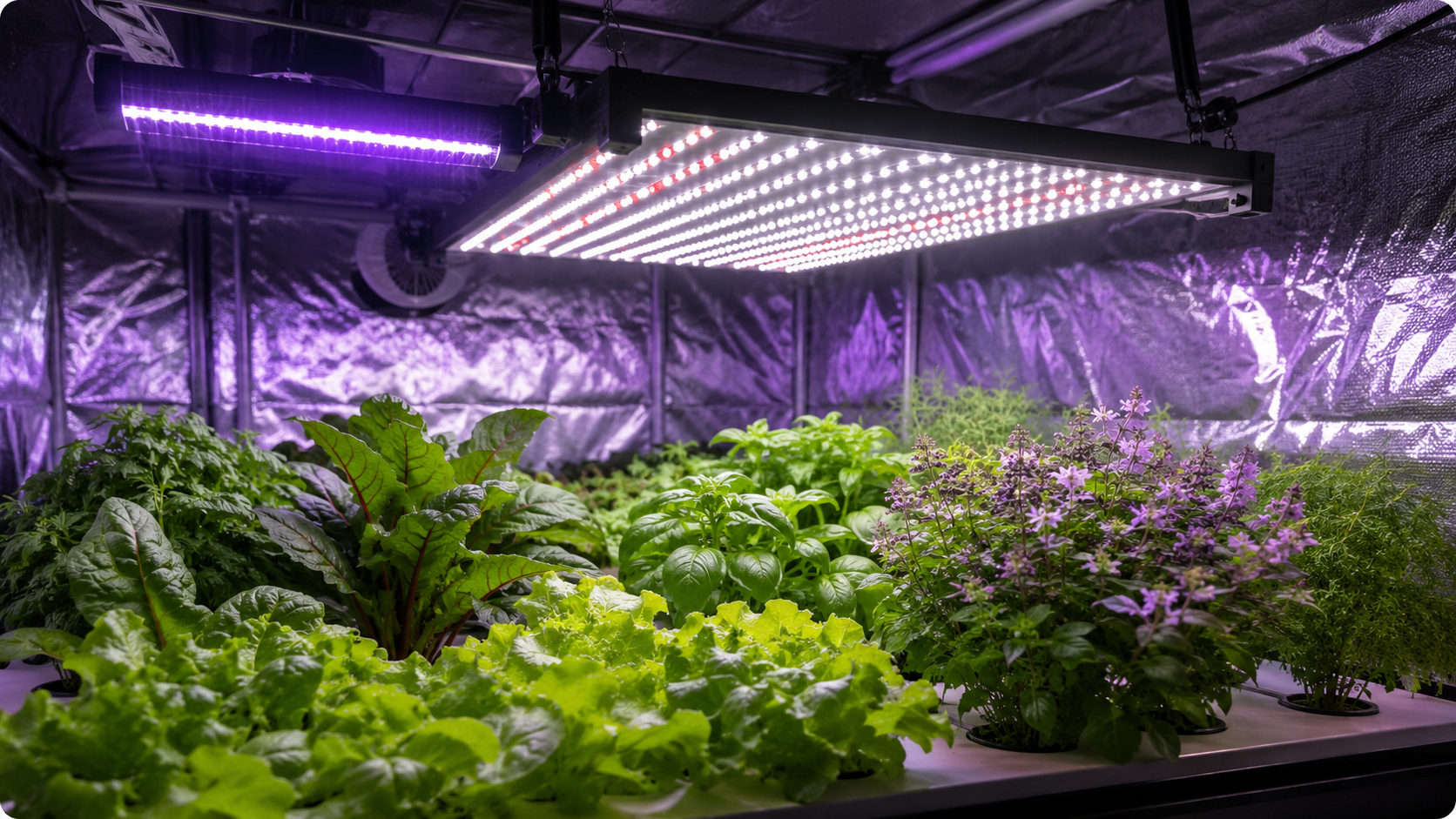
I’ve watched a lot of growers nail the obvious stuff — nutrients dialed in, pH steady, airflow humming — and still end up staring at basil that smells like nothing and peppers that look faded next to the farmer’s market batch. Nine times out of ten, it’s not something they’re doing wrong. It’s something missing from the light itself. UV light for plants is that missing slice of the spectrum, and it’s the difference between a grow that’s “fine” and one that actually tastes like something.
At Grow With Hydroponics, we’ve spent years testing UV-A and UV-B setups across tents, racks, and greenhouse trials, and this guide pulls all of that into one place — including what the older UV articles on this site got half-right and what they left out entirely. You’ll learn the real difference between UV-A, UV-B, and UV-C, how much UV your plants can actually handle, which UV lamp for plants fits your setup, and the mistakes that turn a helpful tool into a scorched canopy.
Quick Answer: UV light for plants means supplementing your grow with UV-A (315–400nm) and, more selectively, UV-B (280–315nm) radiation — wavelengths that standard indoor light, greenhouse glazing, and most window glass filter out. UV-A supports sturdier growth and leaf structure; UV-B triggers a mild stress response that boosts flavonoids, essential oils, anthocyanin color, and disease resistance. Used in short, controlled doses (roughly 1–4 hours of UV-B during flowering, on top of full-spectrum light), it improves flavor, potency, and pest resilience without harming the plant. Overdo it, and you’ll bleach or crisp your leaves instead.
What Is UV Light for Plants, and Why Does It Matter Indoors?
UV light for plants is supplemental ultraviolet radiation added to an indoor or greenhouse grow to replace what natural sunlight normally provides but artificial lighting usually doesn’t. Outdoors, plants evolved under a full solar spectrum that includes UV. Indoors, most of that gets filtered out before it ever reaches the leaf.
Here’s the part the older guides on this topic tend to skip: greenhouse coverings and window glass are often engineered specifically to block UV, because UV degrades plastics and fades pigments over time. So even a “sunny” greenhouse can be delivering a fraction of the UV a field crop would get. Standard LED grow lights aren’t much better — most full-spectrum fixtures include a token amount of UV-A and essentially no UV-B, whatever the marketing copy implies.
Why Plants Respond to UV as a Signal, Not Just Radiation
Plants read UV through a dedicated photoreceptor called UVR8, which senses UV-B specifically and triggers changes in gene expression. It’s not incidental exposure — it’s information. “It’s bright, it’s exposed, defend yourself” is roughly the message, and the plant responds by building thicker leaves, denser pigments, and more of the aromatic and protective compounds that make herbs smell stronger and fruit taste better.
UV-A vs. UV-B vs. UV-C: What’s the Real Difference?
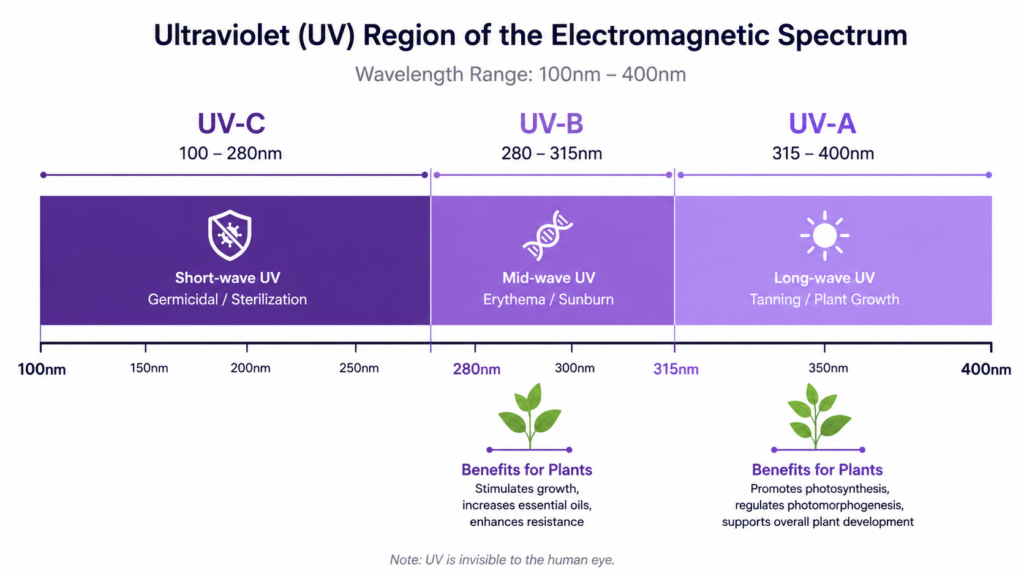
UV-A, UV-B, and UV-C are not interchangeable, and mixing them up is the single most common mistake beginners make when they go shopping for a “UV lamp for plants.” Each band behaves completely differently once it hits a leaf.
UV-A Lamps for Plants (315–400nm)
UV-A makes up roughly 95% of the UV radiation that reaches Earth’s surface, and it’s the mildest of the three bands. It doesn’t drive photosynthesis the way red and blue light do, but it shapes photomorphogenesis — the process controlling leaf thickness, stem sturdiness, and overall plant architecture.
- Runs safely for most or all of the light cycle
- Encourages compact growth and better light tolerance
- Already present, in small amounts, in many quality full-spectrum LED fixtures
UV-B Lamps for Plants (280–315nm)
UV-B is the “stress coach” band, and this is where dosage actually matters. Research on strawberry and greenhouse roses found that even a short 2-hour UV-B treatment at night — delivered at roughly 0.5–1 kJ/m² — suppressed powdery mildew, while a longer 6-hour midday dose controlled disease too but started to show leaf damage. That’s the whole game with UV-B in one sentence: dose is intensity multiplied by duration, and more isn’t automatically better.
- Triggers flavonoids, anthocyanins, essential oils, and antioxidant compounds
- Measurably improves disease resistance in several studied crops
- Needs a conservative introduction — start with 1–2 hours mid-cycle and watch the response
UV-C Light: Why It’s Not a Grow Light at All
This is the gap most competing articles never close. UV-C (100–280nm) is germicidal — it’s used for sterilizing air, water, and surfaces, not for feeding plant chemistry. A cheap “UV bulb” from the hardware aisle is very likely UV-C or a reptile-basking bulb, neither of which is built for horticulture. Point one at your canopy expecting UV-B-style benefits, and you risk tissue damage with none of the upside. If you want the real thing, look specifically for a UV grow light or UV-A/UV-B lamp for plants, not a generic “UV light.”
What Are the Real Benefits of UV Light for Plants?
The benefits of UV light for plants are well documented, but they come with trade-offs that deserve honest coverage — not just the highlight reel.
Flavor, Color, and Aroma
UV-B exposure ramps up production of flavonoids and terpenes, which is why UV-treated basil smells sharper and peppers develop deeper color. Anthocyanin genes (like MYB10 and HY5) activate under UV stress, which is the same mechanism behind the purple blush on some lettuce varieties and the richer red in strawberries.
Disease and Pest Resistance
This is the benefit most beginners never hear about. Supplemental UV-B has shown a consistent positive effect on disease resistance across a wide range of crops, largely by triggering the same protective compounds that make plants less hospitable to pathogens and pests. It’s not a replacement for good IPM, but it’s a legitimate layer of defense — one worth pairing with regular scouting using something like a Hydroponic Pest Identification Tool so you catch problems UV alone won’t solve.
The Trade-Off Nobody Mentions: Yield vs. Potency
Here’s the honest bit. One multistate research trial found that supplemental UV-B before harvest increased phytochemical concentrations in green basil by up to 169% — but it also decreased overall yield. More flavor compounds, less biomass. If you’re growing for weight, that trade-off matters. If you’re growing for flavor, aroma, or quality, it’s usually a fair exchange. Decide which one you actually want before you start dosing.
How Much UV Light Do Plants Need? Dosage and Timing
Direct answer: most home growers do fine running UV-A for most of the photoperiod and UV-B in short 1–4 hour bursts during the mid-to-late vegetative or flowering stage, ideally timed to mimic when UV naturally peaks — around solar noon, or at night for disease-suppression purposes.
Dose isn’t just about the timer, though. It’s intensity multiplied by duration, and both matter as much as each other. A weak UV-B diode run for six hours can deliver the same dose as a strong one run for ninety minutes, so “hours per day” alone is a poor way to plan a UV lighting schedule. If you’re serious about dialing this in, pairing your fixture with a Grow Light Calculator helps you translate intensity and distance into something closer to an actual dose, instead of guessing.
A few grounding rules:
- Start with UV-A only for the first week or two on any new setup.
- Introduce UV-B in short daily bursts — 1–2 hours — once plants hit late veg or early flower.
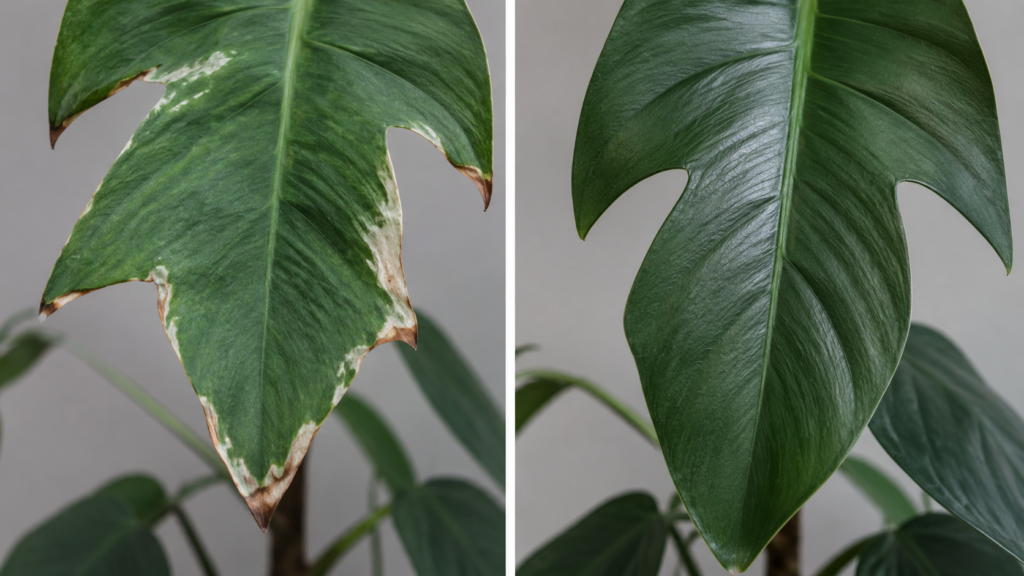
- Watch leaf tips for bleaching or crisping; that’s your cue to back off, not push through.
- Increase duration gradually only if plants show tighter node spacing and no damage.
- Consider a UV radiometer if you’re running multiple fixtures and want to confirm actual output instead of trusting the spec sheet.
Types of UV Grow Lights: Which UV Lamp for Plants Should You Buy?
Not every UV lamp for plants suits every setup, and the “best” one really depends on your crop, your budget, and how much fiddling you enjoy.
| UV Grow Light Type | Best For | Difficulty | Watch Out For |
|---|---|---|---|
| Full-spectrum LED with built-in UV-A/UV-B diodes | Most home and hydroponic growers wanting simplicity | Easy | UV output is often minimal; check the spec sheet, not the marketing |
| Standalone UV-B fluorescent or T5 bulbs | Growers targeting flavor, resin, or disease resistance in flowering | Moderate | Needs a separate timer and careful distance control |
| UV-A supplement bars | Vegetative-stage structure and leaf density | Easy | Mostly redundant if your main LED already includes UV-A |
| Reptile-style UV-B basking bulbs | Not recommended for horticulture | — | Wrong spectral output and intensity for plant tissue |
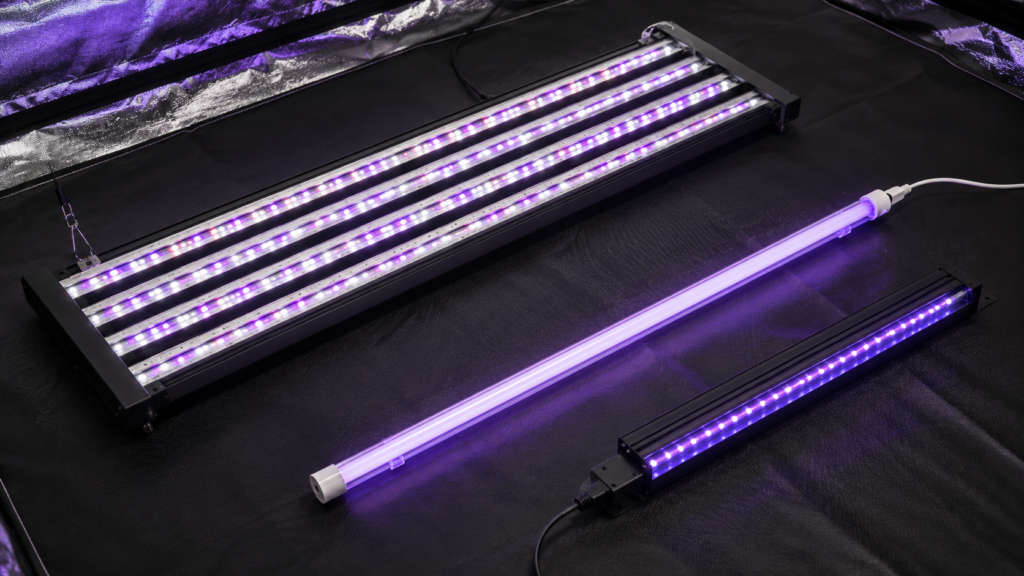
For most people starting out, a full-spectrum LED with tunable UV-A and UV-B diodes is the least fussy option — you’re not running a second fixture or juggling extra timers. Growers chasing maximum terpene or anthocyanin output often add a dedicated UV-B bulb during flowering only, since that’s when the pigment and oil pathways respond best.
Common UV Lighting Mistakes to Avoid
I’ve seen otherwise careful growers torch a tray of seedlings because they got excited and cranked UV-B on day one. Don’t be that person. A few other patterns show up again and again:
- Buying a generic “UV bulb” meant for sterilizing or reptile tanks instead of a proper horticultural UV grow light
- Running UV-B the full photoperiod instead of a short, targeted window
- Skipping eye protection — UV can damage your eyes faster than visible light discomfort would warn you, so wear glasses rated UV400 or meeting a recognized standard like ANSI Z87 or CSA Z94.3, not ordinary sunglasses.
- Placing UV lamps too close to canopy, which can bleach or crisp leaf tips through the same inverse-square relationship that governs your regular grow lights — worth reviewing if you’ve dealt with light burn before.
- Ignoring humidity and airflow, since UV-stressed plants are working harder metabolically and a poor VPD makes that stress compound instead of pay off
Choosing the Best UV Light for Hydroponics: A Buying Checklist
Match the fixture to your actual garden, not the biggest spec sheet in the catalog.
- Know your crop. Leafy greens rarely need more than gentle UV-A; flowering and fruiting plants are where UV-B earns its keep.
- Know your growth stage. Seedlings are sensitive — hold off on UV-B until plants are well into vegetative growth.
- Prioritize LED over fluorescent or HID UV sources for efficiency, lower heat, and tunable output.
- Look for independent UV-A/UV-B control so you’re not locked into one fixed ratio.
- Check for shielding and safety certification, and budget for proper eyewear from day one.
Ready to Pick Your UV Grow Light?
You’ve got the checklist — now see what actually fits it. Here are a few UV-capable and full-spectrum options our growers rate highly for hydroponic setups. When you Shop Smart for a UV fixture, don’t buy on price alone — pair the purchase with a plan for measuring output and dose, not just a hopeful guess based on the box copy.


Shining the Way to a Better Harvest
UV light for plants isn’t a replacement for good nutrients, clean water, or a properly timed light cycle — it’s the layer on top that turns a decent grow into one with real depth of flavor, color, and resilience. Start with UV-A, introduce UV-B carefully, watch your plants instead of the clock, and you’ll know within a couple of cycles whether it’s earning its place in your tent.
The Grow With Hydroponics community has been refining UV setups across small tents and commercial racks alike, and the consensus holds up: thoughtful, measured UV use separates a good harvest from a genuinely great one. For the full picture on matching any light — UV included — to your grow space, check out The Ultimate LED Grow Light Guide: Science-Backed Indoor Setup (2026).
Frequently Asked Questions About UV Light for Plants
Can I use any UV bulb for my plants?
No — most cheap UV bulbs are built for sterilizing surfaces or warming reptile tanks, not for horticulture. Those emit the wrong wavelength and intensity for plant tissue, so you’ll either see no benefit or stressed, damaged leaves. Look specifically for a UV-A/UV-B grow light designed for plants, and check the nanometer range on the spec sheet before buying.
How long should I run UV lights each day?
For UV-A, most growers run it for most of the light cycle without issue. For UV-B, start with just 1–2 hours mid-cycle during flowering and adjust based on how the plant responds. Crisping leaf tips mean back off; tighter growth and no damage mean you can hold steady or extend slightly.
Do leafy greens need UV light?
Not really — lettuce, spinach, and microgreens grow perfectly well under standard full-spectrum LEDs with no UV at all. A little UV-A during vegetative growth can tighten leaf structure and deepen color, but it’s optional polish rather than a requirement.
Will UV grow lights increase my electricity bill?
Only slightly. Modern LED UV grow lights draw very little extra power compared to older fluorescent or HID UV sources, typically adding a small amount to your monthly cost. Given the potential gains in flavor, aroma, and disease resistance, most growers find the trade-off worthwhile.
Is UV-B light safe for humans working near plants?
Not without protection. UV-B can damage unprotected eyes and skin faster than the discomfort would suggest, so wear glasses rated for UV protection — ideally UV400 or a recognized standard like ANSI Z87 — whenever you’re working near an active UV fixture, and limit unnecessary time directly under it.
