

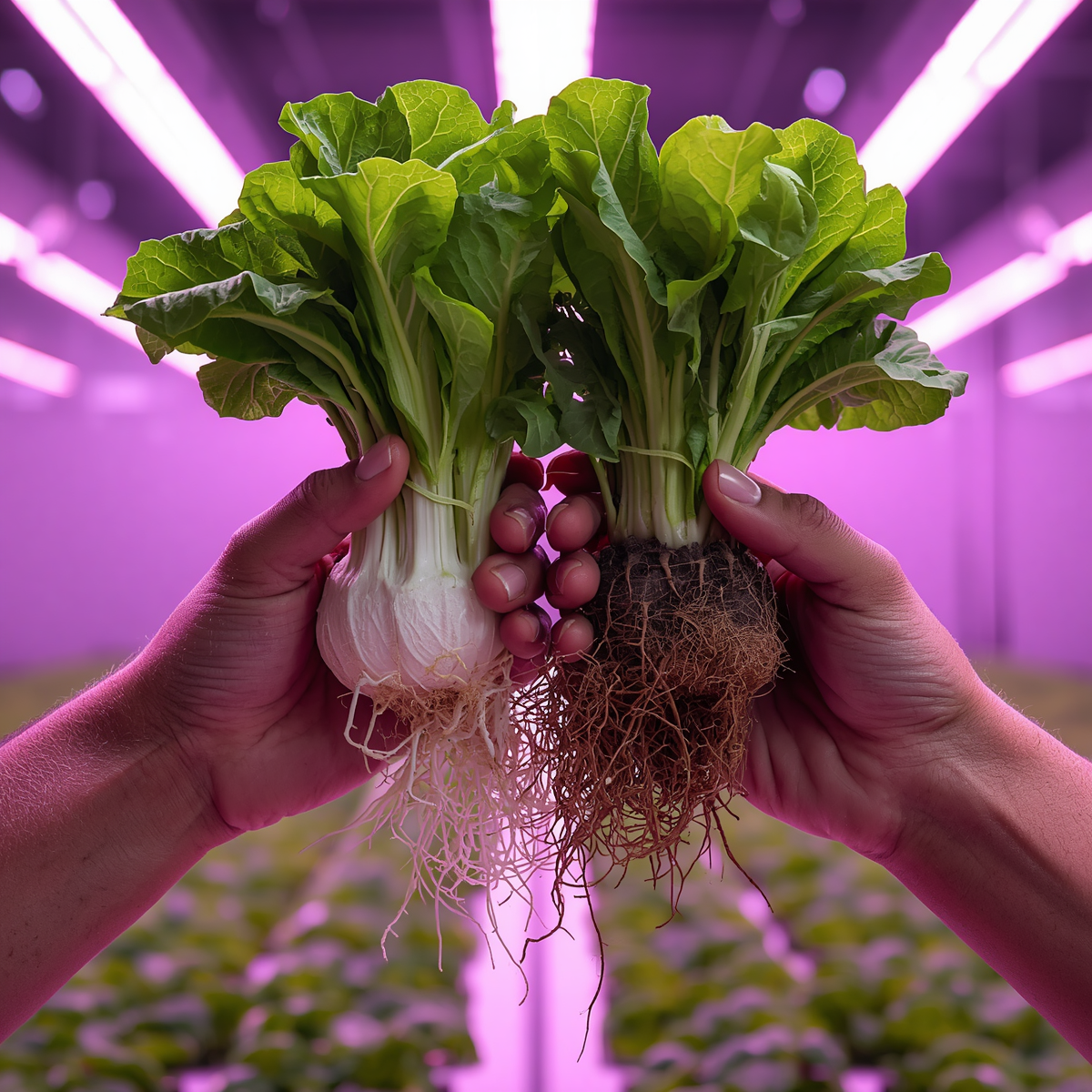
Yellow leaves show up on a Tuesday. You check pH—fine. EC — fine. Roots look white and healthy. So what changed? By Friday, three more plants look the same, and you’re reaching for a nitrogen supplement that probably won’t help. Sound familiar?
This is the most common pattern in hydroponic troubleshooting: growers react to symptoms without accurately diagnosing the cause first. And in a recirculating system where everything is connected, a wrong treatment can create new problems faster than it fixes old ones. Hydroponic plant health diagnosis isn’t just about knowing what the symptoms look like — it’s about reading where they appear, how fast they progress, and what else is happening in your environment at the same time.
Here at Grow With Hydroponics, we built the Plant Health Diagnosis Tool specifically to help growers move from guessing to knowing. This guide walks you through the most common hydroponic plant health problems—nutrient deficiencies, pH lockout, root disease, EC imbalance, and environmental stress—so you understand not just what to look for, but why it happens and how to fix it properly.
Why Is Hydroponic Plant Health Diagnosis So Tricky?
The challenge isn’t that hydroponic plant problems are rare. It’s that their symptoms overlap almost completely. Nitrogen deficiency, iron deficiency, root rot, and high EC stress can all produce yellowing leaves. Low VPD, calcium deficiency, and overwatering all cause wilting. And the same symptom — stunted growth, for example — can result from at least half a dozen different root causes.
There’s another trap beginners fall into regularly: seeing a symptom and immediately adding more of the nutrient that seems deficient. Add extra iron to an iron-deficient plant when the real problem is high pH, and you’ve just added salt load without solving anything. The pH is still blocking uptake. The iron is still unavailable. And now your EC is higher.
The correct sequence is always the same: observe, diagnose, then act. One change at a time.
What Do Yellow Leaves Actually Mean in Hydroponics?
Yellow leaves are the single most common complaint in hydroponic growing—and also the least useful symptom on its own. The pattern matters far more than the colour.
Yellowing Old Leaves First: Mobile Nutrient Deficiencies
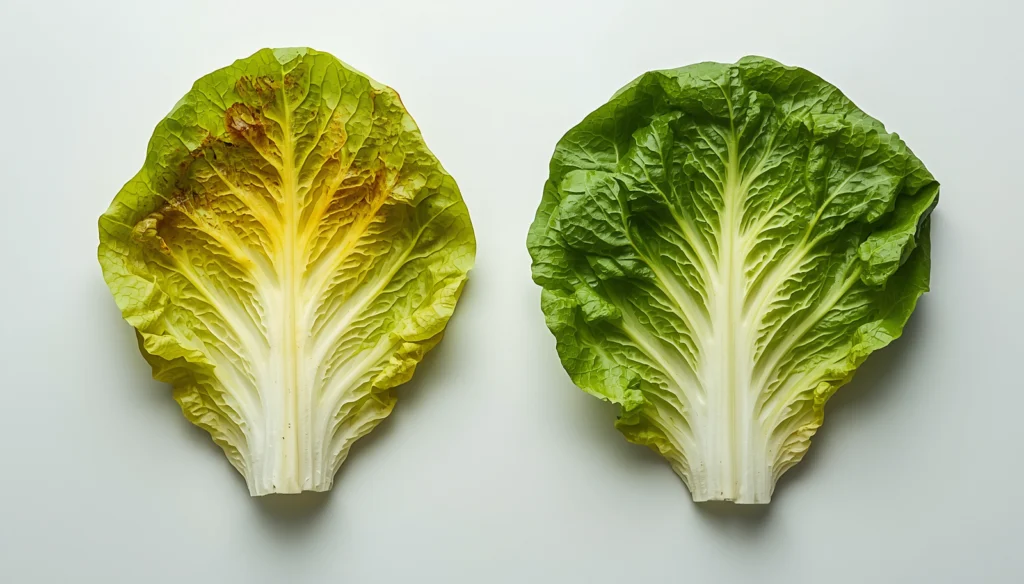
When older, lower leaves yellow first while new growth stays green, the plant is dealing with a mobile nutrient deficiency. Mobile nutrients — nitrogen, phosphorus, potassium, and magnesium — can be relocated by the plant. When the supply runs short, the plant pulls them from older tissue to feed new growth. The old leaves sacrifice themselves.
- Nitrogen deficiency causes uniform pale yellowing starting from the tip of older leaves, progressing upward through the canopy. Stems may develop a slight purple tint. Growth slows noticeably.
- Magnesium deficiency shows as interveinal yellowing on older leaves — the leaf veins stay green while the tissue between them turns yellow. It’s commonly triggered by pH imbalance rather than an actual shortage of magnesium in the solution.
- Potassium deficiency appears as brown, scorched-looking edges on older leaves, sometimes with dead spots spreading inward.
Yellowing New Leaves First: Immobile Nutrient Deficiencies
When new growth yellows while older leaves stay green, you’re looking at an immobile nutrient deficiency. Calcium, iron, boron, zinc, and manganese cannot be moved from old tissue to new once deposited. Young leaves that can’t access enough of these nutrients show the damage first.
- Iron deficiency produces interveinal chlorosis on new growth — bright yellow or white between the veins, with veins remaining green. Almost always caused by high pH (above 6.5) blocking iron uptake, not by an actual shortage of iron in the reservoir.
- Calcium deficiency causes tip burn (browning, curling leaf margins on inner young leaves) in lettuce and blossom end rot in tomatoes and peppers. It’s often linked to low VPD or poor air circulation limiting transpiration, not low calcium in the nutrient solution.
That last point is important. Calcium travels with water through the xylem via mass flow—driven by transpiration. When humidity is too high and VPD is too low, plants barely transpire, and calcium delivery to fast-growing tissues slows even if the reservoir has plenty. Check the environment before adding more calcium.
How Does pH Affect Hydroponic Plant Health?
Over 60% of nutrient deficiency symptoms in hydroponic systems trace back to pH imbalance rather than an actual shortage of nutrients. This bears repeating: your reservoir can contain every nutrient in the correct amount, but if pH is off, the plant can’t access them.
Most hydroponic crops perform best between pH 5.5 and 6.2. Outside this window, different nutrients become chemically unavailable—a condition known as nutrient lockout.
- pH below 5.0: Iron and manganese become available in excess (toxicity risk), while calcium, magnesium, and phosphorus become restricted.
- pH above 6.5: Iron, phosphorus, and manganese become locked out. Calcium and zinc absorption also suffers significantly.
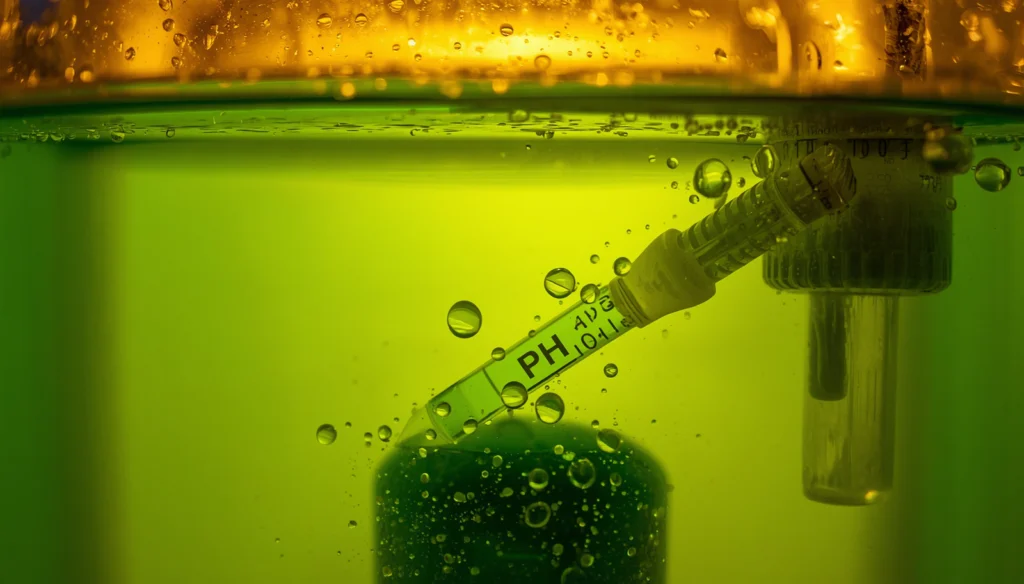
The fix seems simple: adjust pH. But the mistake many growers make is checking pH once and assuming it’s stable. In active systems—especially DWC—pH drifts constantly as plants uptake nutrients and alter the solution chemistry. Daily checks are genuinely necessary, not optional.
A practical tip from experienced growers: if your diagnosis points to a nutrient deficiency but your solution has adequate levels, always check and correct pH before adding any supplement. A high percentage of deficiencies resolve within days once pH is brought back into range.
Hydroponic Plant Health Diagnosis: Reading EC and Salt Stress
EC—electrical conductivity—measures the total dissolved nutrient concentration in your solution. Too low and plants are underfed. Too high and osmotic stress prevents water and nutrient uptake even when nutrients are present. Both produce symptoms that look like other problems.
Low EC signs: Pale overall colour, slow growth, yellowing of older leaves, weak stems. Plants look like they’re simply not thriving.
High EC signs: Leaf tip burn, curling, crispy edges, wilting despite adequate water flow. In severe cases, salt deposits are visible on growing media surfaces. The plant is essentially getting chemically dehydrated because the nutrient solution is saltier than the plant’s cell fluid.
Recommended EC ranges vary meaningfully by crop:
- Lettuce and leafy greens: 1.2–1.8 mS/cm
- Herbs (basil, mint, cilantro): 1.4–2.0 mS/cm
- Tomatoes: 2.0–3.5 mS/cm (lower in early growth, higher in fruit ripening)
- Cucumbers: 1.8–2.5 mS/cm
- Peppers: 2.0–2.8 mS/cm
If EC climbs because the reservoir is topping up with concentrated solution as plants drink, add plain pH-adjusted water rather than more nutrients until EC comes back down. Chasing high EC with water is far safer than adding more salts. Try our free Hydroponic Nutrient Calculator.
Root Health: The Problem You Can’t Always See
Root problems are uniquely frustrating because the damage happens below the waterline. By the time you see wilting, slow growth, or discoloration on leaves, the roots may already be significantly compromised.
What Does Root Rot Look Like in Hydroponics?
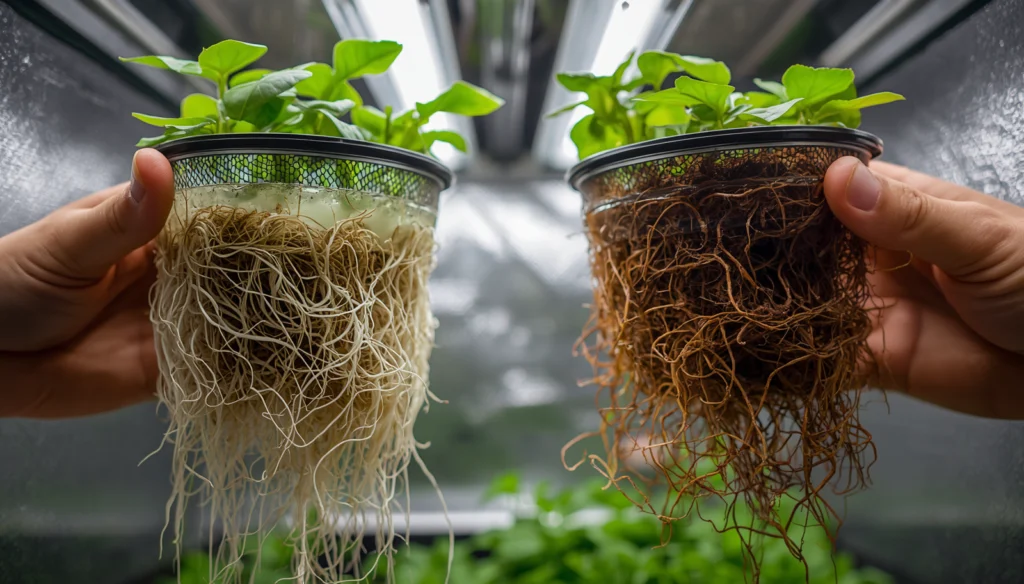
Healthy roots are white, firm, and smell earthy. Root rot—most commonly caused by Pythium and related water mold species—turns roots brown or tan, slimy, and foul-smelling. They lose structural integrity and pull apart easily.
The primary driver of Pythium in hydroponic systems is warm water with low dissolved oxygen. Water temperatures above 22°C (72°F) hold significantly less dissolved oxygen, and Pythium thrives in oxygen-depleted environments. Keeping the nutrient solution between 18 and 20°C is one of the most effective preventive measures you can take.
Foliar symptoms of root rot include wilting that doesn’t respond to water flow, discoloration, and sluggish growth despite correct pH and EC. If your diagnosis turns up no nutrient issues but plants are still struggling, lift a plant and check the root zone. Brown, slimy roots confirm the problem regardless of what the water tests say.
Once Pythium is present in a recirculating system, it spreads through the water. Isolating affected plants and treating the reservoir are essential—one infected plant can contaminate an entire system within days.
How VPD and Environment Affect Hydroponic Plant Health Diagnosis
Environmental stress is one of the most overlooked categories in hydroponic troubleshooting. Temperature, humidity, and airflow don’t just affect comfort — they directly control how plants take up nutrients.
VPD (Vapour Pressure Deficit) measures the difference between the moisture level inside the leaf and in the surrounding air. It’s the key driver of transpiration, and transpiration is what moves nutrients — especially calcium — through the plant.
- Low VPD (high humidity, above 75–80% RH): Transpiration slows. Calcium delivery to young leaves drops. This is why lettuce tipburn and tomato blossom end rot appear in humid environments even with correct calcium levels in the solution.
- High VPD (low humidity, dry conditions): Stomata close to prevent water loss. Nutrient uptake slows. Leaf edges dry and burn. The plant is trying to conserve water at the expense of feeding itself.
The optimal VPD for most hydroponic crops sits between 0.8 and 1.2 kPa during active growth. If your diagnosis keeps returning to calcium or environmental stress, use the VPD Calculator to check whether your temperature and humidity combination is creating the problem. Many growers fix tipburn by improving air circulation rather than by adjusting nutrients.
Hydroponic Plant Health Diagnosis: Common Mistakes to Avoid
Adding nutrients before checking pH. If pH is wrong, adding more nutrients makes things worse. Always correct pH first and wait 48–72 hours before deciding whether a supplement is needed.
Treating the wrong leaf age. Yellowing new growth is a completely different problem from yellowing old growth. Confusing the two leads to completely wrong treatments.
Changing multiple variables simultaneously. A common panic response. If you adjust pH, add a calcium supplement, and reduce EC all at once, you’ll never know what actually helped — or which change created a new issue.
Assuming clean water is neutral. Tap water in many areas is pH 7.0–8.0 and may contain calcium, chlorine, or bicarbonates that interfere with nutrient availability. Hard water is a surprisingly frequent cause of iron and phosphorus deficiency in otherwise well-managed systems.
Ignoring the grow log. Patterns only become visible over time. pH drift, EC creep, temperature fluctuations — these are nearly impossible to diagnose on a single day’s reading. A simple daily log of pH, EC, and water temperature is genuinely one of the most useful tools available.
Comparison Table: Common Hydroponic Plant Health Problems at a Glance
| Problem | Key Symptom | Where It Appears | Most Likely Cause | First Step |
|---|---|---|---|---|
| Nitrogen deficiency | Uniform pale yellowing | Older/lower leaves first | Low EC or low N in solution | Check EC; adjust nutrient formula |
| Iron deficiency | Interveinal chlorosis | New growth first | High pH (above 6.5) | Correct pH to 5.5–6.2 |
| Calcium deficiency | Tipburn, blossom end rot | Inner young leaves | Low VPD or poor airflow | Improve air circulation; check VPD |
| Magnesium deficiency | Interveinal yellowing | Older leaves | pH imbalance or Mg shortage | Check pH; top up Mg if needed |
| Root rot (Pythium) | Wilting, brown, slimy roots | Roots + foliage wilting | High water temp, low DO | Cool reservoir; increase aeration |
| High EC stress | Tip burn, leaf curl | Leaf edges and tips | EC too high, salt build-up | Dilute with plain pH-adjusted water |
| Low VPD stress | Tipburn, poor Ca uptake | Young inner leaves | High humidity, poor airflow | Increase airflow; reduce humidity |
| pH lockout | Multiple deficiency signs | Variable across plant | pH out of 5.5–6.2 range | Correct pH; wait 48–72 hrs |
Step-by-Step Hydroponic Troubleshooting Process
When something looks wrong, follow this sequence before making any changes:
- Observe carefully. Which leaves are affected—old or new? Is the pattern uniform or irregular? Is there webbing, sticky residue, or any visible insects? (Irregular, asymmetric damage with physical signs often points to pests rather than nutrients.)
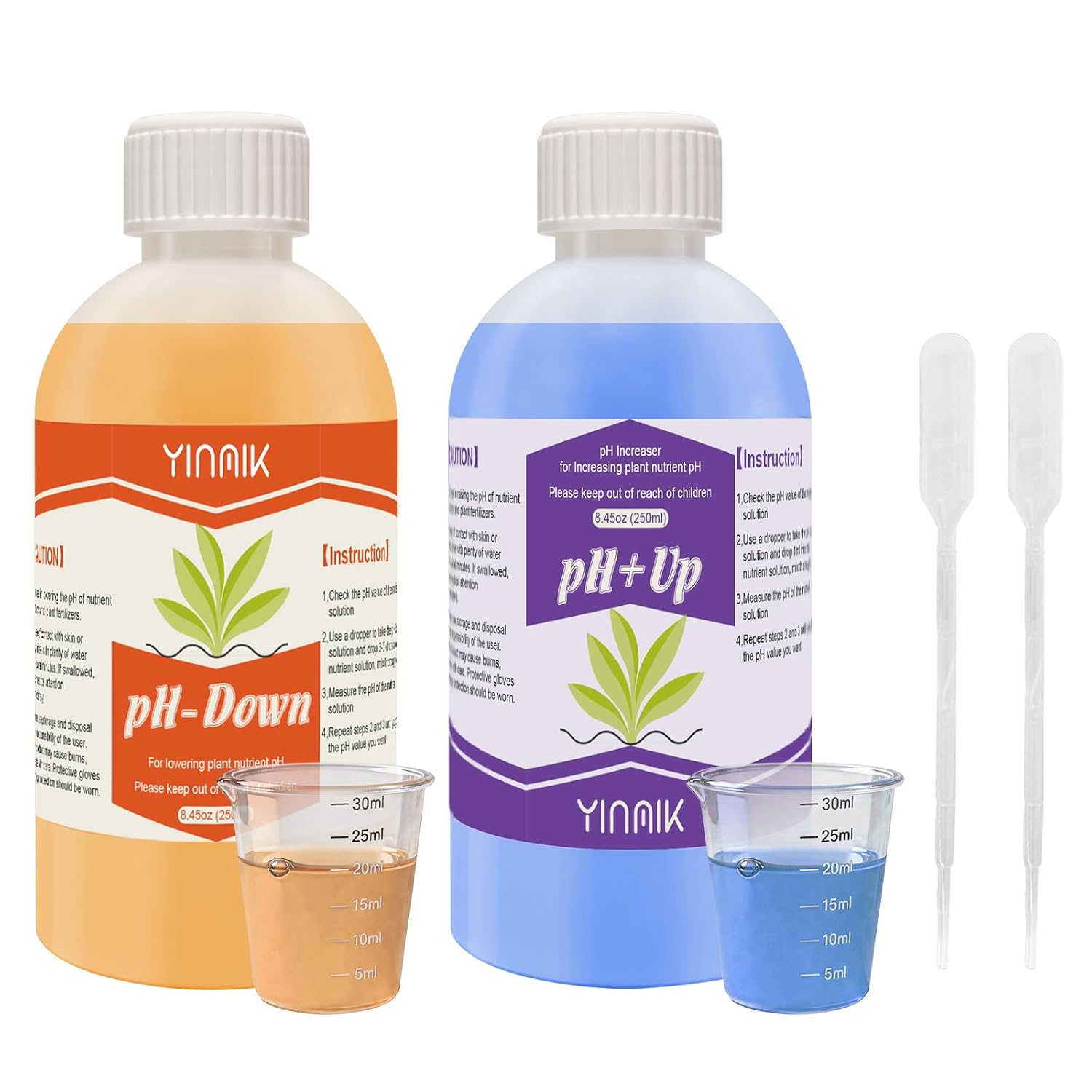
- Check pH first. Measure and record. If pH is outside 5.5–6.2, correct it before doing anything else.
- Check EC. Is it within the correct range for your crop and growth stage? If it’s high, dilute. If it’s low, adjust the nutrient formula.
- Check water temperature. Above 22°C? Your dissolved oxygen is dropping and Pythium risk is increasing. Cooling the reservoir is a priority.
- Check VPD. High humidity environments with low airflow are a common hidden cause of calcium problems and fungal pressure.
- Inspect roots. Lift a plant and look. White and firm is healthy. Brown and slimy means Pythium. Tan and sparse may mean root damage from pests or high EC.
- Make one change. Address the most likely cause. Wait 48–72 hours and observe the plant’s response before making another adjustment.
If you’re not sure where to start or symptoms don’t fit a clear pattern, the Plant Health Diagnosis Tool runs through symptom combinations for your specific crop and gives you confidence-ranked results with corrective steps. It’s particularly useful when multiple issues may be occurring at once.
Nutrients That Actually Work for Hydroponic Systems
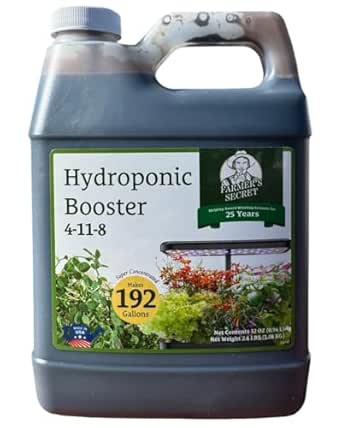
Nutrient quality matters more in hydroponics than most growers realise — especially when diagnosing deficiencies. A complete, balanced hydroponic formula eliminates most of the guesswork and gives the diagnosis tool accurate baseline data to work from. Browse formulations designed for CEA and recirculating systems at Shop Smart.




FAQ: Hydroponic Plant Health Diagnosis Questions
Q: My plants look deficient but my EC and pH are both correct. What else should I check?
First, verify your pH meter is calibrated — an uncalibrated meter is one of the most common sources of “mystery” deficiencies. Also check water temperature (high temps reduce nutrient uptake), VPD (low transpiration blocks calcium movement even with correct solution), and root health (brown, slimy roots mean the plant isn’t absorbing anything efficiently regardless of what the solution contains). Nutrient lockout can also occur even within the correct pH range if a single nutrient is disproportionately high and blocking absorption of others.
Q: How do I tell the difference between a nutrient deficiency and pest damage?
Pattern and progression are the clearest indicators. Nutrient deficiencies develop gradually, are symmetrical across similar leaf ages throughout the plant, and follow predictable patterns (old leaves for mobile nutrients, new leaves for immobile). Pest damage is irregular and asymmetric, progresses faster, and is almost always accompanied by physical evidence — webbing, frass, sticky honeydew residue, or visible insects when you check leaf undersides with a hand lens.
Q: Can I reuse nutrient solution, and does it affect plant health?
Yes, with monitoring. Recirculated solution needs daily pH and EC checks because the balance of individual nutrients shifts as plants selectively uptake some ions over others. Over time, sodium and chloride accumulate (particularly in hard water areas), and certain micronutrients become depleted. Most growers do a full reservoir change every 7–14 days for smaller systems or maintain a drain-to-waste fraction in larger setups to flush accumulated salts.
Q: My tomatoes have blossom end rot, but my calcium level looks fine. Why?
Blossom end rot is almost always a calcium delivery problem rather than a calcium supply problem. Calcium moves through the plant with water (mass flow via transpiration). If VPD is too high, transpiration pulls calcium to leaves rather than fruit. If VPD is too low, transpiration slows and calcium delivery to actively growing tissue (like fruit) drops. Check airflow, temperature, and humidity before adding more calcium. Also check that EC isn’t too high—osmotic stress reduces water movement through the plant and can starve fruit of calcium even with adequate reserves.
Q: How often should I be testing pH and EC in a hydroponic system?
Daily, for both. In a new system or after a nutrient change, test twice a day until you understand how your system drifts. pH can shift significantly within 24 hours in an active DWC or NFT system, particularly during fast vegetative growth when plants are consuming large amounts of nitrogen. Catching a 0.3 pH unit drift early prevents the cascade of deficiency symptoms that follow when it goes unchecked for days.
Diagnose First, Then Fix
The difference between growers who consistently harvest clean, healthy crops and those who spend half their grow cycle firefighting isn’t luck or superior genetics. It’s systematic observation. Read the leaf age. Check pH first. Change one thing at a time. Keep a log.
Hydroponic plant health diagnosis rewards patience and punishes guesswork. Most problems are solvable quickly once you know what you’re actually dealing with—and most solutions are simpler than growers expect when they reach for the right fix at the right time.
Grow With Hydroponics is designed to support that process. The Plant Health Diagnosis Tool gives you a structured, confidence-ranked starting point based on real plant science—organized by crop, symptom pattern, and leaf age. Use it as part of your regular monitoring routine rather than only when things have already gone wrong.
The earlier you diagnose, the less you lose.



Build the Right Growing Foundation
Clean, well-structured growing media is the first step to a healthy root zone — and a healthy root zone makes every other diagnosis simpler. Fewer surprises below the surface means faster, more accurate troubleshooting above it.


