

Most hydroponic growers don’t lose crops because they ignored a problem. They lose crops because they misidentified one. The damage from spider mites looks a lot like early nutrient deficiency. Root aphids produce the same wilting as Pythium root rot. Thrips scarring gets confused with calcium deficiency every single week in grow rooms around the world. And by the time the real culprit becomes obvious, the population has already exploded.
Accurate hydroponic pest identification is the skill that separates growers who consistently harvest clean crops from those constantly fighting crises. Here at Grow With Hydroponics, we built our Hydroponic Pest Identification Tool for exactly this reason—fast, confident diagnosis using a hybrid of symptom-based analysis and AI image recognition designed specifically for CEA and soilless systems.
This guide covers the pests that matter most in hydroponic growing, how to read the symptoms they leave behind, how to respond correctly, and how to build prevention habits that keep infestations from happening in the first place.
Why Hydroponic Pest Identification Is Harder Than It Looks
Outdoor pest problems stay relatively contained. A few aphids on one tomato plant rarely devastate the entire row overnight because natural predators, wind, and rain push back. Indoor systems don’t have those buffers.
In a recirculating hydroponic system, everything is connected. Pythium zoospores swim freely through shared nutrient solution. Spider mites ride air currents between canopy rows. Fungus gnat larvae migrate through moist growing media. A pest that establishes itself quietly on one plant can reach your entire system within 48 to 72 hours under the right conditions.
There’s also no seasonal reset. Outdoor pest populations collapse in winter. Indoor systems maintain warm, humid, year-round conditions that allow pest populations to build continuously without interruption. A small colony that seems manageable on a Thursday can be a full infestation by Monday.
And there’s the misidentification trap. Yellow stippling on a leaf could be spider mites, thrips, or a pH-driven iron deficiency. Wilting despite full reservoirs could be root rot, root aphids, or high EC stress. A wrong diagnosis means wrong treatment—and wrong treatment costs time and crops.
The 5 Most Damaging Hydroponic Pests and How to Identify Them
Spider Mites
Spider mites are consistently the most feared pest in enclosed growing environments. They’re barely visible without magnification—adults measure less than half a millimeter—but their damage is unmistakable once you know what you’re looking for.
How to identify them:
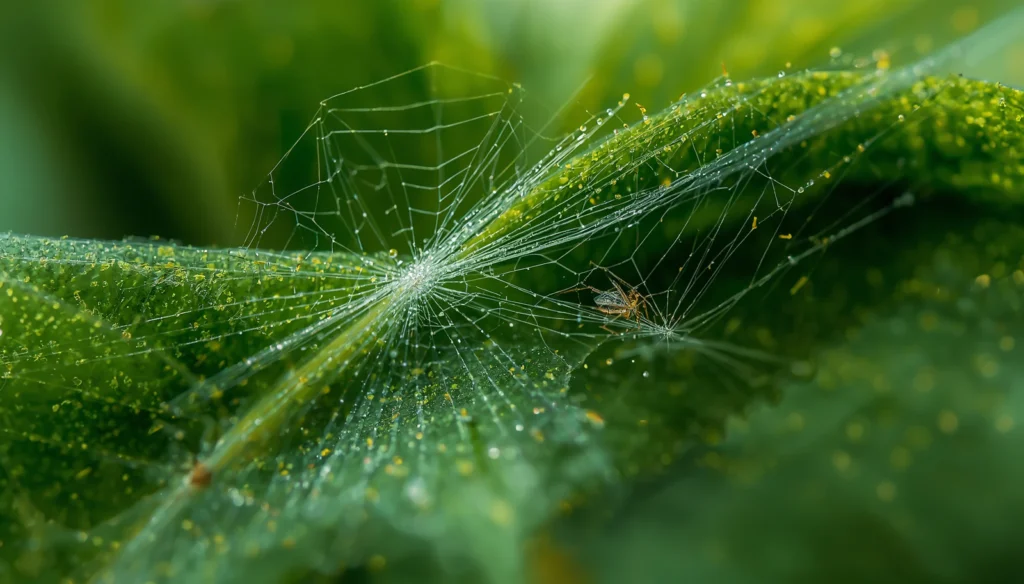
- Fine, silky webbing stretched across new growth and connecting leaves — this is the clearest sign of a significant colony
- Yellow or white stippling (tiny pinprick dots) scattered across the upper leaf surface — caused by mites piercing cells and draining the contents
- Bronze or silvery discolouration on leaves in heavier infestations
- Run a white tissue along the underside of a suspect leaf; faint reddish-brown streaks confirm mite feeding
They thrive in hot, dry conditions — typically above 27°C (80°F) with relative humidity below 40–50%. Summer heat waves or aggressive HVAC dehumidification both accelerate population explosions. A colony can double in size every week under warm, dry conditions, which makes early detection non-negotiable.
Crops most affected: Tomatoes, cucumbers, strawberries, peppers, basil.
Aphids
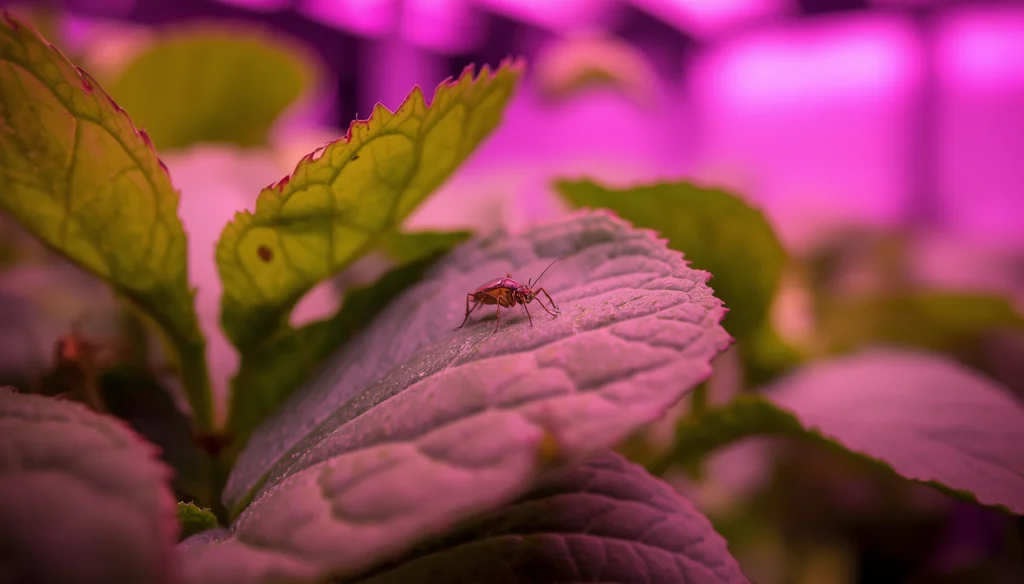
Aphids are soft-bodied, pear-shaped insects ranging from 1–3mm that cluster on new growth and the undersides of leaves. Colour varies — green, black, grey, or yellow depending on species — but their damage pattern is consistent.
How to identify them:
- Dense colonies on tender shoot tips and new growth
- Sticky, shiny honeydew residue coating leaves and growing surfaces
- Black sooty mould growing on honeydew deposits — a reliable secondary indicator
- Curling, cupping, or downward distortion of young leaves
- Ants appearing in your grow space (attracted to honeydew)
Aphids reproduce asexually at room temperature, with a single female producing large numbers of offspring within days. Colonies expand quickly, particularly when nitrogen levels in the nutrient solution are elevated. Plants running heavy veg feeds are aphid-attractive, which is a useful thing to know when scouting.
Crops most affected: Lettuce, herbs, kale, peppers, tomatoes.
Thrips
Thrips are slender, narrow-bodied insects 1–2mm long and range from pale yellow to dark brown. They’re especially difficult to detect early because they hide inside buds, rolled leaves, and flowers. Adults and nymphs both feed by rasping through plant tissue rather than piercing it — producing distinctive silvery scarring rather than uniform stippling.
How to identify them:
- Silver or bronze streaks on leaf surfaces following feeding tracks
- Tiny black fecal deposits (frass) scattered across leaves — one of the most reliable identification markers
- Distorted, twisted, or failed-to-open new growth and buds
- Flower damage and reduced fruit set in fruiting crops
- Blue sticky traps at canopy level catching small, dark-bodied adults
Beyond direct feeding damage, thrips are primary vectors for tospoviruses, including Tomato Spotted Wilt Virus (TSWV). The virus often causes more long-term damage than the feeding itself, which makes early detection genuinely critical in high-value crops.
Crops most affected: Peppers, eggplant, pak choi, tomatoes, cucumbers.
Fungus Gnats
The adults — small, dark, mosquito-like flies around 2–3mm — are mostly harmless nuisances. The larvae are the real problem. They hatch in moist growing media, feed on root hairs and fine root tips, and create entry wounds that secondary pathogens — particularly Pythium — are quick to exploit.
How to identify them:
- Adults hovering around the base of plants, reservoir lids, and growing media surfaces
- Larvae: small, white, thread-like, with a distinct black head, found in the top layer of moist media
- Plants wilting or showing nutrient deficiency symptoms despite correct pH and EC — because root damage is disrupting uptake, not the nutrient formula
- Sticky traps placed at media level (not canopy height) catching significant numbers of adults
Fungus gnats thrive wherever organic growing media stays consistently moist. Coco coir, rockwool slabs, and perlite mixes with poor drainage are the most common breeding grounds. Fully aquatic systems like DWC have considerably lower risk.
Crops most affected: Any crop in organic or mixed media—leafy greens, herbs, and seedlings especially.
Whiteflies
Whiteflies are tiny white-winged insects around 1–2 mm that immediately rise in a cloud when disturbed—making them easy to spot but fast to spread. Two species are most common in CEA environments: the greenhouse whitefly (Trialeurodes vaporariorum) and the sweetpotato whitefly (Bemisia tabaci).
How to identify them:
- Clouds of tiny white insects rising from the canopy when plants are brushed
- Honeydew and sooty mould on lower leaves (same secondary pattern as aphids)
- Yellow stippling and chlorosis spreading across affected leaves
- Nymphs (scale-like, flat, pale) on leaf undersides — often mistaken for part of the leaf
Whiteflies have developed resistance to many chemical insecticides through repeated exposure, making biological control increasingly important in commercial CEA. Multiple generations per month under warm conditions mean populations escalate faster than chemical rotation schedules can keep up with.
Crops most affected: Tomatoes, peppers, eggplant, cucumbers, herbs.
Hydroponic Pest Identification: Reading Damage Patterns Correctly
Identifying the pest from symptoms alone requires reading where damage appears, what it looks like, and what else is present.
Location of damage:
- Upper leaf surface: spider mite stippling, thrips scarring, powdery mildew
- Leaf undersides: aphid colonies, whitefly nymphs, spider mite webbing
- New growth and buds: thrips, aphids, broad mites
- Root zone: Pythium, fungus gnat larvae, root aphids (waxy white deposits on roots)
- Whole plant wilting with healthy-looking foliage: always check roots first
Type of damage:
- Fine uniform stippling → spider mites
- Silver streaks with black frass → thrips
- Sticky residue and sooty mould → aphids, whiteflies, mealybugs
- White powdery coating on leaves → powdery mildew (not mealybug wax, which forms lumps at stem joints)
- Brown slimy roots with foul smell → Pythium root rot
- Root tunnelling, wilting despite good solution → fungus gnat larvae or root aphids
Frankly, this is where most beginners go wrong — reading one symptom in isolation rather than the whole pattern. A single yellowing leaf proves nothing. Three yellowing leaves at the base of the plant with sticky residue on the one above them tells a different story.
Comparison Table: Hydroponic Pests at a Glance
| Pest | Visible Sign | Best Scouting Method | Key Damage | First Response |
|---|---|---|---|---|
| Spider Mites | Stippling, webbing | 10× lens; tissue wipe test | Leaf decline, photosynthesis loss | Raise humidity; release Phytoseiulus persimilis |
| Aphids | Colonies, honeydew | Visual — leaf tips and undersides | Stunting, sooty mould, virus spread | Insecticidal soap; release lacewings or ladybugs |
| Thrips | Silver streaks, black frass | Blue sticky traps; magnification | Scarring, TSWV transmission | Amblyseius cucumeris; spinosad spray rotation |
| Fungus Gnats | Flying adults, wilting | Yellow sticky traps at media level | Root damage, Pythium entry points | Steinernema feltiae nematode drench; Bti |
| Whiteflies | White clouds when disturbed | Yellow sticky traps; visual canopy check | Sap loss, sooty mould, virus spread | Encarsia formosa; insecticidal soap rotation |
| Pythium | Brown slimy roots, wilting | Weekly root inspection | Root system collapse | Lower water temp; increase dissolved oxygen |
| Powdery Mildew | White powdery leaf coating | Visual; check undersides | Reduced photosynthesis, leaf drop | Improve airflow; potassium bicarbonate spray |
Practical Scouting: How to Catch Problems Early
Reactive pest management is always more expensive than proactive scouting. The growers who rarely lose crops to pests scout consistently — and they do it systematically, not casually.
Build a scouting routine:
- Scout at least twice per week. Most infestations double between once-weekly checks.
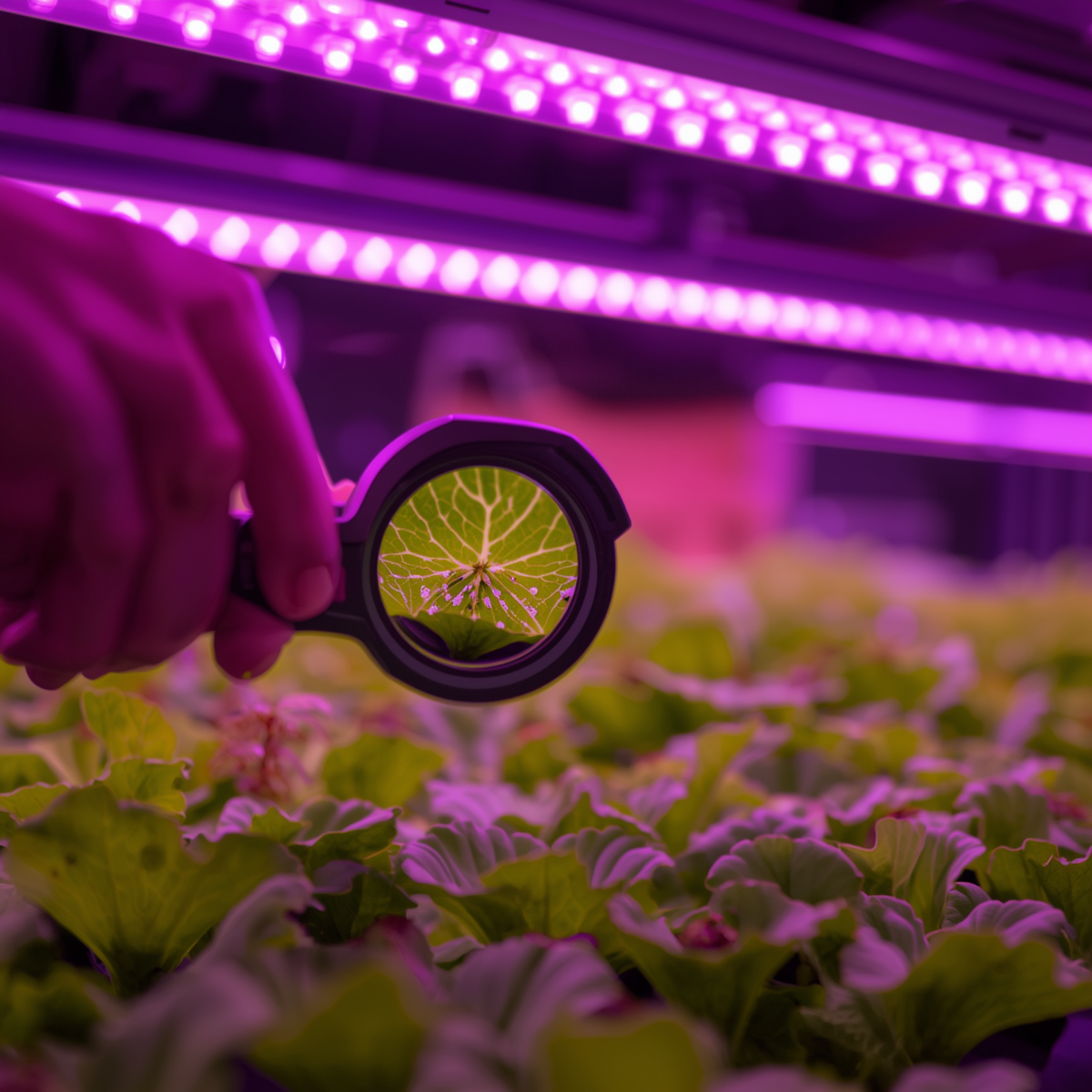
- Use a 10× hand lens. Spider mites, thrips nymphs, and root aphid wax are all but invisible without magnification.
- Check leaf undersides first on every plant. That’s where most insects establish before moving upward.
- Run the tissue test for mites—a white tissue wiped across the leaf underside shows streaks if mites are feeding.
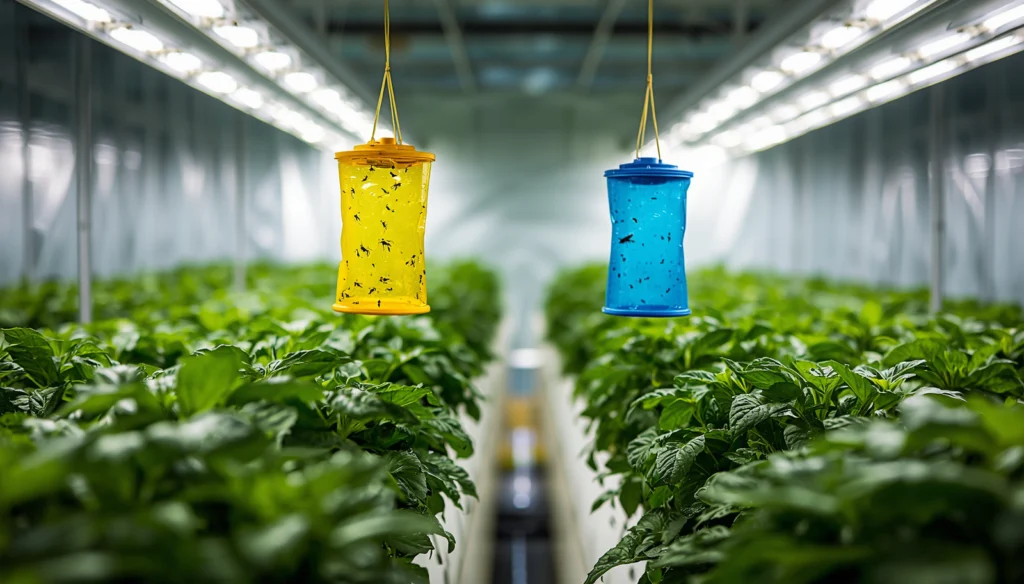
- Place yellow sticky traps at canopy level and blue traps nearby—replace and count weekly. A spike in numbers is an early warning.
- Place additional yellow traps at media surface level specifically for fungus gnat adults.
- Inspect roots on two or three randomly selected plants each week. White and firm is healthy. Brown, slimy, or sparse means trouble.
When you’re unsure what you’re looking at, use a structured diagnostic resource. The Hydroponic Pest Identification Tool uses a hybrid of symptom-based analysis (weighted against a CEA-specific pest database) and AI image recognition to return a confidence-ranked diagnosis with biocontrol-compatible treatment suggestions. Run it when symptoms don’t match what you expect, or when you want a second opinion before committing to a treatment.
Hydroponic Pest Identification: Common Mistakes That Cost Crops
Treating symptoms without diagnosing the cause. Applying nitrogen to a plant with yellowing caused by spider mite feeding wastes product and loses time. The mites keep feeding.
Waiting until the infestation is visible. By the time a colony is obvious with the naked eye, population density is already well past early-stage. Early action with light treatment beats late action with heavy treatment every time.
Reaching for chemicals first. In recirculating systems, chemical pesticide runoff contaminates the reservoir, can affect dissolved oxygen, and often kills beneficial microbes that protect root zones. Many soft-bodied pest species also develop chemical resistance quickly. Biological control first is a practical choice, not just an idealistic one.
Skipping quarantine on new plants. A cutting from another grower, or a purchased transplant, is one of the most common ways pests enter a system. Two weeks of isolation before integration is not excessive. A single aphid-carrying plant introduced without quarantine can spread across an entire DWC system within a week.
Confusing pest damage with nutrient deficiency. If yellowing or distortion is symmetrical and consistent across similar leaf ages throughout the plant, it’s more likely a nutrient or pH issue. Pest damage is irregular, progressive, and accompanied by physical signs. When in doubt, check the roots and undersides of leaves before touching the nutrient formula.
Try for free Hydroponic Plant Health Diagnosis Tool.
Integrated Pest Management in Hydroponic Systems: The Framework That Works
IPM — integrated pest management — is the gold standard for crop protection in CEA. It doesn’t mean avoiding all chemical inputs forever. It means using the most targeted, least-disruptive intervention appropriate for the situation in a defined sequence.
Prevention first. Sterilise all equipment between cycles. Quarantine new plants. Install fine insect screening on air intakes and exhaust vents. Maintain optimal dissolved oxygen in the reservoir (target 7–8+ ppm) and keep water temperature below 20°C (68°F) to suppress Pythium. These habits eliminate most problems before they start.
Monitoring continuously. Systematic scouting, sticky trap data, and weekly root inspection create the early-warning system that makes everything else work.
Biological control as the primary active intervention. When populations need active suppression, beneficial organisms are the most compatible option for hydroponic and CEA systems:
- Phytoseiulus persimilis for spider mites
- Lacewings and ladybugs for aphid colonies
- Amblyseius cucumeris for thrips
- Stratiolaelaps scimitus for fungus gnat larvae in media
- Encarsia formosa for whitefly in enclosed systems
- Steinernema feltiae nematodes drenched into media for fungus gnat larvae
- Trichoderma spp. to occupy root zones and suppress Pythium and Fusarium
Beneficials need time to establish. Introduce them early — before infestations are severe — for the best results.
Organic and OMRI-listed sprays as supplemental support. Insecticidal soap for contact knockdown of soft-bodied pests. Neem oil (azadirachtin) as a preventive and early-stage antifeedant. Potassium bicarbonate for powdery mildew. Rotate products to avoid resistance development.
Chemical controls as a genuine last resort. Reserved for situations where populations have passed the threshold where biologicals alone can recover ground. Always check label compatibility with hydroponic systems, edible crops, and any active biological releases.
Prevention Checklist for Hydroponic Growers
Not glamorous. Very useful.
- Quarantine all new plants for at least 14 days before system introduction
- Sterilise reservoirs, pipes, channels, and growing containers between every crop cycle
- Install insect screening (50 mesh or finer) on all air inlets and exhaust fans
- Keep nutrient solution temperature between 18 and 20°C (65 and 68°F)
- Maintain dissolved oxygen above 7 ppm using air stones or venturi diffusers
- Scout twice weekly; document and log results
- Run yellow and blue sticky traps continuously; count and replace weekly
- Avoid prolonged high nitrogen feeds—it increases plant susceptibility to sap-sucking pests
- Rotate neem oil, insecticidal soap, and biological inputs—never rely on one method repeatedly
Pest Control Inputs Worth Having Before You Need Them
Having insecticidal soap, neem oil, and biological control agents on hand before an outbreak means you respond fast rather than scramble. Browse our curated selection of organic and biocontrol-compatible products at Shop Smart — chosen specifically for CEA and recirculating hydroponic systems.



Frequently Asked Questions About Hydroponic Pest Identification
Q: Can hydroponic systems really get pests without any soil?
Yes, and often faster than soil gardens. The most damaging hydroponic pests—spider mites, aphids, thrips, and whiteflies—are foliage feeders that travel through air and on plant material. They don’t need soil to establish. And in an enclosed system without natural predators or seasonal die-off, populations grow unchecked.
Q: How do I tell pest damage from a nutrient deficiency?
Pattern and progression are the key clues. Nutrient deficiencies develop gradually and symmetrically—older leaves for mobile nutrients like nitrogen and new growth for immobile ones like calcium. Pest damage is irregular, asymmetric, and almost always accompanied by physical evidence: webbing, sticky residue, frass, or visible insects when you inspect leaf undersides with a hand lens. When in doubt, check pH and EC first, then check the leaf undersides.
Q: What’s the fastest-spreading pest in a hydroponic system?
Spider mites under warm, dry conditions. A small colony can reach every plant in a tightly packed system within two weeks. Their rapid reproductive cycle — females can produce hundreds of eggs in a lifetime — means early action is the only effective action.
Q: Should I use chemical pesticides in my hydroponic system?
Only as a genuine last resort, and with careful label review. Chemical runoff in a recirculating system contaminates the reservoir, can reduce dissolved oxygen, and disrupts beneficial microbes that naturally suppress pathogens. Soft-bodied pests also build resistance to chemicals quickly. Biological control and organic inputs handled in rotation are more sustainable and often more effective over a full season.
Q: When should I remove an infested plant from my system?
If the infestation is severe and the plant is past recovery, remove it immediately. In a recirculating system, a heavily infested plant is continuously spreading pests and pathogens to the rest of the crop. Holding onto it to “see if it recovers” almost always costs you more than the plant is worth.
Identify Fast, Respond Right, Prevent Everything Else
Pest management in a hydroponic system comes down to three habits: scout consistently, diagnose accurately, and act early. The growers who maintain clean crops cycle after cycle aren’t lucky — they know what normal looks like, so they notice the first deviation from it.
Know the five key pests: spider mites, aphids, thrips, fungus gnats, and whiteflies. Know what their damage looks like and where it shows up first. Scout twice a week. Use sticky traps. Prioritise biological control. And when you’re genuinely unsure what you’re dealing with, get a structured diagnosis rather than a guess.
Grow With Hydroponics is here to support every step of that process. The Hydroponic Pest Identification Tool uses hybrid AI diagnosis built specifically for CEA environments—combining symptom analysis with image recognition to give you fast, confidence-ranked identification and biocontrol-compatible treatment guidance. Use it as part of your regular scouting routine, not just in emergencies.
Accurate identification isn’t exciting. But it’s what keeps your crop alive.


