
The Ultimate Hydroponic Nutrient Optimizer Guide
Hydroponics gives growers full control over plant nutrition, but maintaining the correct nutrient balance is not always straightforward. If nutrients are not properly managed, plants may show deficiencies, slow growth, or reduced yields.
The Hydroponic Nutrient Optimizer is designed to simplify this process by helping you calculate, adjust, and balance nutrient solutions with precision. Instead of guessing, you can generate data-driven nutrient recommendations tailored to your crop, reservoir, and available salts.
What Is a Hydroponic Nutrient Optimizer?
A hydroponic nutrient optimizer is a tool that helps growers calculate the ideal nutrient composition for plants based on current readings, target NPK levels, and available fertilizer salts.
It is commonly used to:
- Correct nutrient deficiencies
- Balance NPK ratios
- Adjust reservoir strength
- Convert between PPM and grams per liter
- Improve overall plant health and yield
Key Features of the Nutrient Optimizer
Crop-Specific Nutrient Profiles
Select from crops such as tomatoes, lettuce, and herbs. Each crop has unique nutrient requirements depending on its growth stage.
Deficiency Detection & Correction
The tool identifies nutrient imbalances such as calcium deficiency or excess potassium and provides correction suggestions.
Salt-Based Optimization
It calculates the most efficient combination of nutrient salts to reach target levels while minimizing waste.
Custom Nutrient Targets
Advanced users can define their own NPK targets based on specific growing conditions.
Unit Conversion (PPM ↔ g/L)
Easily switch between concentration units for accurate mixing and monitoring.
Salt Library Customization
Enable or disable salts and adjust molecular weights or compositions for more precise calculations.
PDF Export
Generate a downloadable report for record-keeping and repeatable results.
How to Use the Hydroponic Nutrient Optimizer
Step 1: Set Reservoir Size
Enter the total volume of your hydroponic system.
Step 2: Select Units
Choose between PPM or grams per liter depending on your workflow.
Step 3: Choose Your Crop
Select your plant type or input custom nutrient targets.
Step 4: Enter Current Nutrient Levels
Input your current EC or PPM readings.
Step 5: Select Available Salts
Choose the fertilizers you have on hand.
Step 6: Run the Calculation
The tool will generate:
- Salt requirements
- Nutrient balance adjustments
- Optimized solution plan
How the Nutrient Optimizer Works
The optimizer evaluates:
- Current nutrient readings
- Target crop requirements
- Available nutrient salts
- Reservoir volume
It then calculates a balanced nutrient solution by adjusting concentrations to reduce deficiencies and avoid excess nutrients.
When Should You Use This Tool?
- Preparing a new nutrient solution
- Fixing nutrient deficiencies
- Adjusting reservoir strength
- Switching crops or growth stages
- Rebalancing after top-ups
Common Hydroponic Nutrient Issues
- Calcium deficiency (e.g., blossom end rot)
- Nutrient lockout due to imbalance
- Excess salts causing tip burn
- Incorrect NPK ratios
- Unstable reservoir concentration
Best Practices for Accurate Results
- Use calibrated EC/PPM meters
- Maintain consistent monitoring of your reservoir
- Recalculate after major water changes
- Measure nutrients accurately
- Adjust targets based on environmental conditions such as light and temperature
Hydroponic Nutrient Optimization
100L Reservoir, Tomato Targets
Let’s say you’re growing tomatoes in a 100‑liter system with the following targets:
200 ppm N
50 ppm P
300 ppm K
180 ppm Ca
50 ppm Mg
Your current nutrient levels are:
| N | P | K | Ca | Mg | S | Fe | Mn | Zn |
|---|---|---|---|---|---|---|---|---|
| 120 | 20 | 20 | 10 | 0 | 5 | 0 | 0 | 0 |
Using the tool with available salts, the optimizer returns:
Calcium Nitrate – 80.67 g
Magnesium Sulfate – 50.51 g
Mono Potassium Phosphate – 13.16 g
Potassium Sulfate – 23.55 g
Calcium Chloride – 12.04 g
Iron EDTA – 1.67 g
Zinc Sulfate – 0.04 g
Copper Sulfate – 0.04 g
Boric Acid – 0.29 g
Total salts: 182 grams
Nutrient accuracy: 67% of nutrients within 10% of target
Average deviation: 13.92 ppm
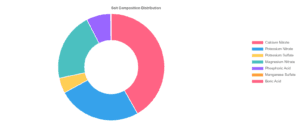
This gives you a clear, actionable recipe to prepare your next nutrient batch with confidence.
Nutrient Adjustment Table (Before vs After)
| Parameter | Before Optimization | After Optimization |
|---|---|---|
| Crop | Tomato | Tomato |
| Current PPM | 900 | 1200 |
| Calcium Level | Low | Balanced |
| Potassium Level | High | Optimized |
| Nutrient Balance | Imbalanced | Corrected |
| Plant Health Status | Deficiency Signs | Healthy Growth |
Nutrient Salts & Their Functions
| Nutrient Salt | Provides Nutrients | Common Use Case |
|---|---|---|
| Calcium Nitrate | Calcium + Nitrogen | Prevent calcium deficiency |
| Potassium Nitrate | Potassium + Nitrogen | Vegetative growth support |
| Magnesium Sulfate | Magnesium + Sulfur | Chlorophyll production |
| Monopotassium Phosphate | Phosphorus + Potassium | Flowering and root development |
| Iron Chelate | Iron | Prevent iron deficiency |
PPM vs Grams per Liter
| Unit Type | Description | Use Case |
|---|---|---|
| PPM | Nutrient concentration measurement | Monitoring solution strength |
| Grams per Liter | Exact nutrient mixing measurement | Preparing nutrient solutions |
PPM is best for monitoring, while grams per liter is ideal for mixing precise nutrient solutions.
Frequently Asked Questions (FAQs)
Should I use a nutrient optimizer for hydroponics?
Yes. It helps maintain balanced nutrients, correct deficiencies, and improve overall plant performance.
Can this tool fix nutrient deficiencies?
Yes. It identifies imbalances and provides recommendations based on your inputs.
Do I need experience to use it?
No. The tool is designed for both beginners and advanced growers.
How often should I use it?
Use it when preparing nutrient solutions or making major adjustments to your reservoir.
Managing hydroponic nutrients manually can be complex, especially when balancing multiple elements in a closed system. The Hydroponic Nutrient Optimizer simplifies this process by turning measurements into clear, actionable recommendations. By using it consistently, you can reduce guesswork, maintain stability in your system, and support healthier plant growth over time.