

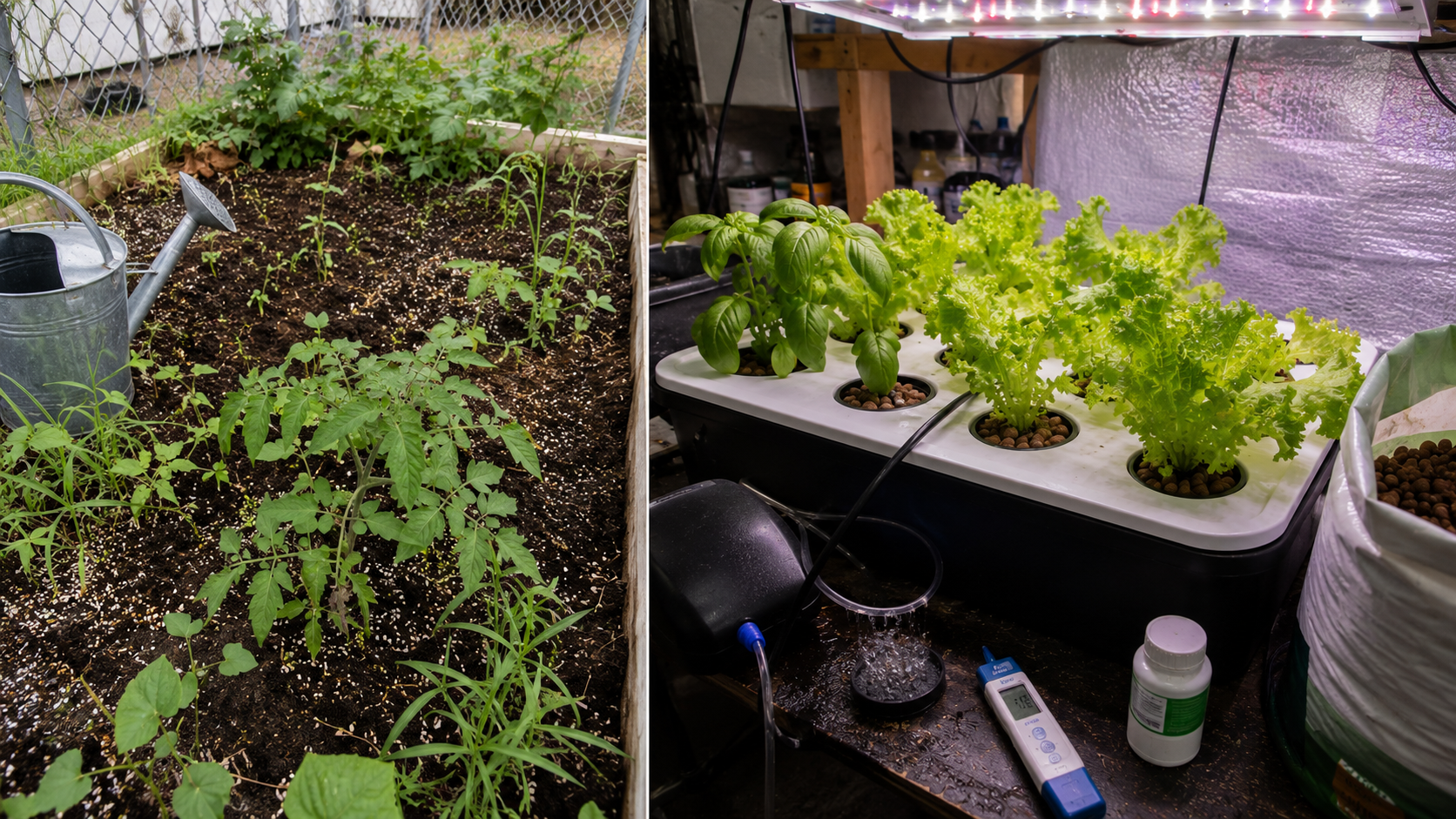
Most people ask “hydroponics vs soil” after they’ve already killed a tomato plant or two. Maybe the soil dried out while you were on vacation, maybe the bag of potting mix turned out to be full of gnats. Either way, you’ve started wondering if there’s a cleaner way to do this. At Grow With Hydroponics, we get some version of this question constantly, and the honest answer isn’t “hydroponics wins.” It’s “it depends on what you’re growing and how much you’re willing to manage.” This guide walks through actual yield data, real startup and running costs, water use, and which crops belong in which system, so you can make the call with numbers instead of guesswork.
Quick answer: Hydroponics typically grows leafy greens and herbs 25–50% faster than soil, with higher yield per square foot and up to 90% less water use, but costs more to start (roughly $200–$2,000+ vs. $50–$300 for soil) and demands more monitoring. Soil remains cheaper, more forgiving, and better for root vegetables.
What’s the Real Difference Between Hydroponics and Soil?
Hydroponics is a method of growing plants in a nutrient-rich water solution instead of soil, usually with an inert growing medium like rockwool, coco coir, or clay pebbles anchoring the roots. There are several distinct hydroponic system types worth knowing before you compare costs — our guide to hydroponic system types breaks down Kratky, DWC, and NFT in detail. Soil gardening relies on the physical and biological structure of soil — its organic matter, microbes, and mineral content — to hold water and slowly release nutrients to roots.
The core difference comes down to control. In soil, nutrients get released gradually as organic matter breaks down, and water availability depends on soil texture, drainage, and weather. In hydroponics, you’re delivering an exact nutrient solution (measured in EC, or electrical conductivity) directly to the root zone, and you control pH, oxygen levels, and feeding schedule down to the number.
That precision is why hydroponic plants often grow faster — but it’s also why hydroponics punishes neglect harder. Soil acts as a buffer. A missed watering in soil might stress a plant; a missed check on a hydroponic reservoir’s pH can crash a whole crop within days.
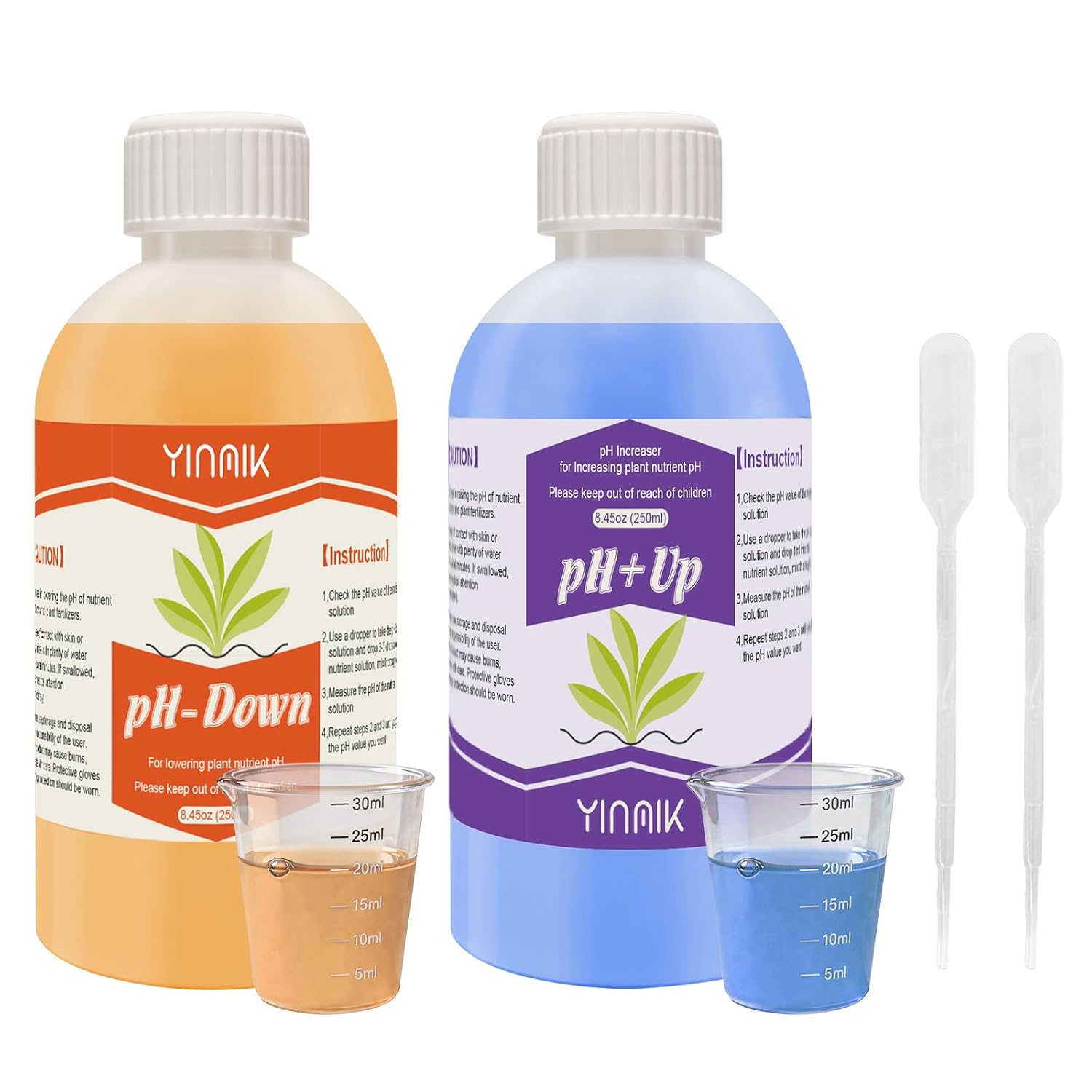
Get Your pH and EC Readings Right From Day One
Guessing your nutrient strength is the fastest way to stall a hydroponic system before it starts. A basic pH and EC meter pays for itself in the first saved crop.


Which Method Grows Plants Faster?
Hydroponic plants generally reach harvest 25–50% faster than the same crops grown in soil, largely because roots don’t have to search for nutrients — that saved energy goes into visible growth instead. Lettuce is a commonly cited example, often reaching harvest in around 30 days hydroponically versus 60 days in soil.
This speed advantage comes from three things working together:
- Direct nutrient access — no energy spent extending roots to “find” food
- Controlled oxygen levels at the root zone in well-run systems (especially DWC and NFT)
- Consistent environmental conditions when grown indoors under LED lighting, instead of being at the mercy of weather
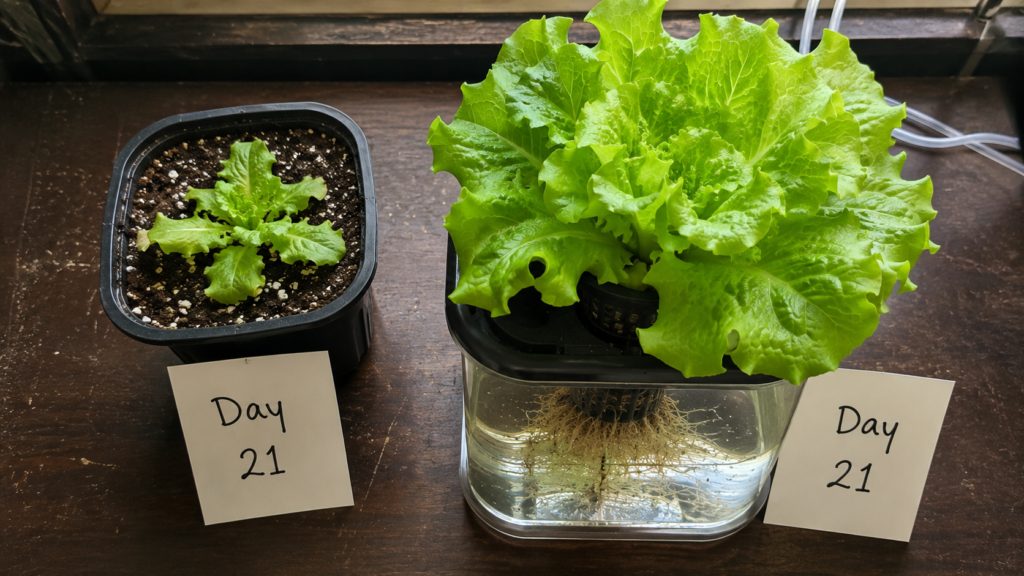
The catch: this speed advantage is most pronounced for leafy greens, herbs, and fast-cycling crops. Slower-maturing or deep-rooted plants don’t show the same dramatic gap, and a skilled soil gardener with good compost and consistent care can close much of the difference. Growth speed alone also isn’t the same as yield — the next section is where that distinction matters.
How Do Yields Compare Per Square Foot?
For most leafy greens and herbs, hydroponic systems produce more usable weight per square foot than soil, largely due to tighter plant spacing and the option to stack crops vertically. But it’s not universal — for some crops, controlled-environment hydroponic yields have actually come in lower than field soil yields in peer-reviewed comparisons.
A 2023 meta-analysis covering 499 observations across 68 published studies (ScienceDirect) found that hydroponic and soil-based yields vary significantly by crop rather than hydroponics simply winning across the board. Lettuce and chicory were the most-studied crops and generally favored hydroponics, while spinach showed the opposite pattern — soil-based agriculture produced roughly six times the yield of hydroponic systems in the reviewed data — likely tied to how spinach is typically grown at field scale versus in smaller controlled setups.
Where the Yield Advantage Is Real
- Leafy greens (lettuce, kale, arugula): Consistently favor hydroponics, especially in vertical or stacked NFT/DWC systems.
- Herbs (basil, mint, cilantro): Strong hydroponic advantage, faster cycles, higher density.
- Strawberries: University of Nevada, Reno research comparing hydroponic and soil-grown strawberries found higher fruit yield and survival rate in hydroponics, though soil-grown berries were significantly heavier on average with more size variation.
Where It Isn’t
- Root vegetables (carrots, potatoes, beets) generally aren’t well-suited to hydroponics — they need the physical resistance soil provides to develop properly.
- Large field crops grown at scale (like spinach, per the meta-analysis above) can out-yield small controlled-environment hydroponic setups simply due to scale and crop biology.
What Does Each System Actually Cost to Start and Run?
A basic soil garden typically costs $50–$300 to start, while an entry-level hydroponic setup runs $200–$2,000+ depending on system type and size. The gap comes almost entirely from equipment: hydroponics needs pumps, reservoirs, and often grow lights, while soil gardening needs containers, potting mix, and seeds.
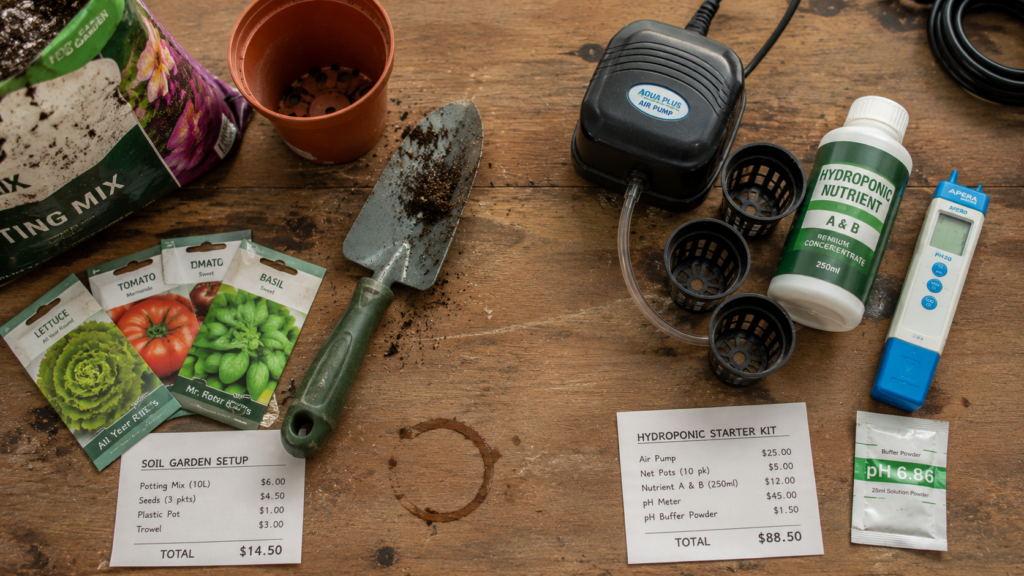
Startup cost is only half the picture, though. Ongoing costs shift the comparison over time.
| Cost Factor | Soil Gardening | Hydroponics |
|---|---|---|
| Initial setup | $50–$300 | $200–$2,000+ |
| Monthly utilities | Low (mostly water) | Moderate–high (water + electricity for pumps/lights) |
| Recurring supplies | Seasonal fertilizer, mulch | Monthly nutrient concentrate, pH/EC testing supplies |
| Pest control | $10–$40 per season | Often lower — enclosed systems reduce soil-borne pests |
| Labor pattern | Weeding, watering, seasonal prep | Daily/weekly monitoring, reservoir checks |
| Typical yearly operating cost | Roughly $100–$400 | Roughly $300–$1,200, scaling with system size and electricity rates |
Hydroponics rarely pays for itself on a windowsill herb garden — the electricity and equipment cost more than the herbs are worth. Where it starts to make financial sense is with frequent harvesters growing higher-value crops like specialty greens or year-round produce that would otherwise be bought at premium prices. If you’re mapping out how much space and equipment you’d actually need before committing, the Grow Space Planner is worth running through before you buy anything — it’s saved more than one reader from over-buying a system that didn’t fit their actual space.
Shop Smart tip: if you’re pricing out a starter hydroponic kit, compare the all-in-one bundles against buying pumps, reservoirs, and grow lights separately — bundles are usually cheaper for a first system, but you’ll outgrow the included pump faster than the reservoir.
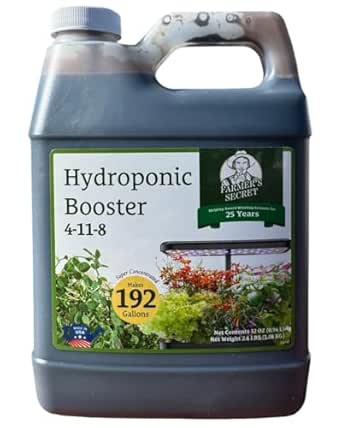
Stock Up on Nutrient Concentrate Before You Start
Once you’ve priced out your first month of hydroponic feeding, it helps to have a reliable concentrate on hand rather than scrambling mid-grow.


Which System Uses Less Water?
Hydroponics uses dramatically less water than soil gardening, largely because it recirculates the same nutrient solution instead of losing water to evaporation, runoff, and deep percolation below the root zone. Reductions of up to 90% compared to soil are commonly cited by university extension programs, including the University of Nevada, Reno.
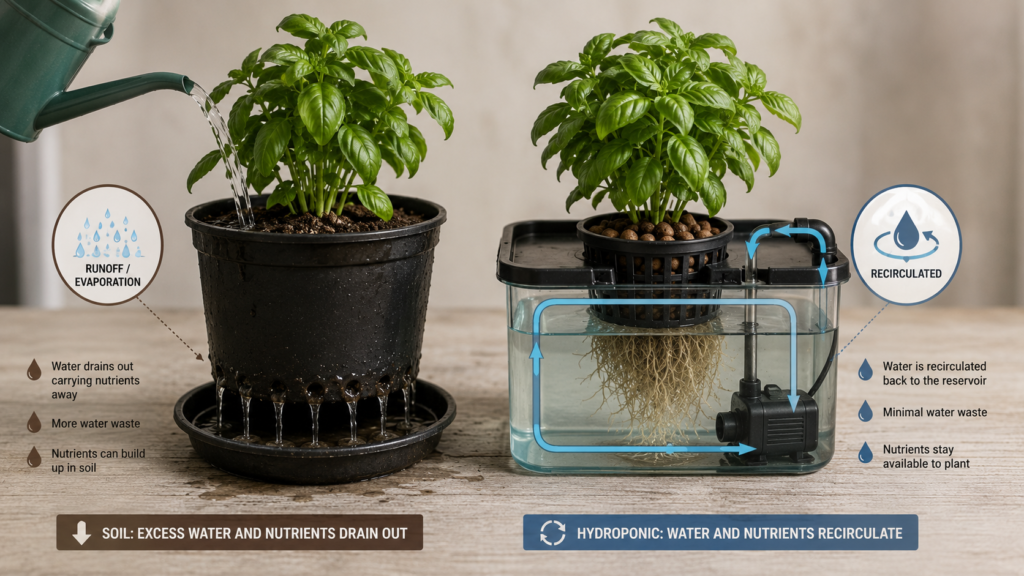
This matters most in two situations: dry climates where water is expensive or restricted, and indoor growing where you’re paying for every drop through a tap rather than relying on rainfall. A small DWC or Kratky setup might use just a couple of gallons a week for a dozen-plus plants, versus daily watering demands for an equivalent soil container garden.
Soil isn’t wasteful by accident — most of that water genuinely goes toward soil structure, microbial life, and buffering against underwatering, not just loss. It’s a trade-off, not a flaw. Water savings are just one piece of the picture — for the fuller list of upsides, see our breakdown of the benefits of hydroponics.
Which Crops Actually Grow Better in Each System?
This is the question competitors gloss over. Crop choice should drive your decision more than any general “hydroponics is better” claim.
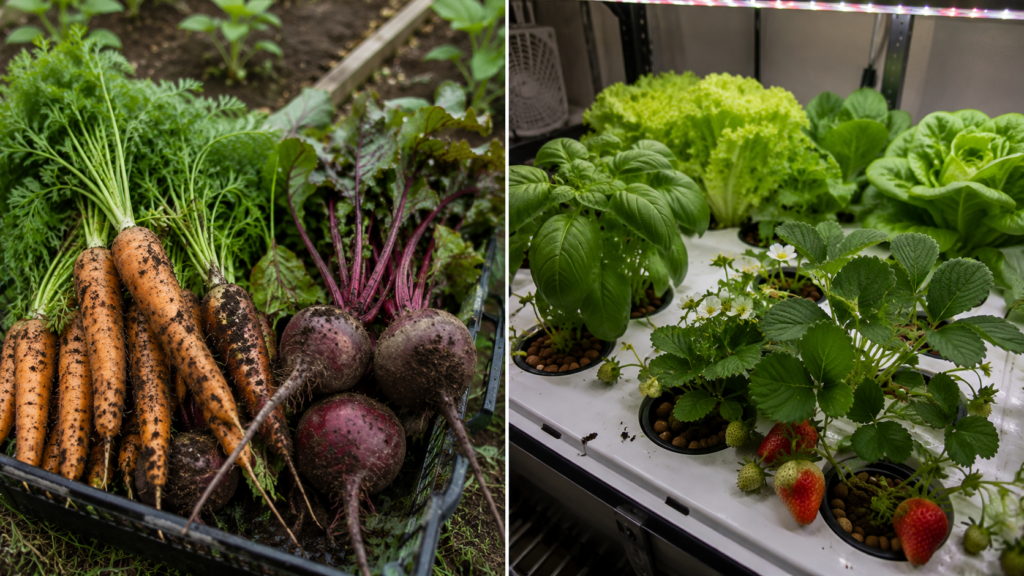
Crops that generally do better hydroponically:
- Lettuce, spinach (small-scale/indoor), and leafy greens
- Basil, mint, cilantro, parsley, and most culinary herbs
- Strawberries, when grown in NFT or DWC with proper support
- Tomatoes and peppers, in larger drip or DWC systems with adequate support
Crops that generally do better in soil:
- Carrots, potatoes, beets, and other root vegetables — they need soil’s physical resistance to form properly
- Large sprawling crops like squash or melons, where soil’s space and root volume are hard to replicate affordably
- Crops grown primarily for deep, complex flavor development, where some growers and tasters report soil-grown produce having an edge — though this is more grower observation than settled science
If your list leans heavily toward root vegetables, hydroponics is the wrong tool for most of that garden, no matter how good the system. For a fuller rundown of what thrives without soil at all, check our list of plants you can grow without soil.
Common Beginner Mistakes When Choosing Between Them
Beginners on both sides tend to make the same handful of errors:
- Assuming hydroponics is “set and forget.” It’s the opposite — it requires more frequent, precise monitoring than soil, not less.
- Underestimating soil’s forgiveness. Soil buffers mistakes; a slightly off watering schedule rarely kills a plant the way an unmonitored hydroponic reservoir can.
- Ignoring electricity costs. Grow lights and pumps add up monthly — a cost soil gardeners simply don’t have.
- Trying to grow root vegetables hydroponically. It’s possible with specialized setups, but it’s fighting the method, not working with it.
- Switching methods mid-crop without a plan. Roots adapted to soil don’t transition cleanly to a water-based system without a proper transplant process.
Experienced growers tend to run both systems side by side rather than picking one exclusively — soil for root crops and space-hungry plants, hydroponics for fast-cycling greens and herbs where speed and density pay off.
Hydroponics vs Soil: Full Comparison Table
| Factor | Hydroponics | Soil |
|---|---|---|
| Startup cost | $200–$2,000+ | $50–$300 |
| Typical yearly operating cost | $300–$1,200 | $100–$400 |
| Growth speed | 25–50% faster for most crops | Standard, weather/season-dependent |
| Water use | Up to 90% less | Higher (evaporation, runoff, percolation) |
| Best crops | Leafy greens, herbs, strawberries | Root vegetables, large sprawling crops |
| Skill floor | Moderate–high (requires monitoring) | Low–moderate (soil buffers mistakes) |
| Space efficiency | High, especially vertical setups | Lower per square foot |
| Weather dependence | None (indoor systems) | High for outdoor soil gardens |
| Pest/disease pressure | Generally lower (no soil-borne pathogens) | Higher (soil-borne pests and disease) |
Which One Should You Choose?
Run through this quickly:
- Are you growing mostly leafy greens, herbs, or strawberries? → Hydroponics is a strong fit.
- Are root vegetables a major part of your plan? → Stick with soil, at least for those crops.
- Is upfront budget your biggest constraint? → Soil is the lower-risk starting point.
- Do you have consistent time daily/weekly for monitoring? → If not, soil’s forgiveness matters more than hydroponics’ speed.
- Is indoor, year-round, weather-independent growing the goal? → Hydroponics solves that in a way soil-in-ground can’t.
Most home growers land somewhere in the middle — soil beds for root crops and larger plants, a small hydroponic setup for greens and herbs. That’s not indecision, it’s matching the tool to the crop.
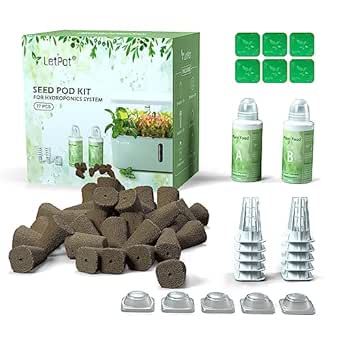
Ready to Start? Browse Beginner-Friendly Hydroponic Kits
If the numbers above point you toward hydroponics, an all-in-one starter kit is the simplest way in — no need to source pumps and reservoirs separately.



Frequently Asked Questions
Is hydroponic food less nutritious than soil-grown food? Not inherently — nutrient content depends more on the specific crop and growing conditions than the growing method itself. University of Nevada, Reno research comparing hydroponic and soil-grown strawberries found higher levels of certain nutrients (like vitamin C) in the hydroponic fruit, alongside lower sugar content, showing the comparison isn’t one-directional.
Can I switch an existing soil garden to hydroponics? Yes, but not by simply moving plants — roots need to be gently cleaned of soil and transitioned gradually, and not every plant handles the switch well. Young, actively growing plants transition more successfully than mature, stressed ones.
Is hydroponics actually cheaper long-term? It can be, but only under specific conditions: frequent harvesting, higher-value crops, and efficient equipment. For casual or low-volume growing, soil usually stays cheaper overall once electricity costs are factored in.
Does hydroponics eliminate pests entirely? No — it reduces soil-borne pests and diseases significantly, but hydroponic systems can still develop their own problems like root rot, algae, and airborne pests such as fungus gnats or spider mites.
Which is better for beginners, hydroponics or soil? Soil is generally more forgiving for absolute beginners because it buffers mistakes in watering and nutrients. Hydroponics rewards attentive beginners with faster results but punishes neglect more quickly.
The Best Method Depends on What You Grow
Neither method is objectively “better” — they’re built for different jobs. Hydroponics wins on speed, water efficiency, and yield for the right crops; soil wins on upfront cost, forgiveness, and root vegetables. The smartest approach for most home growers isn’t picking a side, it’s matching each crop to the system that actually suits it. If you’re leaning toward trying hydroponics for the first time, our beginner’s guide at Grow With Hydroponics walks through picking your first system without overspending on gear you don’t need yet.
