

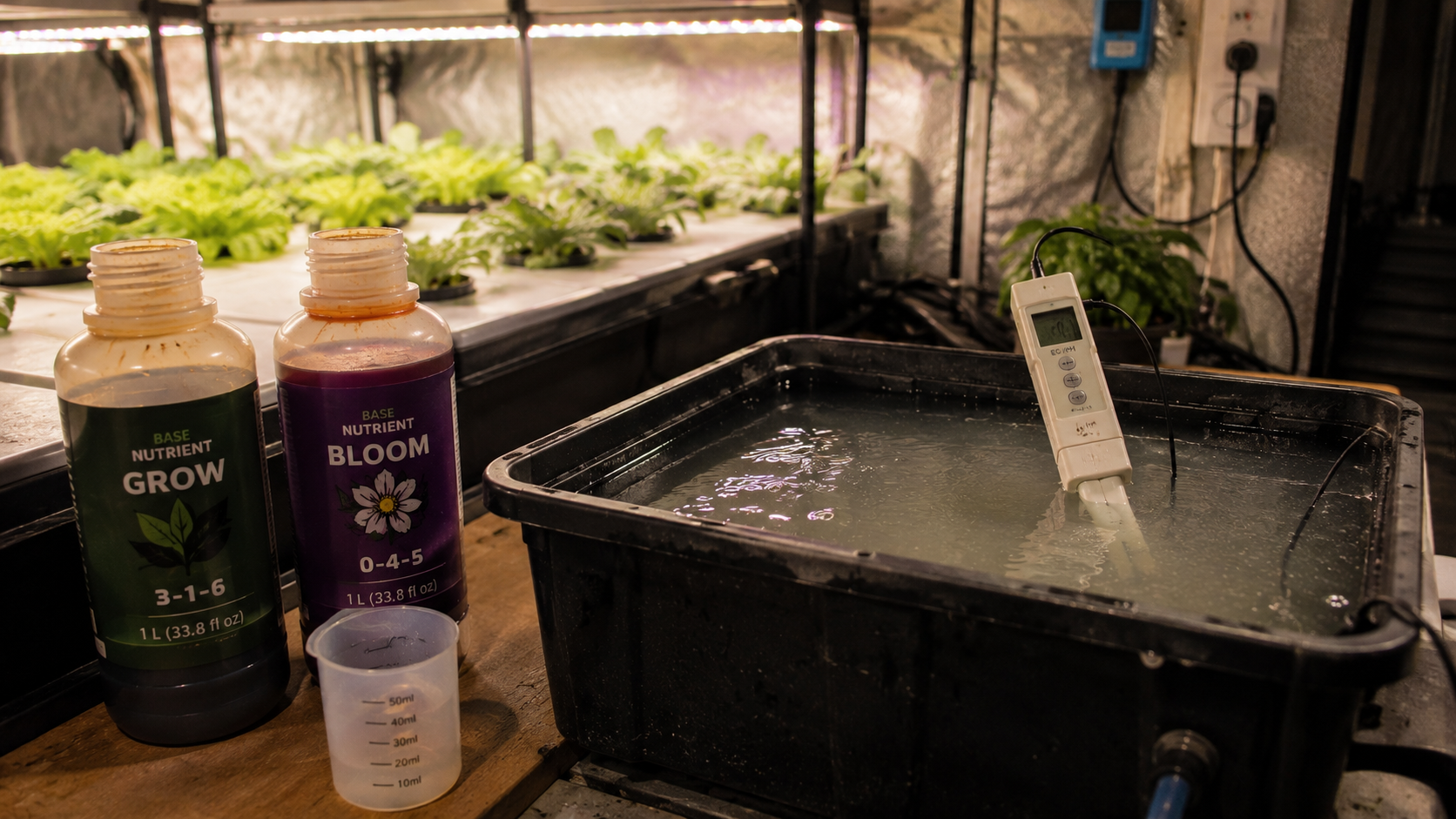
Walk into any hydroponic supply thread and you’ll find the same argument on loop: General Hydroponics versus everything else. It’s the wrong argument to start with. Before picking a brand, you need to know whether you’re shopping for a complete base nutrient — the thing that feeds your plants from seedling to harvest — or a supplement that fixes one specific problem on top of a base you already have. Mixing those two categories up is why so many beginners end up with three bottles that don’t actually solve anything.
This guide breaks down the best hydroponic nutrients by what they actually do, using real, currently available products rather than a generic “top 5” list. Grow With Hydroponics tests and tracks this category regularly, building on the fundamentals covered in our complete guide to hydroponic fertilizers, and the goal here is simple: help you buy the right bottle once, not three bottles by trial and error.
You’ll learn the difference between a complete base system and a supplement, how General Hydroponics and VIVOSUN’s base lines compare, when a CalMag or pH product actually matters, and a short checklist for deciding what your system needs.
Quick answer: For most home hydroponic growers, a complete 3-part base system like General Hydroponics Flora Series (Grow, Micro, Bloom) covers macro and micronutrients across all growth stages and works in any medium. A 2-part budget system like VIVOSUN’s Base A & B is a reasonable lower-cost alternative for less demanding crops. Neither replaces a CalMag supplement in coco coir, and neither eliminates the need to check pH.
Base Nutrients vs. Supplements: What You’re Actually Comparing
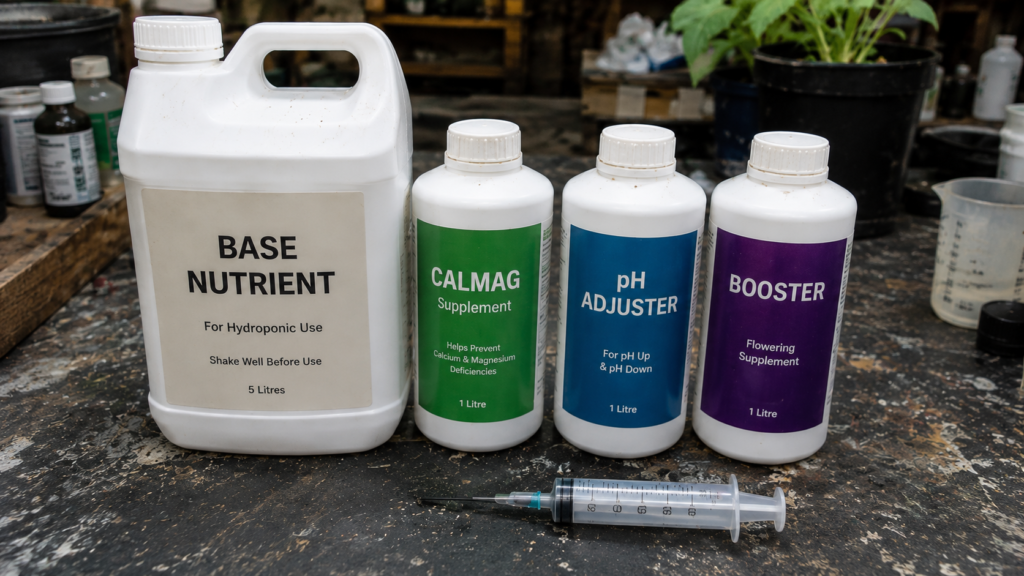
A base nutrient is a complete fertilizer formulated to supply every macronutrient and micronutrient a plant needs across its life cycle. A supplement is a single-purpose additive — calcium/magnesium, a pH adjuster, a bloom booster — meant to correct one gap, not replace the base. If you haven’t already, our hydroponic fertilizers guide walks through this macro/micronutrient breakdown in more depth than we’ll repeat here.
This distinction matters because “best hydroponic nutrients” searches lump both categories together. Buying a supplement expecting it to act like a base is the single most common reason new growers see stunted growth despite following a feeding schedule closely. Farmer’s Secret’s concentrated formula, Athena’s Blended CaMg, and Microbe Life’s pH Down are all supplements — none of them are meant to stand alone as a plant’s entire diet.
Why This Confuses Beginners
Product names rarely make the category obvious. A bottle labeled “hydroponic booster fertilizer” sounds like a complete food but is formulated as an additive layered on top of a base. Reading the guaranteed analysis (the N-P-K numbers and micronutrient list) on the label is the fastest way to tell — a true base nutrient lists a broad spread of both macro and micronutrients; a supplement usually lists one or two elements at a much higher concentration.
General Hydroponics vs. VIVOSUN: The Two Complete Base Systems
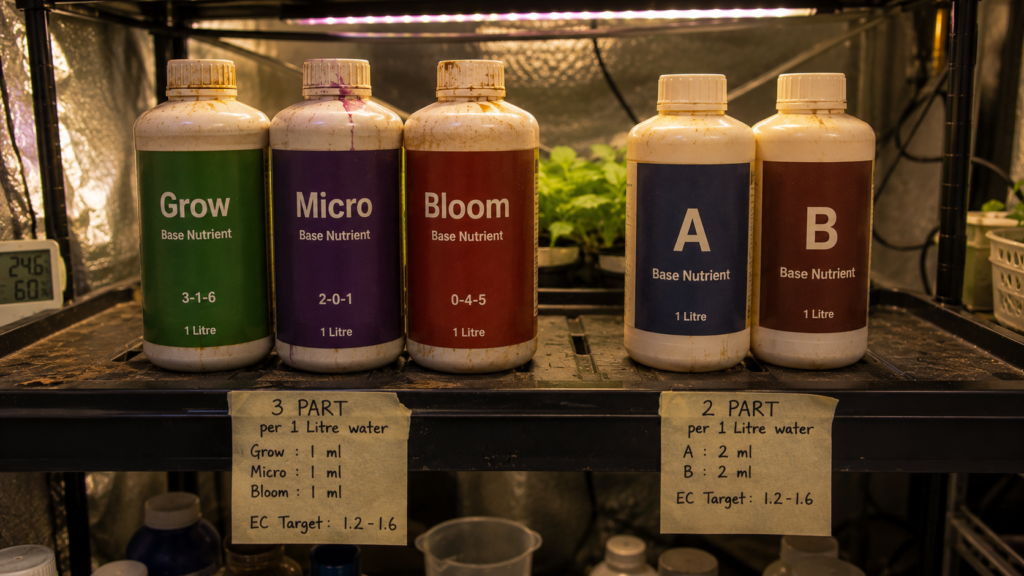
General Hydroponics Flora Series
Flora Series is a 3-part system — Grow, Micro, and Bloom — sold as a combo pack, and it’s one of the most established hydroponic product lines, having supplied hydroponic products for decades. The 3-part structure exists because different plants and different growth stages require different ratios of macronutrients and micronutrients, so you adjust the Grow-to-Bloom ratio as a plant moves from vegetative growth into flowering rather than feeding one fixed blend the whole cycle.
The trade-off: a 3-part system requires you to actively manage the ratio yourself, and, like any hydroponic base nutrient, you still need to monitor pH and EC — General Hydroponics requires monitoring pH and EC levels, which may feel more involved for beginners compared with simpler pre-mixed options. Our EC to PPM guide is worth bookmarking before you start dosing, since Flora Series ratios only make sense once you can read your meter correctly. It works across virtually any hydroponic medium — DWC, NFT, coco, rockwool — which is part of why it’s stayed a default recommendation for so long.
VIVOSUN Base A & B
VIVOSUN’s Base A & B bundle is a 2-part system, which is structurally simpler than a 3-part line: fewer bottles, less ratio math, one combined dose for both vegetative and flowering stages rather than a sliding Grow/Bloom ratio. That simplicity is the appeal for a first-time hydroponic setup or a grower who doesn’t want to fine-tune a three-bottle recipe every week.
The trade-off runs the other way from Flora Series: less stage-specific control. A 2-part system can’t dial in the same precision a 3-part Grow/Micro/Bloom ratio allows during the flowering transition, so heavy fruiting crops that benefit from a strong bloom-phase nutrient shift may respond better to a dedicated 3-part line. For leafy greens, herbs, and less demanding crops — including most of what’s covered in our <a hydroponic herb nutrient solution guide — that extra precision matters less.
Supplements Worth Understanding: CalMag, Boosters, and pH Control
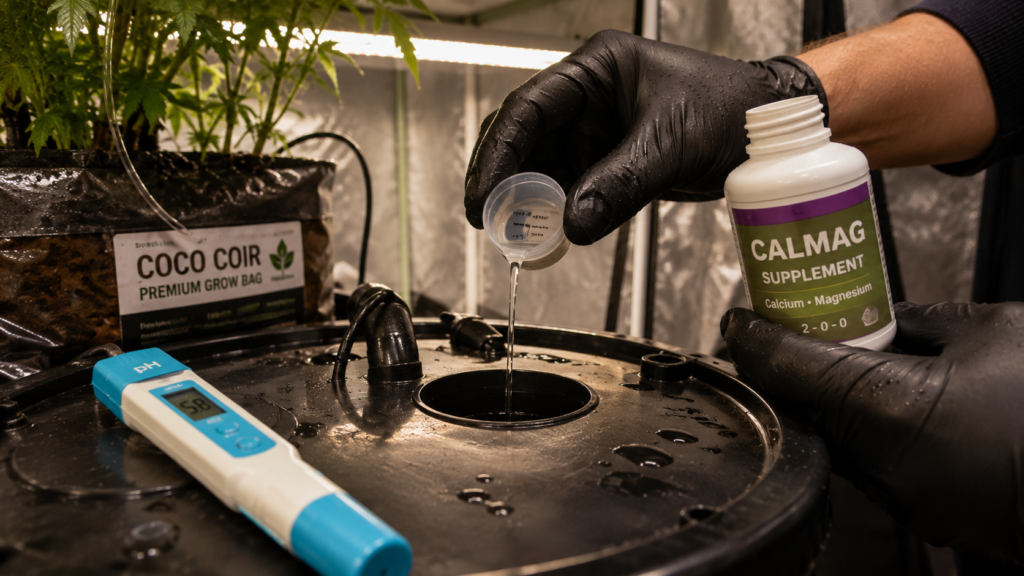
None of these replace a base nutrient — they solve specific, common problems.
Athena Blended CaMg (NPK 2-0-0): A calcium and magnesium supplement. This matters most in coco coir, because coco naturally binds calcium and magnesium out of the root zone, creating deficiencies even when a complete base nutrient is already in use. If you’re growing in coco and seeing interveinal yellowing on new growth, a CalMag supplement — not more base nutrient — is usually the fix.
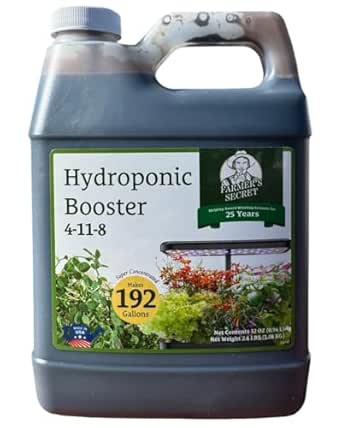
Farmer’s Secret Hydroponic Booster (4-11-8): A concentrated phosphorus/potassium-leaning additive, positioned as a booster layered on top of a base line rather than a standalone feed. Products like this are meant to push flowering or fruiting performance on an already-established feeding schedule, not to correct a deficiency.
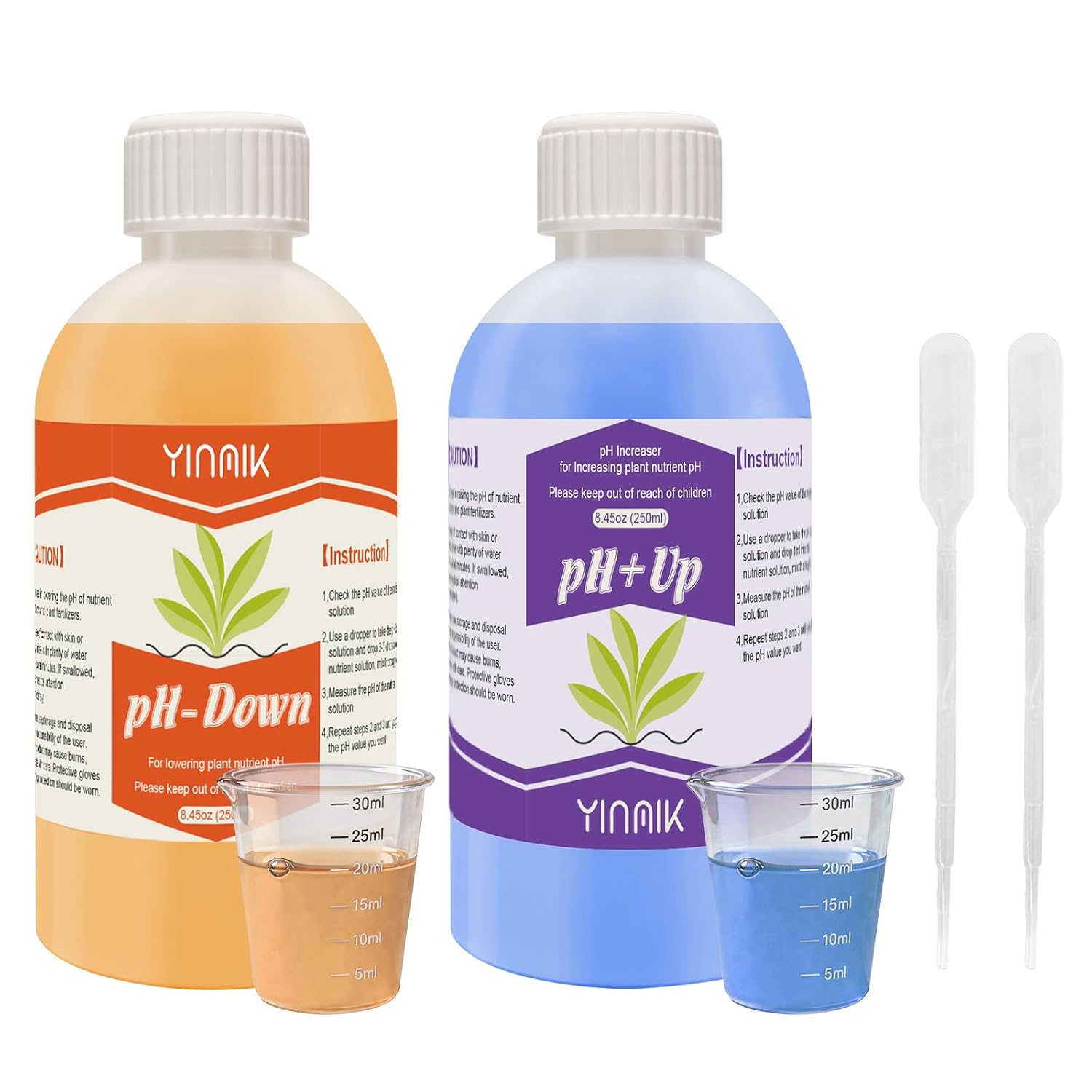
Microbe Life Hydroponics pH Down: Not a nutrient at all — a pH adjuster. Every nutrient brand mentioned above still needs pH management, because soil naturally buffers pH and EC, and that buffering is absent in hydroponic culture, so the grower has to maintain a suitable range manually or with an automated doser. High-alkalinity source water will push nutrient solution pH upward over time, requiring more frequent checks — something worth testing before assuming a nutrient brand is “off.”
Shop Smart: Base Nutrients & Supplements
Whether you need a complete base line or just a CalMag top-up for coco, here’s what’s worth stocking in your grow room. Pair whichever base you choose with our Hydroponic Nutrient Calculator to get exact mixing ratios for your reservoir size.


What About Advanced Nutrients, FoxFarm, or Canna?
You’ll see these names in nearly every hydroponic nutrient comparison online, and it’s worth knowing where they fit even if they’re not part of a specific shop’s lineup. Advanced Nutrients’ pH Perfect line is built to auto-buffer pH within the bottle itself, which reduces the need for constant manual pH adjustment — useful for growers who want to skip that step, at a higher price point. FoxFarm and Canna both run clear, structured feeding schedules and Canna in particular is built around simple, beginner-friendly stage-based feeding. None of these are inherently “better” in a lab sense — the research consensus from extension programs is that nutrient solution recipes are formulated to hit specific ppm targets for a given crop, and any brand that reliably hits those targets will grow a healthy plant. The differences between brands are mostly about convenience, cost per gallon, and how much manual adjustment you’re willing to do — not secret formulas.
Comparison Table
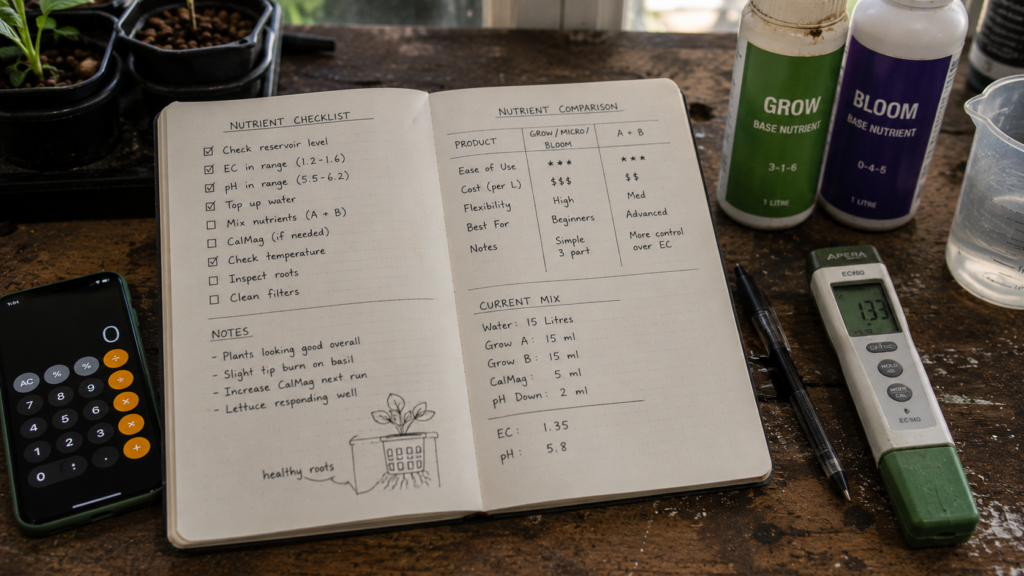
| Product | Category | Best For | Requires Manual pH Management? | Experience Level |
|---|---|---|---|---|
| General Hydroponics Flora Series | Complete 3-part base | All mediums, stage-specific feeding | Yes | Intermediate |
| VIVOSUN Base A & B | Complete 2-part base | Simpler setups, leafy greens/herbs | Yes | Beginner |
| Athena Blended CaMg | Supplement | Coco coir, calcium/magnesium deficiency | N/A (pairs with any base) | Beginner–Intermediate |
| Farmer’s Secret Booster | Supplement | Boosting flower/fruit stage on an existing base | N/A (pairs with any base) | Intermediate |
| Microbe Life pH Down | pH adjuster | Any brand, high-alkalinity source water | This IS the pH tool | Beginner |
Common Mistakes When Choosing or Switching Nutrient Brands
- Buying a supplement expecting it to act as a full diet. A CalMag bottle or a booster will not replace a base nutrient’s broader nutrient spread.
- Mixing two complete base lines together. Combining a full GH feeding schedule with a full VIVOSUN schedule risks stacking nutrients past what the crop needs, which can push EC too high.
- Ignoring source water. Switching brands to “fix” a plant problem that’s actually caused by hard tap water or high alkalinity won’t help — test the water first.
- Skipping pH checks because a bottle claims to be low-maintenance. Even simplified 2-part systems still benefit from occasional pH verification, especially early on.
How to Decide: A Simple Checklist
Run through these in order before buying:
- Do you have a base nutrient yet? If no, start there — a supplement alone won’t feed a plant.
- What’s your growing medium? Coco coir almost always needs a CalMag supplement alongside any base. DWC and NFT usually don’t.
- How much manual adjustment do you want to do? A 2-part system like VIVOSUN trades precision for simplicity; a 3-part system like Flora Series trades a bit more effort for finer stage control.
- Have you tested your source water? High-alkalinity water changes how often you need to check pH — know this before blaming a nutrient brand for a problem.
- Is your plant fruiting/flowering heavily? If so, a booster supplement may be worth adding once the base schedule is dialed in — not before.
If you’d rather not do this math by hand, the Hydroponic Nutrient Calculator walks through exact mixing ratios for whichever base you land on.
Frequently Asked Questions
Is General Hydroponics or VIVOSUN better for beginners? VIVOSUN’s 2-part Base A & B is generally simpler for a first-time setup since it skips the Grow/Bloom ratio math. General Hydroponics Flora Series offers more stage-specific control once you’re comfortable adjusting ratios, which matters more for demanding fruiting crops.
Do I need a CalMag supplement with every hydroponic system? Not always. Coco coir setups usually need one because coco naturally binds calcium and magnesium, creating deficiencies even when a complete base is used. DWC and NFT systems with a quality base nutrient often don’t need extra CalMag unless your water is very soft or reverse-osmosis filtered.
Can I mix nutrient brands? You can generally add a single-purpose supplement from one brand to a base from another. What you shouldn’t do is combine two complete base lines, since that can cause nutrient imbalances and lockout — stick to one full base system and layer supplements on top as needed.
Why does my nutrient brand seem to “not work” even though I’m feeding correctly? Before blaming the brand, check your source water. Bicarbonate-heavy water raises alkalinity and pushes nutrient solution pH upward over time, which can lock out nutrients regardless of which brand you’re using. Our EC to PPM guide covers how to verify your readings before troubleshooting further.
How often should I change my nutrient solution? This depends heavily on crop, reservoir size, and system type, so there isn’t one universal number — our hydroponic fertilizers guide breaks down reservoir change intervals by system type in more depth.
Shop Smart: Keep pH in Check
A nutrient brand can’t perform if your pH is drifting. This tool makes it easy to catch and correct before it costs you a harvest.


Choosing between complete base systems and supplements comes down to matching the product to the actual problem in front of you, not chasing whichever brand a forum swears by. Get the base right for your medium, add a CalMag or booster only when the plant is actually asking for it, and keep an eye on your water source before troubleshooting the nutrient itself. Grow With Hydroponics keeps this comparison updated as new products enter the market — if you want help dialing in exact ratios for whichever line you choose, the nutrient calculator does the math for you.
