

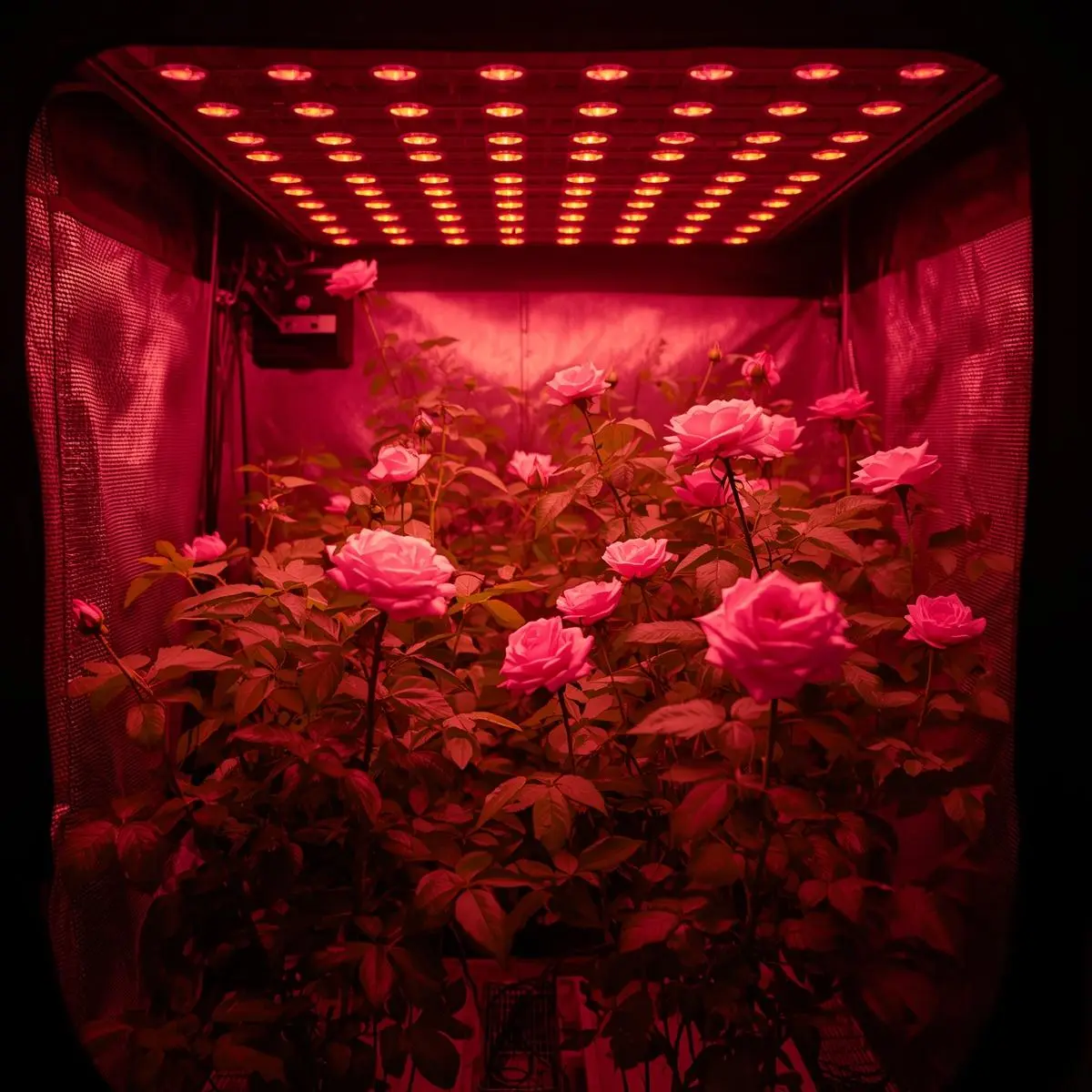
Ever had a healthy rose plant that just… refuses to bloom? You’re not alone. Many growers—especially those transitioning into controlled environments or hydroponics—face this exact frustration. Lush green leaves, strong stems, but no flowers. What’s going wrong?
Here at Grow With Hydroponics, we’ve seen this pattern repeatedly. The truth is simple:
Flowering isn’t accidental—it’s triggered.
It’s frustrating—because the plant looks perfect, yet something invisible is missing. And once you understand how to trigger flowering in roses naturally using light cycles and strategic stress, you can practically tell your roses when to bloom.
In this guide, you’ll learn how to trigger flowering in roses naturally with proven techniques like photoperiod manipulation and strategic stress. If you’re growing in a controlled setup, you’ll also benefit from understanding the full system—how to grow roses hydroponically step-by-step. You’ll also get rose flowering tips that work in soil or hydroponics, indoors or outdoors. This is your roadmap to consistent, vibrant blooms.
Why Aren’t My Roses Flowering?
Before we jump into solutions, let’s quickly diagnose the problem.
Roses typically fail to bloom because of the following:
Light exposure isn’t optimized
The plant is stuck in vegetative growth
Nutrient balance favors leaf growth over flowering
Environmental conditions are too “comfortable.”
Here’s the key insight:
Plants flower when they sense survival pressure plus the right light signals.
That’s where manipulating light and stress comes in. Learning how to trigger flowering in roses naturally starts with understanding these two levers.
How to Trigger Flowering in Roses Naturally Using Light
Light is the primary signal that tells your rose plant when it’s time to reproduce (i.e., flower). If you want to force roses to bloom, light is your most reliable tool.
Understanding Photoperiod (The Flowering Switch)
Roses are generally day-neutral plants, but they still respond strongly to:
Light intensity
Daily light duration
Light consistency
To trigger flowering in roses naturally, you need to fine-tune these variables.
Ideal Light Strategy for Flowering Roses
| Factor | Target |
|---|---|
| Daily Light Duration | 12–14 hours |
| Dark Period | At least 10–12 hours uninterrupted |
| Light Intensity | Moderate to high (PPFD ~300–600 µmol/m²/s) |
Why it works: longer dark periods encourage hormonal changes linked to flowering. Consistent cycles prevent stress and confusion. These indoor rose blooming techniques rely on mimicking natural seasonal shifts.
Shop Smart Tip
When you shop smart for grow lights, don’t just look at wattage. Use our DLI Calculator to match your light output with your rose plant’s needs. It ensures you’re delivering the exact daily light energy required for flowering—not too little, not too much.
Pro Tool Integration
If you’re serious about dialing this in, the Indoor Plant Sunlight Analysis Tool on Grow With Hydroponics helps you:
Convert light intensity into daily usable energy
Prevent under-lighting (no blooms) or over-lighting (plant stress)
Optimize flowering cycles scientifically
Can Stress Actually Trigger Rose Flowering?
Yes—and this is where most growers hesitate. But here’s the truth: controlled stress = survival response = flowering. In nature, plants bloom when they “feel” threatened, ensuring reproduction before conditions worsen. Honestly, this is one of the most effective tricks I’ve seen for getting roses to bloom.
How to Trigger Flowering in Roses Naturally Using Stress
Let’s break down safe, effective stress techniques. These methods can also force roses to bloom when light adjustments alone aren’t enough.
1. Mild Water Stress (Strategic Drying)
Allow the top layer of soil (or medium) to slightly dry out. Avoid overwatering. Resume watering once mild drooping begins.
Effect: Signals drought conditions → triggers flowering response.
2. Pruning Stress (The Reset Button)
Trim back older stems. Remove weak or non-productive branches. Focus energy on fewer, stronger growth points.
Effect: Forces the plant to redirect energy into new growth and blooms.
3. Temperature Fluctuation
Day temperature: 20–26°C. Night temperature: slight drop (15–18°C).
Effect: Mimics seasonal change → encourages flowering hormones.
4. Nutrient Shift (Bloom Mode)
Reduce nitrogen (N). Increase phosphorus (P) and potassium (K).
Effect: Stops leafy growth → promotes bud formation. This is a core part of how to make roses bloom faster once the plant is ready.
Light vs Stress: Finding the Perfect Balance
Here’s a simple breakdown:
| Factor | Too Low | Optimal Zone | Too High |
|---|---|---|---|
| Light | No flowering | Strong blooming | Leaf burn / stress |
| Water | Constant wet | Mild drying cycles | Severe dehydration |
| Nutrients | Excess nitrogen | Balanced bloom nutrients | Nutrient burn |
| Temperature | No variation | Day/night fluctuation | Heat stress |
The goal is controlled discomfort—not damage.
These indoor rose-blooming techniques work best when you balance both factors rather than pushing one too hard.
How to Trigger Flowering in Roses Naturally (Step-by-Step Plan)
I’ve seen growers wait weeks, even months, before realizing the issue isn’t nutrients—it’s signals. Let’s put it all together into a practical routine. Follow these steps to force roses to bloom reliably.
Step 1: Adjust Light Cycle
Set grow lights to 12–14 hours. Ensure complete darkness during off hours.
Step 2: Introduce Mild Water Stress
Let the medium dry slightly between waterings. Avoid constant saturation.
Step 3: Prune Strategically
Cut back 20–30% of plant mass. Remove dead or weak stems.
Step 4: Switch Nutrients
Use bloom-focused nutrients (higher P & K). Reduce nitrogen-heavy feeds.
Step 5: Control Environment
Maintain slight temperature drops at night. Improve airflow.
Can I Trigger Flowering in Roses Naturally Indoors?
Absolutely—and in many ways, indoor growers have an advantage. Why? You control light completely. You can simulate seasons anytime. Stress can be applied precisely. These indoor rose-blooming techniques are actually easier to execute inside a tent or grow room than in an unpredictable outdoor garden.
For even better results, consider using the VPD Calculator from Grow With Hydroponics.
Why VPD Matters for Flowering
Vapor Pressure Deficit (VPD) controls the following:
Transpiration rate
Nutrient uptake
Flower development speed
With the VPD Calculator, you can:
Balance temperature and humidity perfectly
Prevent stalled flowering due to poor transpiration
Boost overall bloom quality
Advanced Tip: Combine Light Stress + Nutrient Timing
Here’s a pro-level trick: slightly reduce light intensity for 2–3 days, then restore optimal lighting plus bloom nutrients. This “shock and recovery” technique often triggers rapid bud formation. It’s one of the fastest how-to-make-roses-bloom-faster methods I’ve used.
One of our community growers struggled with non-blooming indoor roses for weeks. After applying a 13-hour light cycle, slight watering stress, and bloom nutrients, buds appeared within 10 days. That’s the power of controlled triggers. These rose-flowering tips work when you commit to the process.
Frequently Asked Questions
How long does it take to trigger flowering in roses naturally after changing light cycles?
Typically, you’ll see first buds within 10–14 days after adjusting to a 12–14 hour light cycle with 10–12 hours of uninterrupted darkness.
However, results depend on plant health, age, and variety. Strong, well-fed plants respond faster, sometimes within 7–10 days, while stressed or weaker plants may take longer.
Key point: Consistency matters more than speed. Interrupting the dark period can delay or reset flowering signals.
Can I force roses to bloom faster by combining all stress methods at once?
No—this usually does more harm than good.
Instead, apply stress gradually and strategically:
- Start with light adjustment first
- Add mild water stress after a few days
- Then introduce pruning and nutrient shifts
This sequence mimics natural seasonal change.
Important: Overloading the plant with multiple stress factors at once can completely stall flowering or damage growth.
Do these indoor rose blooming techniques work for all rose varieties?
Mostly yes—but with variation.
- Hybrid tea roses → respond very well to light control
- Miniature roses → bloom quickly under stable conditions
- Climbing roses → may require slightly longer dark periods
If a variety does not respond within 2–3 weeks, extend darkness to 13 hours and reassess.
The core principle remains the same: light control + mild stress + bloom nutrition.
What’s the single most effective way to make roses bloom faster indoors?
Without question, fixing light is the most powerful lever.
Ensure:
- 12–14 hours of quality light (PPFD 300–600)
- Complete, uninterrupted darkness at night
After that, reducing nitrogen and switching to bloom nutrients becomes the second most effective step.
In most cases, correcting light alone solves the problem.
You’re in Control of the bloom
If there’s one thing to take away, it’s this:
Roses don’t randomly flower—they respond to signals.
By learning how to trigger flowering in roses naturally using light and stress, you shift from guessing to controlling outcomes. You can reliably force roses to bloom without gimmicks. Start small: adjust your light schedule, introduce gentle stress, and observe your plant’s response. And remember—every plant is slightly different. Watch, adapt, refine.
At Grow With Hydroponics, we believe growing isn’t just about plants—it’s about understanding nature deeply enough to guide it. Your roses are ready to bloom. You just need to give them the signal.

Dr. Awais Yousaf
Algorithm Specialist and Associate Professor leading R&D at Grow With Hydroponics. With 5+ years of hands-on experience in smart hydroponic systems, deep learning, and sustainable AgriTech, he is passionate about turning small spaces into high-yield indoor farms. Connect at awais.yousaf@iub.edu.pk