

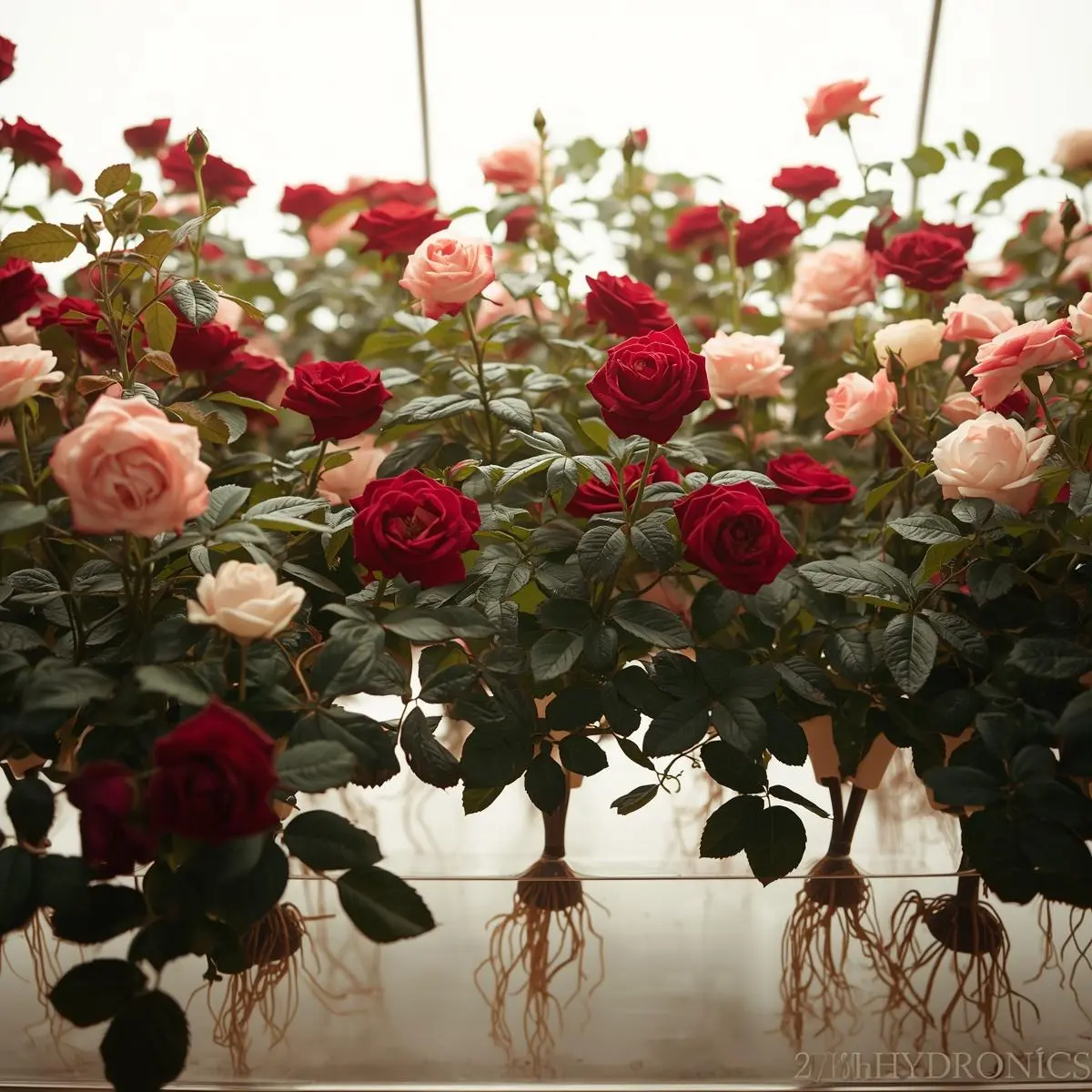
If you’ve ever scratched your head wondering why your hydroponic roses look pretty but miss that jaw-dropping size and intoxicating scent—you’re not alone. This is the single most common question we get at Grow With Hydroponics. And the answer isn’t magic. It’s science, stubborn precision, and a few grower secrets most tutorials skip.
Here’s the good news: hydroponics gives you more control over bloom size and fragrance than soil ever could. You control nutrients, light, air, water—every variable that decides whether your roses smell like an English garden or a gas station carnation. In this guide, I’ll show you exactly which levers to pull, when to pull them, and—more importantly—how to avoid the mistakes that keep hydroponic roses small and scentless.
Why Do Hydroponic Roses Struggle with Size and Fragrance?
Before we fix the problem, let’s name it. Most growers trip over two root causes:
Wrong nutrient ratios at the wrong stage. Feeding a flowering rose the same formula you’d use for lettuce is a fast track to weak, forgettable blooms. Roses are heavy feeders with demands that shift dramatically between vegetative and flowering phases.
Light that’s too weak—or just random. Fragrance compounds are synthesized through photosynthesis. No light, no scent chemistry. Full stop.
The great news? Both problems are entirely solvable once you understand the framework. Let’s get into it.
How Do Nutrients Make Hydroponic Rose Flowers Bigger?
Nutrients are the single biggest driver of bloom size in hydroponic roses. And here’s the insight most beginners miss: what you feed must change as the plant changes.
Frankly, this is where most beginners go wrong—they find one bottle and ride it all the way to disappointment.
What’s the Right Nutrient Ratio for Vegetative vs. Flowering Stages?
| Growth Stage | Key Nutrient Priority | Recommended EC (mS/cm) | Target pH |
|---|---|---|---|
| Vegetative (weeks 1–4) | High Nitrogen (N) | 1.6–2.0 | 5.8–6.2 |
| Transition (weeks 4–5) | Balanced N-P-K | 1.8–2.2 | 5.8–6.2 |
| Flowering (weeks 5+) | High Phosphorus (P) & Potassium (K) | 2.0–2.5 | 5.8–6.2 |
| Pre-harvest | Reduce N, maintain K | 1.8–2.0 | 6.0–6.2 |
During vege, nitrogen builds the plant’s green architecture—roots, stems, leaves. But once buds form, the plant’s entire appetite shifts. It craves phosphorus for robust blooms and potassium for water movement, stress tolerance, and flower quality. Fail to make that switch, and you’ll get pale, undersized flowers with no structural guts.
Can I Use a Standard Hydroponic Formula for Roses?
Short answer: no. Roses aren’t salad. A formula built for lettuce or herbs won’t deliver the potassium density roses need at flowering. Always use a complete, flowering-specific hydroponic nutrient formula—one that includes calcium and magnesium alongside your N-P-K base. These micronutrients compete for uptake, so they must be balanced.
How Do I Know If My EC Is Right for Bigger Blooms?
EC (Electrical Conductivity) is your proxy for nutrient concentration. For hydroponic roses, keep EC at 1.6–2.0 mS/cm during vegetative growth. Then push it to 2.0–2.5 mS/cm during flowering. Swings of even 0.2 EC can trigger deficiencies—so stability matters as much as the number itself.
Here’s where many growers get tripped up: their meter reads 2.0, but the roses still look deficient. Why? Because calcium and magnesium compete with potassium for uptake. If those ratios are off, your roses can’t access the nutrients even when present.
Tool Tip: Use the Hydroponic Nutrient Calculator to mix accurate, stage-appropriate solutions from scratch, and pair it with the EC ↔ PPM Converter to eliminate unit confusion. These two tools turn what feels like alchemy into a repeatable, confident process.
How Does Light Affect Hydroponic Rose Bloom Size and Fragrance?
Light is the other half of the equation—and it’s especially critical for hydroponic rose fragrance. Here’s why: roses produce aromatic volatile compounds through photosynthesis. The quantity and quality of light directly determines how many scent molecules the plant can manufacture. Dim light equals dim fragrance. Genetics won’t save you.
What Is the Ideal DLI for Hydroponic Roses?
DLI (Daily Light Integral) measures the total photon dose your plant receives each day. For hydroponic roses to produce bigger, more fragrant blooms, aim for a DLI of 20–30 mol/m²/day. That typically means running a quality full-spectrum LED at 500–700 PPFD for 14–16 hours per day.
Too little light, and stems stretch weak and bud-shy. Too much, and you cause photoinhibition—a kind of light stress that actually shuts down photosynthesis. The sweet spot is specific. Guessing doesn’t work.
Tool Tip: Use the DLI Calculator to plan a precise lighting schedule based on your grow light’s output and your rose variety’s needs. It removes the guesswork and tells you exactly what daily light dose you’re delivering.
Does Light Spectrum Affect Rose Fragrance?
Yes—significantly. Full-spectrum light, particularly rich in red (630–660nm) and far-red (720–740nm) wavelengths, promotes flowering and increases production of aromatic compounds. Blue spectrum (400–500nm) supports compact, healthy structure during veg. For fragrant hydroponic roses, don’t cheap out on spectrum. A true full-spectrum LED pays for itself in bloom quality.
What Environmental Factors Make Hydroponic Roses More Fragrant?
Fragrance in roses comes from three things: genetics, light, and controlled stress. You can’t change genetics (much), but hydroponics gives you supreme command over the other two.
How Does VPD Influence Rose Fragrance and Bloom Size?
VPD—Vapor Pressure Deficit—is the relationship between temperature and humidity. Get it wrong during budding, and those promising buds stall or abort before opening. Get it right, and you create conditions for dense, fragrant blooms.
For hydroponic roses during flowering, target a VPD of 0.8–1.2 kPa. That typically means temperatures of 65–75°F (18–24°C) with relative humidity around 50–65%.
Tool Tip: The VPD Calculator lets you dial in temperature and humidity together, ensuring nutrients can actually move through your plant efficiently. It’s especially critical during the transition to flowering.
Can “Good Stress” Make Roses Smell Stronger?
Yes—and this is one of hydroponics’ hidden superpowers. Controlled stress triggers the plant’s natural defense chemistry, which overlaps significantly with its fragrance chemistry. A slight temperature dip at night (5–10°F below daytime temps), a brief period of mild water stress before harvest, or optimized VPD—these can push your roses to produce higher concentrations of aromatic oils.
The key word is controlled. Random stress—a pH crash, pump failure, or wild nutrient swing—is just damage. Deliberate, mild, brief stress is a grower’s tool.
Hydroponics doesn’t just grow roses—it lets you engineer the exact flower you want.
Does Water Quality Affect Rose Fragrance Hydroponically?
Absolutely. Tap water with high dissolved solids, chlorine, or chloramine will interfere with your nutrient solution and suppress uptake—both of which ripple into hydroponic rose fragrance and bloom quality. Always use:
Filtered or dechlorinated water (let tap water sit 24 hours or use a carbon filter)
Tested water (check EC and pH before adding nutrients)
Regular reservoir changes (refresh every 2–3 weeks to prevent salt buildup)
Advanced Tips: What Else Makes Hydroponic Rose Flowers Bigger?
Should I Prune My Hydroponic Roses for Bigger Blooms?
Yes—strategic pruning is a force multiplier. Remove dead or yellowing leaves to redirect energy from maintenance to production. Pinch back young growth during vege to encourage bushier architecture. And disbud—remove smaller side buds—to channel all resources into one or two show-quality blooms per stem.
That last one hurts to do. Do it anyway. Your final blooms will thank you.
What Supplements Actually Boost Bloom Size?
A few additions, used carefully, can meaningfully improve bloom size and scent:
Silica – strengthens cell walls for heavier blooms on sturdy stems
Kelp and humic acid – improve nutrient uptake efficiency at root level
Potassium silicate – used during flowering for additional structural support
Cal-Mag supplements – prevent rampant calcium/magnesium deficiencies in fast-growing hydroponic roses
Shop Smart: When shopping for bloom boosters and flowering nutrients, use our Hydroponic Nutrient Optimizer to verify you’re hitting the right ratios before you buy—and use the EC ↔ PPM Converter to translate product instructions into your preferred units. Buy smart the first time. Not the most expensive bottle on the shelf.
Is CO₂ Enrichment Worth It for Hydroponic Roses?
For serious growers, yes. Elevated CO₂ (700–1200 ppm) can meaningfully accelerate photosynthesis and increase both bloom size and aromatic compound production—essentially letting the plant make more flower per unit of light. It’s advanced and requires careful management. But the payoff in bloom quality is real.
Hydroponic Rose Fragrance: Myth vs. Reality
Here’s a truth worth saying clearly: the belief that hydroponic roses can’t be fragrant is a myth rooted in bad genetics, not bad methods. Mass-market roses—whether soil or hydroponic—are often bred for shipping durability and vase life, at the direct expense of scent. That’s a breeding decision, not a cultivation one.
When you choose fragrant varieties (think heritage roses, David Austin types, or fragrant hybrid teas) and grow them with proper light, precise nutrition, and controlled environment, hydroponics can amplify what genetics provide—not suppress it.
Your Path to Bigger, More Fragrant Hydroponic Roses
Let’s bring it all together. Making your hydroponic roses bigger and more fragrant comes down to mastering these pillars:
Stage-specific nutrition – shift from nitrogen-forward to phosphorus/potassium-rich formulas when buds appear
Consistent, high-DLI lighting – 20–30 mol/m²/day with a quality full-spectrum LED
Dialed-in VPD – temperature and humidity working together, not against each other
Clean, stable water – filtered, pH-corrected, regularly refreshed
Strategic stress and pruning – controlled techniques that push your plant toward maximum bloom output
Every one of these variables is in your hands when you grow hydroponically. That’s the gift of this method—not just faster growth, but the ability to engineer exactly the flower you want.
I know what you’re thinking: “Does this actually work in a tiny apartment?” Yes. I’ve seen it done in spare bedrooms, basements, and closet tents. Start with one pillar, dial it in, then move to the next. Roses reward patience and precision in equal measure.
Explore more guides, calculators, and tools built specifically for hydroponic flower growers at Grow With Hydroponics—your go-to resource for growing smarter, not just faster. And if you’re curious about applying these principles to other blooms, check out our pillar guide: How to Grow Roses Hydroponically: Science-Backed Complete Guide (2026).
Frequently Asked Questions
Q: Can hydroponic roses really be as fragrant as soil-grown roses?
Yes—and often more so, when the right genetics, lighting, and nutrient program are in place. Lack of fragrance in commercial roses is a breeding choice, not a hydroponic limitation.
Q: What pH should I maintain for the best blooms?
Keep pH between 5.8 and 6.2 for hydroponic roses. This window ensures optimal uptake of phosphorus and potassium—the two nutrients most critical for bloom size.
Q: How often should I change my nutrient reservoir?
Every 2–3 weeks during active flowering. More frequent changes may be needed if EC drifts or if you notice any root discoloration.
Q: Why are my rose buds aborting before opening?
The most common causes are VPD imbalance (humidity too low or temperature too high), phosphorus deficiency, or light intensity too low during bud development.
Q: Do I need CO₂ enrichment to grow fragrant hydroponic roses?
No—CO₂ is an advanced enhancement, not a requirement. Master light, nutrients, and VPD first. CO₂ becomes a meaningful upgrade once the fundamentals are locked in.

Dr. Awais Yousaf
Algorithm Specialist and Associate Professor leading R&D at Grow With Hydroponics. With 5+ years of hands-on experience in smart hydroponic systems, deep learning, and sustainable AgriTech, he is passionate about turning small spaces into high-yield indoor farms. Connect at awais.yousaf@iub.edu.pk