

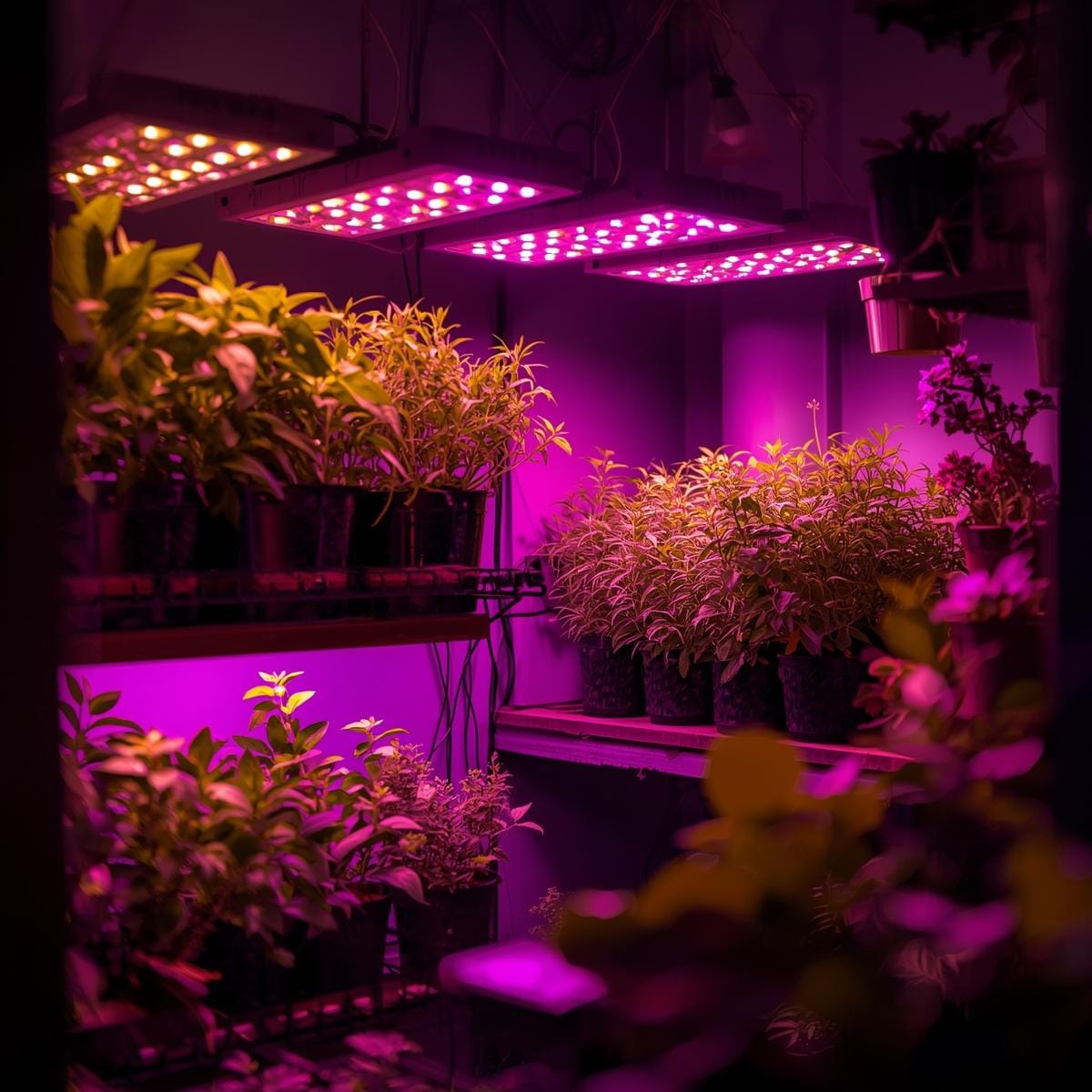
Most people blame themselves when seeds fail indoors. They second-guess their soil, their watering, their timing. The real culprit is almost always the light — specifically, there isn’t nearly enough of it.
A south-facing window in February delivers a fraction of the photons a germinating seed actually needs. That’s not an opinion; it’s physics.
Light intensity drops sharply indoors, and most windowsills don’t come close to matching even a cloudy spring day outside.
The seedlings tell you quickly. They stretch upward — long, thin, pale stems reaching for anything brighter
Until they collapse under their own weight before they’re ever worth transplanting. Try Indoor Plant Sunlight Analysis Tool developed by our team.
Grow lights for starting seeds exist to solve exactly this problem, and when used correctly, they transform indoor seed starting from a frustrating gamble into something predictable and genuinely rewarding. At Grow With Hydroponics, we’ve watched growers go from trays of leggy failures to dense, vigorous transplants simply by getting their light setup right. This guide covers the full picture — why it matters, how to choose correctly, and how to avoid the mistakes that waste an entire growing season before it starts.
Why Is Light the Deciding Factor for Starting Seeds Indoors?
The moment a seed germinates, it starts looking for two things: moisture and light. It doesn’t have much energy stored. If the light source overhead is weak or positioned too far away, the seedling burns through its reserves stretching toward it — putting every calorie into stem length instead of root mass, leaf density, or structural strength.
This is called etiolation, and it’s the single most common failure in indoor seed starting. The fix isn’t complicated, but it does require adequate light intensity, the right spectrum, and reliable timing every single day.
Natural light through glass cannot reliably deliver this. Window coatings, seasonal angle changes, cloud cover, and basic indoor geometry all reduce available light in ways most growers don’t account for. The appeal of grow lights for starting seeds is exactly this: you control what the plant receives, every hour of every day, regardless of what’s happening outside.
How Do You Choose the Right Grow Lights for Starting Seeds?
LED vs Fluorescent: Which Is Better for Seedlings?
This question comes up constantly, and the honest answer is that LEDs have largely won — though not for every budget or every situation.
Full-spectrum LEDs are now the standard choice for serious seed starting. They run cool enough to position close to the canopy, they maintain their output over years of use, and they draw considerably less power than fluorescents for equivalent light delivery. Critically, a quality full-spectrum LED at 5000K–6500K colour temperature mimics the quality of spring sunlight more closely than any other readily available light source — which is exactly what a germinating seedling is wired to respond to.
T5 fluorescent fixtures are still a workable entry point. They’re inexpensive upfront, widely available, and produce gentle, even light that suits seedlings well. The trade-offs are real though: bulb output degrades over time, replacement costs accumulate, and heat output is higher relative to usable light delivered. For a grower running one small tray seasonally, fluorescents are fine. For anyone running multiple trays or wanting consistent results year after year, LEDs pay for themselves.
Avoid the old “blurple” red-blue panels for seed starting. That purple glow makes it genuinely difficult to diagnose plant health — yellowing, spots, and early deficiencies become nearly invisible under that spectrum. Full-spectrum, white-light LEDs let you see exactly what’s happening.
What Spectrum Do Seedlings Actually Need?
Young seedlings respond primarily to blue-spectrum light in the 400–500nm range. This wavelength drives compact, stocky vegetative development — exactly what you want from a transplant. A seedling grown under strong blue-spectrum light builds shorter internodes, thicker stems, and a root system prepared for productive life.
As seedlings mature toward transplant size, a balanced full spectrum — blue plus red (600–700nm) plus mid-range green — becomes increasingly important for efficient photosynthesis across the whole leaf. The simplest approach: use a quality full-spectrum LED from day one and don’t overthink the staging.
How Bright Do Grow Lights for Starting Seeds Need to Be?
Two numbers matter here, and neither of them is wattage.
PPFD (Photosynthetic Photon Flux Density) measures actual light intensity at the canopy — the photons that plants can use. For most seedlings and young transplants, target 200–400 μmol/m²/s. Sun-loving crops like tomatoes and peppers benefit from the higher end of that range; leafy greens and herbs are content with less.
DLI (Daily Light Integral) measures total light received over a full day — intensity multiplied by duration. Most seedlings thrive with a DLI of 10–15 mol/m²/day. Cool-weather crops like lettuce and spinach sit at the lower end; warm-season crops like peppers and basil prefer higher daily doses.
Tool Tip: Use the DLI Calculator to verify what your current grow light and schedule actually deliver. It’s a quick check that catches the most common problem in seed starting setups — running a light that sounds adequate but doesn’t hit the numbers your seedlings need.
How Do You Set Up an Indoor Seed Starting Station?
What Equipment Do You Actually Need?
You don’t need an elaborate setup to get excellent results. A basic seed starting station that works well looks like this:
- Seedling trays or small pots with drainage — never without drainage
- Seed-starting mix — lightweight, soilless, nothing with fertiliser already added
- A height-adjustable grow light — LEDs with chain or pulley mount work best since you’ll adjust height regularly
- A programmable outlet timer — non-negotiable; manual switching will fail you within a week
- A small clip-on fan — not optional if you want strong stems and want to prevent fungal problems
Before you build out the shelving, it’s worth mapping the space properly. Knowing your light footprint and tray capacity in advance prevents the frustrating moment where you’ve set everything up and realised the outer trays are sitting in shadow.
How Far Should Grow Lights Be from Seedlings?
This is where most beginners get it wrong — and the consequences show up fast.
Light Type | At Germination | After Sprouting | Vegetative Stage |
Full-Spectrum LED | 8–12 inches | 6–10 inches | 10–16 inches |
T5 Fluorescent | 2–3 inches | 2–4 inches | 4–6 inches |
CFL (compact fluorescent) | 3–5 inches | 3–6 inches | 6–8 inches |
Place the light too far away and the seedlings stretch toward it, producing weak, leggy stems that fold over at the soil line.
I’ve seen basil seedlings triple in height overnight trying to reach a light that was hung just eight inches too high.
Adjust daily as the plants grow — it takes thirty seconds and saves weeks of recovery time.
With modern LEDs, the greater risk at close range is drying out the soil surface rather than burning leaves. Watch for wilting between waterings as a sign the canopy is too warm from the light.
How to Start Seeds Under Grow Lights: Step-by-Step
Getting the sequence right matters. Here’s the rhythm that consistently produces strong transplants:
- Pre-moisten your seed-starting mix. Do this in a separate bucket before filling trays. The mix should feel like a wrung-out sponge — moist through, not dripping. Dry mix in trays repels water and leaves dry pockets around roots.
- Sow at the correct depth. A practical rule: plant seeds to a depth of roughly twice their diameter. Tiny lettuce seeds sit near the surface; larger tomato or pepper seeds go deeper.
- Cover and retain humidity. Use a humidity dome or a sheet of clear plastic wrap until germination. This keeps the surface moist without constant watering. Remove it immediately the moment sprouts appear — lingering moisture under a dome invites damping off.
- Turn the lights on at first sprout. Not a day later. The moment green appears above the soil, those seedlings need intense light or they’ll begin stretching within hours.
- Set your timer for 14–16 hours of light per day. Most seedlings and vegetables thrive on a 14–16 hour photoperiod with 8–10 hours of darkness. Darkness is not wasted time — root development and cellular processes that support future growth happen during it. Running lights 24 hours doesn’t accelerate growth; it stresses the plant.
- Adjust light height daily. Keep the fixture close. As the seedlings grow, raise the light to maintain the appropriate distance rather than letting the canopy grow into a position that’s either too close or too far.
Compare our top-rated budget LED panels : Best Affordable LED Grow Lights (2026)—Budget Picks That Work.
What Vegetables Grow Best Indoors Under Grow Lights?
Grow lights for starting seeds aren’t limited to the germination phase. Many vegetables are genuinely productive grown to full maturity indoors, under lights, year-round. Others are better suited to starting indoors and transplanting outside.
Vegetables that grow exceptionally well indoors under lights:
- Leafy greens — lettuce, kale, spinach, Swiss chard; these are genuinely designed for low-hassle indoor growing
- Herbs — basil, parsley, cilantro, chives; consistent harvesting keeps them productive for months
- Compact fruiting crops — dwarf cherry tomatoes, bushy pepper varieties, determinate bean types
Crops best started indoors, then transplanted:
- Full-size tomatoes and peppers — they’ll start beautifully indoors but need outdoor or greenhouse space to fruit at scale
- Cucumbers and squash — fast-growing once established outdoors; indoor starts give you a 4–6 week head start on the season
The practical advantage of keeping herbs and leafy greens indoors permanently is real. No soil pests, no weather events, no seasonal gaps. A few well-placed LED panels on a shelving unit can produce a continuous harvest year-round from a surprisingly small footprint.
What Are the Most Common Mistakes When Using Grow Lights for Starting Seeds?
These come up repeatedly and are all fixable once you know to look for them:
Light positioned too high. Still the leading cause of leggy seedlings. Lower the fixture before you assume anything else is wrong.
No timer. Inconsistent photoperiods disrupt plant development in ways that aren’t immediately obvious but compound over weeks. A basic programmable timer costs very little and eliminates the problem entirely.
Overwatering under artificial light. Indoors with LEDs, there’s less heat and airflow than a greenhouse or outdoor environment. Soil stays wet longer. Let the surface dry slightly between waterings — more seedling deaths in controlled environments are caused by overwatering than underwatering.
Skipping airflow. A small fan, pointed away from the seedlings to create gentle air movement in the room, prevents fungal gnats, strengthens stems through gentle mechanical stress, and reduces the humidity pockets that cause damping off. It’s inexpensive and often overlooked.
Leaving lights on 24 hours. Well-intentioned but counterproductive. Plants use darkness for processes that light interrupts. Consistent dark periods produce stronger plants than continuous light.
Tool Tip: If your grow space is also struggling with humidity or temperature swings — common in basements and spare rooms used for seed starting — the VPD Calculator helps you find the temperature-humidity balance where your seedlings can actually absorb and use the light you’re providing. Light intensity only helps if the environment supports the plant’s ability to respond to it.
Shopping Smart: What to Look for When Buying Grow Lights for Starting Seeds
Shop Smart: Our dedicated equipment and gadget page is built for exactly this kind of decision. When you Shop Smart for grow lights, filter by actual wattage draw (not “equivalent” claims), full-spectrum output, and adjustable mounting height. A light that can’t be raised as your seedlings grow is a light you’ll grow out of by week three.
A quick checklist for evaluating any grow light before purchase:
- Full-spectrum output — look for 5000K–6500K colour temperature for seedling use; avoid narrow red-blue blurple panels
- Actual power draw confirmed — the wall draw in watts, not equivalent ratings
- Adjustable height mounting — chain, pulley, or telescoping stand; height adjustment is non-negotiable
- Quiet operation — built-in fans should be barely audible; loud fans in a living space become irritating quickly
- Timer compatibility or built-in timer — some fixtures include programmable scheduling; others require a separate outlet timer
When and How to Transplant Seedlings Started Under Grow Lights
Seedlings are ready to transplant when they have developed at least two sets of true leaves — the second set that looks like the mature plant, not the rounded cotyledon leaves that appear first. At this point, roots have established enough to handle the transition.
Harden off seedlings before moving them outdoors or into a dramatically different environment. This means gradually reducing light intensity or duration over 7–10 days, and introducing outdoor conditions incrementally. Going from a controlled indoor environment to direct outdoor sun without hardening causes leaf scorch and transplant shock that sets plants back weeks.
For transplanting into a hydroponic system, maintain similar light intensity for the first few days while roots adjust to the new medium. The seedling needs stability during the transition, not new environmental challenges on top of root disturbance.
Grow Lights for Starting Seeds: Quick-Reference Comparison
Factor | Full-Spectrum LED | T5 Fluorescent | CFL |
Best For | All seedlings, vegetables | Greens, herbs, beginners | Supplemental or small setups |
Colour Temperature | 5000K–6500K | 4000K–6500K | 5000K–6500K |
Typical PPFD at Canopy | 200–600+ μmol/m²/s | 100–300 μmol/m²/s | 80–200 μmol/m²/s |
Heat Output | Low | Low–Medium | Medium |
Lifespan | ~50,000 hrs | 10,000–20,000 hrs | 8,000–15,000 hrs |
Mounting Flexibility | High | Medium | Low |
Running Cost | Low | Medium | Medium–High |
Get the Light Right, and the Rest Follows
Gardening rewards observation more than effort.
And when it comes to indoor seed starting, what you observe in the first week — whether seedlings are compact and upright or already reaching desperately for the ceiling — tells you everything about whether your light is working.
Grow lights for starting seeds are not an optional upgrade. They’re the foundation of consistent, repeatable results indoors. Get the right fixture, position it correctly, set a reliable schedule, and your seedlings will build the root mass and structural strength that carries them through the rest of their life — whether that’s outdoors in spring, or in a hydroponic system year-round.
Start simple. One quality full-spectrum LED grow lights over one tray. A timer. A small fan. Adjust height daily and watch what the plants tell you.
Everything else — bigger setups, more trays, advanced crop selection — comes naturally once that foundation is reliable. For every step along that path, Grow With Hydroponics has the guides, calculators, and honest equipment breakdowns to help you keep building on what works.
FAQ: Grow Lights for Starting Seeds Indoors
Do seeds actually need grow lights to germinate? Most seeds germinate in darkness and don’t need light until the sprout breaks the soil surface. The grow light becomes essential the moment green appears. Delaying light even by a day at that stage causes stretching that’s difficult to reverse.
How many hours should grow lights run for seedlings? Aim for 14–16 hours of light with 8–10 hours of darkness daily. Use a programmable timer — consistency matters more than the exact number within that range.
Can regular LED bulbs work for starting seeds? Standard LED bulbs provide some usable light but lack the spectral balance and intensity that seedlings need for compact, strong growth. They’ll keep something alive in a bright room; they won’t produce transplant-quality seedlings reliably.
Why are my seedlings still leggy even with a grow light? The light is almost certainly positioned too high. Lower it first before changing anything else. Even a quality LED delivers a fraction of its rated PPFD at excessive distance due to the inverse square law — light intensity drops sharply as distance increases.
What’s the ideal DLI for tomato and pepper seedlings? Tomatoes and peppers are warm-season, high-light crops. Target a DLI of 12–20 mol/m²/day during seed starting — higher than leafy greens, which manage well at 8–12 mol/m²/day. Use the DLI Calculator to verify your setup is hitting these targets.

Dr. Awais Yousaf
Algorithm Specialist and Associate Professor leading R&D at Grow With Hydroponics. With 5+ years of hands-on experience in smart hydroponic systems, deep learning, and sustainable AgriTech, he is passionate about turning small spaces into high-yield indoor farms. Connect at awais.yousaf@iub.edu.pk