

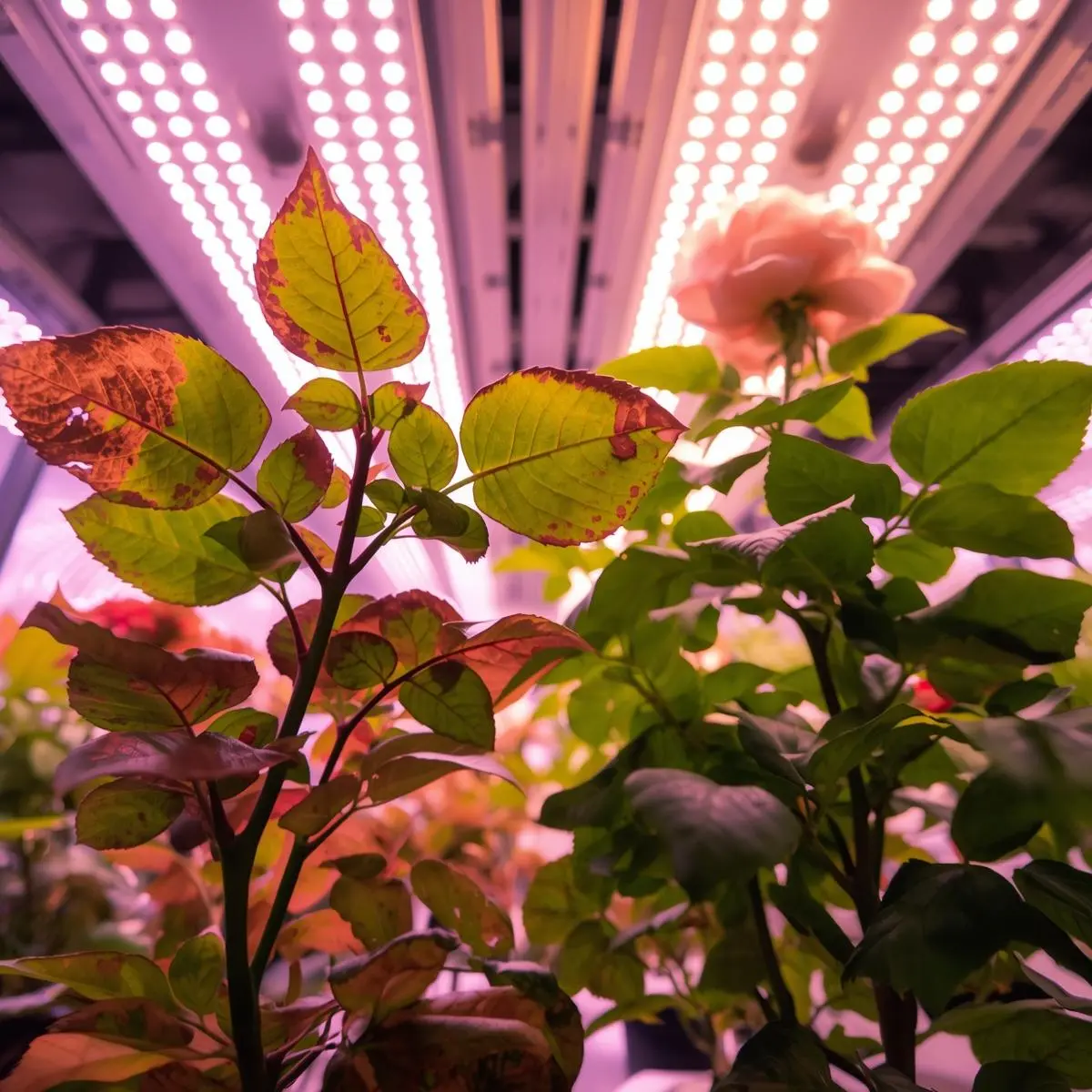
Growing roses hydroponically is incredibly rewarding. You get faster growth, bigger blooms, and precise control over plant nutrition. But that same precision can sometimes work against you.
One of the most common mistakes indoor growers make is overfeeding. We see it all the time—someone new to the system thinks if a little nutrient is good, a lot must be better. It’s not.
When nutrients are too concentrated, roses can’t process them properly, and that’s when nutrient toxicity in roses begins to appear.
Instead of stronger plants, you may see burnt leaf tips, curling foliage, unnaturally dark green leaves, or growth that just stalls for no apparent reason.
At Grow With Hydroponics, we’ve seen this happen countless times with both beginners and experienced growers. The good news? Nutrient toxicity in roses is very fixable once you understand the signs and know how to reset your system.
In this guide, you’ll learn:
The early warning signs of nutrient toxicity in roses
Why hydroponic systems make roses more sensitive
Step-by-step recovery strategies
Advanced tips to prevent nutrient buildup in the future
Let’s start with understanding what actually causes the problem.
What Is Nutrient Toxicity in Roses?
Nutrient toxicity in roses occurs when the concentration of minerals in the nutrient solution becomes too high for the plant to absorb safely. It’s essentially the plant equivalent of force-feeding—too much nutrition too fast.
Unlike soil, hydroponic systems don’t provide a natural buffer. There are no clay particles or organic matter to hold onto excess salts and release them slowly. That means nutrients reach the plant roots directly and immediately.
If levels rise too high, several things happen:
Osmotic pressure increases around the roots, making it hard for the plant to push water uptake.
Water uptake becomes difficult because the roots are surrounded by a too-salty environment.
Certain minerals begin blocking others, a phenomenon called nutrient antagonism.
Salt buildup damages root tissues, leaving them vulnerable to infection.
The result? The plant essentially gets overwhelmed by nutrients instead of nourished by them.
In hydroponics, this usually happens due to:
Overly concentrated nutrient mixes
Poor EC (Electrical Conductivity) monitoring
Evaporation increasing nutrient strength in the reservoir
Incorrect feeding schedules
Salt buildup in the system over time
Why Hydroponic Roses Are More Sensitive to Nutrient Toxicity
Hydroponic systems provide nutrients directly through water. This precision is powerful—but it also leaves very little margin for error. Think of it as the difference between a measured IV drip and chugging a gallon of syrup.
Direct Root Exposure
In soil, excess nutrients can bind to organic matter and release slowly. It’s a forgiving medium.
In hydroponics:
Roots absorb nutrients immediately upon contact.
High concentrations hit the root system instantly.
Toxic levels affect plants much faster—sometimes within hours.
Closed-System Salt Buildup
Many home systems recirculate nutrient solutions. While efficient, this can lead to:
Mineral accumulation as water evaporates but salts remain.
EC levels slowly increasing over a few days.
Imbalanced nutrient ratios as plants drink more water than food.
Environmental Amplification
Temperature, humidity, and light intensity also influence nutrient uptake. A plant under intense light drinks more, which can dilute the nutrients in its tissues. But if the lights dim and the plant slows down, the same nutrient strength suddenly becomes too strong.
For example:
High light increases feeding demand.
Low humidity increases transpiration, pulling more water through the plant.
Warm reservoirs accelerate nutrient uptake and can lead to imbalances.
This is where environment management tools become extremely helpful. For instance, growers often use the VPD Calculator to balance temperature and humidity so plants absorb nutrients at the correct rate—not too fast, not too slow.
Early Signs of Nutrient Toxicity in Roses
Catching nutrient toxicity in roses early makes recovery much easier. Once leaves crisp up completely, they won’t heal, but you can stop the damage from spreading.
Here are the most common symptoms.
Leaf Tip Burn
This is usually the first visible warning sign. It looks like the plant got too close to a hot light, even when it didn’t.
You may notice:
Brown or crispy leaf tips
Yellow halos around damaged areas
Edges turning dry or brittle
This happens because excess salts accumulate in leaf tissues and essentially burn them from the inside out.
Dark Green, Thick Leaves
Overfeeding nitrogen often produces:
Very dark green foliage that looks almost artificial
Thick, leathery leaves that feel stiff
Slower flowering or buds that refuse to open
While it might look healthy at first—like a supercharged plant—it usually indicates a nutrient imbalance that will affect bloom quality.
Leaf Curling or Clawing
When nutrient levels spike dramatically:
Leaves may curl downward like a claw
Edges may twist inward
New growth appears distorted or stunted
This symptom is commonly linked to excess nitrogen or potassium. I’ve seen beginners mistake this for a pest problem, only to realize the damage is chemical, not biological.
Stunted Growth
Ironically, too many nutrients can slow growth to a crawl.
Roses experiencing toxicity may show:
Shorter stems between leaves
Reduced bud formation or buds that blast (die before opening)
Smaller leaves than usual
The plant is spending energy trying to survive the osmotic stress instead of growing.
Root Damage
If the issue continues unchecked, the roots will tell the story. Healthy hydroponic roots should be white and vigorous. With toxicity, you may see:
Brown discoloration
Slime buildup
Reduced branching and root hair loss
Can Too Much Fertilizer Kill Hydroponic Roses?
Yes—severe nutrient toxicity in roses can eventually kill the plant. It’s not an instant death sentence, but a slow decline.
Here’s what happens when overfeeding continues:
Roots experience salt stress, losing their ability to function.
Water uptake becomes difficult, leading to wilting even in a wet system.
Nutrient lockout begins as one element blocks another.
Photosynthesis slows due to cellular damage.
Plant tissues start failing, from leaf tips down to the crown.
The plant may appear simultaneously burnt and deficient because nutrient absorption becomes completely disrupted. You might see brown leaf tips alongside yellowing new growth—a confusing mess.
Fortunately, most cases can be reversed quickly if treated early. The roots are resilient if you catch them before they rot.
How to Fix Nutrient Toxicity in Roses (Step-by-Step Recovery)
If your roses are showing signs of toxicity, don’t panic. This is a fixable problem. Follow this simple recovery process.
Step 1: Check EC Levels
Electrical Conductivity (EC) measures nutrient strength in your reservoir. If you’re not measuring this daily, you’re flying blind.
Typical EC ranges for hydroponic roses:
Vegetative stage: 1.4 – 1.8 mS/cm
Blooming stage: 1.8 – 2.2 mS/cm
If your EC exceeds these values, the solution is too concentrated. If you use PPM instead of EC, the EC ↔ PPM Converter makes it easy to translate readings accurately so you know exactly where you stand.
Step 2: Flush the Root Zone
Flushing removes excess salts from the root system. Think of it as a reset button.
Do this by:
Draining the reservoir completely.
Running clean, pH-balanced water (around 5.8–6.2) through the system.
Allowing water to circulate for 30–60 minutes to rinse the roots and media.
This helps reset the root environment and wash away the accumulated salts.
Step 3: Refill With a Diluted Nutrient Solution
After flushing, don’t immediately go back to full strength. The roots are stressed.
Instead:
Mix a 50% strength nutrient solution based on your usual recipe.
Monitor plant response for several days. Look for new growth.
Gradually increase strength if plants recover and demand more food.
Less is often more during recovery. The plant needs water first, food second.
Step 4: Remove Severely Damaged Leaves
Pruning helps the plant redirect energy to new, healthy growth.
Focus on removing:
Crispy or dead leaves that are clearly non-functional
Severely curled foliage blocking light to lower growth
Leaves blocking airflow through the canopy
Avoid heavy pruning—just remove the worst damage. Partially damaged leaves can still contribute energy through photosynthesis.
Step 5: Stabilize the Environment
Plants recovering from toxicity need stable conditions, not more stress.
Aim for:
Temperature: 20–26°C (68–78°F)
Humidity: 50–65%
Moderate light intensity—dim the lights or raise them temporarily
Too much light during recovery can worsen stress and slow the healing process.
Advanced Tips to Prevent Nutrient Toxicity in Roses
Once you’ve experienced nutrient toxicity, prevention becomes the priority. Here are proven strategies experienced growers use to keep things balanced.
Always Mix Nutrients Carefully
Never guess measurements. “Eyeballing” nutrients is the fastest way to burn a crop.
Instead:
Follow manufacturer ratios precisely.
Dissolve nutrients in separate containers of water first before adding to the reservoir.
Add them gradually to the reservoir while circulating.
Consistency prevents spikes.
Monitor EC Daily
Nutrient strength changes faster than many growers expect.
Evaporation alone can raise EC levels dramatically in a small reservoir.
A simple daily habit helps:
Check EC at the same time each day.
Check pH at the same time.
Adjust if necessary by adding plain water to dilute rising EC.
This small routine prevents big problems. If you see EC climbing, you know water is evaporating faster than nutrients are being used.
Replace Reservoir Water Regularly
Even balanced solutions drift over time. Plants selectively absorb certain elements, throwing off the ratios.
Most hydroponic growers refresh nutrients:
Every 7–10 days as a standard practice
Immediately if EC rises unexpectedly despite adding water
Fresh solution keeps mineral ratios stable and prevents the gradual buildup of “leftover” salts.
Match Feeding With Light Intensity
Plants under strong lights consume nutrients faster. But if your lights are too weak for the feeding schedule, nutrients accumulate.
When you Shop Smart for grow lights, match the fixture to your plant’s needs and use tools like a DLI Calculator to plan an appropriate lighting schedule. Balanced lighting prevents the underfeeding or overfeeding cycles that come from guessing.
Keep Good Records
Write down what you feed, when you flush, and how the plants respond. After a few cycles, you’ll have a personalized feeding schedule that works for your setup, not just a generic chart.
Frequently Asked Questions About Nutrient Toxicity in Roses
Can Roses Recover From Nutrient Burn?
Yes—most hydroponic roses recover within 1–2 weeks after flushing and correcting nutrient strength. New, healthy growth is the best indicator that the plant has moved past the stress. The damaged leaves won’t heal, but the new ones should look right.
Should I Cut Off Burnt Leaves?
Only remove leaves that are completely brown, crispy, or blocking airflow. Partially damaged green leaves still photosynthesize and help the plant recover. Let the plant decide when to drop them.
Is Nutrient Toxicity the Same as Nutrient Lockout?
Not exactly, though they’re closely related. Toxicity is an excess of a specific nutrient. Lockout is when that excess—or an imbalance—prevents the plant from absorbing other nutrients. Toxicity often causes lockout. Excess minerals interfere with uptake, creating deficiency symptoms even though the nutrients are present in the water.
How Often Should I Flush My Hydroponic System?
For prevention, many growers flush with plain water for a few hours once a month. For recovery, a full system flush is the first step. Between flushes, regular reservoir changes keep salt buildup in check.
Can I Use Tap Water to Flush?
Yes, if your tap water is reasonable. The goal is to remove salts, not to provide perfect chemistry. Just ensure the water is pH-adjusted to the 5.8–6.2 range before circulating it through the roots.
Internal Resources for Growing Hydroponic Roses
If you’re learning to grow roses hydroponically, these resources may help deepen your understanding:
How to Grow Roses Hydroponically: Science-Backed Complete Guide
Boost Your Hydroponic Roses: Exact pH & EC Levels for Bigger Blooms
Healthy Roses Need Balance, Not Excess
Hydroponic growing gives you remarkable control over plant nutrition—but with that control comes responsibility. It’s easy to think we’re helping by giving more, but plants don’t work that way.
Remember this simple rule:
More nutrients don’t mean more growth. In fact, balanced feeding almost always produces healthier roses than aggressive fertilization.
The best-looking blooms I’ve seen came from growers who paid attention to their plants instead of just their feeding charts.
If you monitor EC, refresh your reservoir regularly, and respond quickly to early warning signs, nutrient toxicity becomes an easily manageable issue.
And if you ever need practical tools, calculators, and growing resources, the learning tools available at Grow With Hydroponics are designed specifically to help indoor growers make better, data-driven decisions.
Healthy roots, balanced nutrients, and stable environments—those are the real secrets behind stunning hydroponic roses.

Dr. Awais Yousaf
Algorithm Specialist and Associate Professor leading R&D at Grow With Hydroponics. With 5+ years of hands-on experience in smart hydroponic systems, deep learning, and sustainable AgriTech, he is passionate about turning small spaces into high-yield indoor farms. Connect at awais.yousaf@iub.edu.pk