You bought a bunch of fresh cilantro on a Sunday. By Tuesday it was a dark, slippery mess at the back of the fridge. Happens to all of us. That quiet, repetitive waste—the wilted parsley, the dried-out dill, the basil that blackened before you even got to the pasta—is exactly the nudge that sends most people looking for a better way.Hydroponic gardening kits for herbs are that better way. Not the trendy version. The practical one: a compact, soil-free system that sits on your counter, delivers nutrients directly to plant roots, and keeps a steady supply of fresh basil, mint, or thyme going year-round without a garden bed, a green thumb, or much guesswork. At Grow With Hydroponics, we’ve helped growers at every level find their footing with these systems, and the honest truth is that a good kit makes the whole process far less complicated than most people expect.This guide covers what hydroponic gardening kits for herbs actually do, which features matter, how to choose one for your budget, and which herbs to start with. No jargon, no hype—just the practical stuff.
What Are Hydroponic Gardening Kits for Herbs—and Why Do They Work?
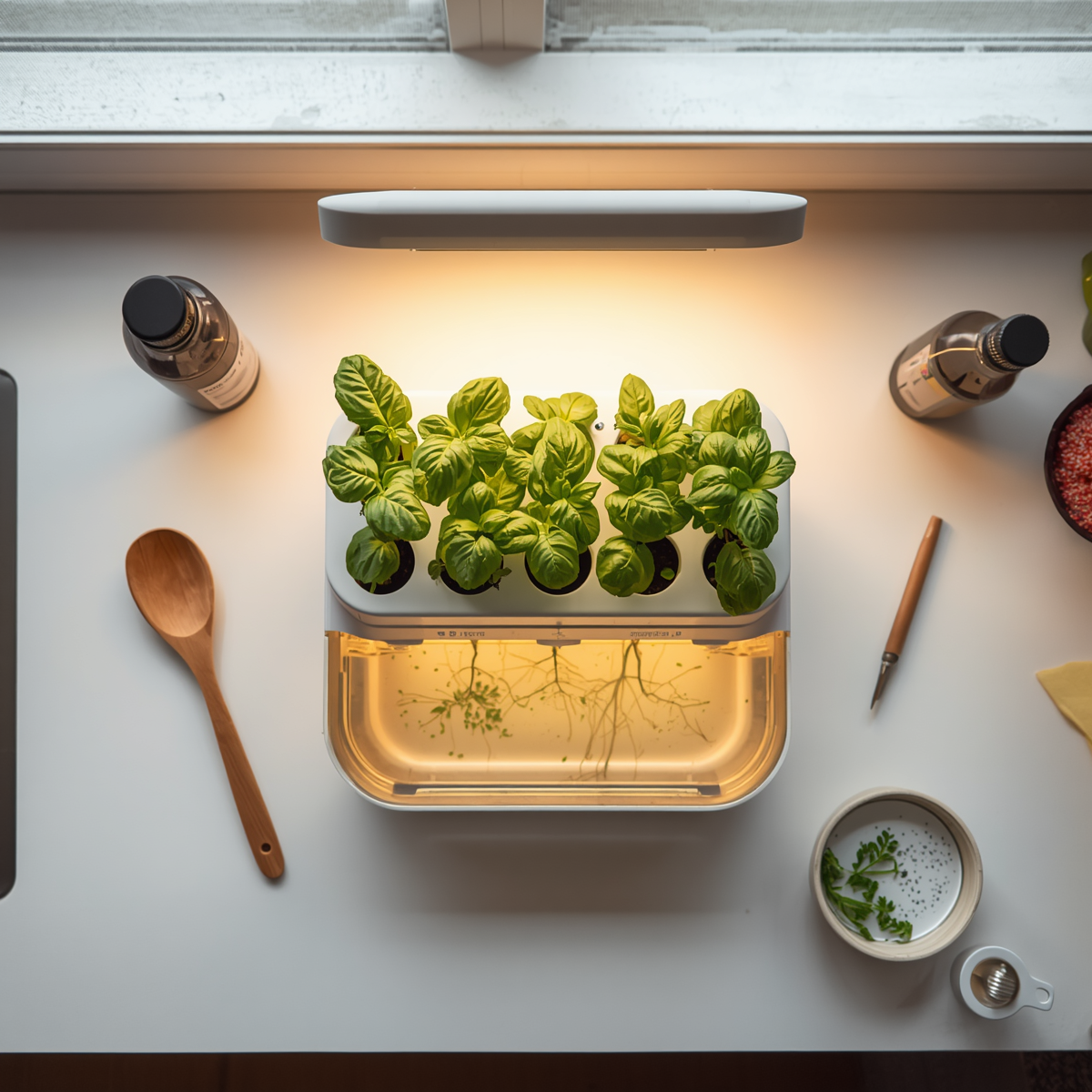
Strip away the marketing, and a hydroponic herb kit is a self-contained life-support system for plants. Roots sit in or near a circulating nutrient solution instead of soil. An LED light plays the role of the sun. A small pump keeps the water moving and oxygenated. The whole loop is closed, clean, and contained.Plants in hydroponic setups can grow 30–50% faster than plants in soil. The reason is straightforward. In soil, a plant spends real energy hunting for nutrients through the root zone—competing with microbes, navigating pH fluctuations, and working through organic matter breakdown. In a hydroponic system, the nutrients are already dissolved in the water and delivered directly to the roots. That freed-up energy goes into growth instead.For herbs specifically, this is a significant advantage. Basil, mint, parsley, and cilantro are exactly the kind of light-feeding, fast-cycling plants that respond best to precise, consistent nutrition. They’re not heavy feeders like tomatoes. They don’t need massive root systems. Give them the right nutrients, enough light, and a stable pH, and they’ll produce reliably in a remarkably small space.The kit part matters too. A pre-built system eliminates the DIY calculus—the pump sizing, the reservoir sealing, the light spectrum decisions—and lets you focus on growing. That’s the real value for beginners.Check out our Herb Gardening Guide: Indoor & Hydroponic Herb Growing (Beginner to Pro).
What Features Do Hydroponic Gardening Kits for Herbs Actually Need?
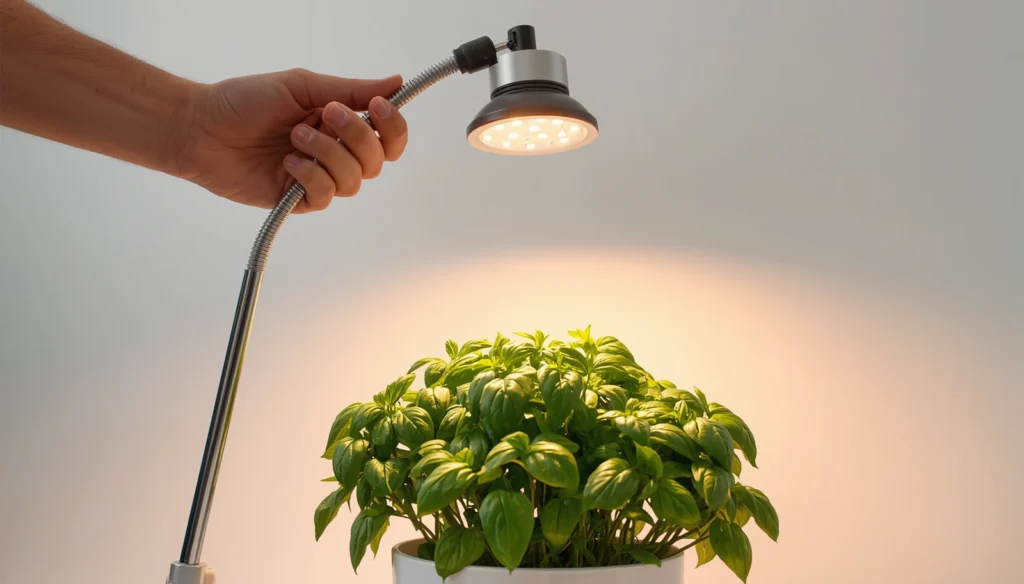
This is where it’s worth slowing down. A lot of kit marketing focuses on aesthetics and app features. What your herbs actually care about is different.An adjustable light arm isn’t a bonus feature — it’s basic functionality. Basil grows fast. Fixed lights don’t.Lighting quality—not just wattage. For herbs like basil and mint, you want a PPFD range of around 200–400 µmol/m²/s for good growth. Many budget kits list wattage prominently but give no information about actual light intensity at the plant canopy. A 20-watt light mounted too far above the pods delivers far less usable light than the spec suggests. If the kit’s light arm isn’t adjustable, that’s a genuine limitation.Reliable water circulation. An air pump keeps water oxygenated and circulating around the herb’s root system, which is what drives fast, healthy growth. A stagnant reservoir grows problems fast—algae, root rot, inconsistent nutrient uptake. Even a basic pump that hums reliably beats a quiet one that fails in month two.Adjustability. Basil grows tall quickly. If lights are fixed at a single height, you’ll end up with either burnt tops or stretching stems. An adjustable arm isn’t a luxury—it’s basic functionality.A reservoir you can actually clean. Neglected maintenance is one of the most common reasons kits get abandoned. If the water tank is awkward to access or rinse, you’ll dread doing it. Simple geometry matters here.pH range awareness. Most herbs perform well in a pH range of 5.5–6.5 and an EC range of 1.0–1.6. If a kit comes with no pH testing equipment or guidance, that’s a gap you’ll need to fill yourself.Before you buy anything, use our DLI Calculator to work out whether the kit’s specified light output will actually hit your target daily light integral for the herbs you want to grow. It’s a fast check that saves expensive mistakes.
Comparing Hydroponic Gardening Kits for Herbs by Budget
Kits cluster into three tiers. Each serves a different grower and a different goal.Budget, mid-range, premium — the right kit depends on how much you cook, how much space you have, and how far down the rabbit hole you want to go.
Kit Tier
Price Range
Capacity
Best For
Key Limitation
Budget
$40–$80
3–6 pods
First-timers, small kitchens, testing the concept
Fixed lights, limited control, smaller yields
Mid-Range
$80–$250
6–15 pods
Home cooks, year-round herb supply, mixed growing
Higher upfront cost, some learning curve
Premium
$250–$600+
15–30+ pods
Enthusiasts, food-focused households, high output
Space requirements, ongoing input costs
Budget Hydroponic Gardening Kits for Herbs ($40–$80)
Entry-level systems like simple deep water culture kits cost around $40–$60 and provide everything needed to start growing. These compact systems usually hold three to six herb pods, come with basic LED lighting, and handle simple water circulation.Don’t underestimate them. A budget kit is an excellent way to learn the rhythm of hydroponic growing—the water top-offs, the pruning schedule, and the quiet daily observation of white roots developing in nutrient water—without committing serious money upfront. The trade-off is limited capacity, fixed lights, and minimal control over the environment.If this is where you’re starting, go in with realistic expectations. Grow two or three herbs. Learn the system. Expand later.
Mid-Range Hydroponic Herb Kits ($80–$250)
Mid-range systems ($100–$300) typically offer better build quality, automated features, and customer support that justifies their higher price. Built-in LED grow lights, timers, and sometimes smartphone apps make daily care nearly effortless.This tier is where the practical value really kicks in for home cooks. A system in this range can support six to fifteen pods—enough for a rotating supply of basil, parsley, mint, and cilantro simultaneously. Most include adjustable light arms and timers, which means less hands-on management and more consistent results.When you Shop Smart at this tier, look past the pod count and focus on the quality of the included lights and whether the nutrient pods are proprietary or open-system. Closed pod systems lock you into the brand’s seed refills, which adds ongoing cost over time.
Premium Hydroponic Gardening Kits for Herbs ($250–$600+)
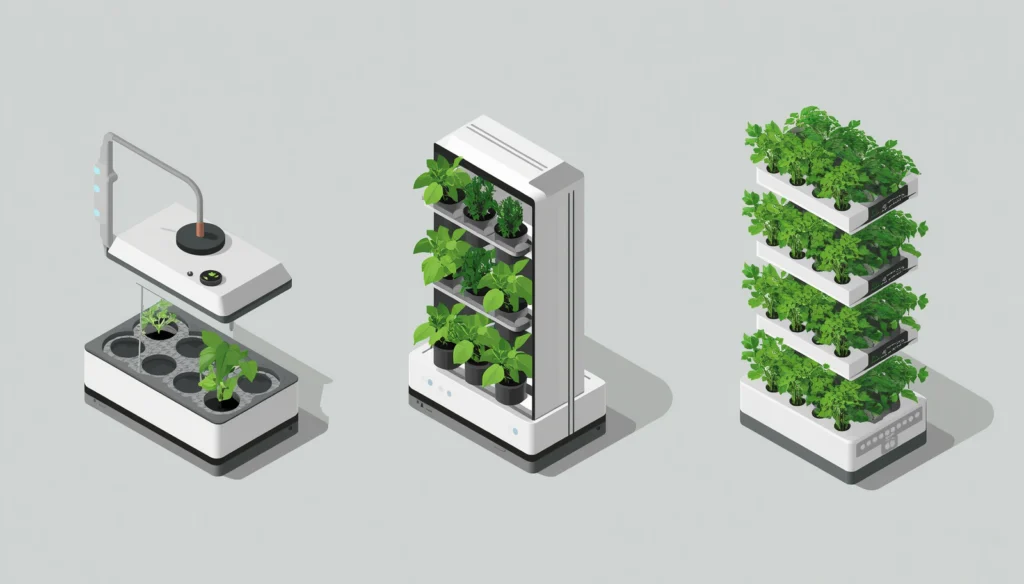
The most advanced premium systems deploy smart features like automated dosing, app connectivity, real-time notifications, and sensor-based monitoring. Vertical towers, wall-mounted panels, and modular multi-tier racks fall into this category. You’re looking at 15 to 30-plus plants and borderline food-production output.This level makes sense if you’re feeding a household, reducing grocery spend in a meaningful way, or simply committed to the craft. The running costs are real—nutrients, replacement parts, electricity—but the yields justify them for the right grower.
Hydroponic Herb Kits Our Experts Actually Recommend
Shop Smart: Not every kit on the market earns its counter space. Our team has tested and hand-picked a shortlist of hydroponic herb kits that balance build quality, light performance, and real-world value across every budget tier.
Which Herbs Grow Best in Hydroponic Gardening Kits?
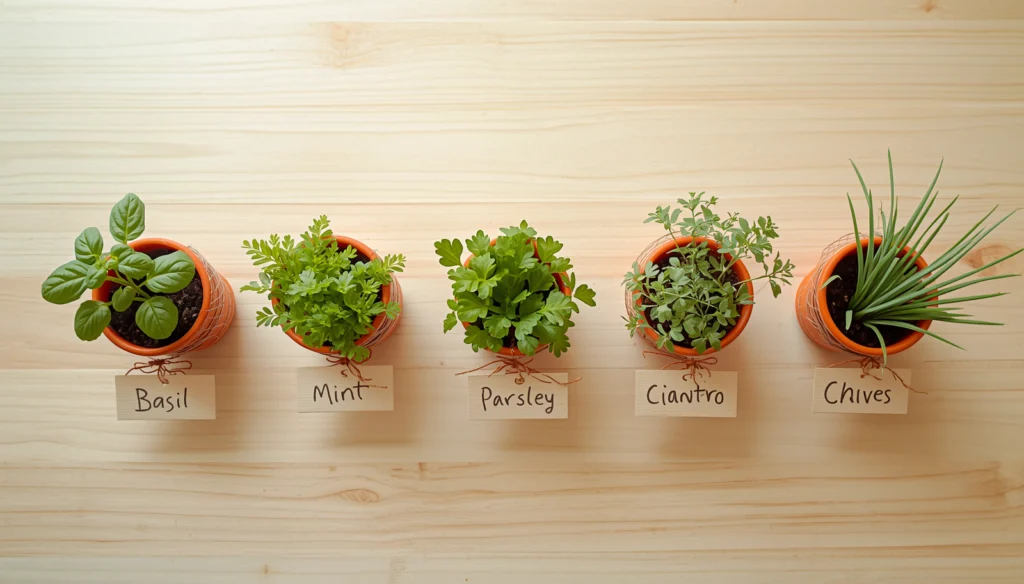
Not all herbs perform equally in a kit environment. Start with the fast, forgiving ones and expand from there.Start here. These five herbs are fast, forgiving, and actually useful in the kitchen. Master them before moving on to slower, fussier varieties.Basil, cilantro, mint, parsley, chives, dill, and thyme are among the most productive and popular herbs to grow hydroponically. These herbs share a few useful traits: relatively short growth cycles, tolerance for the controlled environment of a kit, and frequent kitchen utility.Basil is the most common starter herb for good reason—it grows quickly, signals problems visibly, and tastes noticeably better when harvested fresh versus refrigerated.Mint is almost too easy. It grows aggressively and is useful for tracking whether your nutrient levels are balanced; if mint struggles, something’s genuinely off.Parsley and chives are slightly slower but require minimal attention once established.Cilantro can be trickier—most varieties are ready to harvest in about two to two and a half months and prefer a cooler temperature range of 60–65°F. In a warm kitchen, it tends to bolt faster. Worth growing, but watch the temperature.Hold off on rosemary and oregano in a beginner kit. They grow slowly, prefer drier conditions than most kit systems provide, and don’t show results fast enough to build early confidence.25 best plants you can grow without soil—a practical guide to crop selection for hydroponic beginners and intermediate growers.
Common Mistakes with Hydroponic Gardening Kits for Herbs
Even a well-designed kit can produce disappointing results if the fundamentals go wrong. Here’s what trips up most beginners.Ignoring pH drift. This is the single most common problem. Maintaining a stable pH level between 5.5 and 6.5 in the hydroponic solution ensures optimal nutrient absorption for herbs. Let it drift outside that range, and nutrients are present in the water but unavailable to the plant. Yellowing leaves follow, then the guessing starts. Test pH every two to three days. Adjust. That’s the whole job.Trusting the marketing wattage. A 20-watt LED isn’t the same as a 20-watt LED mounted eight inches too far above the canopy. Light intensity and adjustable height are critical—herbs require about 12–16 hours of light per day for consistent growth. If seedlings are stretching upward toward the light, the canopy needs to be closer.Planting too many varieties at once. Different herbs have slightly different nutrient and light preferences. A mint’s aggressive growth can crowd out a slower-developing thyme. Start with two or three compatible herbs, then expand once you’ve run a full cycle.Skipping the full reservoir change. Topping off water between changes is correct, but it doesn’t substitute for a full flush and refill every two weeks. Salt buildup in the reservoir gradually interferes with nutrient uptake in ways that are slow and easy to miss until growth stalls noticeably.Over-adjusting. Every grower does this at some point. You change the nutrient concentration, lower the light, and add a pH buffer all in one day. Then you can’t tell what worked. Change one variable. Wait three days. Observe. Then adjust again if needed.
The Realistic Path to a Counter Full of Fresh Herbs
Hydroponic gardening kits for herbs aren’t a shortcut to perfection. They’re a compression of the learning curve—a way to understand plant behavior, nutrient management, and light requirements in a forgiving, contained environment. The first grow teaches you more than a year of reading about it.Start small. Choose a kit that fits your counter space and your budget honestly. Grow three herbs you actually cook with. Run a full cycle before expanding. The principles you build in that first run—pH management, reservoir timing, light positioning—carry into every system you’ll ever use.At Grow With Hydroponics, our tools exist to make that learning curve shorter and your results more consistent. Use the DLI Calculator before you buy a kit to confirm the included lights will actually deliver what your herbs need. Then browse our curated equipment through Shop Smart when you’re ready to set up or upgrade.That first pesto from basil you grew yourself? It’s worth the $40 kit and the two weeks of patience.
Frequently Asked Questions About Hydroponic Gardening Kits for Herbs
How often do I need to maintain a hydroponic herb kit? For the first week, check daily while you learn the baseline. After that, every two to three days for water level top-offs and a quick pH check. A full reservoir change every two weeks is the main recurring task. Most kits need less time than watering a soil pot garden.Are hydroponic herb kits worth the cost compared to buying fresh herbs? Over time, yes—especially for herbs you use frequently. A mid-range kit pays for itself in grocery savings within one to two growing seasons, particularly for basil, mint, and parsley, which are expensive to buy fresh and quick to spoil.Can I grow different herbs together in one kit? Generally yes, as long as you pair herbs with similar light and nutrient needs. Basil, parsley, mint, and chives work well together. If one herb starts growing faster than the others, a quick trim usually keeps everything balanced.Do hydroponic herb kits need special water? Tap water works in most cases. If your tap water is heavily chlorinated, let it sit uncovered for 24 hours before using. If it’s particularly hard—above 300 ppm—cutting it with distilled or filtered water will give you more consistent results.What happens if my herbs turn yellow? Check pH first before assuming it’s a nutrient deficiency. If pH is within range, check the EC of your solution to verify nutrient strength. Yellow leaves from the base upward often signal nitrogen, while yellowing between leaf veins can indicate a micronutrient issue. Adjust pH, wait three to four days, and reassess before changing anything else.
Dr. Awais Yousaf
Algorithm Specialist & Associate Professor
Algorithm Specialist and Associate Professor leading R&D at Grow With Hydroponics. With 5+ years of hands-on experience in smart hydroponic systems, deep learning, and sustainable AgriTech, he is passionate about turning small spaces into high-yield indoor farms. Connect at awais.yousaf@iub.edu.pk