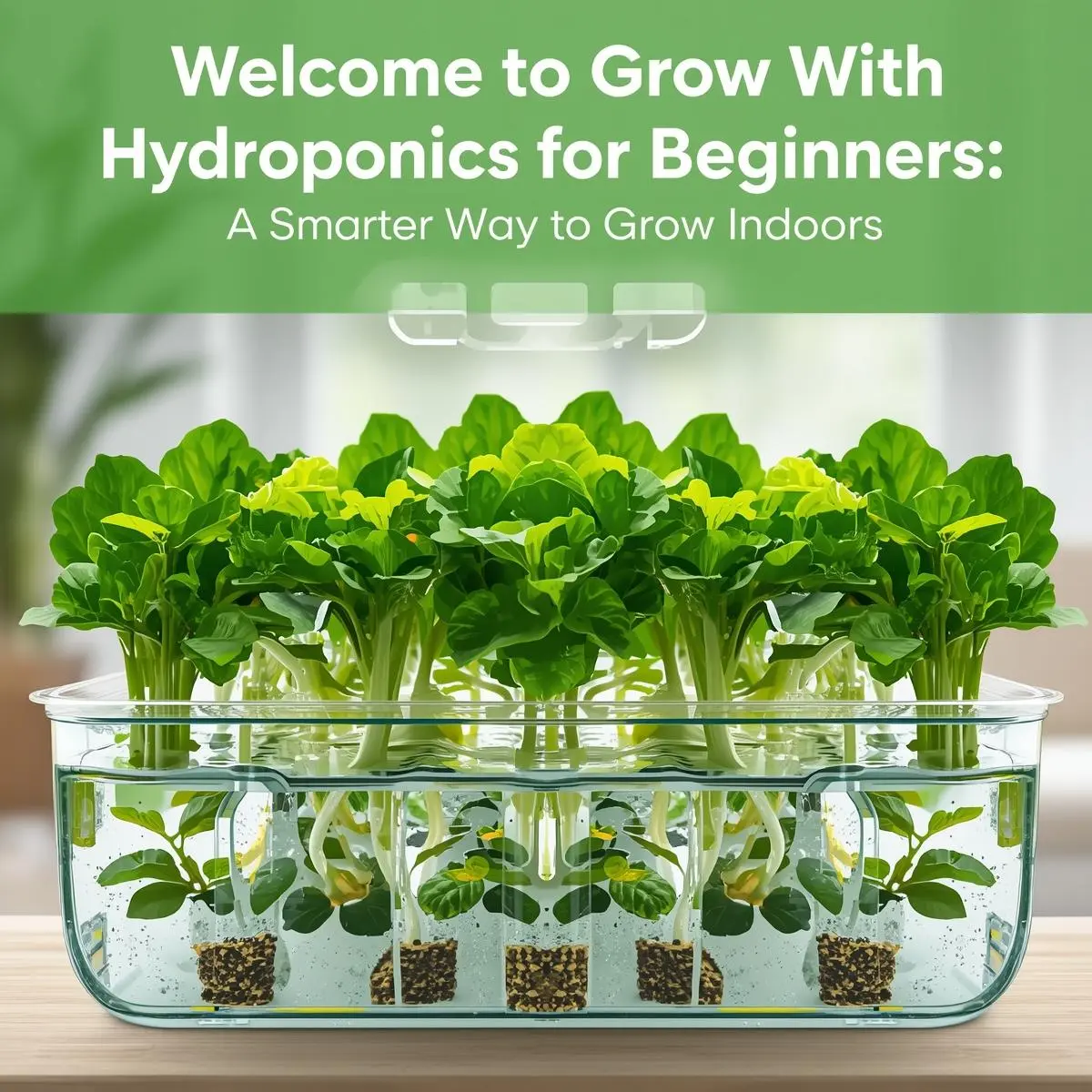
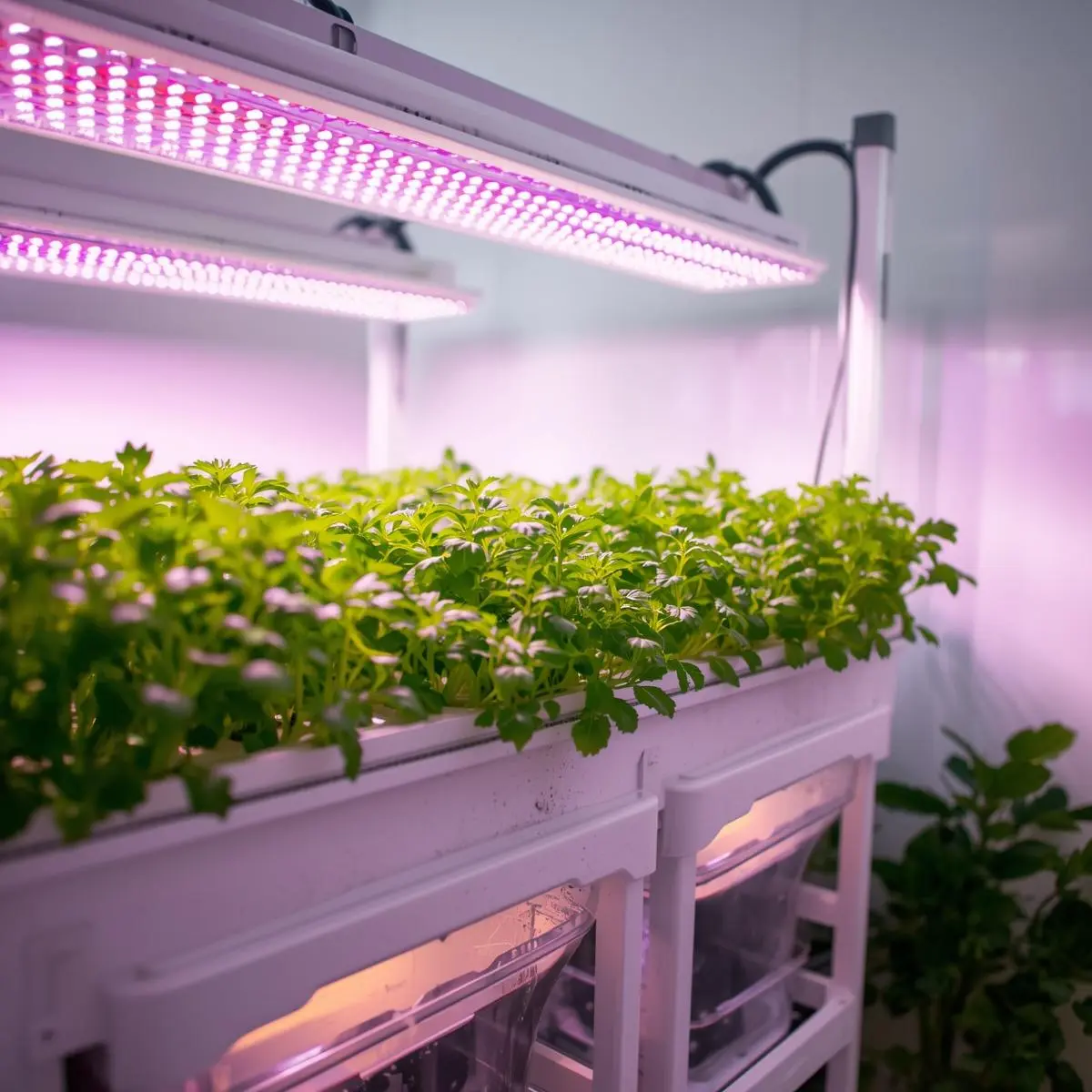
Indoor hydroponics comes down to three key elements: water, nutrients, and light. And although water and nutrients may provide the fuel, light is undoubtedly what drives the entire growth process. Without the correct spectrum and intensity, plants grown using the hydroponic method will struggle to photosynthesize and may exhibit weak growth, ultimately resulting in a poor or nonexistent harvest. That’s where hydro grow lamps and hydroponic grow lights come into play.
Everything you need to know about hydroponic grow bulbs, fixtures, and complete systems: we’ll cover it all in this guide! We’ll review various hydro LED lights, describe the different growth stages, and discuss how hydroponic lamps help them, as well as explore new trends such as galaxy LED grow lights. Whether you’re new to gardening indoors or a seasoned hydroponic farmer, this guide is intended as your pathway for selecting the right lighting option.
Why Lighting Matters in Hydroponics
Plants harness light energy to carry out photosynthesis, a process that converts water and nutrients into sugars and growth. Outdoors, the sun offers a full spectrum of light for free. However, in hydroponics, especially when it involves an indoor or vertical operation, the sun must be replaced by artificial light.
Decommissioned aircraft, hybrid potatoes, and Madrid from the air: An aerial view of one of North Korea’s hydroelectric plants. Good hydroponic lights should do more than brighten your plants. They:
- Provide the optimal light spectrum for plants at various stages of growth.
- Enhance yields by encouraging strong roots, stems, and flowering.
- You can plant year-round, even during the cold season.
- Reduce the growth cycles to accelerate harvesting.
With the wrong hydroponic grow lamps, your system may never reach its full potential.
Types of Hydroponic Grow Lights
When it comes to hydroponic grow lights, the requirements depend on your specific crops, available space, and budget. Here are the main choices:
Hydro LED Lights
These days, LEDs are the standard for indoor hydroponics. They’re energy-efficient, with lifespans in the tens of thousands of hours, and produce less heat than older technologies.
- Full-spectrum hydro LED lights replicate natural sunlight.
- Multispectrum LEDs can be tuned to shift from a blue-heavy spectrum (promoting vegetative growth) to a red-heavy spectrum (supporting flowering).
- Galaxy LED grow lights are high-power growing products that offer customizable light functionality and energy efficiency, as expected from this price point.
Fluorescent Hydroponic Lamps
Fluorescent lights are a good, budget-friendly choice and easy for someone new to growing. They are generally available in T5 tubes and as compact fluorescents.
- Perfect for seedlings, cuttings, flowers, and houseplants.
- Cooler operating conditions require positioning the plant closer to the light.
- Low-level, so it may not be the ideal option for high-yielding crops.
HID Hydro Grow Lamps (MH and HPS)
HID Lighting: (High-Intensity Discharge) (Fluorescent lights are really a type of HID light.)—These types of lights consist mainly of Metal Halide (MH) and High-Pressure Sodium(HPS). They were the industry norm for commercial hydroponics at one time.
- MH hydro grow lamps → Blue hue, ideal for the vegetative stage.
- HPS hydro grow lamps → Red/orange spectrum suitable for flowering and fruiting.
- Emit light at high intensity but produce a significant amount of heat, requiring ventilation and ballasts.
Plasma & Induction Hydro Lights
Not as typical, but it is fast becoming a favorite with experienced growers.
- Provide intense full-spectrum lighting.
- Very long lifespan.
- Still expensive compared to LEDs.
Hydroponic Grow Bulbs vs Lamps vs Lighting Systems
The language is confusing: the terms “bulbs,” “lamps,” and “systems” can be easily interchanged, so let’s differentiate:
- The hydroponic grow bulbs are, in fact, the actual light sources (LED chips, HID bulbs, or fluorescent tubes).
- Hydroponic grow lamps consist of bulbs and the fixture that holds them.
- A hydroponic light kit is a comprehensive package that includes reflectors, ballasts (for high-intensity discharge, or HID), timers, spectrum control, and multiple lamps.
If you do much growing, then using a complete hydroponic lighting system will be more cost-effective for professional growers. Still, for personal use, you may find it easier to start with just one hydro light or a mini-sized hydroponic lamp.
Selecting the Best Hydro Grow Lamps for Your Configuration
The best lighting technique is generally dependent on:
Plant Type
- Leafy greens (lettuce, spinach, and basil) → do well under blue-dominant hydro LED or fluorescent.
- Fruiting plants (tomatoes, peppers, strawberries) → need intense red light from hydro grow lights like HPS or higher-end LEDs.
Growth Stage
- Seedlings: Low-power hydroponic lamps (fluorescent or LEDs).
- Vegetative growth: Blue heavy hydro LED lights or MH hydro grow lamps.
- Blooming/Fruiting: Use red-shifted LEDs or HPS bulbs for optimal hydroponic growing.
Space Size & Budget
- Small Grow Tent → LED Panels, T5 Fluorescent.
- Midsize indoor garden → Reflective surfaces and hydroponic grow lights together.
- Big greenhouse → All-round coverage is needed with complete hydro lighting systems.
Plant Lighting in Hydroponics: Perfecting the Spectrum
Spectrum is key. Here’s how different colors of light affect plant growth:
- Blue light (400-500nm): Promotes the vegetative leaf and Root growth.
- Red (range: 600-700 nm): promotes flowering and fruiting.
- White/full spectrum during the whole growth cycle.
This is why adjustable plant lighting hydroponics systems are so empowering— they allow you to adjust the light spectrum according to what your plants require.
Energy Efficiency and Costs
Grow lights may be one of the most significant expenditures in hydroponics. Here’s how different systems compare:
- HydRo LED lights: Expensive at first, but low energy consumption and long (30-50K + hours) life.
- HID hydro grow lamps: Least expensive upfront, but with a high heat output and short lifespan (10-20,000 hours).
- Hydroponic fluorescent lights: The cheapest, but these will only take you so far with dense crops.
LEDs and new hydroponic lighting systems typically save money over the long run and have a smaller environmental footprint.
New Age of Hydro Light Systems
Hydroponic lighting technology has come a long way in the last few years:
- Innovative hydro lighting systems: Controlled by a timer and spectrum controller, it changes the level of light at different germination stages.
- Galaxy LED grow lights: These offer adaptable spectrum tuning, low energy costs, and self-cooling.
- Climate-Controlled Integration: Many of the newer systems integrate with humidity & temp controls for a truly optimal growing environment.
Hydroponic Grow Lights Mistakes
- Wrong distance from plants: if you get too close, you’ll burn; if you get too far away, you’ll make your plants stretch and weaken.
- Defying light schedules → Plants require different photoperiods (18 hours for vegetative, 12 hours for flowering).
- Underestimating heat → Even efficient systems like LEDs generate some heat that needs to be managed.
- Selecting the wrong spectrum → A leafy herb garden under red-shifted HPS lamps won’t be happy.
FAQs About Hydroponic Grow Lights
Q: Hydro grow lamps, hydroponic grow lights … what’s the difference?
A: They are often used interchangeably, but “lamps” tend to refer to an individual fixture, while the term “grow lights” can refer to the whole system.
Q: Are hydro LED grow lights superior to HID lights?
A: For most growers, yes. They’re more energy-efficient, emit less heat, and last longer. HID remains a staple in commercial flowering systems, but LEDs are in the lead.
Q: Do I need a complete hydroponic light system, or can I use a lamp?
A: You can dabble with a single hydroponic lamp. Still, it is usually necessary to invest in a hydro lighting system, the more you wish to scale up, to ensure that everything receives consistent light coverage.
Q: Are galaxy-led grow lights any good?
A: (Mostly yes, if you want high performance.) They are ideal for commercial hydroponic farms or dedicated hobbyists seeking high yields.
Conclusion: The Heart of Hydroponics is Lighting
The addition of hydroponics eliminates the need for soil, but regardless of the approach, lighting remains non-negotiable. Hydro Lamps’ performance and Galaxy LED grow lights. With your light of choice, you will face the decision between budgeted panels and professional, high-quality hydroponics lamps, and how this choice will impact plant health, growth speed, and final harvests.
If you’re new to this, a basic hydroponic grow bulb or compact LED panel would suffice to get rolling. ONCE – As your system grows, invest in a comprehensive hydroponics lighting system for uniform and efficient coverage.
In summary, choose your lighting solution wisely, and your plants will reward you with robust growth, bountiful yields, and year-round harvests.
For a deeper dive into matching your light to your grow space, The Ultimate LED Grow Light Guide: Science-Backed Indoor Setup (2026) covers everything from fixture specs to hang height calculations.