

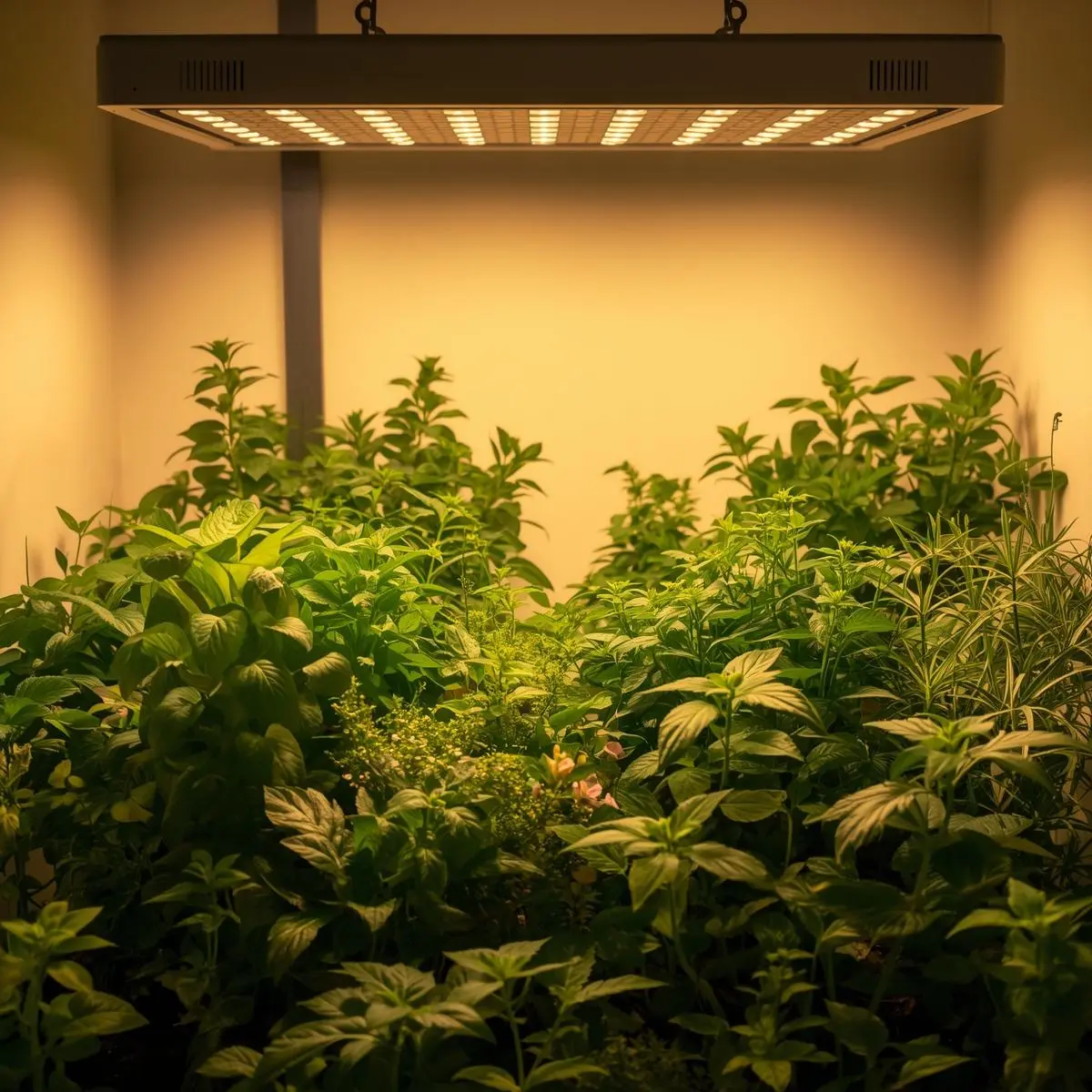
Best Affordable LED Grow Lights (Quick Comparison)
If you want healthy indoor plants without overspending, affordable LED grow lights are the best option. Shop Smart for top budget LED grow lights based on performance, energy efficiency, and real grower results.
Let’s be honest. The dream of a lush, thriving indoor garden usually crashes into two hard realities: the price of gear and the pathetic gray light of a winter windowsill. For years, quality grow lights were a serious investment. But here’s the good news—that’s changed.
The real secret to year-round rapid plant growth isn’t a fancy greenhouse; it’s a simple, affordable grow light.
And with modern energy-efficient LED tech, it won’t bankrupt you on the electricity bill, either.
Why Your Plants Are Begging for a Grow Light (Especially an Affordable One)
Sunlight is messy. It’s inconsistent, it’s seasonal, and in an apartment, it’s rarely where you need it to be. A proper grow light cuts through that chaos. It’s not just about keeping your plants alive through December—it’s about giving them the fuel to truly thrive.
The game-changer has been the rise of full-spectrum LEDs. Early LEDs often had that creepy, alien purple glow and were, frankly, a bit niche. Today’s models mimic the complete solar spectrum—the warm, the cool, and everything in between—which means they support every stage, from the first tentative seedling to heavy, fruiting branches.
So, why choose an affordable grow light? It boils down to a few brutally practical points:
- Energy Efficiency That Actually Matters: This isn’t just a greenwashing bullet point. An energy-efficient LED panel uses a fraction of the power of old-school HPS or fluorescent fixtures. You’ll see the difference on your utility bill, which makes the ongoing cost of a productive garden almost negligible.
- Durability You Can Set and Forget: A good LED fixture is rated for tens of thousands of hours. We’re talking a decade or more of daily use. You buy it once.
- The Full-Spectrum Advantage: Think of it as a complete diet for your plants. Full-spectrum light isn’t a gimmick; it provides all the “nutrients” of light they’d get outdoors, leading to stronger stems, richer colors, and better yields.
- Heat Management (or Lack Thereof): This is a huge one that beginners overlook. Old tech cooked your plants. LEDs run remarkably cool. Less heat stress means happier plants and one less thing to worry about in a confined space.
- The Bottom Line: The low initial investment pays off—and quickly. You’re not just buying a light; you’re buying control, consistency, and a serious upgrade to your plant’s quality of life.
The Tangible Benefits: What You’ll Actually See
Forget theory. Here’s what happens on your shelf: your leggy basil stems grow up thick and bushy. Your monstera pushes out larger, more fenestrated leaves. Your peppers actually fruit. You gain the flexibility to garden anywhere—a dark corner, a basement, a rental with terrible windows.
The benefits are immediate:
- Real Energy Savings: Less power drawn for more usable light. Full stop.
- Optimized Growth: Photosynthesis isn’t a mystery; it’s a chemical process driven by specific light wavelengths. A full-spectrum source feeds that engine perfectly.
- Space and Simplicity: Modern fixtures are slim, lightweight, and plug-and-play. No ballasts, no bulky reflectors, and no advanced electrical degree required.
The Data Doesn’t Lie
If you’re skeptical of marketing claims—and you should be—look at the research. If you want to stop guessing and actually understand spectrum, PPFD, and which numbers matter (versus which ones are just marketing), read The Ultimate LED Grow Light Guide: Science-Backed Indoor Setup (2026). It’s the technical deep dive without the bro-science.
Studies in journals like the Journal of Horticultural Science have shown plants leaping ahead by 20% faster under full-spectrum LEDs compared to traditional bulbs. Work from places like the University of Guelph has demonstrated yield improvements of up to 30% by tweaking light spectra. And that reduced heat stress? The Journal of Applied Horticulture quantified it: a 35% reduction. This isn’t speculation; it’s botany.
Full Spectrum vs. Targeted Spectrum: Cutting Through the Noise
You’ll see this debate everywhere. Here’s the distilled version for a home grower:
- Full-spectrum LEDs are your all-rounders. Like natural sunlight, they deliver a broad range of wavelengths. You can grow literally anything under them, from seed to harvest, without swapping fixtures. For 95% of home gardeners, this is the obvious, versatile choice. Set it, forget it, and watch everything grow.
- Targeted Spectrum lights (those blurple red/blue combos) focus on peaks for specific phases—blue for vegetative growth and red for flowering and fruiting. They’re efficient for those stages, but they require you to change your lights as your plants mature. It’s more fiddly. In my view, they’re best left to commercial growers chasing absolute maximum yields in a tightly controlled environment.
For your living room herb garden or collection of houseplants? Go full-spectrum. Every time.
A Few Pro-Tips on Wattage, Coverage, and Setup
Don’t get lost in the numbers. Think about your space.
- Wattage: It’s about power draw, not raw output. For a small shelf or a single plant tray, a 20W to 100W LED panel is plenty. A larger rack or tent might need 200W or more. Ignore “equivalent wattage” claims—look at the actual draw (in watts) and the PPFD map (the light intensity distribution) if the manufacturer provides it.
- Coverage: Hang height is everything. Most fixtures need to be 30-60 cm above your plants. Too high, and the light diffuses to uselessness. Too low, and you risk light burn (even with cool LEDs). Follow the manufacturer’s guidelines, but watch your plants—they’ll tell you if they’re getting too much or too little.
- Build Quality: Look for solid heat sinks (those finned aluminum backs), standard screw-in plugs, and a reputation for reliability. You want this thing to last. A built-in timer is a luxury that’s worth every penny for the convenience.
An affordable grow light is no longer a compromise.
Shop smart; it’s the single most effective tool to transcend the limitations of your space and the seasons. Hydroponic Tools Suite: the one ultimate thing you can’t always get for free: perfect, predictable, plant-fueling light. And now, you can get it without taking out a second mortgage. Go turn that dim corner into your most productive spot.

