

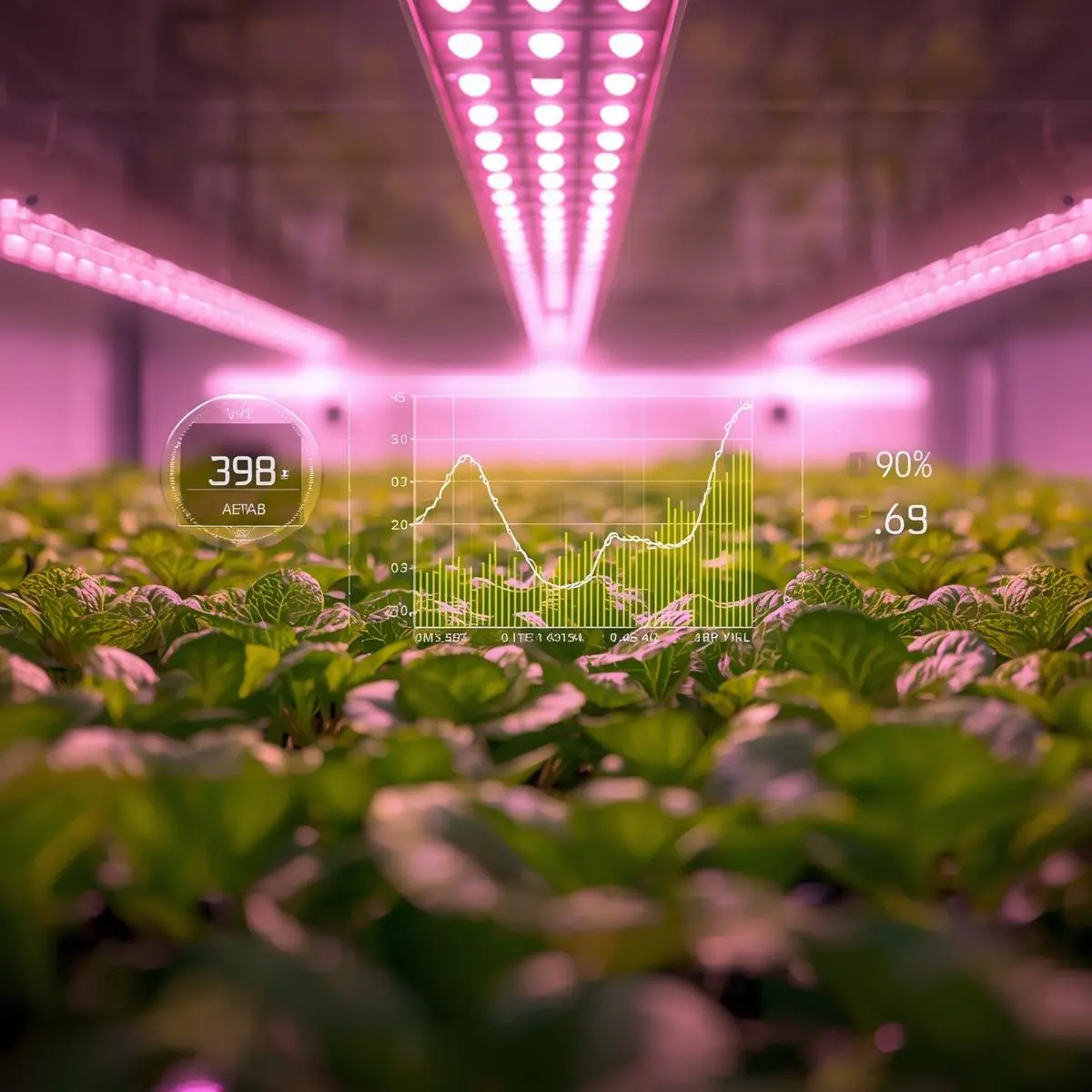
If you’ve ever opened your grow tent and felt the humidity hit your face like a warm wave, or you’ve seen your leaves droop even though you swear everything is “in range,” there’s a good chance Vapor Pressure Deficit (VPD) is the missing puzzle piece. VPD isn’t just another grow-room metric; it’s the invisible force that dictates how confidently your plants drink, breathe, and ultimately yield. At Grow With Hydroponics, we see this pattern all the time: growers dial nutrients, upgrade to better LEDs, fine-tune airflow, and still hit mysterious issues. Nine times out of ten? VPD was whispering in the background, asking for attention. This guide breaks everything down from Veg and Flower VPD charts to KPA management, LED VPD nuances, and even printable VPD charts you can hang in your grow space. And yes, we’ll use your own VPD Calculator tool to make everything easier. Let’s make VPD your new superpower.
What VPD Actually Means (And Why Growers Obsess Over It)?
VPD stands for Vapor Pressure Deficit, and it measures the “drying power” of the air around your plants. Think of it as the gentle pull encouraging moisture to leave the leaves.
- If the air is too dry: Plants lose water too quickly and get stressed.
- If the air is too humid: Leaves stop transpiring and nutrient uptake slows to a crawl.
A good VPD zone feels a lot like a sweet spot healthy leaf turgor, steady nutrient flow, strong photosynthesis, and minimal disease risk.
The overlooked truth:
Even when your humidity and temperature appear ‘fine,’ your VPD can still be off. That’s why more growers now rely on VPD charts for Veg and Flower stages instead of guessing.
VPD Chart for Veg: The Zone Where Plants Build Structure
During the Vegetative stage, plants crave stability. Their leaves are wide, soft, and highly active. Veg VPD generally sits lower than Flowers to encourage aggressive growth without stress.
Ideal VPD for Veg:
0.8–1.0 kPa
Why? Because in Veg, you want strong transpiration without pushing the plant into overdrive. Too high a VPD here dries the leaves and slows canopy development.
If your Veg VPD is too low:
- Leaves may feel overly soft
- Risk of powdery mildew increases
- Plants may “stall” despite good nutrients
If Veg VPD is too high:
- Curling tips
- Dry edges
- Slower leaf expansion
This is exactly where your “VPD chart Veg” keywords come in it guides growers to the right humidity–temperature pairs so they don’t have to play guessing games.
VPD Chart for Flowering: Less Humidity, More Intensity
Flowering plants shift priorities. They’re no longer focused on growing new leaves; they’re building buds, fruit, or Flowers. To prevent mold while keeping nutrient flow optimal, we push VPD higher.
Best VPD for Flowering:
1.2–1.5 kPa
This range helps plants:
- Pull moisture efficiently
- Stack heavier Flowers
- Reduce mold and bud rot risks
- Improve resin and terpene expression (for c-plant grows)
Many growers specifically search for terms like vpd chart Flowering, vpd during Flower, and best vpd for Flower because dialing this in makes or breaks the harvest.
Signs your Flowering VPD is too low:
- Buds feel too moist or dense
- You notice slow drying of leaves
- Humidity spikes at lights-off
Signs Flowering VPD are too high:
- Crispy leaf edges
- Small Flower sites
- Poor nutrient uptake (especially K and Ca)
The LED VPD Chart: Why LEDs Change Everything
LED lighting has a unique effect on leaf surface temperature. Because LEDs run cooler than HID, the leaf itself is typically cooler than the surrounding air. This matters for two reasons:
- VPD uses leaf temperature, not room temperature.
- Under LED, VPD is often lower than you think.
This is why LED VPD charts exist in the first place: they adjust for leaf temperatures that can sit 2–4°C cooler under strong LED fixtures.
Real-world takeaway:
If you follow an HPS-based VPD chart while using LEDs, your VPD may be too low. That means slower transpiration, slower nutrient flow, and a higher risk of moisture-related problems.
A quick fix?
Use your Grow With Hydroponics VPD Calculator to adjust leaf temperature. It’s far more precise than guessing.
Pulse VPD Chart: Why So Many Growers Love It
Many growers refer to the Pulse VPD chart, popularized by the Pulse environmental monitor system. It’s clean, easy to read, and based on real-world grow room data.
Your growers may specifically search for:
- pulse vpd chart
- vpd chart jungleboys
- vpd chart for hight valued plants
All of this shows that slightly different strains or cultivars respond differently in Veg and Flower, but the general principles remain consistent.
Pulse-style charts usually highlight:
- Accurate leaf temp compensation
- Dynamic humidity changes
- Quick glances Veg/Flower zones
If you want a chart that feels intuitive even for beginners, pulse-style visuals are top of the list.
How to Lower kPa in a Grow Tent (When VPD Is Too High)
This one’s a big deal because many people chase the “best VPD for Flowering” but accidentally push it too far. High VPD equals high kPa, meaning the air is too dry for your plants’ comfort.
Signs your KPA (VPD) is too high:
- Leaves feel papery
- Plants drink too fast
- Nutrient burns even at low EC
- Edges curl upwards like tacos
Here’s how to lower kPa quickly:
Raise humidity
Even a 5–10% RH boost can fix the issue.
Lower air temperature slightly
Cooler air holds less moisture → lower kPa.
Reduce air intensity
Decreasing exhaust fan speed increases humidity.
Mist the canopy lightly
Don’t soak, just mist to stabilize leaf temperature.
Use a humidifier
For dry climates, it’s essential during Veg.
These techniques tie directly to high-volume searches like how to lower kPa in grow tent and your readers will appreciate the actionable clarity.
Why C-Plant VPD Charts Become Famous
Growers in c-plant communities often share VPD charts branded under groups because they reflect years of hands-on experience. While every strain behaves slightly differently, c-plant tends to respond especially well to:
- Lower VPD during Veg for lush leaf growth
- Higher VPD during Flower for terpene and resin quality
It’s not magic; it’s just plant physiology. But the takeaway is simple: if you’re growing C-Plant, following a VPD chart can be especially helpful.
The Single Most Useful Tool: Your VPD Calculator (Highly Recommended)
Throughout this entire process, one tool makes life dramatically easier:

Dr. Awais Yousaf
Algorithm Specialist and Associate Professor leading R&D at Grow With Hydroponics. With 5+ years of hands-on experience in smart hydroponic systems, deep learning, and sustainable AgriTech, he is passionate about turning small spaces into high-yield indoor farms. Connect at awais.yousaf@iub.edu.pk