Let’s be blunt: you can nail your nutrients, dial in your humidity, and still end up with leggy, sad plants if your light is wrong. Light isn’t just another input—it’s the engine. Without enough of the right kind, photosynthesis sputters, growth stalls, and even the healthiest seedling turns into a stretched-out disappointment.
For indoor gardeners, a good grow light system is basically a subscription to the sun. It’s what lets you ripen tomatoes in January or keep basil alive on a kitchen counter that gets no natural light.
In this guide, we’re going to cut through the marketing jargon and cover what you actually need to know to choose the right indoor grow light kit. We’ll talk spectrum, timers, energy bills, and setup—so next time, you’re growing smarter, not just harder.
Understanding Grow Light Systems
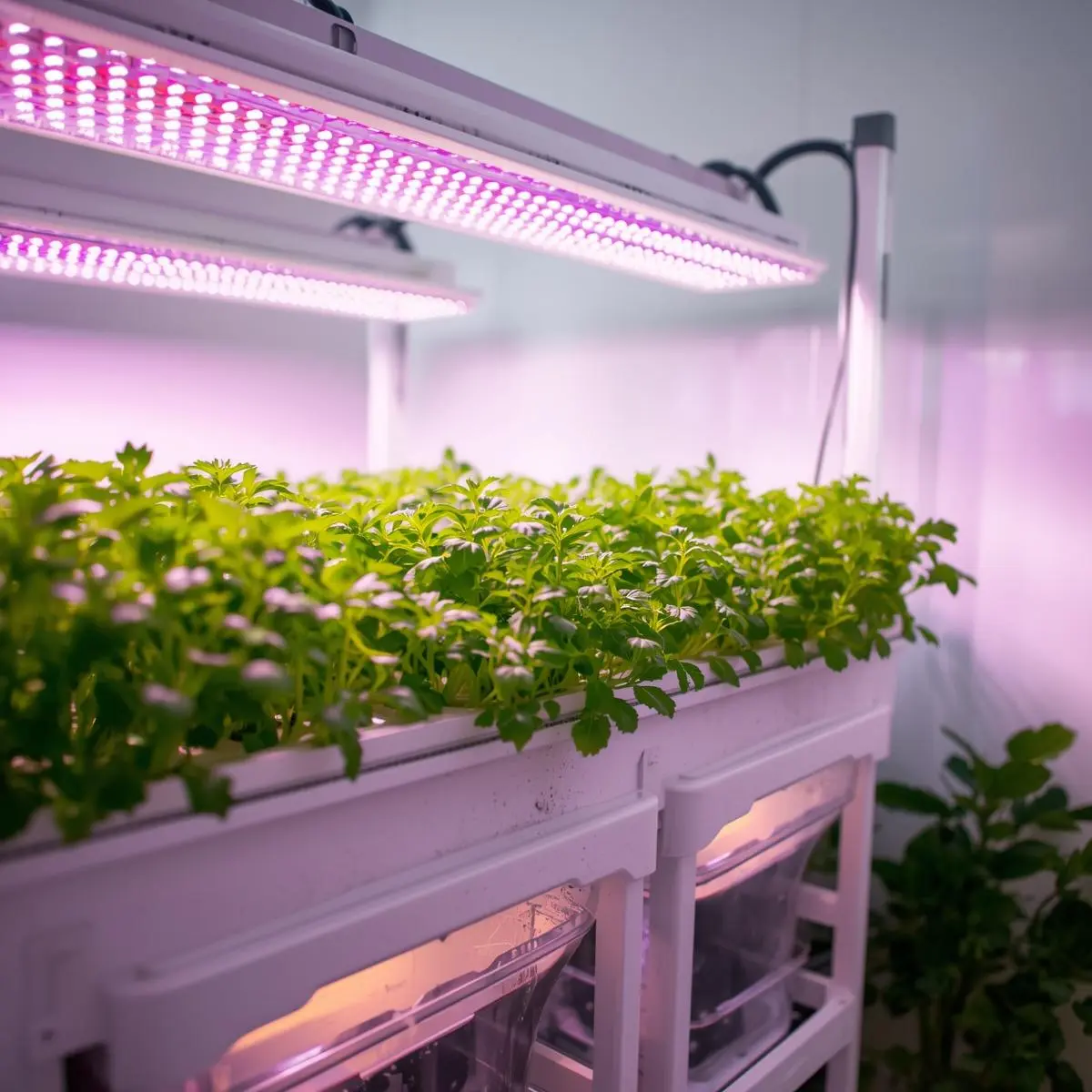
At its core, a grow light system is just a device that replaces the sun. But within that simple definition lies a world of difference in technology, cost, and performance. Most systems include the light source (bulbs or LEDs), a reflector to direct light down to your plants, and often a timer or hanging hardware.
Here’s a quick rundown of what’s out there, based on what I’ve seen work (and fail) in hundreds of setups.
Popular Grow Light Systems
| Type | Best For | Pros | Cons |
|---|---|---|---|
| LED Grow Lights | All-purpose indoor growing | Energy-efficient, full spectrum, long lifespan | Higher upfront cost |
| Fluorescent (T5/T8) | Seed starting & herbs | Affordable, low heat | Low intensity for fruiting plants |
| HID (MH/HPS) | High-yield veggies & flowers | Very high output | Hot, power-hungry, need cooling |
| Compact Kits | Small apartments, kitchens | Easy setup, low wattage | Limited coverage |
If you’re in an apartment, a corner grow light or a compact countertop kit is your friend. They slip into tight spaces and provide enough juice for houseplants, herbs, and leafy greens without making your living room look like a commercial grow-op.
How Does the Grow Light Spectrum Work?
Plants don’t use all colors of light equally. It’s not about what looks good to us; it’s about what drives specific biological reactions.
Blue Light (400–500 nm): This is your growth manager. It promotes compact, leafy growth and is essential for seedlings and herbs. Too little blue, and things get leggy.
Red Light (600–700 nm): This is the bloom booster. It triggers flowering and fruiting responses. If you want tomatoes or peppers, you need deep reds.
Green Light (500–600 nm): Green light penetrates deeper into the plant canopy than red or blue, reaching lower leaves that would otherwise get shaded out. It’s why plants look green to us, but it’s actually useful for uniform growth.
White or Full Spectrum Grow Light: This blends all colors to simulate natural sunlight. It’s the “set it and forget it” option.
For most home growers, a Full Spectrum LED Grow Light is the smartest choice. It works from sprout to harvest, and you don’t have to swap bulbs when you switch from veg to bloom cycles.
Selecting the Appropriate Light Color for Different Stages of Growth
Plants are dynamic. A seedling doesn’t need the same light as a mature plant about to flower. Here’s the cheat sheet:
| Growth Stage | Ideal Light Color | Spectrum | Duration (hrs/day) |
|---|---|---|---|
| Seedling | Blue-dominant | 400–500 nm | 14–16 |
| Vegetative | White + Blue mix | 450–600 nm | 16–18 |
| Flowering / Fruiting | Red-dominant | 600–700 nm | 12–14 |
If you buy a light marketed “For Vegetative & Flowering,” it’s designed to handle both phases. But understanding this split helps you troubleshoot—if your plants are all leaves and no flowers, you might need to shift the spectrum toward red.
How Much Light Do Indoor Plants Need?
This is the million-dollar question, and the answer depends on what you’re growing. You need to match the light dose to the plant’s natural habitat.
Low Light Plants (ferns, pothos, snake plants): 10–12 hours/day.
Medium Light Plants (herbs, lettuce, leafy greens): 12–14 hours/day.
High Light Plants (tomatoes, peppers, cannabis): 16–18 hours/day.
Here’s a quick diagnostic: leaves looking pale and stems stretching toward the light? You’re not giving enough. Leaves turning yellow or getting crispy at the edges? The light is too intense or too close.
For consistency, a grow light timer is non-negotiable. It removes the guesswork and ensures your plants get the same day length, every single day.
Automating Growth with Timers and Smart Systems
Honestly, trying to remember to flip lights on and off manually is a recipe for failure. You’ll forget, or your schedule will change, and your plants will pay the price. Timers fix that.
Mechanical Timers: Old-school, cheap, and they click on and off. They work, but they can be less precise.
Digital Timers: Programmable for multiple on/off cycles per day. More reliable.
Wi-Fi Smart Timers: The modern choice. Control your lights from your phone, set complex schedules, and even integrate with other smart home gear.
Consistent light cycles reduce plant stress dramatically. During flowering, a consistent 12 hours of light and 12 hours of absolute darkness is critical—any light leaks can revert a plant back to veg or cause hermaphroditism.
Full-Spectrum vs. Red and Blue Grow Lights
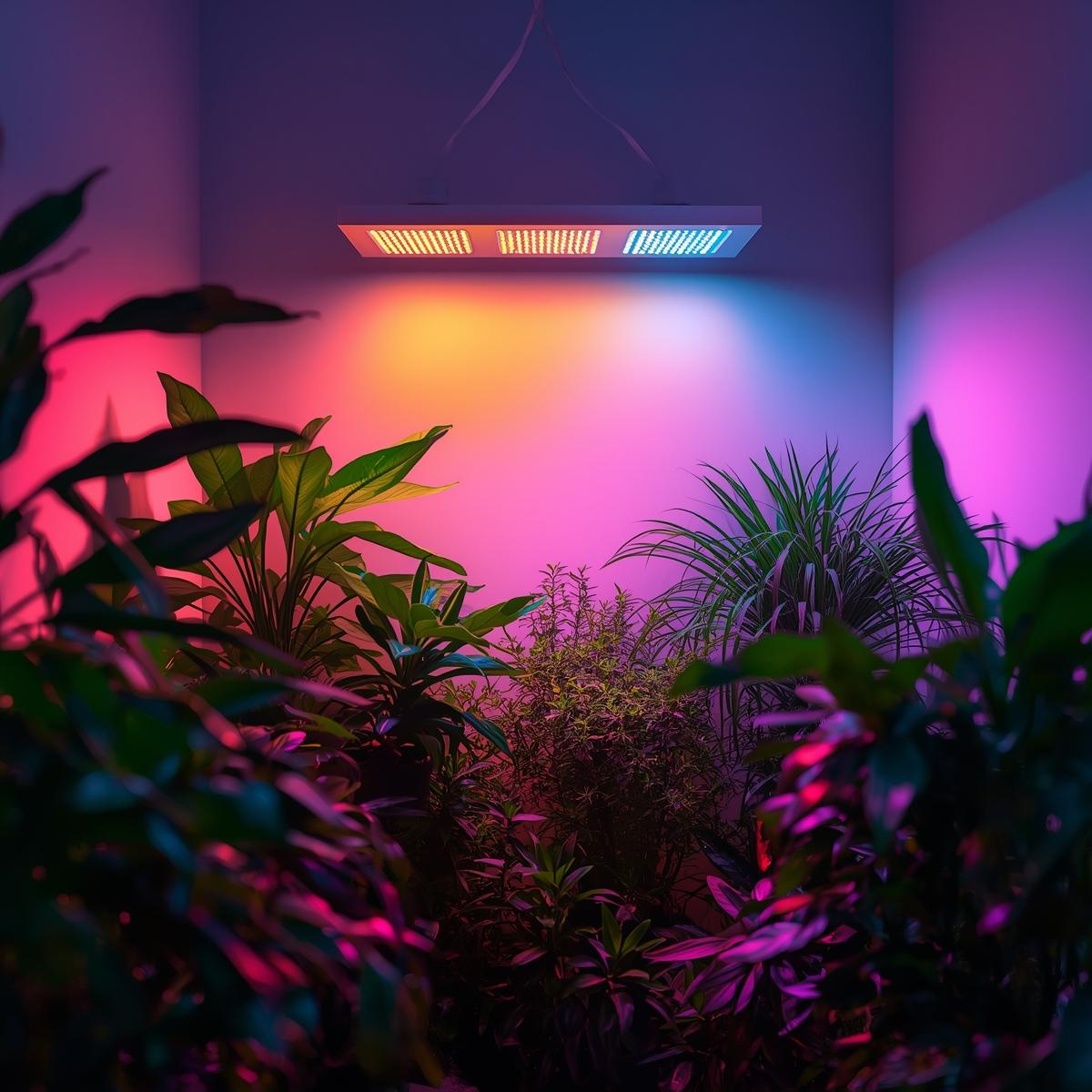
Remember those old “blurple” lights? They emitted only red and blue light, which plants can use, but they made it impossible to see problems like pests or deficiencies. Everything looked weird and purple.
Modern white full-spectrum lights are superior for two reasons:
Better Growth: They include green and far-red wavelengths that penetrate the canopy and drive photosynthesis more efficiently.
Better Viewing: You can actually see your plants’ true colors, so you spot trouble early.
If your plants look “washed out” under your current light, it’s time to switch to a white full-spectrum LED. You’ll grow better plants, and your living room won’t look like a disco.
Can Any Light Be a Grow Light?
This comes up constantly. The short answer is no, not effectively. A standard LED bulb is designed to light your room efficiently for the human eye, which peaks in the green spectrum. Plants need more red and blue.
| Light Type | Works for Plants? | Reason |
|---|---|---|
| Regular LED Bulb | ❌ | Lacks sufficient red/blue spectral power |
| CFL Desk Lamp | ⚠️ Partial | Works for very low-light seedlings only |
| LED Grow Bulb | ✅ | Engineered for photosynthetic spectrum |
That said, a cheap desk lamp fitted with a proper LED grow bulb is a perfectly fine solution for a few succulents or starting seeds. It’s not ideal, but it works.
Setting Up Your Indoor Growing Light System
You don’t need an engineering degree to set this up, but a little planning goes a long way.
Select a spot: A corner, a wire shelf, or a countertop near an outlet.
Hang or mount lights: As a rule of thumb, LED panels should be 12-18 inches from the top of your plants. Adjust based on your light’s intensity and your plants’ reactions.
Set the timer: Program it for your target light cycle (e.g., 16 on, 8 off).
Adjust coverage: Make sure the light footprint covers all your plants. If the edges are dark, you need more lights or to move them closer.
Monitor growth: Rotate your pots weekly. Plants lean toward the light.
Energy Tip: Look for LED lights with dimmers. It lets you adjust intensity as plants mature and saves power.
Energy Use and Cost Efficiency
Yes, grow lights use electricity. But the fear of a massive power bill is usually overblown, especially with modern LEDs. A 100-watt LED fixture can replace a 250-watt fluorescent or a 400-watt HID, cutting your usage by more than half.
To estimate your cost:(Wattage × Hours per Day × 30) ÷ 1000 × Electric Rate = Monthly Cost
Example: A 100W light running 16 hours a day uses about 48 kWh per month. At the U.S. average of ~$0.12/kWh, that’s $5.76. A small price for fresh herbs all winter.
When you’re ready to buy, look for lights labeled “Energy Star Certified” or with high “PPFD” (Photosynthetic Photon Flux Density) ratings—that’s the light actually reaching your plants.
And speaking of buying smart: When you Shop Smart for a new LED, pair the purchase with our DLI Calculator. It helps you calculate the Daily Light Integral your plants are actually getting, so you buy the right fixture for your space—not just the one with the brightest-looking box.
Troubleshooting Common Grow Light Issues
Plants stretching: Light is too far away or not intense enough. Move it closer.
Leaves curling up or bleaching: Light is too intense. Raise the fixture or dim it.
Slow growth, dark environment: Check your spectrum. Might need more blue light.
Uneven growth: Rotate your plants. Light isn’t perfectly uniform across the whole footprint.
FAQs About Grow Lights
Q1. What are the best grow lights for seedlings?
A: Blue-dominant LEDs or cool-white T5 fluorescents. They prevent stretching.
Q2. How long should indoor plants be under grow lights?
A: 12–18 hours a day, depending on the species. Use a timer to keep it consistent.
Q3. Will LED lights replace sunlight completely?
A: Yes, if they emit a full photosynthetic spectrum (400–700 nm) and provide sufficient intensity (PPFD).
Q4. What color light makes plants grow the fastest?
A: Blue light drives vegetative leaf growth fastest. Red light drives flowering.
Q5. Are grow lights dangerous for humans or pets?
A: Standard LEDs are generally safe. Be more cautious with high-intensity lights that emit UV or IR, and avoid staring directly into them.
A well-chosen grow light system takes indoor gardening from a hopeful experiment to a reliable harvest. With a basic grasp of spectrum, timing, and setup, you can create an environment that rivals the sun. Whether you have a single countertop kit or a full grow tent, the principles are the same.
At Grow With Hydroponics, we’ve seen good lights and bad lights. The goal is to find the right-fit system for your space and your plants. Once you do, you’ll wonder why you waited so long. Explore The Ultimate LED Grow Light Guide: Science-Backed Indoor Setup (2026).