

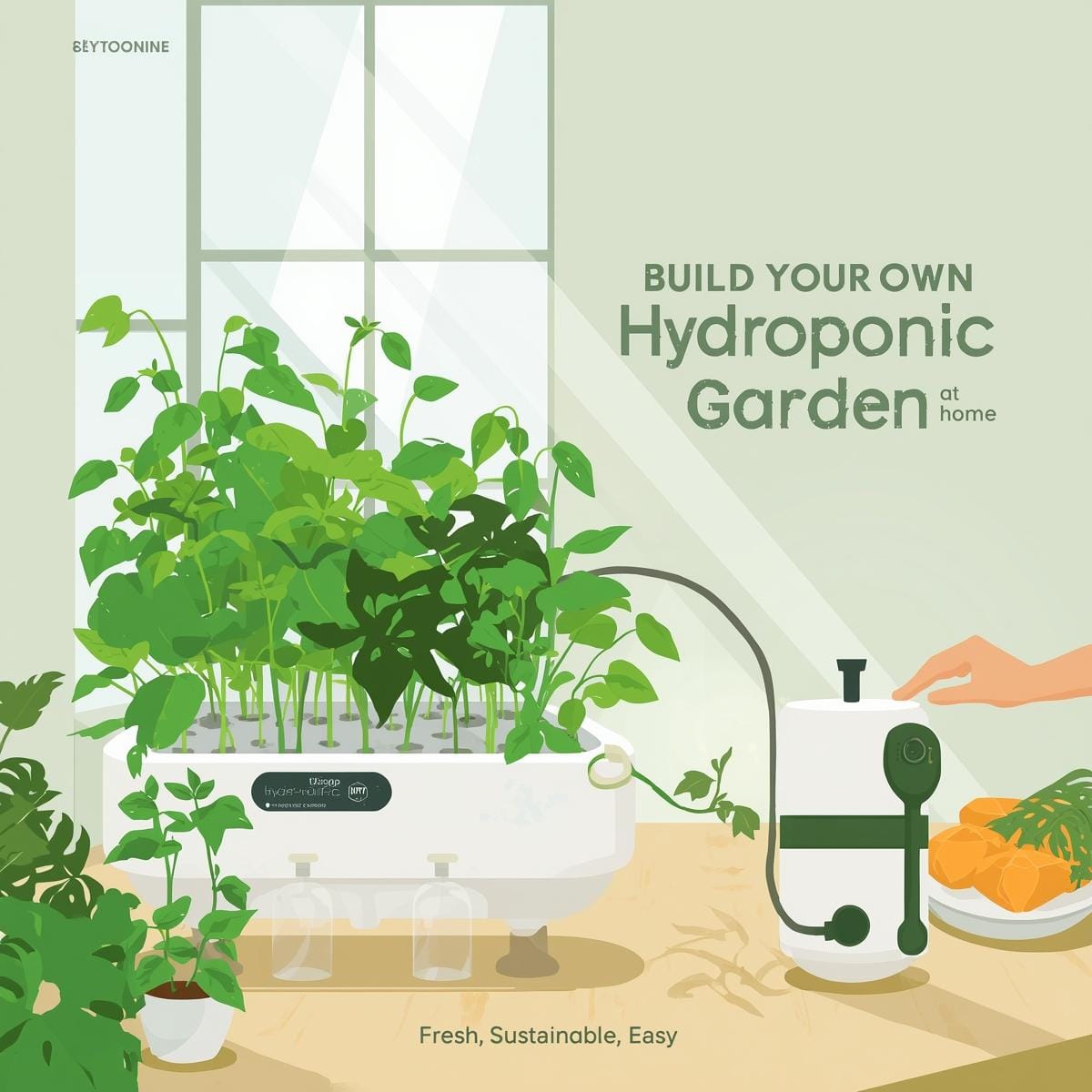
There’s something quietly profound about growing your own food. It’s not just about having fresh, tasty veggies or herbs at your fingertips (though, let’s be honest, that’s a huge win). It’s about taking control of a process that’s as old as humanity itself, growing things. But let’s kick it up a notch: Imagine doing all of that indoors, with minimal space and zero dirt. Enter home hydroponic gardening. Instead of soil, we’re talking about nutrient-rich water doing the heavy lifting.
You’re probably asking: “How do I start a hydroponic garden at home?” “What gear do I need?” “Can I actually build this myself?” Well, guess what? You can. Don’t worry, this guide will walk you through everything you need to know—step by step—to create your very own DIY hydroponic system, right in your own home.
What Exactly Is Home Hydroponic Gardening, and Why Should You Bother?
Here’s the deal: home hydroponic gardening is simply the practice of growing plants in a nutrient-rich water solution, no soil involved. Seems pretty straightforward, right? But let me tell you—this method is a game-changer. Whether you’re after fresh herbs for your morning omelet or some homegrown veggies for dinner, hydroponics makes it possible. And the beauty of it? It works indoors. So, no garden required.
Why Try Home Hydroponic Gardening?
Space-Saving: If you’re living in an apartment, or you just don’t have the luxury of a sprawling backyard, this is for you. Hydroponics works in small spaces, and you can grow a ton with minimal setup.
Water-Efficient: It’s true—hydroponics uses way less water than traditional soil gardening. You’re not constantly watering the plants—your system recycles water and nutrients.
Faster Growth: With direct nutrient delivery, plants absorb exactly what they need, resulting in faster growth. Who doesn’t love a speedy harvest?
No Soil-Borne Diseases: Since there’s no soil, you don’t have to worry about pests or diseases that usually come with it. It’s like giving your plants a VIP pass to better health.
Complete Control Over Growth: Want your plants to grow faster? Or maybe you want them sweeter? Adjust the water, light, or nutrient mix. You’re in charge.
What You’ll Actually Need for Your DIY Hydroponic System
Now, I know what you’re probably thinking: “This sounds cool, but what exactly do I need to make it happen?” Fair question. Let’s break it down.
Key Materials for Your Hydroponic Setup:
Container or Reservoir: This is where your nutrient solution lives. A plastic tub, bucket, or anything similar works fine.
Pump and Tubing: Circulates the nutrient solution through the system. This is non-negotiable if you’re going for something like a flood-and-drain system.
Net Pots: These hold the plants in place while their roots hang down into the nutrient solution. Think of them as your plants’ little safety net.
Grow Medium: This supports the plant roots (we’re talking clay pellets, perlite, or even something like vermiculite). It’s what your plants will root into.
Nutrient Solution: A mix of water and nutrients (usually a pre-made solution, but I’ll get into how to make your own in a bit).
pH Control Kit: Not the most exciting, but it’s essential. Most plants do best with a pH between 5.5 and 6.5.
Grow Lights (if you’re growing indoors): Unless you live under perfect lighting conditions (spoiler: you don’t), grow lights are key. They simulate sunlight and keep your plants photosynthesizing.
Shop Smart, and get started today.
How to Build a Hydroponic Garden at Home: A Step-by-Step Guide
Ready to get your hands dirty, but not really dirty since we’re skipping the soil? Let’s break it down into digestible steps.
1. Pick Your Hydroponic System
First off, you need to choose a system. There are several types, but let’s talk about the big four:
Deep Water Culture (DWC): Plants’ roots are suspended in the nutrient solution. This is ideal for leafy greens (think lettuce and spinach).
Nutrient Film Technique (NFT): A thin film of nutrient solution flows through slanted channels. Great for smaller plants like herbs.
Wick System: This is a passive system where a wick draws nutrients up into the plant. Super simple, but effective.
Flood and Drain (Ebb and Flow): This one floods the roots with nutrient solution and then drains it. It’s versatile and works well for a variety of plants.
For beginners? DWC or the Wick System are your best bets. They’re simple, low-maintenance, and won’t cost you a fortune.
2. Gather Your Materials and Set Up
Once you’ve chosen your system, gather your materials. You’ll need a reservoir, pump (for circulation), and a way to hold the plants in place—enter the net pots.
If you’re going with a DIY hydroponic system like DWC, you’ll need to cut holes in your container’s lid to fit the net pots, which will hold your plants while their roots get to work.
3. Mix Your Nutrient Solution
Here’s the part that makes or breaks the system: the nutrient solution. You can buy a pre-made one, or make your own. Mix it with water according to the instructions and check the pH. Most plants like it between 5.5 and 6.5. Trust me, a cheap pH meter is worth the investment. Explore GrowPro Nutrient Calculator: Accurate Hydroponics Made Effortless.
4. Plant Your Crops
Next, fill your net pots with your chosen growing medium. Carefully place your seedlings or cuttings into the pots, making sure their roots have access to the nutrient solution but aren’t completely submerged.
For first-timers, go with herbs like basil, mint, or parsley. They’re easy, low-maintenance, and really thrive in these setups.
5. Set Up Your Lights and Monitor Growth
If you’re growing indoors, you’ll need grow lights. LED or fluorescent are the most efficient options. Place the lights about 6-12 inches above the plants and keep them on for 12-16 hours a day. Now the waiting game begins. Monitor the nutrient levels, pH, and water levels, but mostly… relax. The plants are doing their thing. Try our free digital Hydroponic Tools Suite.
Tips for Building a Hydroponic System Without Breaking the Bank
Let’s face it: DIY projects don’t have to cost an arm and a leg. Here are a few ways to keep your DIY hydroponic garden affordable:
Repurpose Containers: Old buckets, bins, and kitchenware, if it holds water, it’s fair game.
DIY Hydroponic Grow System: Skip the fancy net pots, foam or plastic cups work just as well.
Start Small: Don’t go big on your first system. Test the waters with something simple.
Use a Simple Hydroponic Plan: Stick with easy plants and basic setups to avoid frustration.
With a little creativity, you can set up a cost-effective hydroponic system that works like a charm.
Common Problems and Troubleshooting Your Hydroponic Garden
Okay, now for the not-so-glamorous part: troubleshooting. But don’t worry, most of these are quick fixes.
1. Yellowing Leaves
Cause: Likely a nutrient deficiency.
Solution: Check your nutrient solution and adjust as needed. A pH imbalance could also be at fault.
2. Wilting Plants
Cause: Could be too little water or a broken pump.
Solution: Check the pump and water levels. If you’re using a flood-and-drain system, verify the drainage timing.
3. Algae Growth
Cause: Too much light or stagnant water.
Solution: Cover your reservoir to block light and clean your system regularly.
Pro Tip: Use our Hydroponic Nutrient Deficiency Calculator to easily manage nutrient levels and keep your plants healthy and thriving.
The Future of DIY Hydroponics: Growing Food at Home
Home Hydroponic gardening is more than just a fun trend. It’s an efficient, sustainable way to grow fresh, healthy food at home, regardless of where you live. Whether you’re cultivating herbs in your kitchen or veggies in your living room, hydroponics offers you the power to grow anything, anytime.
And if you’re ready to dive in, Grow With Hydroponics has everything you need—from nutrient solutions to best grow lights. We offer expert advice and the tools to set up your perfect system. Shop Smart, and get started today. With a little time, effort, and a DIY mindset, you’ll soon be harvesting the fruits (or veggies) of your labor.
Learn More:
DIY Hydroponic Systems: Shop Now
Home Hydroponic Gardening Tips: Read More
Hydroponic Tools: Discover Tools

