

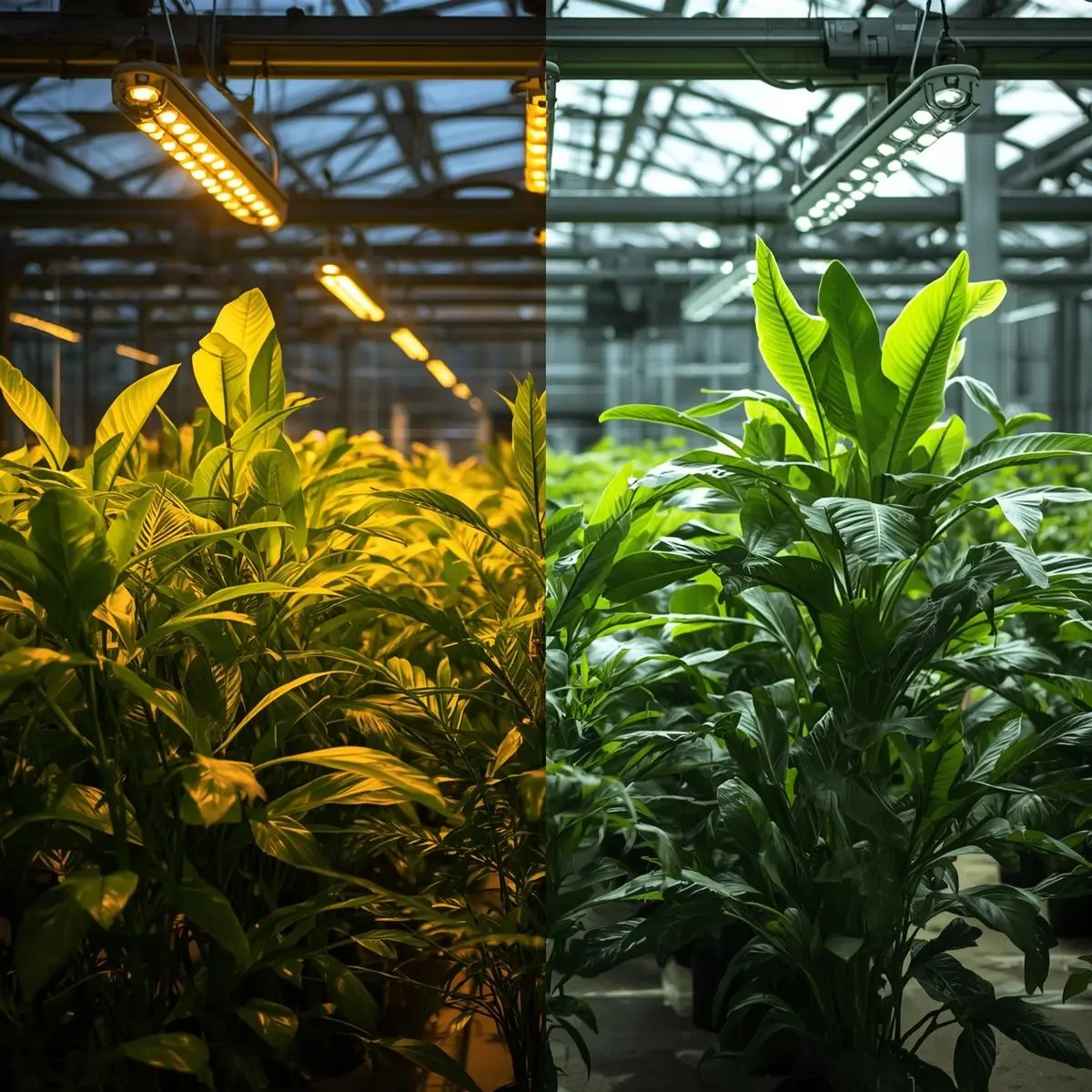
If there’s one variable that separates predictable greenhouse production from seasonal guesswork, it’s light. We’ve got temperature, nutrition, and irrigation locked down in modern houses—but light? Too often, we’re still praying to the weather gods. That’s the old way. Greenhouse LED grow lights change the entire equation.
Instead of just reacting to another gloomy week, LEDs let you actually manage plant growth. You protect your yield targets and—finally—stabilize that production schedule. After a decade in this space, the pattern is undeniable: operations that treat light as a controllable input, not a seasonal risk, pull ahead. It’s that simple. Let’s cut through the hype and talk about how these systems actually work in the real world. And more importantly, how to choose them without getting burned.
What Do Greenhouse LED Grow Lights Actually Do?
In a greenhouse, lighting isn’t one job—it’s two. And confusing them is the first mistake a lot of smart growers make.
Supplemental Lighting vs. Photoperiod Lighting
Supplemental lighting is about brute-force photosynthesis. It adds usable PAR light to boost growth rate, yield, and quality when the sun checks out. Think of it as your crop’s morning espresso.
Photoperiod lighting, on the other hand, is about signaling. It’s a low-intensity nudge to control flowering, keep things vegetative, or stop that premature bolting. It’s not about energy; it’s about information.
The savvy move? Combining both. Use a low-intensity signal to manage timing, then layer in higher-intensity supplemental light during key growth pushes. It’s a way to protect your weekly harvest numbers without sending your power bill into the stratosphere.
Why Winter Production Is the Toughest Test
Let’s be frank: winter is where profit margins go to die. It’s a brutal squeeze—natural light plummets, while your heating and de-humidification costs soar.
This is where Daily Light Integral (DLI) becomes your limiting factor. DLI is the total amount of photosynthetic light your plants get in a day. If it’s too low, growth slams on the brakes. Everything else could be perfect—your nutrients, your climate—and it just doesn’t matter.
This isn’t a place for guesswork. Guessing gets expensive. Tools like the DLI calculator on Grow With Hydroponics help you figure out your baseline and how much supplemental firepower you actually need to hit your targets. Use them.
Why LEDs Dominate Modern Greenhouse Upgrades
Look, HPS had a good run. It carried the industry for decades. But LED greenhouse lighting isn’t just an upgrade—it’s a different philosophy. The advantages are operational, not just theoretical: better photon efficiency, smooth dimming, flexible fixture shapes (top lights, interlighting bars), and crucially, less radiant heat dumped straight onto your canopy.
The real win? Control. You deliver light precisely where and when the plant needs it. You’re not just fighting the dark; you’re orchestrating growth.
Light Basics You Must Understand Before Buying Fixtures
Before you even look at a spec sheet, you need to speak the language. Otherwise, you’re just buying shiny objects.
What Is DLI (Daily Light Integral)?
Think of DLI as your plant’s daily energy budget. Measured in mol·m⁻²·d⁻¹, it’s what correlates directly with speed, yield, and finish quality. Year-round success isn’t about perfect sun—it’s about hitting consistent DLI targets, come hell or high water.
What Is PPFD?
PPFD (µmol·m⁻²·s⁻¹) is the intensity right now, at the canopy. You measure it with a quantum sensor. PPFD is for designing your layout—figuring out fixture spacing and checking for uniformity. DLI tells you if the plant had a good day. You need both. Confusing them is how you end up with a beautiful, expensive, and utterly ineffective lighting plan.
PPF and PPE: Output vs. Efficiency
PPF is the total photons coming out of the fixture. PPE is how many of those photons you get per joule of electricity you pay for. When you’re comparing greenhouse LED grow lights, PPE is the number that protects your ROI. Ignore it at your peril.
Spectrum: Strategy Beats Marketing Labels
“Full spectrum” is a strategy, not a magic spell. For most greenhouse crops, a broad white-plus-red approach works just fine. But spectrum does tweak things—plant architecture, flowering nuance, final quality. The trick is to align your spectrum choice with a specific crop goal, not a marketing claim. This is where a lot of buyers overspend for zero visible return.
Setting Realistic Targets by Crop and Season
Use DLI Targets to Define “Enough Light”
As a rule of thumb: moderate-DLI crops (many leafy greens) might target ~14–18 mol·m⁻²·d⁻¹. High-wire fruiting crops like tomatoes? They’re often in the 25–30+ range. Your latitude, your glazing, your shading—they dictate your starting point. The lights fill the gap.
Don’t guess the gap. Use the Hydroponic Tools Suite. Grow With Hydroponics has resources to model your seasonal light levels before you spend a dime.
Translating DLI Into Supplemental PPFD
Most greenhouses end up in supplemental PPFD ranges of 60–100 µmol·m⁻²·s⁻¹ for moderate crops, or 150–200 for high-DLI monsters. These are starting points. Measurement and adjustment matter infinitely more than theoretical perfection.
Choosing the Right Greenhouse LED Grow Light System
Top Lighting: The Commercial Foundation
Top lighting is your workhorse for leafy greens, propagation, bench systems. The design priorities are brutal simplicity: uniform PPFD, minimal shading, straightforward controls. Uneven light creates uneven crops—full stop.
Inter-lighting: Solving Dense Canopies
For tall crops like tomatoes and cucumbers, the upper leaves hog all the light. Inter lighting places LED bars within the canopy to rescue those lower leaves. The most advanced setups use a hybrid approach: top lighting for the base load, with strategic inter-lighting to juice productivity. It’s more complex, but the yield bumps don’t lie.
Controls That Protect Yield While Cutting Power Costs
DLI-Based Controls Beat Fixed Schedules
Running lights on a fixed timer is… well, it’s rudimentary. Smart greenhouses fill the DLI gap. Bright day? Lights dim or shut off. Dark, dismal day? Lights ramp up. You’re aligning your electricity spend with actual plant need. It’s not just efficient; it’s intelligent.
Zoning and Dimning Matter
Your greenhouse isn’t uniform. The edges are darker. The structure casts shadows. Zoning lets you fix those weak spots without blasting light everywhere—a huge, often overlooked advantage of LEDs.
Heat, Humidity, and the Greenhouse Reality Check
Here’s the thing everyone misses: LEDs change your climate, not just your light bill. With less radiant heat hitting the canopy, your heating strategy might need a tweak. And more light means more transpiration—if your airflow and de humidification aren’t tuned, you’re inviting condensation and disease, especially in winter.
Never do a lighting upgrade without a micro climate review. Explore Indoor Plant Sunlight Analysis System.
ROI and Incentives: How LEDs Get Approved
The ROI on LEDs isn’t just watts saved. Real payback comes from consistent weekly harvests, fewer crop delays, better grade-out percentage, and smarter scheduling. Oh, and don’t sleep on utility incentives—they’re out there, but you need proper documentation. That means understanding PPE, controls, and long-term performance before you buy.
Shop smart. A cheaper fixture with lousy controls or no reliable data often costs you more in the long run.
Installation & Purchasing Checklist
Before you sign anything, confirm you have:
- Real PPF, PPE, and input power data—not just marketing claims.
- Clear dimming and control compatibility details.
- Mounting height recommendations and layout guidance for uniformity.
- A warranty you understand, with clear light-maintenance expectations.
After install, measure your PPFD. Log your DLI. If the numbers are off, adjust. Don’t just hope it’ll work out.
The step-by-step measurement guides on Grow With Hydroponics are built for this exact moment.
FAQ: Greenhouse LED Grow Lights
How many hours per day should LEDs run?
As many as it takes to hit your DLI target. DLI-based control is almost always smarter and cheaper than a fixed schedule.
Are LEDs always better than HPS?
Not automatically. But when designed correctly, their control, zoning, and efficiency are in a different league.
Do I need full spectrum lighting?
Most crops do great if the PAR and timing are right. Use spectrum to solve a specific problem, not because a brochure told you to.
Make Light a Controllable Input, Not a Seasonal Risk
Consistent production starts by controlling what you can. And light is the biggest lever left. With a properly planned greenhouse LED grow light system, realistic DLI targets, and controls with a brain, you can finally stabilize yield, protect quality, and plan with something resembling confidence.
If you’re staring down a lighting design or upgrade, don’t wing it. The Daily Light Integral (DLI) Calculator and Hydroponic Tools Suite on Grow With Hydroponics exist for a reason—to help you move from seasonal guesswork to predictable control. Season after season.

