

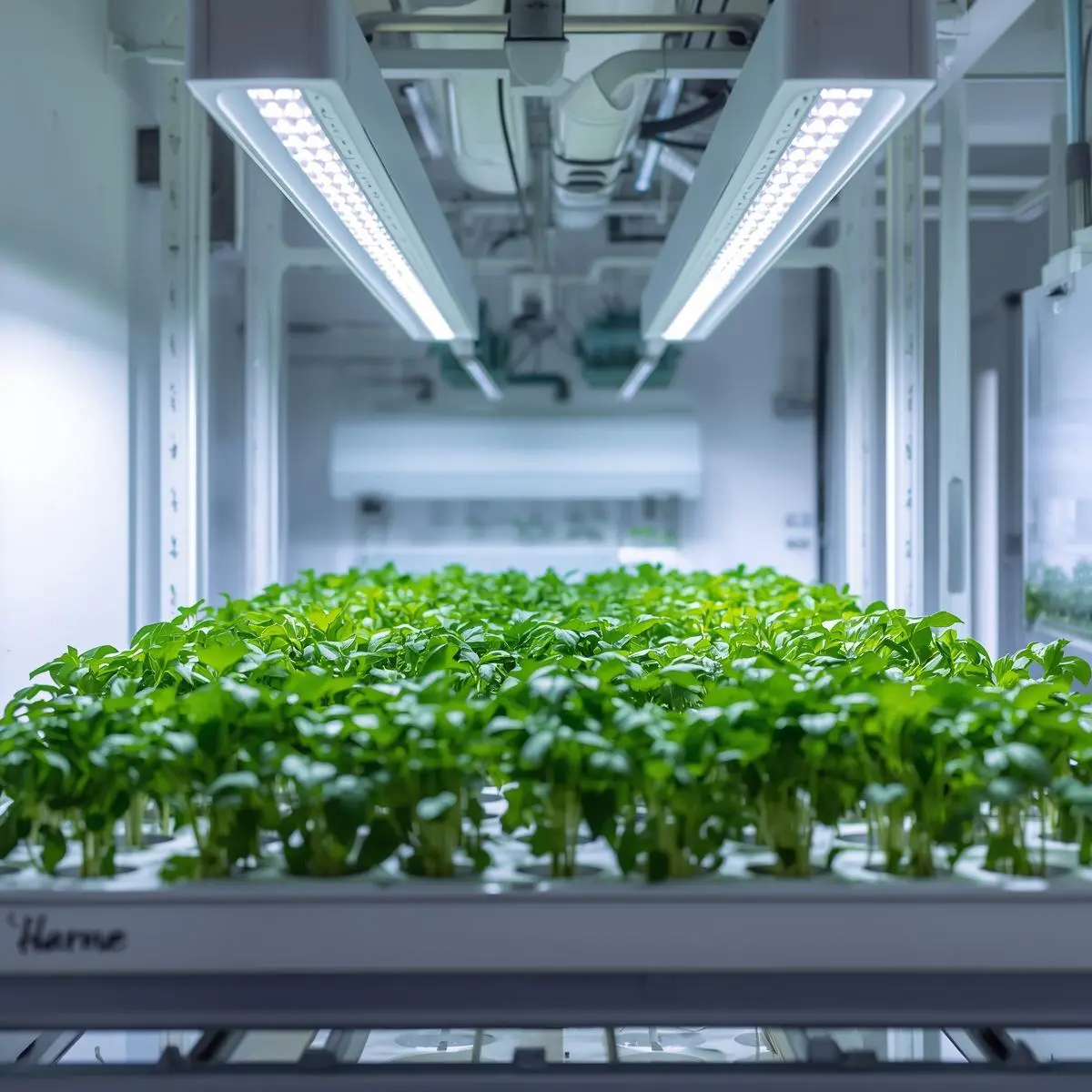
I’ve tested more grow lights than I care to admit. From the blister-packed panels on Amazon to the eye-wateringly expensive “pro” rigs, I’ve seen it all. But in 2026, the conversation has finally—mercifully—moved past just wattage and that purple glow.
Let’s be clear:
The best LED grow lights today aren’t about being the brightest bulb in the box. They’re about being the smartest tool in your garden.
They’re defined by what they do: maximize yield per square foot, deepen the flavor of your herbs, harden off your seedlings without burning them, and do it all without making your utility bill look like a ransom note.
If you’re still using an old HPS rig or a blurple panel, you’re not just wasting energy. You’re leaving results on the table.
What Does “Best LED Grow Lights” Really Mean in 2026?
In a word: balance. It’s the intersection of raw photosynthetic power (PPFD), the quality of that light (full-spectrum), and the efficiency with which it’s delivered (that all-important µmol/J).
The best fixture is the one you don’t have to think about—it just works, season after season, quietly turning electricity into plant mass.
NASA’s been at this for decades, but now that research is finally available for the everyday grower. What would have been a commercial-only investment five years ago can now easily fit into a 2×2′ tent in your spare room.
Matching LED Grow Light to Your Plants and Grow Space
This is where almost every beginner goes wrong. You cannot buy a light for a “herb garden.” You buy it for a specific space growing specific plants. Throwing a 700-watt bar light over a tray of microgreens is like using a flamethrower to toast a marshmallow.
Here’s the simple rule: buy for your largest ambition, not your simplest plant.
Ask yourself two questions:
What’s the exact footprint of your grow space? (Measure it now.)
What’s the hungriest plant I’ll grow there? (Light needs are set by your most demanding crop.)
A light for a 2×2 ft basil setup is a different beast from one for a 4×4 ft full of peppers. Matching your LED light to your grow space and plant type will make all the difference.
Key LED Grow Light Science Simplified
Forget lumens. Your plants certainly do. The only metrics that matter live in the PAR zone.
PPFD (Photosynthetic Photon Flux Density): This is your instant light intensity reading. Think of it like rainfall hitting a specific leaf. 200–400 µmol/m²/s is perfect for seedlings; 600–900+ µmol/m²/s drives tomatoes to fruit. If the manufacturer doesn’t give you a PPFD map, they’re hiding something.
DLI (Daily Light Integral): This is the total light your plant receives over the course of the day. A shade-loving houseplant might be happy with a DLI of 8, while a cannabis plant needs 40+. This is why a timer isn’t optional—it’s how you hit your DLI target without manually turning the lights on and off.
The Hydroponic GrowSpace Planner Calculator is perfect for turning those “18 hours a day” into an actual daily light budget for your Swiss chard. It takes the guesswork out and ensures your plants are getting the right light for healthy growth.
Spectrum: Why Full-Spectrum LEDs Are Best
The “blurple” era is a relic. Plants don’t need flashy purple light to thrive—they need a balanced light spectrum. Full-spectrum white LEDs with targeted red and blue peaks are now the standard, and for good reason. They look natural, reduce plant stress, and just… work better across all growth stages. A little far-red can coax earlier flowering; a dash of blue keeps stems stout. The goal isn’t to recreate a rave—it’s to mimic June sunlight at noon.
Efficiency: The Spec That Pays Your Bills
Efficacy (µmol/J)—memorize this term. It tells you how many useful photons you get per watt of electricity drawn.
A light with a 3.0 µmol/J efficacy will give you more growth, with less heat and a lower bill, than a 1.5 µmol/J light of the same wattage.
This is the silent killer of operating costs. The best LED grow lights have this number proudly displayed. If they don’t, assume it’s bad.
How to Choose: A Brutally Practical Checklist
Define Your Arena: Not “a shelf,” but a 4-foot long, 18-inch deep wire rack.
Know Your Champion Crop: Are you growing lettuce or light-hungry strawberries? The latter sets your PPFD requirement.
Demand the PPFD Map: Coverage claims are marketing fluff. The PPFD map shows the truth—where the light reaches evenly and where it doesn’t.
Check the Cooling: No fans is a good thing (quiet). A massive, finned aluminum heat sink is a better thing (reliable).
Dimming is Non-Negotiable: You need to turn down the sun for seedlings. A 0-100% dimmer is your volume knob for plant growth.
Ignore the Brand Hype, Read the Specs: Samsung or Bridgelux diodes? Mean Well driver? These are the engine and transmission of your light. Good parts last.
Conclusion: Cutting Through the 2026 Noise
So, what are the top picks? I won’t give you a generic list. Instead, I’ll tell you what to look for in a category:
For a 2×2′ or 3×3′ Tent: Look for a stout quantum board-style panel with a dimmer, around 200-400 true watts. It should be lightweight, easy to hang, and have an even PPFD spread. These are the workhorses of the hobbyist world.
For a 4×4′ or Larger: This is where bar-style LED lights shine (literally). The multiple bars spread the light source, eliminating the single hot spot and giving you gorgeous, even wall-to-wall coverage. Expect to invest more here.
For Shelves & Houseplants: Don’t overthink it. LED strips or panels designed for plants are perfect. Just ensure they’re full-spectrum, not just pretty white light.
The final word? The best LED grow light for you is the one that matches your space, respects your budget, and comes from a company that shows you the real data—not just marketing poetry. Your plants will show you the truth within a week. Light quality directly affects micronutrient uptake. For a complete breakdown, read The Ultimate LED Grow Light Guide: Science-Backed Indoor Setup (2026).
Head to GrowwithHydroponics.com to use their comparison tools. Plug in your space and plant goals. Let it narrow the field, then use the checklist above to make your final, confident choice. Now go get the right light! Let the experts guide you! Visit our Shop Smart section for top-rated grow lights tailored to your plants’ needs

