

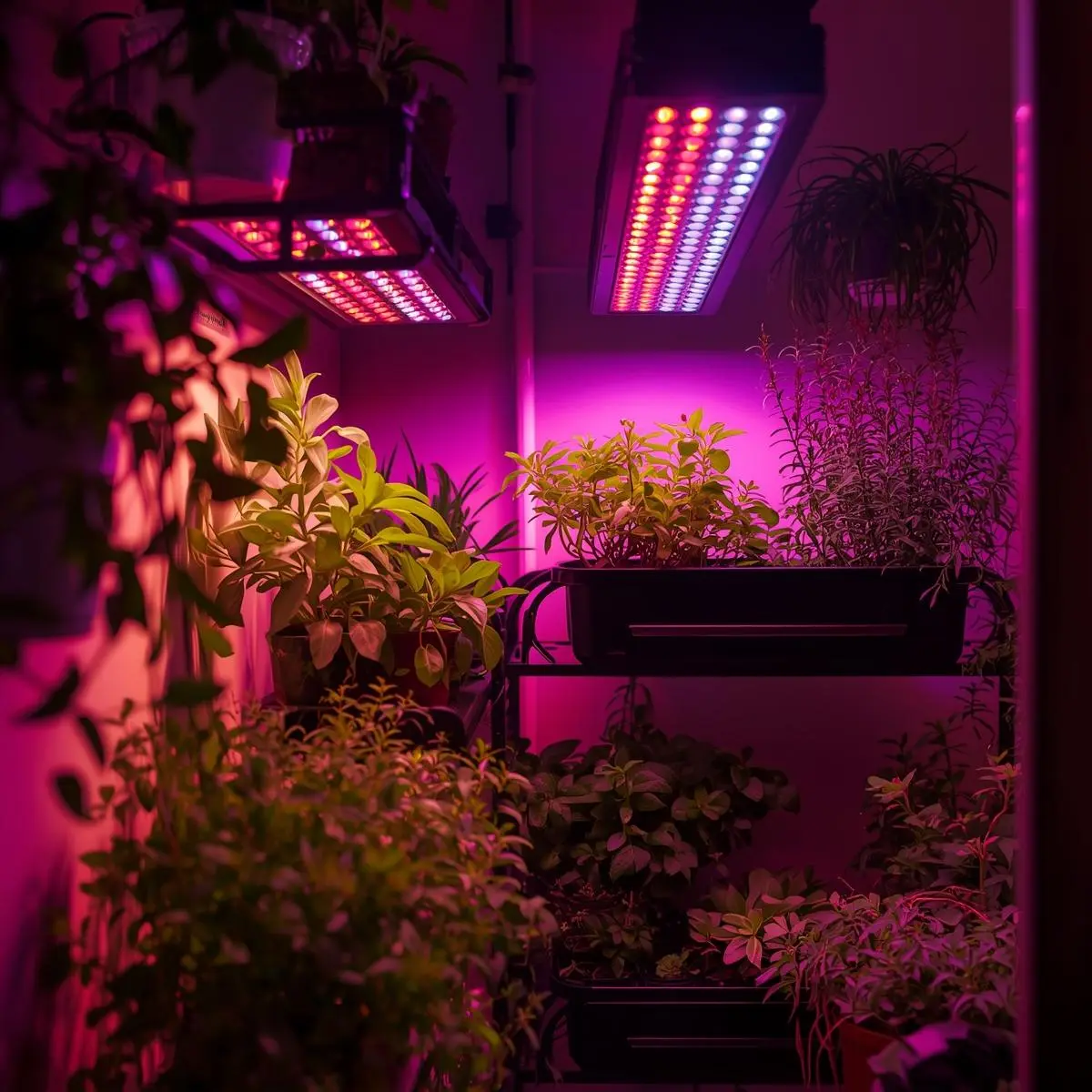
The searching for the best LED grow light is a special kind of agony. You’re bombarded with claims of “industry-leading PAR” and “sunlike spectrum” from brands you’ve never heard of. After a decade of running lights in everything from hobby tents to commercial racks, I can tell you the truth: the “best” light is the one you stop thinking about. It just works, consistently, without drama or a surprise spike on your power bill.
The needs here aren’t monolithic. A home grower nursing a few plants cares about heat and simplicity. A commercial operator needs bulletproof data and efficiency you can bank on. The core of the problem is the same, though: marketing noise versus horticultural reality. You can cut through it. But you need to know which specs are signals and which are just clever noise.
This isn’t about flashy features. It’s about understanding the physics of a photon and the economics of your grow room.
What Does “Best LED Grow Light” Really Mean?
Forget wattage. The best LED grow light isn’t the loudest one in the spec sheet. It’s the fixture that hits a brutally simple checklist: the right intensity and spectrum, spread evenly across your canopy, for the lowest total cost of ownership over its lifespan. That last bit is key—it folds in your electricity, cooling needs, and whether the thing will still be humming along in three years or become a doorstop.
Plants don’t see watts or lumens. They count photons. Shift your mindset from “how bright is it?” to “how many usable photons are landing on my leaves, and how evenly?” That single shift will save you more money than any coupon code.
What Metrics Actually Matter for LED Grow Lights?
PPF: Total Plant-Usable Light Output
Think of PPF (Photosynthetic Photon Flux) as the total fuel in the tank. It measures all the photosynthetically usable photons the fixture spits out every second (µmol/s). Here’s the kicker: two lights can pull the same wattage from the wall and have wildly different PPF values. Wattage tells you what you pay; PPF tells you what your plants get.
Grower tip: If a product page buries the PPF or just says “1000W equivalent!”—close the tab. That’s not an oversight; it’s a strategy.
PPFD: What Your Plants Actually Receive
PPFD (Photosynthetic Photon Flux Density) is where theory meets dirt. It’s the intensity of light at the canopy (µmol/m²/s). This is the number your plants actually feel. And the most important part isn’t the peak number they love to advertise in the dead center—it’s the uniformity. A proper PPFD map isn’t a single, glorious number. It’s a heat map showing the highs, lows, and averages across your entire grow space. You want a gentle hill, not a mountain with sheer cliffs at the edges.
PPE: Efficiency That Impacts Your Power Bill
PPE (Photosynthetic Photon Efficacy), measured in µmol/J, is your efficiency rating. Higher PPE means more light per watt, which translates directly to lower energy costs and less waste heat you have to manage. It’s crucial. But—and this is a big but—a super efficient light with terrible uniformity is like a fuel-efficient car with one flat tire. Always, always pair the PPE number with a real PPFD map.
DLI: The Daily Light Dose That Ties It All Together
DLI (Daily Light Integral) is the master metric. It combines your PPFD and your photoperiod (how long the lights are on) to give you the total daily “dose” of light your plants receive. Think of it this way: PPFD is your speed, time is how long you drive, and DLI is the total distance traveled. If your plants are struggling and everything else checks out, DLI is often the missing piece of the puzzle.
Pro tip: Don’t guess on this. Shop Smart and use the DLI calculators and planning tools—you’ll find good ones in places like the Grow With Hydroponics resource library. It takes five minutes and saves weeks of frustration.
Why Watts and Lumens Mislead Growers
This is the classic rookie trap. Watts measure electricity consumed, not light produced for plants. Lumens are weighted for human eyes, not chlorophyll. So a “300W” light can absolutely smoke a cheap “500W” light. And if a product screams about lumens but whispers about PPF, you’re being marketed to, not informed.
What Should “Full Spectrum” Actually Include?
The Practical Meaning of Full Spectrum
In the real world, a good full spectrum light is built on a broad white-light base (often using Samsung or Bridgelux diodes) with a thoughtful bump of deep red for flowering efficiency. That’s it. That combination will carry you from seedling to harvest beautifully—if your intensity (PPFD) and daily dose (DLI) are correct. Never forget: spectrum is a fine-tuning tool. It cannot rescue a light that simply doesn’t deliver enough photons.
Red, Blue, and Far-Red: When They Matter
Blue influences plant structure—keeps things compact. Red drives photosynthesis hard. Far-red? That’s an advanced tool. It can trigger flowering responses and stretch, which is useful in some commercial systems but a nightmare in a crowded tent if it’s unmanaged. Most home growers don’t need to chase far-red; it’s just another variable to control.
Spectrum Stability Over Time
Here’s a hidden failure point: spectral drift. A cheap light with poor thermal management will see its output spectrum change as it heats up and ages. Your results will subtly shift crop to crop, and you’ll never know why. Consistency is a feature you pay for.
Why Coverage and Uniformity Separate Good from Great
Your plants grow in a plane, not a point. Uneven light creates inconsistent growth, uneven nutrient demands, and makes “crop steering” impossible. Bar-style fixtures often win on uniformity in rectangular spaces or racks. Boards can be great in square tents. There’s no universal “best” shape—only what’s best for your footprint.
Testing and Documentation: How to Trust the Numbers
Any serious manufacturer will provide real, third-party test reports (think UL, DLC, or a reputable lab) for PPF, PPE, and spectrum. The method should be clear. If the documentation feels vague or is just a marketing PDF with big numbers on it, you’re not buying a tool. You’re buying a gamble. This is where experienced growers Shop Smart—they compare data sheets, not product photos.
Reliability and Lifetime: What Actually Makes LEDs Last?
Thermal Design Is Not Cosmetic
Heat is the enemy. Period. It shortens diode life and causes that spectral drift I mentioned. A quality fixture manages heat with intelligent layout, proper aluminum heat sinks, and fans if necessary (though good passive designs are quieter). If the housing is too hot to touch, it’s cooking itself from the inside out.
Drivers Matter More Than Most People Think
The driver is the heart and brain of the light. A cheap, off-brand driver will fail in the humid soup of a grow room long before the diodes do. It dictates dimming smoothness, power quality, and overall lifespan. This is not the place to cut corners.
Environmental Resistance in Real Grow Rooms
Let’s be real: grow rooms are harsh. Humidity, splashed nutrient water, cleaning chemicals… a light needs a robust IP rating (IP65 is a good target for water resistance) and corrosion-resistant materials. The best LED grow light for you is the one that survives your environment.
Controls and Dimming: More Than Convenience
Dimming isn’t a luxury. It’s a critical tool for matching light intensity to plant stages, saving energy, and managing canopy heat. For anyone thinking about scaling, compatibility with external controllers (like those from trolMaster or Autopilot) turns your light from an appliance into part of an integrated system.
How to Match Light to Plant Stages
- Seedlings & Clones: Low PPFD. Extreme uniformity. Be gentle.
- Vegetative Growth: Ramp up the intensity. Focus on wide, even coverage.
- Flowering & Fruiting: Crank the PPFD. But that high intensity must be consistent edge-to-edge, or you’ll get lopsided results.
How to Size an LED Grow Light Correctly
- Measure your canopy area, not your whole room.
- Choose a target PPFD for your growth stage.
- Use your photoperiod to hit your DLI target.
- Plan for fixture overlap to avoid dark edges.
Throw out the old “watts per square foot” rule. It’s useless in the modern LED era.
The Real Cost Story: Efficiency vs Heat
Higher PPE slashes your power bill and cuts cooling costs. But here’s my two cents: reliability often saves more money than pure efficiency. A slightly less efficient light that runs for 50,000 hours without a flicker is cheaper than a “super efficient” one that needs a new driver in year two.
The Best LED Grow Light Buying Checklist
Before you click “buy,” can you check these off?
- Verified PPF and a real PPFD map at your intended hanging height.
- A sensible PPE value (anything north of 2.5 µmol/J is decent; top-tier is now over 3.0).
- A coherent spectrum strategy, not just “full spectrum!” in a rainbow font.
- Visible, quality thermal management (real heat sinks) and a brand-name driver (Mean Well, Inventronics).
- An IP rating suitable for your room’s humidity.
- A clear, accessible warranty and support channel.
If the answers are vague, or the reply is “trust me bro,” walk away. Your crops—and your wallet—will thank you.
Common Mistakes Growers Make
Buying on peak PPFD alone. Overpaying for spectrum magic beans. Ignoring the quality of the documentation. Underestimating how much heat even an LED can dump in a sealed space. The smart move? Verify. Every. Single. Claim.
Quick FAQ
- Is higher wattage always better? No. It’s just a bigger electricity bill waiting to happen if the efficiency and uniformity aren’t there.
- Do I need full spectrum? It’s beneficial, but it’s the last thing to optimize. Get your PPFD and DLI right first.
- What’s the single best comparison number? PPE, for efficiency. But only if it comes with a trustworthy PPFD map to prove it’s not just a lab queen.
The best LED grow light delivers verified photons, even coverage, and stubborn reliability in the exact conditions where you’ll use it. When you start thinking in terms of PPFD, PPE, and DLI—and you Shop Smart using planning tools instead of getting swept up in hype—you stop buying lights and start investing in predictable harvests. That’s the mindset. It’s what separates a hopeful beginner from a confident grower, and it’s the same principled approach you’ll find guiding the resources and community at Grow With Hydroponics. Because in the end, informed decisions always, always outperform flashy promises.

