

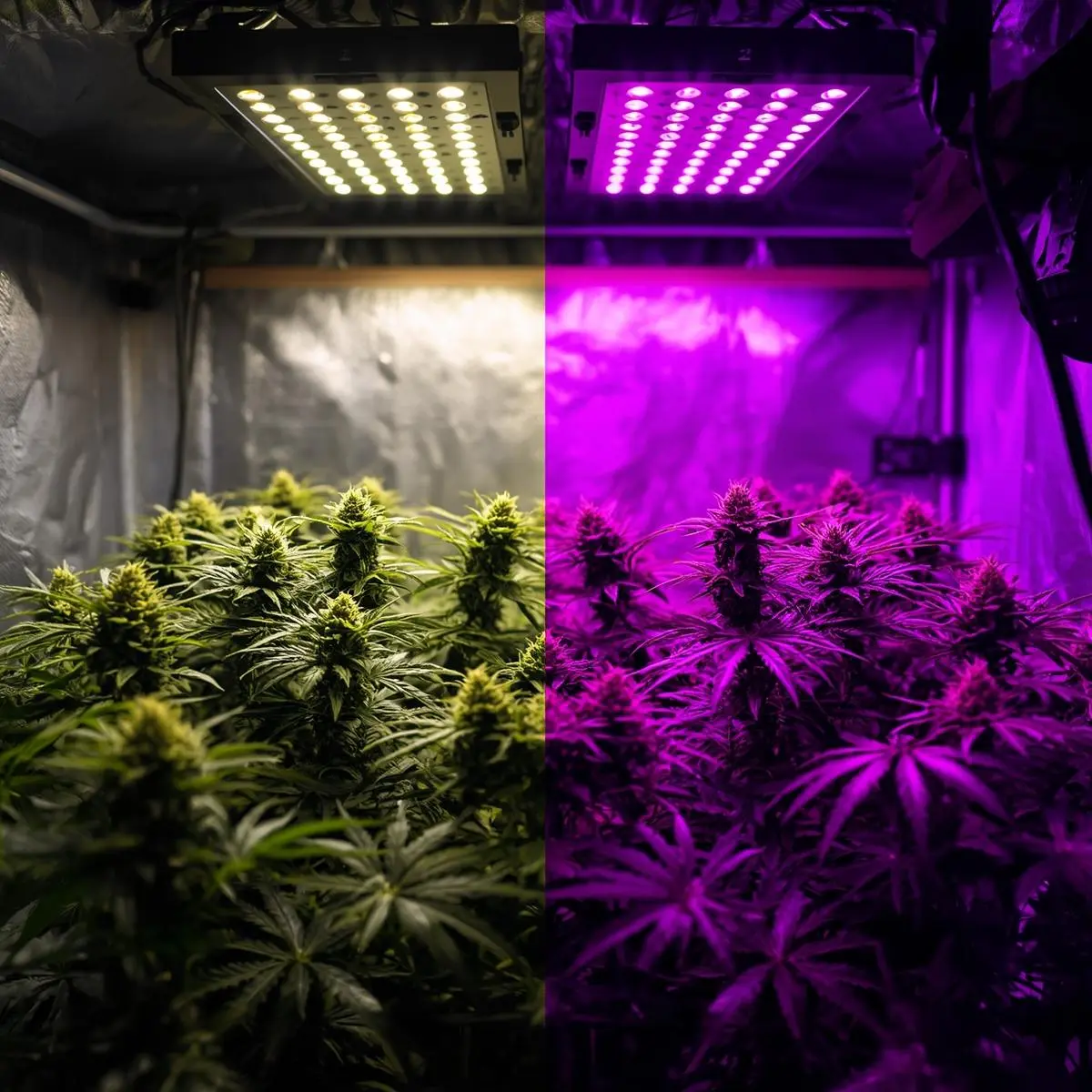
After a decade of editing tech and horticulture journals—and managing my own perpetually overcrowded grow room—I’ve developed a healthy skepticism for “best of” lists. The truth is, the best full spectrum LED grow lights aren’t the ones with the flashiest marketing. They’re the ones you forget are there. The fixtures that just… work. Day in, day out, without drama.
So when a grower asks me for the single best light to buy, I usually throw it back at them. Best for what? A compact tent for herbs? A commercial room for high-value crops? Your best full spectrum LED grow lights are defined by fit, not by raw power. A light you can run comfortably with will always beat a monster you’re constantly fighting.
At Grow With Hydroponics, we focus on helping growers make confident, informed decisions that actually improve results. Let’s cut through the noise and talk about what actually matters.
Why Do Indoor Growers Choose Full Spectrum LED Grow Lights?
Let’s be blunt: they’ve won. Full spectrum LED grow lights are the industry standard now, and for good reason. They mimic a broad slice of sunlight, which means your plants get what they need from seedling to harvest—all from a single fixture. Remember those harsh, purple “blurple” lights? Modern full-spectrum white light is easier on your eyes and, crucially, lets you actually see your plants. Spotting a deficiency or pest early is half the battle, and you can’t do that under an alien glow.
The real key benefits of full spectrum LEDs boil down to simplicity and sanity: one light for all stages, less heat dumping into your room than old HID systems, and a genuinely better quality of life while you’re working. Oh, and the efficiency. Which brings me to my next point.
How Does Efficiency Impact Running Costs?
This is where sticker shock meets power bill shock. A high-output light might look impressive, but your utility bill—and your HVAC system—feels every watt. True efficiency means hitting your daily light integral (DLI) targets with less electricity. It’s not just about being “green”; it’s about cost and control.
Why efficiency matters long-term is straightforward: lower running costs, less heat to exhaust (meaning quieter fans and smaller AC units), and a more stable environment. If you’re paying commercial power rates, efficiency isn’t a nice-to-have; it’s the cornerstone of your return on investment (ROI).
Is Heat Management Part of Lighting Performance?
It’s everything. Every watt you pump in turns into heat eventually. A fixture with poor thermal design will throttle its own output and cook its components prematurely. A well-built light keeps those LED junctions cool, which maintains intensity and extends lifespan. Fanless designs? Great—if the heat sinking is substantial. When you’re comparing models, heft the heat sink. Good thermal design is a silent promise of reliability.
How Can You Estimate ROI on a Grow Light?
Forget just calculating grams per watt. The real return on investment (ROI) is in predictability and reduced headache. When comparing two lights, look past the price tag. Check the actual power draw at the wall, the photosynthetic photon efficacy (that’s your photons-per-watt), and factor in your daily run time. Over thousands of hours, a 10% efficiency gain pays for itself. But the bigger ROI is fewer midnight crises. That’s priceless.
What Build Quality Separates “Good” From “Best”?
You can feel this in your hands. It’s in the weight of the driver—the thing’s heart—and the cleanliness of the wiring. A quality driver means smooth dimming, consistent output, and it won’t be the reason your harvest is interrupted.
Physically, look for clean strain relief on the cables, a frame that doesn’t flex, and even heat distribution across the board or bars. These aren’t minor details; they’re proof of engineering intent. And that leads directly to the next thing…
How Important Is Warranty and Serviceability?
Critically. A five-year warranty is only as good as the company behind it. The best full spectrum LED grow lights come from brands that stand by their products and make repairs—or part replacements—straightforward. Downtime is lost revenue, whether you’re growing heirloom tomatoes or boutique cannabis. Good support isn’t a perk; it’s a risk mitigation strategy.
What Are the Most Common Mistakes When Buying Grow Lights Online?
- Believing “Equivalent Watt” Claims. It’s nonsense. Ignore it. Demand real data: actual wattage draw and a legitimate PPFD map. No map? Walk away.
- Ignoring Coverage Uniformity. A single, blistering hot spot of light in the center of your canopy is useless. You want an even spread. This is why bar-style layouts have become so popular—they defeat hot spots and give you consistent growth edge-to-edge.
- Using More Light to Fix Environmental Problems. This is the cardinal sin. Cranking up the intensity amplifies your plants’ demands for CO₂, nutrients, and perfect climate control. If your environment isn’t dialed, more light will burn them, not boost them. Always balance your system.
How Do You Choose the Right Full Spectrum LED for Your Space?
Stop thinking about the biggest light you can afford. Start with your room’s reality.
- What’s your actual canopy size?
- How much vertical height do you truly have to play with?
- Does the light dim smoothly?
The goal is to Shop Smart—match the tool to the job you have today, with a little headroom for tomorrow. Use a PPFD calculator or a DLI calculator (any decent resource will have them) to run the numbers. It takes the guesswork out.
FAQ: Best Full Spectrum LED Grow Lights
Are full spectrum LED grow lights good for all plants?
Yes, from leafy greens to fruiting tomatoes. The principle is universal. You just adjust the intensity and photo period to match the plant’s needs. Try Indoor Plant Sunlight Analysis System for free.
How do I know if a light is truly full spectrum?
Look for a spectral graph that shows a smooth, continuous curve across PAR ranges (400-700nm), not just a few spikes. And, again, demand that PPFD map.
How high should I hang a full spectrum LED grow light?
There’s no universal answer. Start with the manufacturer’s recommendation—usually 18-24 inches for mature plants—and use a light meter (or your plants’ response) to dial it in. Watch for stretching or bleaching.
Board-style or bar-style—what’s better?
Board-style lights are compact and great for smaller, square footprints. Bar-style fixtures excel in larger or rectangular spaces because they solve the uniformity problem, spreading light more evenly and reducing shadowing.
Do I need CO₂ with high-performance LEDs?
Not until everything else is perfect. Focus on nailing your temperature, humidity, and nutrient balance first. Adding CO₂ is an advanced move for when you’re already hitting the limits of ambient air. It’s the last lever you pull, not the first. You can optimize CO₂ with CO₂ Flux Calculator.
Choose “Best” by Fit, Not by Hype
The best full spectrum LED grow lights disappear into the background of a successful grow. They match your space, deliver even light without fuss, and don’t add to your monthly anxiety. They’re reliable. If you’re ready to master spectrum science and PPFD mapping, The Ultimate LED Grow Light Guide: Science-Backed Indoor Setup (2026) covers it all.
The right choice is rarely the loudest one on the forum. It’s the one that fits the reality of your room, your goals, and your budget. Get that fit right, and the rest gets a whole lot simpler. The Internal Hydroponic Tools Suite is a perfect resource to link here for readers who want to go deeper.

