

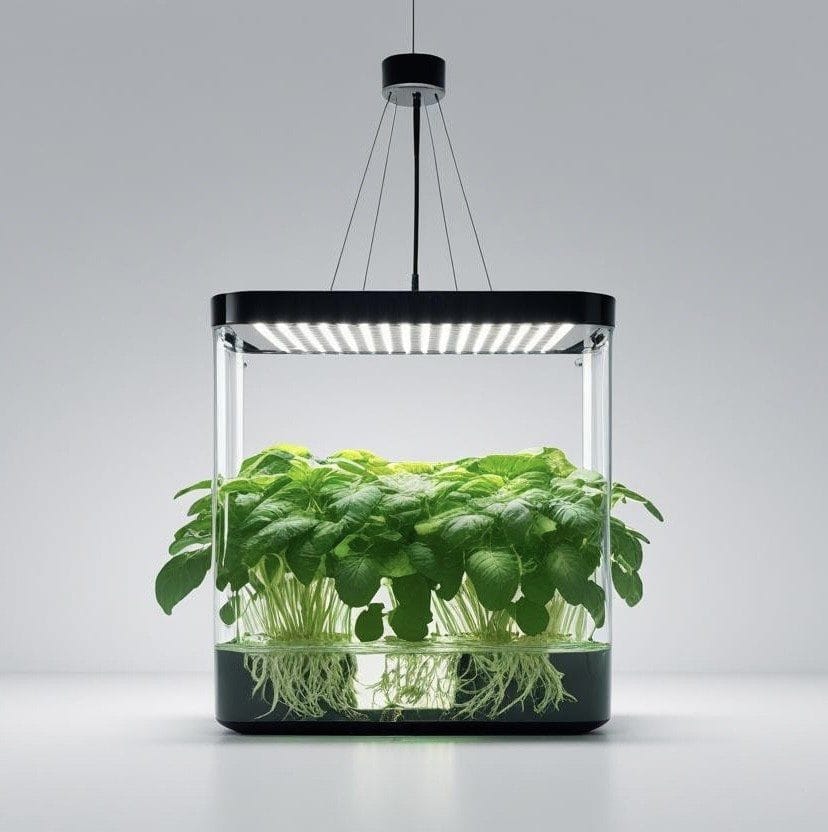
Let’s be real for a second. The idea of “farming” usually calls to mind vast fields, tractors, and a whole lot of dirt under your nails. But what if you could cut out 90% of that—the land, the weather, the weeds—and grow a salad right on your countertop? That’s the quiet revolution of hydroponics. It’s not some sci-fi fantasy anymore; it’s a brilliantly efficient, slightly addictive way to grow your own food, and it’s catching on for all the right reasons.
Small-scale hydroponics is where the magic becomes personal. It’s for the apartment dweller with a sunny balcony, the hobbyist tinkering in the garage, and the chef who wants basil that doesn’t wilt in a plastic clamshell. This guide is for you. We’ll walk through the good, the tricky, and the downright satisfying steps to get your own little ecosystem thriving.
What is hydroponics?
Strip away the jargon, and it’s simple: hydroponics is growing plants without soil. Their roots sit in—or are intermittently bathed by—a water solution packed with precisely measured nutrients. Think of it as a direct intravenous drip for your plants. They get exactly what they need, exactly when they need it, with none of the guesswork or competition they face in dirt. The “medium” you see—clay pebbles, rockwool, coco coir—is just a supportive anchor. The real action is in the water.
That control—over food, water, and environment—is the whole game. It’s why a head of lettuce can go from seed to salad in about half the time it takes in your backyard. It’s not magic; it’s just better logistics.
Why Bother? The Undeniable Upsides of Going Small
We can talk about future-of-food scalability all day, but for you, at home, the benefits are deliciously immediate.
- Speed & Yield: This isn’t a marginal gain. With direct nutrient access, plants don’t waste energy building massive root systems to search for food. That energy goes straight into growing up. You’ll see growth spurts that feel like time-lapse videos in real life.
- Water Wisdom: The statistics are staggering—up to 90% less water than traditional gardening. The water recirculates in a closed loop. In a world of increasing droughts, that’s not just efficient; it feels responsible.
- Space is no excuse: No yard? No problem. Your “farm” can be a kitchen counter herb garden, a vertical tower on a balcony, or a tidy DWC bucket system in a basement corner. You design for the space you have.
- Year-Round Harvest: Seasons become a suggestion, not a limitation. With a simple LED light and a bit of climate control, you’re growing strawberries in January. It’s a small rebellion against the grocery store produce aisle.
- Fewer Headaches (Literally): No soil means a drastic reduction in soil-borne pests and diseases. Say goodbye to gnats, certain molds, and a whole shelf of chemical remedies. It’s a cleaner, simpler way to grow.
Choosing Your Weapon: Types of Small Systems
This is where most beginners get paralyzed. Don’t. Each system is just a different engineering solution for delivering water and oxygen to roots. Here’s the straightforward breakdown:
- Deep Water Culture (DWC): The plant’s roots dangle directly into an aerated nutrient bath. Pro: Dead simple, great for beginners. Con: You’re married to that air pump. If it fails, roots suffocate fast.
- Nutrient Film Technique (NFT): A shallow stream of nutrient solution constantly flows over the roots in a sloped channel. Pro: Super efficient for water and nutrients, ideal for lightweight, fast-growing greens. Con: Prone to pump failures and root clogs. Demands a bit more vigilance.
- Ebb and Flow (Flood & Drain): The classic. The grow tray floods with solution from a reservoir below, then drains back. Pro: Incredibly versatile for plant types and mediums. Feels active and hands-on. Con: More moving parts (pumps, timers) means more potential points of failure.
- Wick System: The passive option. Nutrients are drawn up to the roots via capillary action through a wick. Pro: Silent, cheap, no electricity. Con: Limited to small, non-thirsty plants like herbs and lettuces. It can’t keep up with a hungry tomato.
- Kratky Method: The ultimate “set-it-and-forget-it” passive system. The plant starts with its roots in solution, and as the water level drops, an air gap forms for the roots. Pro: Zero electricity, brilliantly simple for beginners. Con: Not suitable for long-term, large plants. It’s a one-shot deal per growth cycle.
My advice? Start with DWC for hands-on learning or Kratky for foolproof simplicity. Get one harvest under your belt. The confidence boost is everything.
The Gear: What You Actually Need to Buy
You can go down a serious rabbit hole here, but the core components are non-negotiable:
- The System Itself: The framework (tubes, trays, buckets) that holds everything.
- Growing Medium: Your soil substitute. Clay pebbles (hydroton) are my go-to for reuse and drainage.
- Nutrients: Don’t try to mix your own from scratch as a beginner. Get a reputable, pre-balanced hydroponic nutrient solution. This is your plant’s food.
- Lighting (for indoors): Full-spectrum LED grow lights. They’re cool and efficient, and the tech is now cheap and excellent. Skip the blurple lights of yesteryear.
- The Brain Trust: A pH meter and an EC/TDS meter. This isn’t optional tech. It’s your dashboard. You’re flying blind without them.
- Air Pump & Stone: For any system where roots sit in water (DWC, some reservoirs). Oxygen is life.
Before you buy a single component, I strongly recommend playing with our Grow Space Planner. It lets you virtually arrange your gear in your actual space. It saves you from the classic “everything arrived and now nothing fits” headache.
The Five-Step Launch Sequence
- Pick Your Fight. Match the system to your goal. Herbs? Kratky. A head of lettuce every week? NFT or DWC. A balcony tomato plant? Ebb and Flow. Don’t overcomplicate it.
- Choose Beginner-Friendly Plants. Start with forgiving champions: lettuce, spinach, basil, and mint. They’re resilient and give you quick wins. Avoid the siren call of peppers and tomatoes until run #2.
- Mix the Lifeblood. Follow the nutrient bottle instructions to the letter for the seedling/early growth phase. Then, get your pH to 5.5–6.5. This is critical—the wrong pH locks out nutrients, no matter how perfect your mix is. Our Nutrient Calculator takes the guesswork out of mixing for different growth stages.
- Dial in the “Climate.” If indoors, lights on for 14-16 hours. Aim for room temperature (65-75°F) and moderate humidity. A small fan for air circulation is worth its weight in gold—it strengthens stems and prevents mold.
- Monitor & Tweak (The Daily 5-Minute Habit). Check the reservoir level. Glance at the pH meter. Look at the plants—are the leaves perky? Green? This is where you learn. Yellowing lower leaves? Your Deficiency Calculator is your first call. Growth seems slow? Check the VPD Calculator to see if your temp/humidity combo is stressing them.
Honestly, the best way to learn is to simulate failure before you live it. Run some “what-if” scenarios in our Grow Space Simulator. See what happens to your virtual lettuce if the pH drifts or the pump fails. It’s the cheapest education you’ll get.
The Inevitable Hiccups (And How to Fix Them)
- pH Drift: It will happen. Biological activity pulls it one way, and nutrient uptake pulls it another. Check it every other day. Have “pH Up” and “pH Down” solutions on hand.
- The Mystery Deficiency: Yellow leaves, purple stems, weird spots. Don’t panic. Diagnose with the Deficiency Calculator, then adjust your nutrient mix. It’s almost always a pH issue or a simple imbalance.
- Pests: You’re not immune. Fungus gnats can still find their way. Sticky yellow traps and a drop of dish soap in the reservoir work wonders. Cleanliness is your best defense.
- Pump Failure: For DWC/NFT, this is a critical failure. Have a backup air pump. For less than $20, it’s cheap insurance against a wiped-out crop.
Ready to build your system? Start with the right components. Explore our Shop Smart recommendations.
A small hydroponic system isn’t just a gardening project; it’s a lens through which to understand what plants truly need to thrive. It’s efficient, productive, and deeply rewarding. Yes, there’s a slightly steeper learning curve than throwing seeds in dirt. But the payoff—crisp, homegrown food harvested year-round from a corner of your home—is utterly worth it.
Start simple. Nail one crop. You’ll be hooked.
For more actionable advice, please have a read of all our Beginner’s Guides to Hydroponics!