

There’s a silent revolution taking place in basements, garages, and spare rooms across the country. Hydroponics and indoor gardening have zoomed in popularity, providing a way to grow lush, vibrant plants year-round, no matter the weather outside. But after a decade of editing for indoor farming journals and, frankly, killing my fair share of seedlings in the early days.
The heart of any good indoor garden isn’t the seeds or the nutrient schedule. It’s the light.
For years, serious growers relied on bulky, hot, inefficient high-intensity discharge (HID) lights. They worked, but they turned grow rooms into saunas and electricity bills into nightmares. Today, the game has changed. At Grow With Hydroponics, we’ve watched this tech evolve from a promising idea into the undisputed workhorse of modern growing. This guide cuts through the hype to help you master this potent tool.
What is a 1000W LED Grow Light?
Let’s start with the basics, and frankly, this is where most beginners go wrong. Unlike the previous generation of single-purpose lights, these units are high-tech pieces of agri-tech. But the 1000W LED grow light label can be tricky. It usually corresponds to the light output of a standard 1000-watt HPS lamp, not its actual draw from your wall. A real 1000W equivalent LED typically pulls between 400 and 700 watts.
This “real wattage” is the spec that hits your wallet every month. The fundamental goal of a 1000W LED grow light is to emit an intense, full-spectrum light covering a wide area, producing healthy plants from seedling to harvest, whether you’re growing hydroponically or in soil.
When you’re comparing 1000W LED grow light options, you’re essentially comparing your indoor garden’s engine.
It’s the single most important factor shaping your plants’ health, speed, and yield potential. Mastering the difference between a power-hungry light and one that efficiently produces plant-usable energy is your first real step.
Largest LED Growing Lights: Are Bigger Always Better?
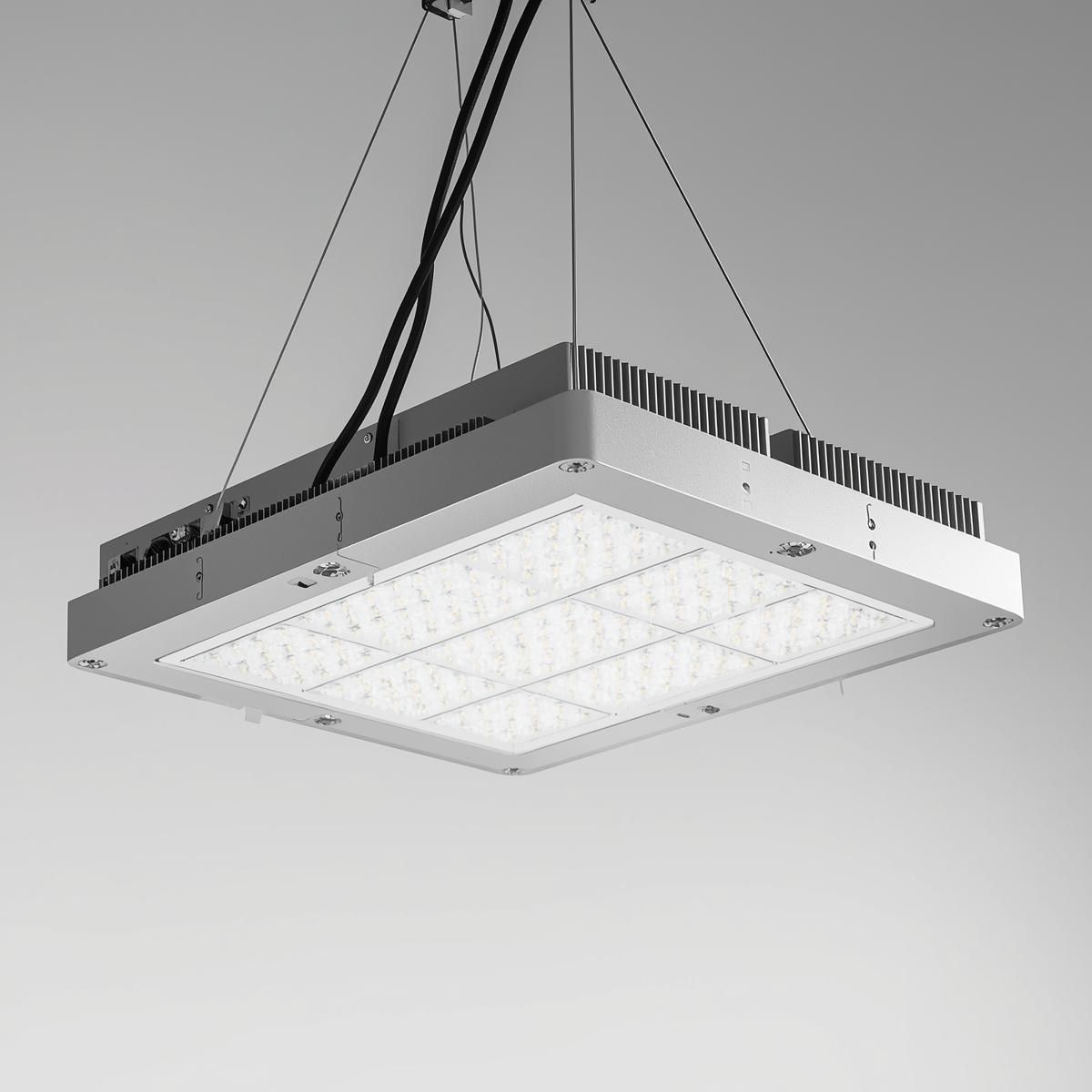
When growers discuss the largest LED grow light or the biggest LED grow light, they’re typically considering two things: physical size and light output. A genuine 1000W LED light sits at the top end of consumer and prosumer lighting. These aren’t for a little closet grow; they’re designed for moderate-sized, dedicated spaces. They typically include large heat sinks, multiple high-power diode bars, and a wide footprint to spread the light out.
A standard top-notch 1000-watt LED grow light will sufficiently cover a 4×4-foot to a 5×5-foot flowering area. During the fruiting or flowering stage, plants require significantly more light intensity. If you’re looking for a Luz LED 1000W, the same principle applies: that kind of power is aimed at generating results. These “1000-watt grow lights” are the workhorses for serious hobbyists and small commercial ops looking to maximize yield per square foot. If generating huge, dense, resinous buds in a big tent is your plan, acquiring one of these powerhouse units is simply unavoidable.
Full-Spectrum Efficiency: Why You Should Have 1000w LED Grow Lights
More than just a marketing buzzword, full spectrum represents the secret sauce of modern LED technology. Sunlight holds a full rainbow of colors, and plants evolved to use different wavelengths for specific tasks. A high-efficiency 1000W LED grow light full spectrum system mimics natural sunlight as closely as possible. It provides:
Blue light (400-500 nm): Drives the vegetative phase, promoting strong root development and compact, healthy leaf growth.
Red Light (600-700nm): Essential for flowering and fruiting; it’s the key signal for plants to develop flowers, directly impacting yield.
White Light & Other Wavelengths: Includes far-red, UV, and IR that play roles in overall plant health and terpene production (which affects flavor and aroma), driving more efficient photosynthesis.
The edge of a 1000-watt full-spectrum light over previous tech is its ability to deliver this wide variety of wavelengths simultaneously. Your plants get exactly what they need in all stages. This isn’t just about health; it ensures your yields are greater with higher-quality results compared to the limited spectrum of HPS or MH bulbs. The technology has advanced to where the spectrum isn’t just full—it’s tuned for optimal plant response. Getting this right can be complex, which is why tools like the Hydroponic Nutrient Optimizer are invaluable for fine-tuning the rest of your environment to match that perfect light.
Comparison Between 1000W LED Grow Lights and Conventional Lamps
For years, the 1000 Watt High-Pressure Sodium (HPS) or Metal Halide (MH) was the standard. So, why the mass exodus to LED? Let’s break down the comparison.
Energy Efficiency: This is arguably the largest win. An LED-powered 1000-watt grow light might draw only 600 watts from the wall and still deliver the same or higher usable light as a conventional 1000-watt HPS. That’s a 40% to 50% energy savings, translating directly to lower operating expenses.
Heat Production: HID units are terribly inefficient, blasting much of their energy as radiant heat. This forces growers to buy powerful ventilation and AC, adding cost and complexity. A 1000-watt growing lamp built on LED tech runs much cooler, virtually eliminating concerns about heat stress.
Lifespan: An average HPS bulb lasts 10,000-18,000 hours. A high-quality 1000-watt LED grow light will run for 50,000 to 100,000 hours. That’s years of dependable service without regular bulb replacements.
Light Spectrum: As mentioned, LED provides a customized full spectrum in one fixture. HID growers historically needed an MH for veg and an HPS for flower.
Even though the upfront cost of a decent LED is higher, the continued savings on electricity, cooling, and bulbs make 1000-watt grow lights in LED versions the undeniably smarter economic choice. When you Shop Smart for a light, use that saving to grab a reliable EC ↔ PPM Converter to ensure your nutrient mix is just as precise as your new spectrum.
Top 5 best 1000 watt LED grow light 2026: Buyer’s Guide.
Finding the best 1000W LED grow light isn’t just about the price. It’s about matching a tool to a job. Here’s what to consider when hunting for the top 1000-watt LED grow light this year:
High PAR/PPFD Levels: Look for published PPFD maps showing uniform coverage across your entire grow area, with sufficient levels for flowering (800-1000 µmol/m²/s). Don’t just take their word for it; scrutinize the map.
High Quality Diodes: Fixtures packed with quality diodes (like Samsung LM301H or LM301B for efficiency, and Osram for red spectrum) are more reliable and efficient.
Strong Driver: The driver is the power supply. Mean Well drivers are the industry gold standard, designed for years of reliable, multi-dim capable operation.
Full-Spectrum with UV/IR: The best options now include UV and IR diodes to excite resin production and more fully emulate the solar spectrum.
Build Quality and Warranty: Pay attention to the robustness of the heat sinks. A 3 to 5-year warranty offers peace of mind that the manufacturer trusts its product.
Pro LED Grow Lights vs 1000-watt HPS and MH
You’ll find lights advertised as “pro LED grow lights.” What does that actually mean? It represents a leap in build quality, performance, and features geared toward the commercial or serious enthusiast. A “pro” model typically has:
Greater Efficiency: A higher amount of light output per watt (μmol/J).
Grade-A Components: The latest, most advanced diodes and drivers.
Advanced Features: Controllability via external controllers, programmable timers, and sometimes customizable spectrum settings.
Enhanced Heat Dissipation: Over-engineered heat sinks for cooler running and longer diode life.
Scientific Validation: In-depth, third-party tested PPFD maps.
A standard 1000-watt light is perfect for the home hobbyist. But if you’re running a business where quality and yield hit your bottom line, a pro-level 1000-watt LED system is the way to go.
How To Install a Grow Tent With 1000w LED Grow Lights
The right environment is critical. The grow tent LED lights setup is the most popular and efficient system for a reason. Here’s how to optimize it for a 1000W LED:
Size of Tent: A single 1000-watt LED grow light is a perfect match for a 4x4ft or 5x5ft tent. This allows for good light penetration into the lower canopy.
Height Adjust: Follow the manufacturer’s instructions. Generally, lights are higher (30-24 inches) during veg and lower (18-24 inches) during flower. Watch your plants; they’ll tell you if they’re getting too much light.
Ventilation: Despite LEDs running cooler, active air exchange is still non-negotiable. You need an exhaust fan with a carbon filter to manage humidity and bring in fresh CO₂. A tool like the VPD Calculator is essential here to balance temperature and humidity for optimal growth.
Reflective Interior: A tent with diamond Mylar lining ensures no precious light is wasted, achieving up to 98% light reflection.
UV Lights and Growing Plants: Are 1000 Watt UV Lights For Growing Worth It?
UV (ultraviolet) light is a hot-button inclusion. Some high-end models tout 1000-watt UV lights, and it’s important to understand what this means. UV-B light, in particular, is a stressor that can trigger plants to produce more protective compounds—terpenes and flavonoids—which directly influence flavor, aroma, and potency.
But here’s the reality check: UV diodes are costly and can degrade faster than standard ones. For many growers, a light that includes some UV as part of a balanced spectrum is a nice bonus. Chasing a dedicated 1000-watt UV grow light is probably overkill unless you’re an experienced cultivator fine-tuning for those last few percentage points of quality. Get the core spectrum right first.
What should I look for when buying a 1000-watt LED Grow Light?
It’s a daunting choice. Use this checklist:
Know your space: Measure your grow area. For a 4×4 tent, ensure the light’s advertised coverage matches or exceeds that.
Determine your Budget: You generally get what you pay for. Weigh initial cost against long-term efficiency and warranty.
Verify the True Wattage: Don’t let “1000W equivalent” fool you. Find the “Power Draw” spec.
Review the PPFD Map: Demand a map showing light levels across the coverage area. Look for even distribution.
Research the Brand: Check forums and communities. Good customer service is invaluable.
Keep an Eye on the Future: If you might expand, a light with daisy-chaining capabilities is worth the investment.
A 600W draw light running 12 hours/day at $0.15/kWh costs $32.40 per month.
This 1000-watt LED grow light is the superior choice for anyone seeking professional-grade results. It provides the brute strength for high yields alongside the precision needed for exceptional quality. By investing in a premium unit, you’re buying healthier plants, heavier harvests, and lower long-term costs. The process from seed to harvest is incredibly fulfilling, and with the right 1000-watt LED grow light at the heart of your hydroponic grow light system, you’ll be set for success.
Do your research, spend wisely, and get ready to watch your garden flourish. For more insights and community-proven strategies, keep it locked at Grow With Hydroponics. And if you’re planning a diverse garden, don’t miss our deep dive on a classic challenge: The Ultimate LED Grow Light Guide: Science-Backed Indoor Setup (2026).

