If you’re serious about growing indoors, you’ve probably heard the term VPD meter or VPD sensor tossed around. And, if you’re like most people, you probably nodded and thought, “Yeah, that sounds important. I’ll Google it later.” But here’s the thing VPD is the unsung hero of plant growth. And when you get it right, it makes all the difference. So, let’s break this down. At GrowWthHydroponics, we’ll cover what it is, why it matters, and how the right tools VPD meters and sensors can help you nail your plant care like a pro.
What exactly is VPD, anyway?
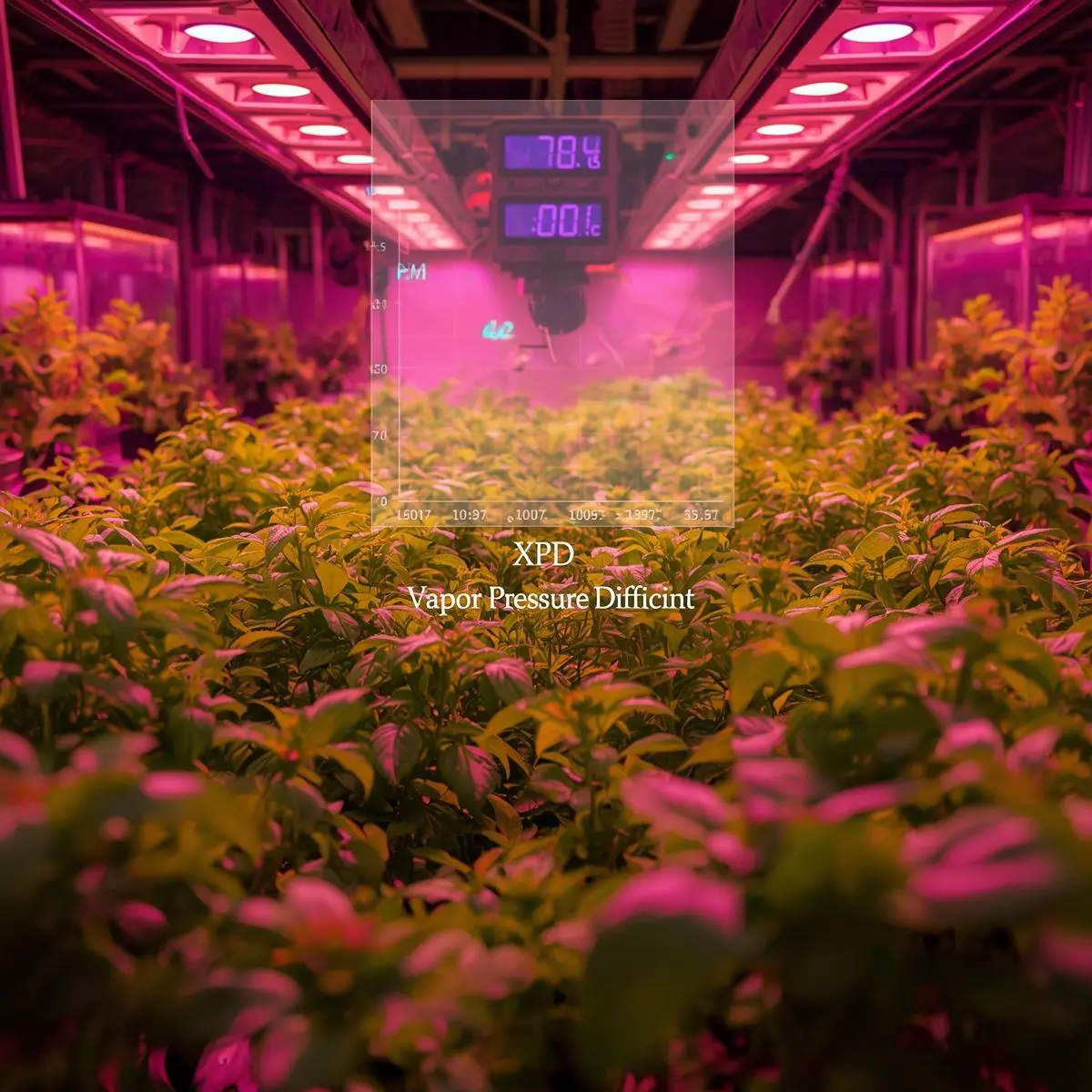
First, let’s talk about the acronym. VPD stands for Vapor Pressure Deficit. Yeah, it sounds fancy. But don’t get too bogged down in the jargon. In the simplest terms, VPD is the difference between the moisture the air can hold and the moisture it actually contains. It’s like the gap between what you’ve got and what you could have. Now, why does that matter for plants? Here’s where things get interesting. If VPD is too high, the air is dry, your plants are sweating out water faster than they can take it in. If it’s too low, the air’s too saturated, and your plants aren’t able to “breathe” as efficiently. Both scenarios lead to stress. And stress isn’t good for anyone especially your plants.
If you want your indoor garden to thrive, you need to manage that gap. VPD helps balance transpiration, the process by which plants release moisture. When it’s dialed in, plants grow better, faster, and with fewer issues. Too high? They dehydrate. Too low? They suffocate. Getting it right is everything. Explore VPD Guide for Veg & Flower: Charts, Calculators, and Optimal kPa for Indoor Growing.
VPD Meter: Your First Line of Defense
Let’s get practical. A VPD meter is one of the simplest tools to measure your growing environment’s temperature and humidity. It doesn’t need to be some high-tech, sci-fi gadget, just a straightforward device that spits out numbers. Those numbers? They let you know whether you’re in the optimal range for plant growth or if you’re about to turn your indoor oasis into a desert.
When you monitor the humidity and temperature, the VPD meter can quickly calculate the Vapor Pressure Deficit. And let’s be real here: without the right environment, your plants aren’t going anywhere. So why guess when you can measure? You wouldn’t build a house without blueprints, right? Same thing. A VPD meter is the blueprint for plant growth. It tells you exactly what’s going on, so you can make adjustments and optimize for better yields.
VPD Sensor: More Than Just a Reading
Alright, so now you’re thinking, “Okay, cool, I’ll grab a VPD meter. That should do the trick.” But let me hit you with a reality check: VPD sensors are a whole new level. These little wonders don’t just give you a one-off reading, they constantly track the conditions of your indoor space. They’re your real-time spies in the war on bad humidity. The real kicker? They can be integrated with your existing systems think automated hydroponics setups or high-tech grow rooms. A VPD sensor provides continuous feedback, and that’s the key to maintaining an optimal environment without constantly checking your stats. It’s like upgrading from a thermometer to a smart thermostat, but for your plants. The best part? These sensors can often be linked to your smartphone or control system, making it easier to adjust things like temperature and humidity from wherever you are.
What’s the Deal with VPD Calculators?
Alright, let’s take it one step further VPD calculators. Now, you’re probably thinking, “Wait, another thing to keep track of?” But stay with me here. A VPD calculator is a nifty tool that uses the data from your meter or sensor and translates it into actionable insights. It’s like a GPS for your garden. You plug in your temperature and humidity data, and the calculator tells you whether your VPD is within the ideal range.
I get it: You’re probably wondering, “What’s in it for me?” Here’s the thing. Sure, you could just eyeball it. Throw some water in your humidifier, tweak the thermostat, and hope for the best. But spoiler alert, it’s never that simple. A VPD calculator takes the guesswork out of it. You’ll know exactly where your VPD sits, and from there, you can make specific changes that keep things running at peak performance. No more hoping for the best. Just science.
Why Does This All Matter?
Let’s pause for a second. You’re probably thinking: Why go through all this trouble? Look, VPD isn’t just some geeky number crunching exercise. It’s about making sure your plants aren’t working overtime to survive. It’s about reducing stress, maximizing nutrient absorption, and ultimately helping your plants grow strong and healthy. And if you’re growing hydroponically, it’s even more critical. The entire system relies on precise control over water, nutrients, and yes, humidity.
And the results? Well, when you get VPD right, you’re going to notice a difference. Healthier roots. Faster growth. A plant that’s thriving instead of just surviving. And that’s the goal, isn’t it? To grow plants that make you look like the gardening genius you know you are.
Managing VPD Like a Pro
Okay, enough theory. How do you manage VPD in your space? Here’s the rundown:
- Measure and Monitor: Use a VPD meter to take regular readings of temperature and humidity. Don’t trust your gut here let the data tell you what’s happening.
- Optimize the Environment: Once you’ve got your data, it’s time to act. If VPD is too high, crank up the humidity. If it’s too low, improve airflow. Small tweaks, big results.
- Get Real-Time Feedback: Invest in a VPD sensor for continuous monitoring. These are game-changers when it comes to keeping your environment dialed 24/7. No more guessing. Just consistent, high-quality conditions.
- Use a Calculator: While it’s not strictly necessary, a VPD calculator can save you a lot of headaches. The quicker you can assess the situation and make adjustments, the better.
Shop Smart: Tools to Help You Nail Your VPD
If you’re going to get serious about optimizing your VPD, you’re going to need some quality tools. I can’t stress this enough: don’t skimp here. Grow With Hydroponics offers top-of-the-line VPD meters and sensors that make managing your indoor garden a whole lot easier. Whether you’re just starting out or you’ve been growing for years, these tools can give you the precision you need to thrive.
Here’s the thing about VPD: it’s one of those topics that sounds complicated at first, but once you get the hang of it, it’s surprisingly straightforward. It’s not some magic formula—it’s science, pure and simple. And once you embrace it, you’ll be on your way to building an environment where your plants can grow their best. Is this a silver bullet? No. There are a lot of factors that go into indoor gardening, light, nutrients, pH levels, etc. But getting VPD right? Here is the Hydroponic Tools Suite to solve all your indoor gardening problems in smart way.