

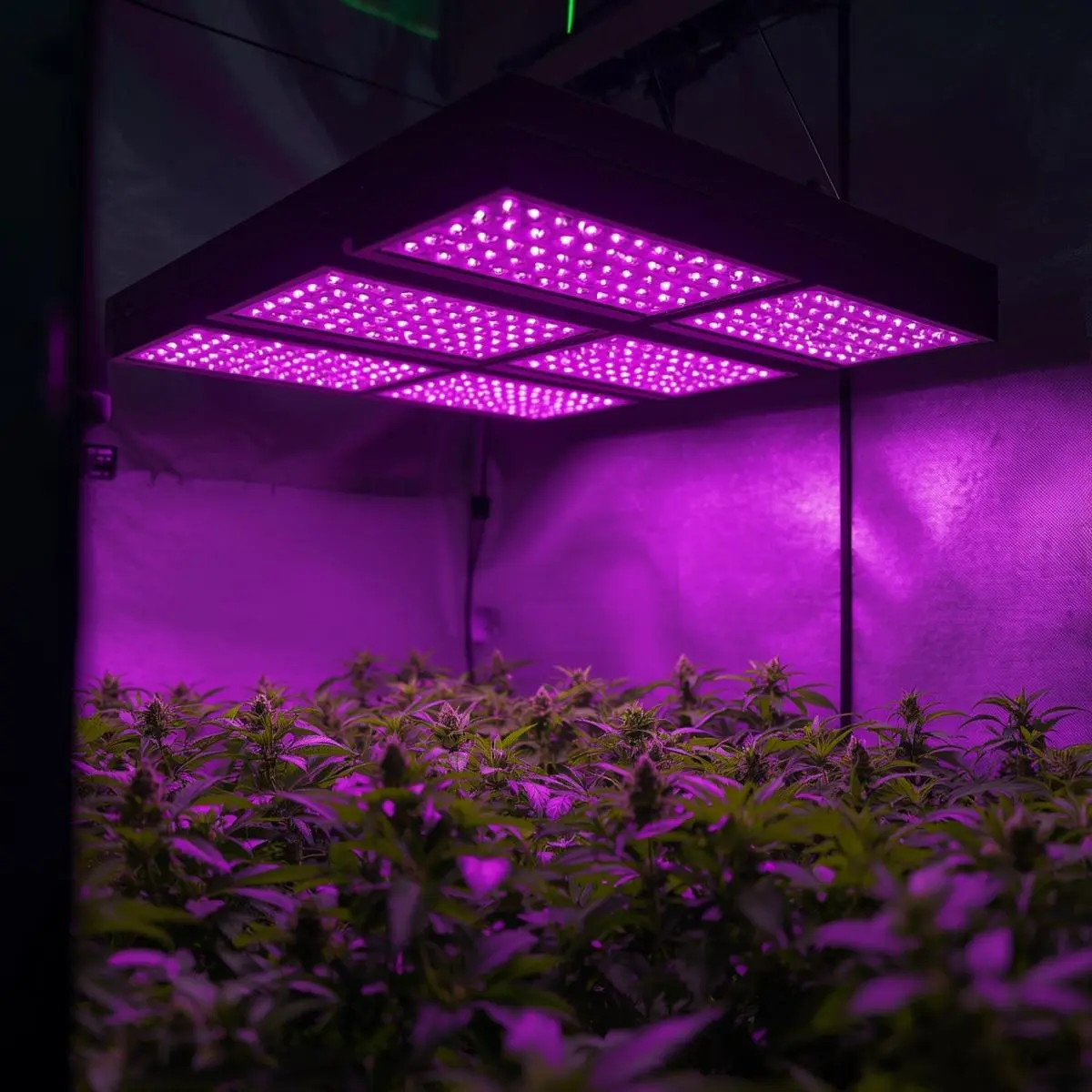
The Smart Grower’s Guide to LED Grow Lights
Let’s be frank: most “buying guides” are just dressed-up spec sheets. You don’t need another list of blurple lights with exaggerated wattage claims. You need to know what actually works on the canopy, year after year. After a decade of testing everything from garage-built panels to commercial arrays, I’ve learned that the best results come from ignoring the hype and focusing on a few unsexy fundamentals. This guide, informed by the same rigor we apply at Grow With Hydroponics, will help you do exactly that.
For 2026, the conversation has decisively shifted. It’s no longer about which light is “brightest.” It’s about which fixture is the most intelligent partner for plant biology. We’re judging by photon efficiency, even coverage, and the kind of reliability that only shows itself after a few thousand hours of humid, hot operation.
What “Top Rated” Really Means in 2026
Forget star ratings. In 2026, a top-rated LED grow light earns its stripes through a trifecta of performance: converting watts to usable photons with ruthless efficiency, spreading that light uniformly, and surviving the soggy, thermal punishment of a grow room without flinching. Wattage is a billing metric, not a performance one. The benchmark now is how many µmol/J (micromoles per Joule) a fixture delivers. The bar has been raised—premium lights are now pushing 2.7–2.9 µmol/J, a figure that would have been headline news three years ago.


Key Lighting Metrics That Matter to Plants
This is where most beginners go wrong, focusing on the wrong numbers. The metrics that matter are plant-centric, not human-centric.
Understanding PPFD and Canopy Uniformity
PPFD (Photosynthetic Photon Flux Density) is the crucial measure. It tells you how many photosynthetically active photons are hitting a specific spot on your canopy every second. The magic word here is “uniformity.” A light that blasts a 1500 PPFD hot-spot in the center while the corners get 200 is a recipe for lopsided, stressed plants.
Why does uniformity matter? It prevents stem stretch in low-light zones and bleaching in high-light zones, leading to consistent morphology and flower development across your entire tray. Your 2026 target for flowering is a steady 900–1100 µmol/m²/s, evenly, from edge to edge. You shouldn’t have to hang a light six inches from the canopy to hit your numbers.
Shop Smart Tip: When you Shop Smart for grow lights, never trust a manufacturer’s “center-only” PPFD claim. Demand the full uniformity map. Then, pair your fixture with our DLI Calculator to cross-check the daily light integral—it’s the only way to ensure you’re delivering the right total dose without wasting electricity or frying your plants.
PPE Explained: Why Efficiency Equals Profit
PPE (Photosynthetic Photon Efficacy) is your bottom-line metric. It measures how efficiently a fixture converts electricity (watts) into plant-usable photons (µmols). Early LEDs struggled to hit 2.0 µmol/J. Today’s best fixtures hit 2.9+. That difference isn’t just technical—it’s financial.
Higher PPE means lower monthly power bills, less waste heat for your HVAC to fight, and a lighter environmental footprint. This is why the upfront sting of a premium light often fades within a single grow cycle. The cheap box with the screaming logo? You’ll pay for it forever on your utility bill.
Spectrum Evolution: Full Spectrum vs Targeted Light
The “blurple” vs. white light war is over. Full spectrum won. Modern LED grow lights use a blend of high-CRI white diodes (often a mix of 3000K and 5000K) to mimic the sun’s broad output. The green light they emit—once wrongly thought useless—is now known to drive photosynthesis in lower, shaded leaves, improving whole-plant efficiency.
The Role of UV and Far-Red (IR)
Now, the nuance. The best 2026 fixtures offer supplemental channels for UV-A and far-red (730 nm). These aren’t gimmicks when used correctly. UV-A can stimulate protective secondary metabolite production (think terpenes). Far-red can influence stem stretch and flowering timing through the Emerson Effect. The key word is supplemental. They are tools for fine-tuning, not the main event.
Commercial vs. Home-Grown Lighting Needs
The needs here diverge sharply.
Commercial facilities live and die by uniformity and reliability. They lean into multi-bar “spider” styles for even coverage and passive, fanless cooling. Features like IP65 ratings, daisy-chaining, and external controllers are non-negotiable.
Home growers (in the classic 4×4 or 5×5 tent) should target the 480-650W sweet spot. Over-light a small space and you’ll immediately battle CO² limitations and light stress. A major 2026 trend is the detachable driver. Mounting that heat box outside your tent can drop interior temps by a crucial 3-5°F, making VPD management far easier.
Thermal Management & Build Quality
Heat is the great destroyer. The shift from noisy, failure-prone fans to massive, passive aluminum heat sinks is a hallmark of a modern quality light. Heft is often your friend here—more aluminum means better heat dissipation and longer diode life.
And never, ever overlook the driver. This unsung hero regulates current. A high-quality, Mean Well-style driver with 94%+ efficiency and surge protection is what separates a fixture that lasts 3 years from one that lasts a decade.
ROI Breakdown: Cheap Lights vs Premium LEDs
Let’s talk real money. Compare a legacy 1100W HPS to a modern 650W high-PPE LED.
HPS Daily Cost (12hr @ $0.15/kWh): ~$1.98
LED Daily Cost: ~$1.17
That’s roughly $295 saved per light, per year, before you even account for reduced cooling costs and the yield boost from better spectrum and uniformity. The “bargain” light that underperforms its specs is the most expensive light you’ll ever buy.
Buyer Checklist for LED Grow Lights (2026)
Do not click “buy” until you’ve verified:
Dimmability (seedlings don’t need flowering power).
Actual diode specs (Samsung LM301H or Bridgelux? Ask.).
A balanced full-spectrum base, not a purple circus.
Separate control for any UV/IR supplements.
Safety certifications (UL/ETL, not just CE).
A warranty of at least 3-5 years.
If the product page is vague, assume the engineering is, too.
Installation & Optimization Tips
Even a masterpiece can be hung wrong. General rule: start high and dim, then lower and increase intensity as plants acclimate.
Seedlings: 24–30″ at 25–40% power.
Veg: 18–24″ at 50–75%.
Flower: 12–18″ at 100%.
And here’s the pro move: as you crank up the light, you increase transpiration. Use our VPD Calculator to dial in your temperature and humidity accordingly. Lighting doesn’t work in a vacuum.
The Future of Grow Lighting
The next leap is integration. We’re moving from set-and-forget fixtures to responsive systems: lights that simulate dawn/dusk, adjust spectra via app, or sync to environmental sensors. The future isn’t just more photons—it’s smarter photons. In 2026, a top-rated LED grow light is defined by three pillars: brutal electrical efficiency (>2.7 µmol/J PPE), uniform canopy coverage, and a build quality that promises a long, dull life. The smartest buy is the one matched precisely to your space and goals—a concept we stress constantly in the Grow With Hydroponics community.
Forget chasing the highest wattage or the flashiest colors. Invest in understanding the metrics that matter, plan your layout with a tool like our Grow Space Planner, and choose a light built to last. Your plants—and your wallet—will show the difference.




For a deeper dive on managing your environment, read Mastering VPD for Healthier Plants. Are you stuck diagnosing a problem? Our Plant Health Diagnosis Tool.

