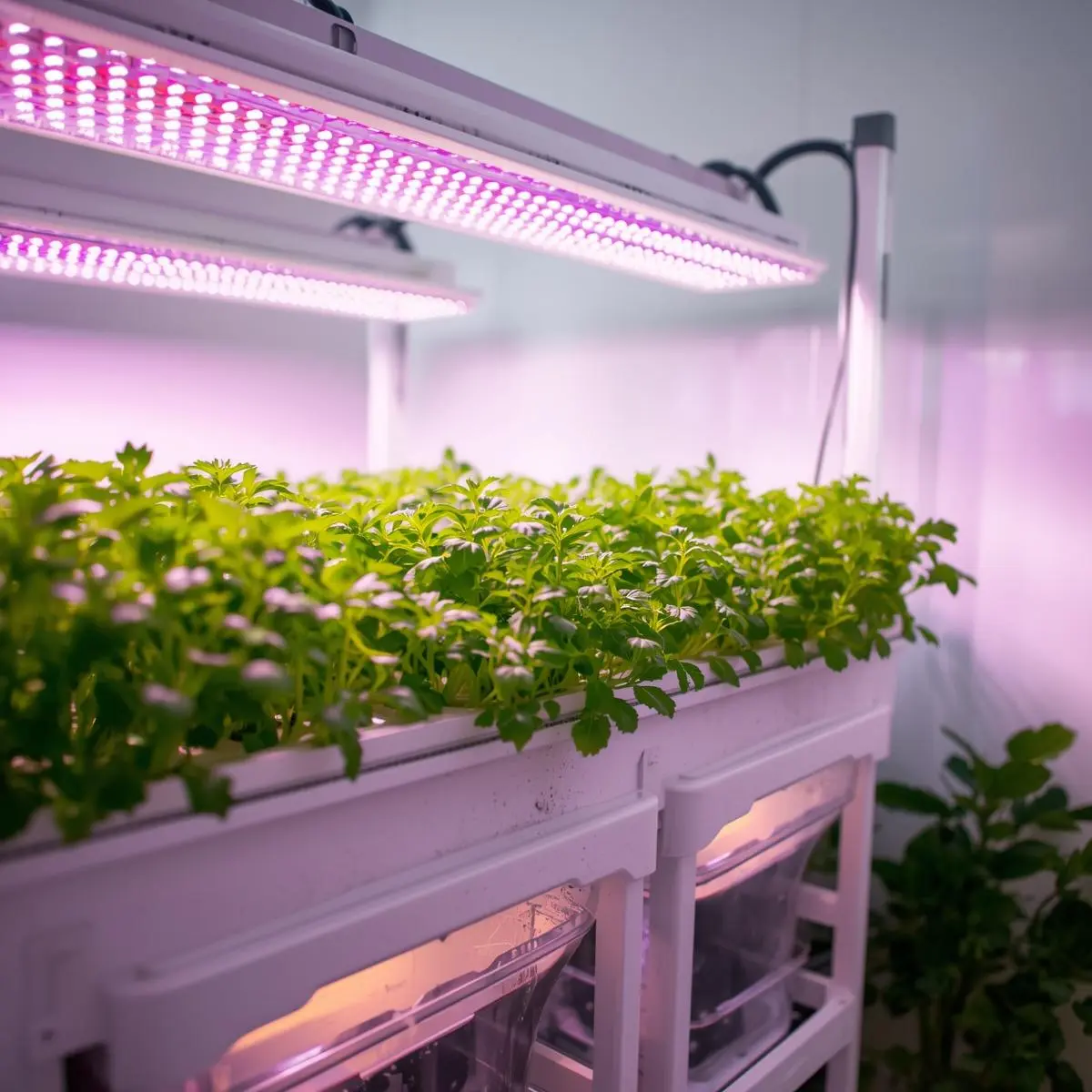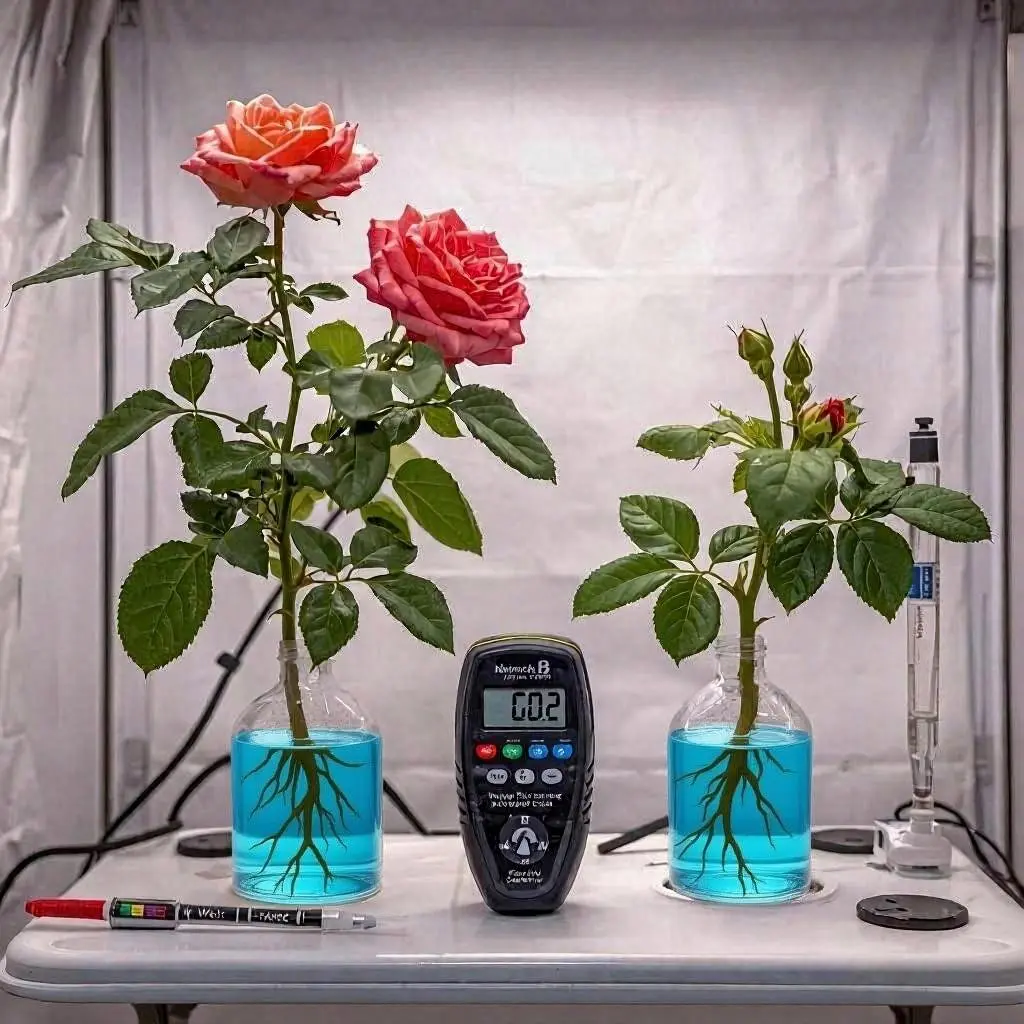
You’ve dialed in your lights until the PAR map looks surgical. Your hybrid teas are sitting in a pristine DWC setup. Your nutrient solution reads textbook-perfect on paper—N looks right, P looks right, and K is where it should be.
And yet. Your roses are missing that show-stopping “wow” factor. The ones at the grow shop down the road? Somehow fuller. Somehow more.
If this sounds familiar;
The culprit is often invisible: micro-nutrients for hydroponic roses. These tiny elements seem negligible compared to nitrogen, phosphorus, or potassium. But in hydroponics? Ignoring them can quietly sabotage bloom size, petal density, and overall flower quality.
No drama. Just underwhelming results.
At Grow With Hydroponics, we’ve spent over a decade watching growers chase the wrong fixes—more light, more air, more something—when the real answer was hiding in plain sight at the bottom of the nutrient label. In this guide, you’ll learn which micro-nutrients matter most for roses, how to measure and adjust them in hydroponic setups, and why small tweaks often yield the biggest blooms.
You’ll also discover practical tools—like the Hydroponic Nutrient Calculator—that take the guesswork out of precision feeding. Because guessing is expensive.
Why Micro-nutrients for Hydroponic Roses Are Often Overlooked
Let’s be honest. Most growers pour all their attention into the headliners: N, P, K. Maybe calcium and magnesium if they’re paying attention. The micro-nutrients? They’re easy to ignore because:
Their required concentrations are tiny—parts per million range
Deficiencies often show subtle symptoms that get mistaken for other issues
Commercial fertilizers rarely highlight precise micro-nutrient content on the front label
But here’s what I’ve learned watching hundreds of grows: these “tiny” nutrients control critical processes. Chlorophyll production. Bud formation. Stem strength. Pigment intensity. Disease resistance.
Skipping them is like trying to build a cathedral with no mortar. Your structure might stand. But it won’t impress anyone.
Which Micro-nutrients for Hydroponic Roses Matter Most?
Let’s break down the essential players you can’t afford to overlook. These are the micro-nutrients for hydroponic roses that separate “meh” blooms from magazine covers.
Iron (Fe)—The Chlorophyll Driver
Iron supports leaf greening and photosynthesis. Without it, your roses can’t generate the energy needed for large flowers.
Deficiency: Pale, yellowing leaves between veins (interveinal chlorosis). New growth looks anemic.
In hydroponics: Use chelated iron—EDDHA form if your pH runs high. Standard EDTA can precipitate out.
Manganese (Mn)—The Enzyme Activator
Manganese plays a key role in nitrogen assimilation and energy transfer. It’s a workhorse.
Deficiency: Small necrotic spots on leaves, slower growth overall.
Warning: Overdose can interfere with magnesium and iron uptake. Balance matters.
Zinc (Zn) – The Growth Regulator
Zinc promotes stem elongation, internode spacing, and bud development. Frankly, this is where beginners go wrong—they wonder why stems are stubby and ignore zinc.
Deficiency: Small leaves, shortened internodes, reduced flowering.
Fix: Foliar application can correct mild deficiencies quickly while you adjust the reservoir.
Copper (Cu)—The Flower Enhancer
Copper is important for lignin synthesis and disease resistance. It’s the structural integrity player.
Deficiency: Weak stems, distorted new growth that looks… off.
Warning: Excess copper can be toxic. Keep concentrations low—0.05–0.1 ppm is the sweet spot.
Boron (B) – The Bloom Organizer
Boron is vital for cell wall formation and flower development. This one’s critical during bud set.
Deficiency: Hollow stems, malformed buds, flowers that abort for no obvious reason.
Warning: Over-application leads to tip burn. Boron has a narrow window.
Molybdenum (Mo)—The Nitrogen Helper
Molybdenum assists in nitrate reduction and nitrogen metabolism. It’s the behind-the-scenes operator.
Deficiency: Leaf tip curl, poor nitrogen uptake despite adequate N in solution.
Note: Rare but critical in high-yield hydroponics.
How Micro-nutrients Interact With Macronutrients
Here’s where it gets interesting. Micro-nutrients for hydroponic roses don’t act alone—they directly influence how roses absorb and use N, P, and K. Key interactions include:
Calcium & Boron: Together, they strengthen cell walls. Deficiency in either leads to weak stems and poor bud integrity. I’ve seen rock-solid calcium levels still produce floppy stems—boron was the missing link.
Magnesium & Manganese: Both are central to photosynthesis. Magnesium deficiency may mask manganese issues, and vice versa. You treat one, the other stays deficient.
Potassium & Zinc: Potassium drives bloom expansion, but zinc deficiency can prevent full petal development. The potassium’s there. The plant just can’t use it properly.
Ignoring these interactions is why some growers follow a “perfect” macronutrient formula but still end up with underwhelming blooms. The machine has fuel, but the spark plugs are fouled.
Hydroponic Rose Nutrient Formula: The Exact Veg & Bloom Ratios That Work.
Testing and Correcting Micro-nutrients for Hydroponic Roses
You can’t fix what you don’t measure. In hydroponic roses, that’s not a slogan—it’s the difference between guessing and knowing.
Start With Water Analysis
Measure baseline calcium, magnesium, sodium, and trace minerals before you mix anything. Adjust your micro-nutrient targets based on what’s already in the water. If your tap water has 0.2 ppm zinc already, adding more changes the math.
Monitor Leaf Tissue
Regular tissue analysis reveals hidden deficiencies before they show visually. Compare leaves from different canopy levels—if the top looks different from the bottom, something’s moving (or not moving) wrong.
Adjust Nutrient Solution
Use chelated forms of iron, manganese, and zinc to avoid precipitation in the reservoir. Add micronutrients incrementally—tiny doses make a huge difference. Dumping in “a little extra” is how you get toxicity.
Use a Nutrient Calculator
Our Hydroponic Nutrient Calculator ensures precise ppm levels for micro-nutrients. It prevents over- or under-application, reducing stress on your plants. Punch in your water source, select your targets, and mix with confidence instead of hope.
Shop Smart: When you’re buying micro-nutrient supplements, look for products with full elemental disclosure on the label. If the manufacturer won’t tell you exactly what’s inside, move on. Match your purchase to a calculator output—don’t guess. Your roses deserve better than “approximately correct.”
Try our Hydroponic Nutrient Optimizer.
FAQ: Common Micro-nutrient Questions
Can I Use Tap Water for Micro-nutrients?
Sometimes. Tap water may already contain calcium and magnesium, but it rarely has adequate iron, manganese, or zinc. RO water plus controlled micro-nutrient addition is safest for bloom-intensive setups. You want control? Start clean.
How Often Should I Adjust Micro-nutrients?
Check weekly during the bloom stage. Hydroponic roses are sensitive during bud development—small fluctuations can reduce flower size and stem strength. I check every Sunday. Same time. Same routine.
Can I foliar feed Micro-nutrients?
Yes, especially for iron or zinc. Foliar application corrects deficiencies faster than root uptake—sometimes within 48 hours. But it’s a band-aid, not a solution. Use it to buy time while you fix the reservoir.
Advanced Tips to Maximize Bloom Size
Once the basics are covered, these refinements push you from “good” to “How did you do that?”
Balance EC and pH
Micro-nutrients become unavailable at extreme pH. Iron disappears above 6.5. Manganese gets locked out below. 5.5. Maintain 5.8–6.2 for optimal uptake. Not 5.5. Not 6.8. Narrow window, big payoff.
Monitor Interactions
Keep an eye on calcium, magnesium, and potassium ratios. Micro-nutrients may amplify or block macronutrient absorption. Too much calcium? Zinc uptake drops. Too much magnesium? Iron gets blocked.
Use Environmental Tools
High VPD accelerates transpiration, affecting micro-nutrient delivery. When plants drink faster, micronutrients concentrate in the root zone—sometimes to toxic levels. Our VPD Calculator helps maintain optimal root-zone uptake by balancing the environment first.
Plan Ahead
Multi-crop setups may require slightly adjusted micro-nutrient levels per species. What works for roses might starve your basil. The Multi-Crop Planner helps maintain balance across different plants sharing the same system.
Tiny Elements, Big Difference
Here’s what I want you to take away:
Micro-nutrients for hydroponic roses may be small, but their impact on bloom size is huge. Properly managing iron, manganese, zinc, copper, boron, and molybdenum ensures:
Strong stems that actually support large blooms
Dense, vibrant petals with rich, saturated color
Uniform flowering cycles across your garden
Reduced tip burn and nutrient stress
At Grow With Hydroponics, we’ve seen the difference in growers who respect micro-nutrients. The results are dramatic—roses that look like they belong in magazines, not just on a home table. It’s not magic. It’s measurement.
Start measuring. Start adjusting. Start observing. Your blooms will reward you with size, color, and longevity you didn’t think possible from a handful of parts-per-million adjustments.
Explore How to Grow Roses Hydroponically: A Science-Backed Complete Guide.