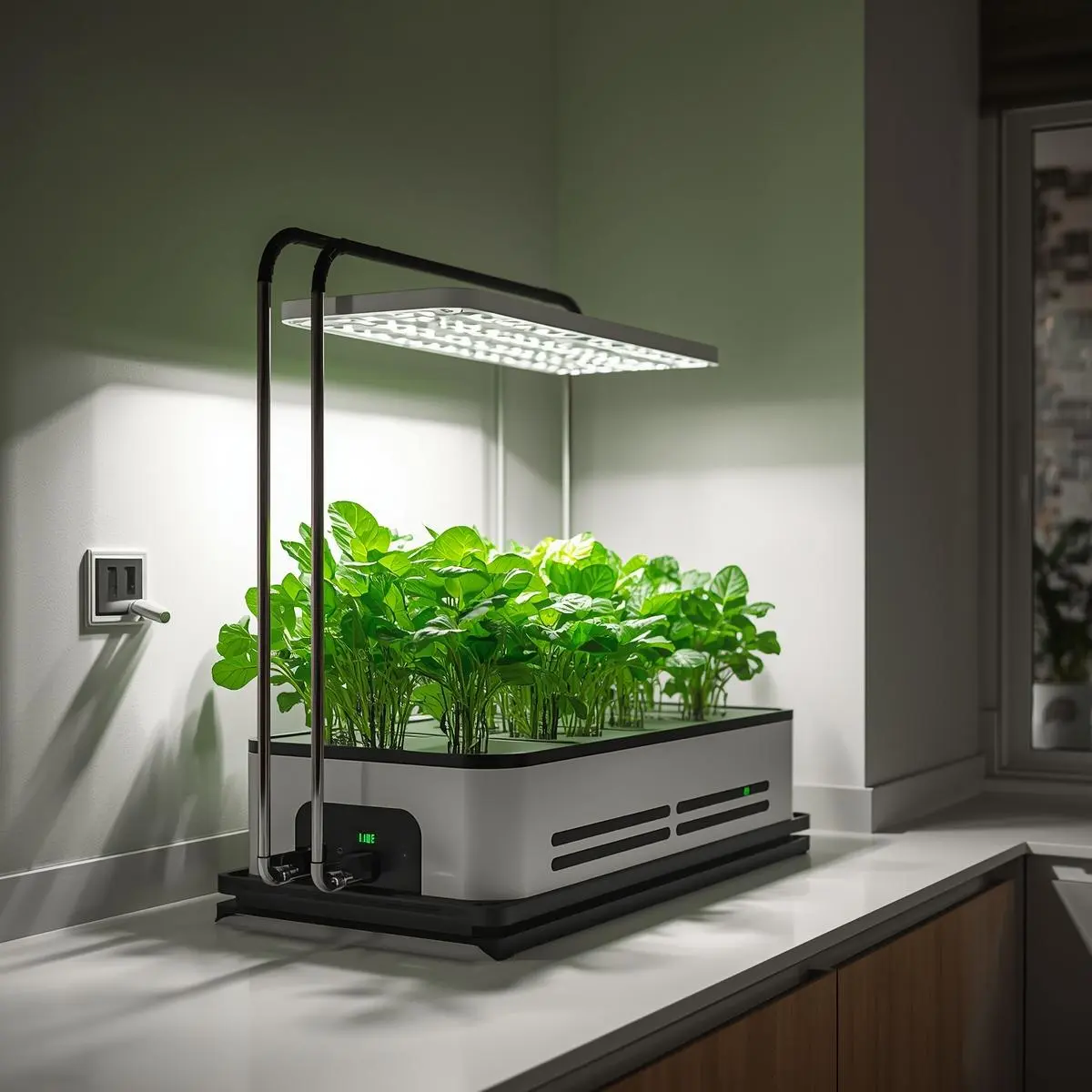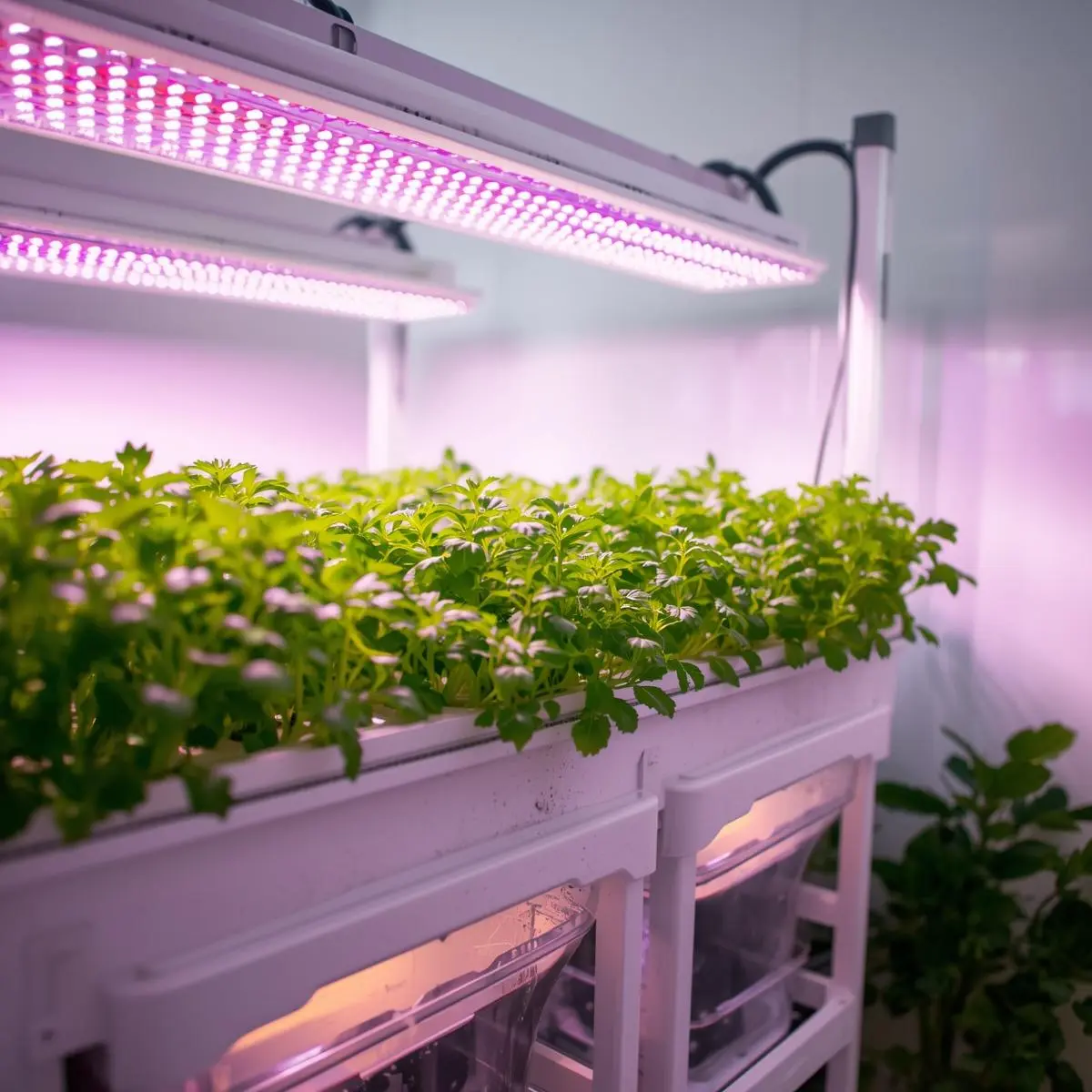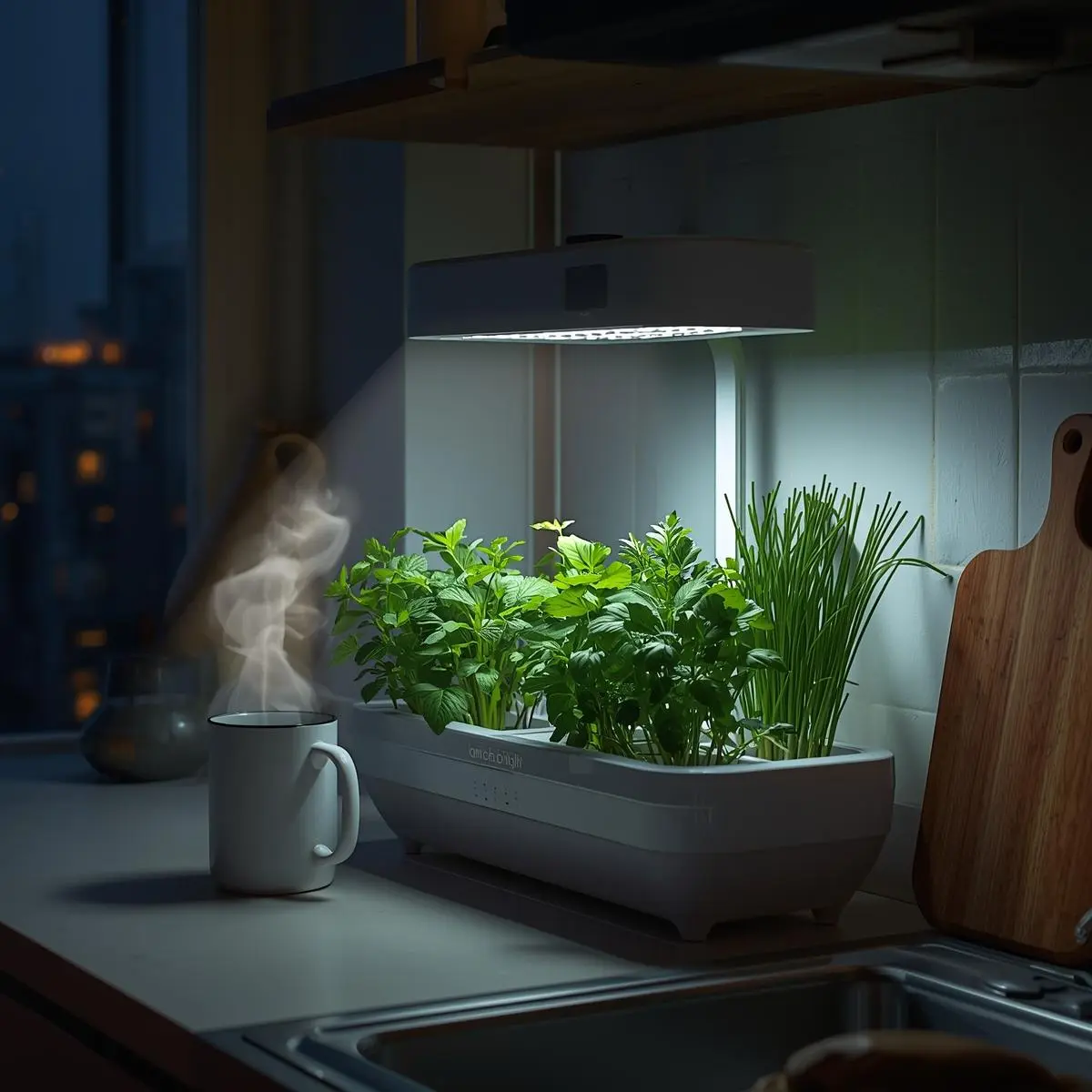
Let’s be honest: most gardening advice assumes you have a sun-drenched patio. But many of us live in the real world—apartments with north-facing windows, kitchens tucked in shadows, or rooms that haven’t seen direct sun since we moved in. If you’ve tried growing herbs there, you know the drill: spindly stems, pale leaves, and a slow, sad decline.
Here’s the good news: that space is perfectly viable. You just need a different playbook.
Grow With Hydroponics has fielded questions from basement dwellers and high-rise tenants for years. The secret isn’t magic; it’s understanding how light actually works indoors—and then choosing plants that don’t mind the gloom. This isn’t about forcing sun-loving plants to suffer. It’s about working with what you have.
In this guide, we’ll cut through the assumptions. You’ll learn what “low light” really means, which herbs genuinely thrive there, and how to set up a system that works with—not against—your environment.
You don’t need a sunroom. You just need a plan.
What Counts as “Low Light” Indoors?
First, a crucial distinction: “low light” isn’t darkness. In an indoor gardening context, it usually means the following:
No direct sunbeams ever hit the spot.
You’re relying solely on indirect window light.
The space is more than 6–10 feet from a decent window.
It’s a north-facing room or a shaded corner.
In traditional soil gardening, these conditions are brutally limiting. In hydroponics, they become a manageable constraint—because you’re not at the mercy of the weather. A modest, well-placed LED fixture can utterly outperform a cloudy windowsill. The trick is matching plant physiology to your available photons.
If you’re new to how plants actually use light—what PAR is, why lumens don’t matter, or how photons drive growth—our Ultimate LED Grow Light Guide: Science-Backed Indoor Setup (2026) starts with the absolute fundamentals. It’s the perfect foundation before diving into low-light hydroponic herb gardening strategies.
For a broader foundation, start with our herb gardening fundamentals.
Why Hydroponics Excels in Low Light
Soil-bound plants in dim corners face a double crisis: scarce light and scarce nutrients. Hydroponics elegantly solves half of that equation.
Roots get constant, direct access to a perfectly balanced meal. Water is oxygen-rich. The plant’s energy isn’t wasted searching for food; it’s focused on growth. This inherent efficiency means hydroponic herbs can perform remarkably well with less light than their soil-based cousins. It turns a limitation into a calculated advantage.
Best Herbs for Low-Light Hydroponic Gardens
Not all herbs are sun worshippers. Some evolved in the dappled light of forest understories. These are your reliable, shade-tolerant champions:
Top Performers:
Mint: Almost indestructible and fast-growing.
Parsley: Slow to germinate, but steady and forgiving.
Chives: Compact, resilient, and productive.
Cilantro: Prefers cooler temps and has modest light needs.
Lemon Balm: Its soft leaves are naturally shade-adapted.
Oregano: More adaptable than its Mediterranean origins suggest.
These herbs succeed because they’re built for efficiency. Basil, by contrast, is a light hog. It might survive, but it won’t thrive—you’ll get slow, leggy growth.
Pro tip: Use our Multi-Crop Planner to group your shade-tolerant herbs together logically. This prevents you from accidentally placing a light-hungry plant in a dark corner and wondering why it’s failing.
For a deeper dive on varieties, see 25 Best Plants You Can Grow Without Soil.
Setting Up a Low-Light Hydroponic Herb Gardening System
“Low-light” doesn’t mean “no design.” It means your design is intentional.
System Size & Placement:
Think compact. Countertop units, shelf systems, or wall-mounted rails are ideal. Place them where you have even a sliver of ambient light, or near an outlet for your LEDs. Before you buy a single component, run it through our Grow Space Planner. It’ll help you map vertical clearance and fixture placement, avoiding costly “it doesn’t fit” surprises.
Lighting Strategy:
This is where you seize control. In low-light environments, supplemental LEDs aren’t a luxury; they’re the engine.
Don’t guess. Use the DLI Calculator to determine the exact daily light integral your chosen herbs need. Then, match a fixture’s output to your plant count. Often, the best approach is running lights longer (16–18 hours) at a lower, gentler intensity. It mimics a long, cloudy day rather than a blast of desert sun.
For the technically minded, our Indoor Plant Sunlight Analysis System goes deeper, helping you optimize photon distribution across every leaf in a tight space. When you Shop Smart for grow lights, never buy a fixture in isolation. Always pair it with the DLI Calculator to ensure it can deliver what your plants need in your specific, dim environment. An underpowered light is the most common reason low-light gardens stall.
Nutrients in Low-Light Hydroponic Herb Gardening Systems
Here’s a critical, often-overlooked synergy: light drives nutrient uptake. In dim conditions, your plants eat slower. Overfeeding isn’t just possible—it’s probable. Salt buildup happens faster, roots get stressed, and growth halts.
The adjustment is simple:
Mix lighter nutrient solutions.
Aim for the lower end of the recommended EC range for your herbs.
Refresh your reservoir more frequently to prevent accumulation.
Our Nutrient Calculator is built for this. It generates herb-specific formulas that account for slower growth. And if your meter confuses you with different units, the EC ↔ PPM Converter is there to keep your readings accurate and actionable.
Environmental Balance Matters More
Dim spaces—especially kitchens and bathrooms—are prone to microclimates. Drafts, dry air from appliances, or cold spots can wreak havoc. Your target is stability: 65–75°F and 50–70% relative humidity. Why does this matter more here? Cold roots in low light absorb nutrients at a snail’s pace. Dry air stresses plants that are already working with limited energy. Use the VPD Calculator to nail the relationship between temperature and humidity. It ensures your herbs are in the perfect physiological state to use every bit of light and food they get.
Light and environment work as one system. For a complete look at how to balance light intensity, photoperiod, temperature, and airflow in perfect harmony, the Ultimate LED Grow Light Guide dedicates an entire section to environmental integration.
Signs Your Herbs Need More Light
Your plants will talk. Listen for:
Etiolation: Long, thin, weak stems stretching for light.
Chlorosis: Pale, washed-out green, or yellowing leaves.
Slowed Production: New growth takes forever.
Phototropism: A pronounced lean toward the light source.
These aren’t failure signals—they’re adjustment alerts. Lower your lights, extend the photoperiod, or add a simple white reflective surface to bounce photons around. Sometimes, just thinning out the canopy gives each leaf a fighting chance.
Common Mistakes in Low-Light Hydroponics
We see these all the time. Avoid them:
Trusting a window alone in a north-facing room.
Using “bloom” or “tomato” nutrient formulas packed with unnecessary phosphorus.
Overcrowding, which guarantees shaded leaves.
Setting lights too high and forgetting to lower them as plants grow.
Overfeeding out of a misguided desire to “boost” growth.
Low-light gardening rewards a light touch and obsessive consistency.
Scaling in Small, Dim Spaces
Constraint breeds creativity. Your compact space is an advantage. Think vertically with shelving, utilize wall-mounted rails, or practice succession planting—harvest one batch and immediately start another.
Before you rearrange furniture, test your idea with the Grow Space Simulator. It lets you visualize photon spread and plant spacing virtually. Even a single square foot, managed intently, can keep you in fresh herbs year-round.
Shade Is Not a Limitation
Low-light hydroponic herb gardening doesn’t mean low yield. With hydroponics, it simply defines a new set of rules. By choosing the right herbs, implementing gentle but precise lighting, and feeding with restraint, you transform “dead space” into a productive, living pantry.
Your apartment corner, your shady kitchen, that weird nook by the bookshelf—they can all grow food. Fresh herbs don’t demand sunshine. They demand strategy. And when you’re ready to optimize that strategy down to the last photon, the tools and deep-dive resources at Grow With Hydroponics are here to help you master your unique environment.
Grow smart, not just hard.