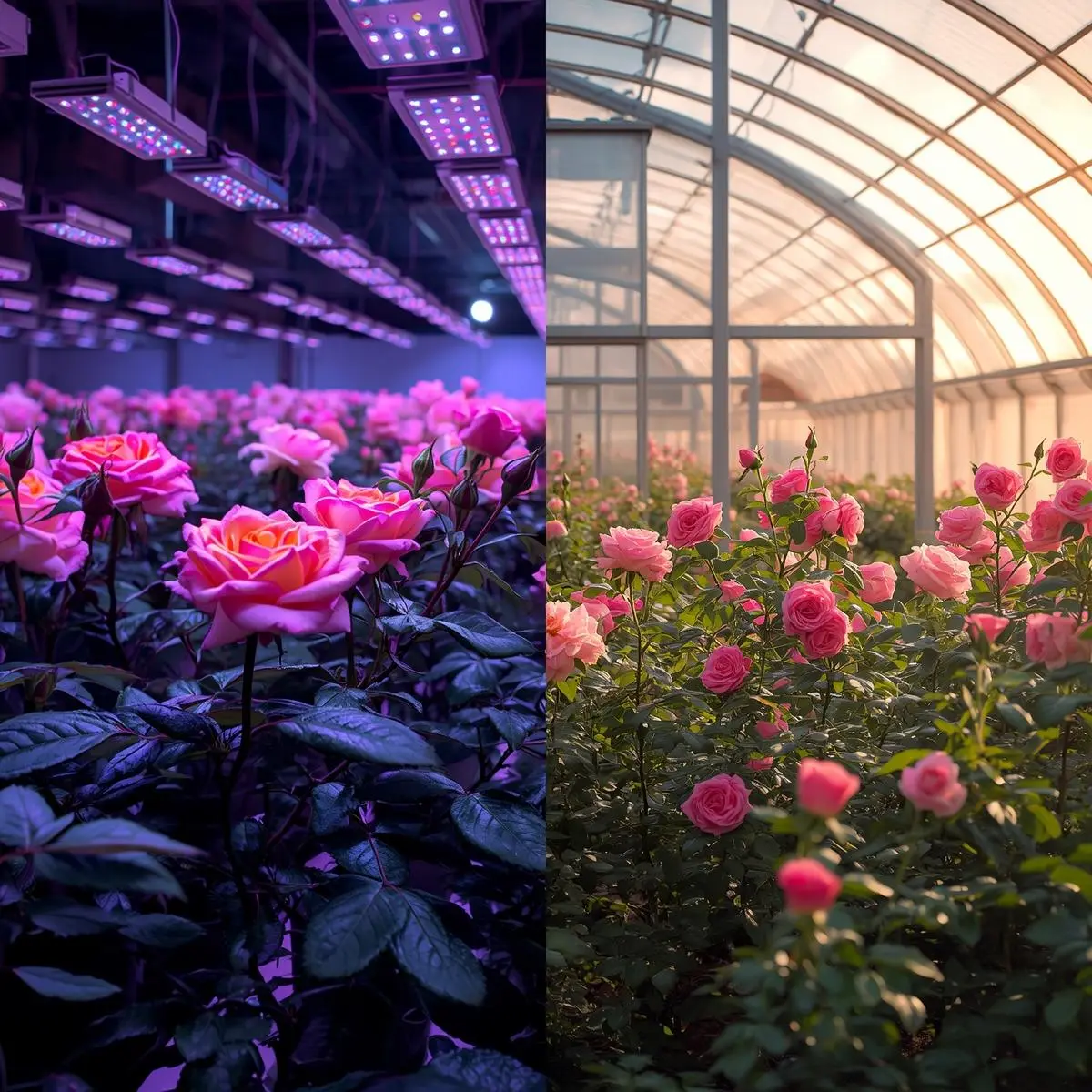
Indoor vs Greenhouse Roses: Which Grows Better?
If you’ve ever stood between a grow tent and a sunlit greenhouse, wondering where roses actually thrive, you’re in good company. I ask myself the same thing every season, usually after spotting the first signs of heat stress indoors or a suspicious white fuzz on a greenhouse leaf. Roses are resilient, sure. But they’re also divas with strong opinions about their surroundings. The environment isn’t just a detail—it’s the headline.
Through years of trial and error (emphasis on the error), we’ve seen both setups triumph and fail, often for the same root cause: mismatched expectations. This guide cuts through the romance. We’ll break down Indoor vs Greenhouse Roses with the blunt honesty of someone who’s scrubbed algae off reservoirs and mourned a perfect bloom lost to botrytis. You’ll learn what “better” really means, and how to match a system to your space, your climate, and your patience.
What Does “Grows Better” Actually Mean for Hydroponic Roses?
First, let’s define our terms. Roses don’t care about our debates—they respond to conditions. In hydroponics, “better” isn’t just about a flashy bloom. It’s about the whole, sustainable cycle.
Here, it usually translates to:
Strong, compact vegetative growth without leggy, weak stems.
Predictable, consistent flowering cycles—not a single spectacular show followed by a months-long sulk.
Lower disease pressure, because nothing saps joy faster than a fungal war.
Real control over the variables: nutrients, light, and climate.
Frankly, most disappointments stem from choosing a system that almost fits. With roses, “almost” is a recipe for frustration.
Indoor Hydroponic Roses: Precision and Control
Why Indoor Roses Appeal to Growers
Indoor hydroponic roses excel where control is non-negotiable. You’re not battling a surprise heatwave or a week of gloomy skies. Every photon, every milliliter of nutrient, is intentional.
The advantages are compelling:
Stability: Temperature and humidity stay in their lanes year-round.
Light Dictation: You set the photoperiod and intensity, banishing seasonal blues.
Pest Exclusion: Starting with a clean slate means fewer opportunistic invaders.
And yes, roses respond. I’ve seen indoor setups produce foliage so textbook-perfect it looks illustrated—with far fewer panic-driven interventions.
The Lighting Reality Indoors (This Is Where Most Fail)
Let’s be blunt: roses are photosynthetic gluttons. Indoor growers chronically underestimate their appetite.
To trigger and sustain flowering, roses demand a high Daily Light Integral (DLI)—we’re talking measurable, canopy-level intensity, not just a “bright” room. This is the stage where hope meets physics. Guessing leads to weak stems and shy blooms.
Forget watts. You need a plan. Our DLI Calculator is the essential first step to avoid the classic blunder: buying a powerful-looking fixture that still under-delivers where it counts.
Climate Control Indoors: Easier Than It Sounds
Temperature and humidity are simpler to manage indoors—but only if you treat them as a linked pair. Roses despise stagnant, soggy air.
This is where the VPD Calculator becomes your best friend. Balancing vapor pressure deficit isn’t academic; it’s the practice that prevents wilted, stressed plants and keeps powdery mildew in the realm of theory, not practice. Growers who dial in VPD early spend less time playing detective with spotted leaves.
The Downsides of Indoor Roses
Let’s not sugarcoat the trade-offs.
Cost: The upfront investment in lights, environmental controls, and infrastructure is real.
Dependency: You’re tied to the grid. A prolonged outage isn’t just an inconvenience.
Space: You’re limited by your footprint. Some sprawling, majestic rose varieties simply won’t fit.
Indoor roses reward precision but punish half-measures.
Greenhouse Hydroponic Roses: Sunlight’s Natural Advantage
Why Greenhouses Still Matter
Greenhouses offer one asset no LED can match economically: free, full-spectrum sunlight. It’s not just about brightness; it’s about spectral quality and depth.
The benefits are profound:
Sky-High DLI: In sunny regions, the natural light integral is unbeatable.
Operating Costs: After the build, the sun doesn’t send a monthly bill.
Airflow Scale: Properly designed, a greenhouse can achieve passive ventilation that’s hard to replicate indoors.
Commercial growers still lean on greenhouses for a reason. The sun is a powerful tool.
Climate Challenges You Can’t Ignore
But a greenhouse demands vigilance. It’s a dynamic environment, not a sealed box. Heat spikes in the afternoon, humidity swings at night, and seasonal light shifts are daily realities.
This is where many well-intentioned projects falter. Using a Grow Space Planner before you bolt anything together is critical. It helps you avoid rookie layout mistakes that create dead-air corners and heat pockets—saving you months of corrective hassle.
And if you’re considering CO₂ enrichment to boost growth (a common greenhouse tactic), precision is key. Guesswork is wasteful. Our CO₂ Calculator helps you inject just enough, turning a potential expense into a measured investment.
Disease Pressure: The Greenhouse Trade-Off
Let’s talk about the white powder of heartbreak: mildew. Greenhouses, especially in humid climates, are fungal playgrounds if airflow is an afterthought.
I’ve watched breathtaking vertical growth collapse in a matter of weeks because overnight humidity quietly crossed the threshold. Success here hinges on relentless monitoring, not optimistic neglect.
Indoor vs Greenhouse Roses: Side-by-Side Comparison
Here’s the unvarnished breakdown:
Factor | Indoor Roses | Greenhouse Roses |
|---|---|---|
| Control | Wins. Every variable is at your fingertips. | Subject to weather and season. |
| Light Quality | Excellent, but artificial & costly. | Wins. Unbeatable, free sunlight. |
| Long-Term Cost | Higher (energy, equipment). | Often wins (after initial build). |
| Disease Risk | Lower. Contained environment. | Higher. Requires active management. |
| Scalability | Limited by space and infrastructure. | Wins. Easier to scale volume. |
So, which grows better? Neither, universally. The better system is the one you can manage consistently day in, day out.
Which Setup Is Better for Beginners?
If you’re new to hydroponic roses, indoor systems often offer a gentler learning curve—provided you respect their lighting demands.
Why?
Fewer Surprises: You’re not fighting a sudden cold snap or a week of rain.
Easier Troubleshooting: When a problem arises, your variables are finite and known.
Tool Alignment: Systems like our Plant Health Diagnosis Tool integrate seamlessly, helping you diagnose nutrient issues before they become crises.
Greenhouses, conversely, reward experience. They’re for the grower who enjoys the dance with the elements, not just the dial on a controller.
Can You Combine Indoor and Greenhouse Strategies?
Absolutely—and the savviest growers often do. Hybrid strategies aren’t overkill; they’re risk management.
Smart approaches include:
Propagation Indoors: Starting cuttings in a controlled nursery before hardening off to the greenhouse.
Supplemental Lighting: Using LEDs in the greenhouse to extend photoperiods during short winter days.
Simulation First: Using the Grow Space Simulator to model climate interactions and nutrient schedules before committing a single plant to a new setup.
Common Mistakes in Both Systems
Some errors are universal, echoing in tents and glasshouses alike:
Ignoring EC/PPM: Overfeeding is a silent killer. Keep our EC ↔ PPM Converter handy for unit clarity across nutrient brands.
Underestimating Airflow: Stagnant air is the enemy, especially during the dense flowering stage.
Chasing Speed: Pushing for rapid vegetative growth often leads to imbalanced, weak plants that falter later. Roses punish impatience.
Indoor vs Greenhouse Roses—Which Truly Grows Better?
Here’s the grounded truth, the one you learn after a few seasons: roses grow better where the grower pays closer attention.
Indoor systems offer surgical control. Greenhouses offer the sun’s raw, glorious power. Neither is a success guarantee. Both are mirrors reflecting your own consistency and understanding.
If you value predictability and year-round climate independence, indoor hydroponic roses are your smartest path. If you have a favorable climate and the hands-on temperament to manage a living, breathing environment, a greenhouse can deliver spectacular, sun-powered results. Unsure? Start small. Test one variety. Document everything. Gardening at this level isn’t about finding certainty—it’s about honing your skill on a beautiful, thorny learning curve. For more deep dives, planning tools, and a community that values results over hype, the resources at Grow With Hydroponics are built for exactly this journey. Now, go get your hands wet.