You can buy the best genetics on the market.
You can dial in your lighting until the PAR map looks like a work of art.
And still end up staring at smaller-than-expected blooms, wondering what the hell happened.
If that’s you right now, here’s the uncomfortable truth: how water quality affects rose flower size is something most hydroponic growers underestimate until they’ve wasted a full grow cycle learning the hard way. Your starting water isn’t just a background variable—it’s half the battle. Full stop.
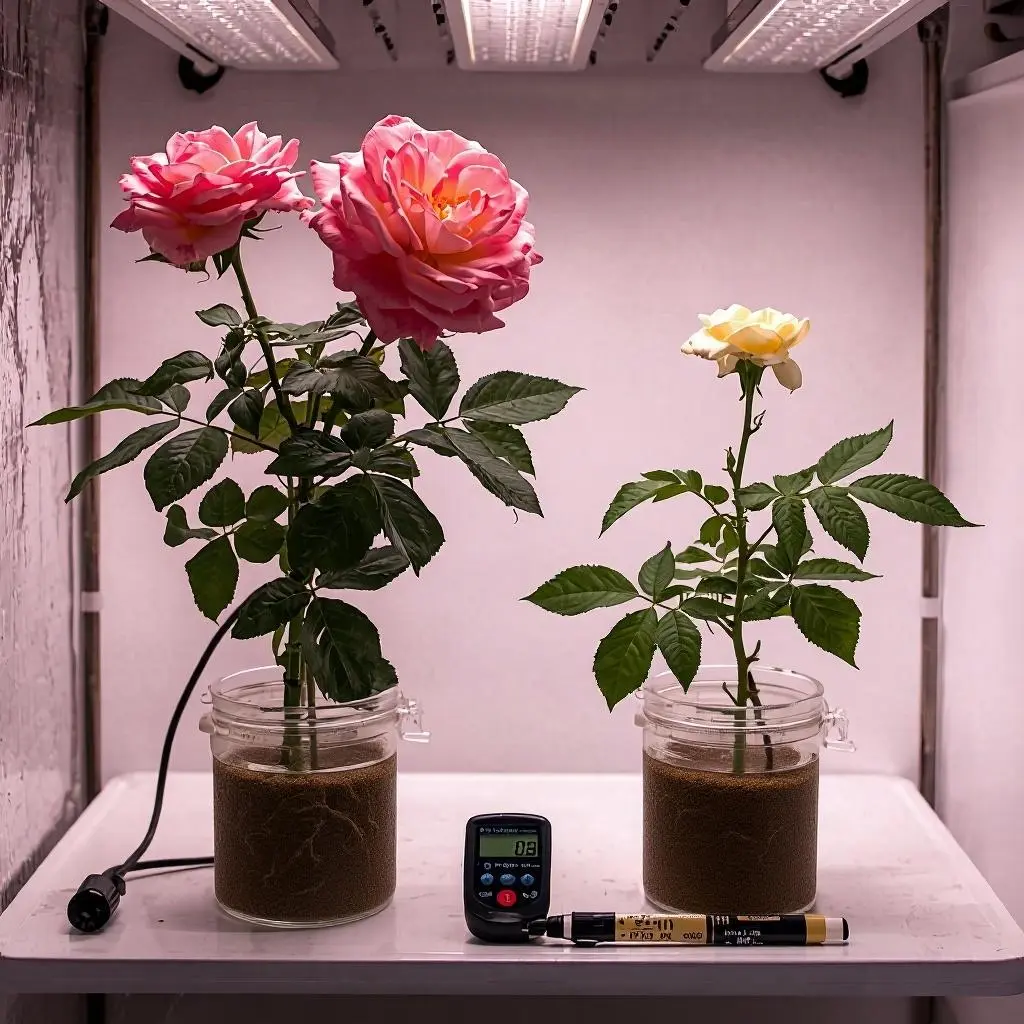
At Grow With Hydroponics, I’ve watched this pattern play out more times than I can count. Two growers. Same hydroponic rose nutrient formula. Same system design. Same cultivar. One gets roses you’d put on a magazine cover. The other gets politely disappointed. The difference? Almost always, it’s the water.
In this guide, you’ll learn:
Why water chemistry directly impacts flower diameter and petal density
Which water parameters actually matter for hydroponic roses
How to test and correct poor-quality water without a chemistry degree
When to use RO (reverse osmosis) and when tap water is fine
If you’re serious about growing larger, more consistent roses hydroponically, this isn’t optional. It’s foundational.
Why How Water Quality Affects Rose Flower Size Is Often Overlooked
When growers chase bigger blooms, they usually blame the usual suspects:
Nutrient ratios
Light intensity
Genetics
Pruning technique
All important. But incomplete.
Here’s what’s really happening in your reservoir:
Water quality determines how accurately your carefully mixed hydroponic rose nutrient formula actually behaves in practice.
In hydroponics, your water isn’t neutral. It’s already carrying dissolved minerals—calcium, magnesium, sodium, and bicarbonates—and those invisible passengers influence:
Final EC (often more than you realize)
Nutrient availability (some elements get blocked)
Root zone pH stability (or instability)
Calcium transport to developing buds
If your starting water is unstable, your bloom size will be too. Simple as that.
How Water Quality Affects Rose Flower Size Through EC & TDS
Let’s start with the most obvious metric: EC.
What Is EC and Why Does It Matter?
EC measures dissolved salts. High EC means more dissolved minerals you didn’t add yourself.
For hydroponic roses, here are the hard numbers:
Ideal starting water EC: below 0.3 mS/cm
Acceptable but workable: 0.3–0.5 mS/cm
Problematic: above 0.5 mS/cm
When starting EC is high, you lose control. You reach target nutrient strength faster, but now you’re guessing what’s actually in there. Calcium levels become unpredictable. Sodium may accumulate silently. Roots experience osmotic stress.
And stressed roots? They produce smaller flowers. Period.
Why High Base EC Shrinks Bloom Size
If your tap water already contains 200–300 ppm of mystery minerals:
Less room for potassium adjustment during bloom
Reduced control over calcium-magnesium balance
Increased risk of nutrient antagonism (one element blocking another)
Roses are extremely sensitive during bud formation. A slight imbalance at the wrong moment, and that flower never reaches full size.
If you’re constantly switching between EC and PPM scales—especially when interpreting water quality reports—our EC ↔ PPM Converter makes unit swaps instant. No math errors. No guessing.
How Water Quality Affects Rose Flower Size Through pH Stability
Flower size isn’t just about feeding more. It’s about feeding consistently.
The Role of Bicarbonates
Hard water often contains high bicarbonate levels. These act like a chemical spring:
They buffer pH upward constantly
Force you to make frequent acid adjustments
Create instability in the root zone
When pH fluctuates daily:
Iron uptake decreases
Magnesium absorption becomes inconsistent
Calcium transport weakens during critical growth windows
And guess what calcium controls directly? Petal strength and bud integrity.
If you’ve ever seen large-looking buds that refuse to fully open—like they’re stuck—unstable water chemistry is often the hidden culprit.
How Water Quality Affects Rose Flower Size via Calcium & Sodium Levels
This is where it gets interesting. And where most growers make mistakes that cost them bloom size.
Too Much Calcium Can Reduce Bloom Size
Yes, roses need calcium. But excess calcium in hard water:
Competes with magnesium uptake
Locks out potassium at root level
Alters nutrient ratios without you realizing it
You think you’re feeding 150 ppm calcium. But your water may already contain 80 ppm before you add anything. Now your bloom nutrient profile is skewed toward calcium away from potassium. And potassium drives flower expansion.
Sodium: The Silent Bloom Killer
Sodium above 50 ppm is trouble. It can:
Reduce root efficiency (less water uptake)
Compete directly with potassium uptake
Cause marginal leaf burn that reduces photosynthesis
Since potassium drives bloom expansion, sodium indirectly shrinks flowers. This is one of the clearest examples of how water quality affects rose flower size in hydroponic systems—and one of the most overlooked.
Testing Water Quality Before Growing Roses Hydroponically
Before you adjust anything, test your source. Guessing is expensive.
Key Parameters to Measure
Start with at least:
EC (or TDS)
pH
Calcium content
Magnesium content
Sodium levels
Bicarbonates (if possible)
Many municipalities publish annual water reports online—free data. Use it.
If you’re unsure how to mix nutrients based on your starting mineral profile—and frankly, most people are—our Hydroponic Nutrient Calculator allows you to adjust inputs and build a solution tailored to your exact water chemistry. Takes the guesswork out.
Can I Use Tap Water for Hydroponic Roses?
Short answer: sometimes. Longer answer: it depends entirely on what’s in it.
Use Tap Water If:
EC is below 0.4
Sodium is under 50 ppm
Calcium is moderate (not extreme)
pH stays relatively stable between waterings
Avoid Tap Water If:
EC exceeds 0.5 consistently
pH swings constantly without explanation
You see salt buildup on system components
Leaves show tip burn despite “correct” nutrient levels
If your tap water is borderline, blending RO water with tap water can restore control without the cost of full RO.
Reverse Osmosis (RO): Is It Worth It for Bigger Roses?
This is the most common question I get. And the answer matters for your wallet.
When RO Makes a Noticeable Difference
RO water:
Removes excess sodium completely
Strips bicarbonates that cause pH drift
Gives you full nutrient control from scratch
Creates predictable EC targets every time
Growers who switch from hard tap water to RO often report:
Increased bloom diameter within one cycle
Improved petal density (flowers feel heavier)
More uniform flowering cycles across plants
Why?
Because the hydroponic rose nutrient formula finally behaves as designed. No hidden variables.
When RO Is Probably Overkill
If your water is already soft and low in EC—say, below 0.3—RO might not significantly improve bloom size. In that case, your focus should shift to:
Lighting intensity and spectrum
VPD balance (more on this below)
Nutrient ratio optimization during transition
Don’t spend money solving a problem you don’t have.
Environmental Factors That Amplify Water Quality Effects
Water quality doesn’t act alone. Environment matters.
High VPD + Hard Water = Smaller Blooms
When vapor pressure deficit (VPD) is too high:
Transpiration increases (plants drink faster)
Calcium movement becomes erratic (it moves with water)
Salt concentration in the root zone rises as water evaporates
Combine that with mineral-heavy water, and stress multiplies fast.
Our VPD Calculator helps you maintain ideal temperature and humidity balance so water uptake supports—rather than limits—bloom expansion. Fix the environment, and suddenly your water problems shrink.
Optimizing Water for Maximum Rose Flower Size
Let’s move from theory to implementation. Here’s exactly what I’d do.
Step 1: Test Before You Plant
Never assume water is neutral. Measure EC and pH at a minimum before you add anything.
Step 2: Decide on RO, Blend, or Tap
Choose based on your mineral load:
EC above 0.5? Strongly consider RO
Sodium above 50 ppm? RO is the fix
Calcium high but sodium low? Try blending 50/50
Step 3: Adjust Nutrient Formula Accordingly
If your water already contains significant calcium:
Reduce calcium nitrate addition proportionally
Recalculate magnesium to maintain balance
Confirm potassium levels remain dominant during bloom
Step 4: Monitor Bloom Response
Look for:
Bud diameter consistency across the plant
Stem rigidity (bent stems = calcium issues)
Petal fullness and thickness
Absence of tip burn on new growth
Changes in flower size often appear within one or two bloom cycles. Be patient. Observe.
How This Connects to Growing Roses Hydroponically
This article supports our larger guide on mastering roses hydroponically.
Water quality affects:
Nutrient accuracy (what you mix vs. what plants get)
Root health (sodium and bicarbonates damage roots)
Flower size directly (potassium availability)
Overall system stability (pH, EC, uptake)
If you haven’t read the full framework yet, it’s called How to Grow Roses Hydroponically. Think of water as the foundation. Everything else—light, nutrients, and airflow—builds on it. A weak foundation means weak results.
Shop Smart: When you’re investing in water quality tools, don’t cheap out on the meter. A reliable EC pen and calibrated pH pen pay for themselves in avoided frustration. Match your purchase to our EC ↔ PPM Converter so you’re reading accurately—not just guessing.
Mastering How Water Quality Affects Rose Flower Size
Here’s what I want you to take away:
Hydroponic roses aren’t smaller because they’re weak. They’re smaller because the chemistry is off.
Once you truly understand how water quality affects rose flower size, you gain control over one of the most overlooked variables in hydroponics. It’s not flashy. It’s not exciting. But it works.
Cleaner water means:
More predictable nutrient ratios
Better potassium uptake during bloom
Stronger calcium transport to developing buds
Larger, more uniform flowers cycle after cycle
At Grow With Hydroponics, we focus on these foundational details because they create repeatable results. Not luck. Not hype. Just clarity. Test your water. Adjust intelligently. Watch your blooms expand. And remember—your starting water really is half the battle. 🌹