Let’s be honest. That plastic clamshell of basil from the grocery store? It’s a tragedy in the making. You’ll use a few leaves, and the rest will turn into a slimy, blackened mess in your fridge. It’s enough to make you want to grow your own. But then you try a pot on the windowsill, and you end up with a spindly, sad-looking thing that tastes more like regret than pesto.
There’s a better way. Basil was practically designed for hydroponics. It’s shallow-rooted, hungry for light, and responds to consistent care like nothing else. When you get it right, the growth is almost indecently fast. We’re talking about leaves so tender and fragrant they’ll ruin you for anything store-bought.
At Grow With Hydroponics, we’ve seen this journey a thousand times. That moment a beginner sees their first hydroponic basil plant bush out after a strategic prune… it’s the start of an addiction. This guide is about getting you to that moment efficiently.
Why Basil and Hydroponics Are a Perfect Match
Basil is a drama queen in soil—prone to legginess, fussy about water, and a magnet for pests. Hydroponics cuts through the nonsense. You’re delivering nutrients and oxygen straight to the roots, on demand. The result isn’t just incremental improvement; it’s a different plant entirely.
You get:
Speed: Growth can be 2-3 times faster. You’re not waiting around.
Flavor: Without soil stress, the essential oils—the flavor—come through cleaner and brighter. Less bitterness, more basil.
Control: No more guesswork about watering. And say goodbye to fungus gnats forever.
It’s less like gardening and more like engineering flavor.
If you’re new to the whole concept, see our piece on Herb Gardening Guide: Indoor & Hydroponic Herb Growing (Beginner to Pro).
Choosing a System: Keep It Simple
You can overthink this. Don’t. Basil isn’t fancy.
Deep Water Culture (DWC): A bucket, an air stone, a net pot. It’s the go-to for explosive growth. The roots sit in a perfectly oxygenated nutrient bath, and the plant goes wild.
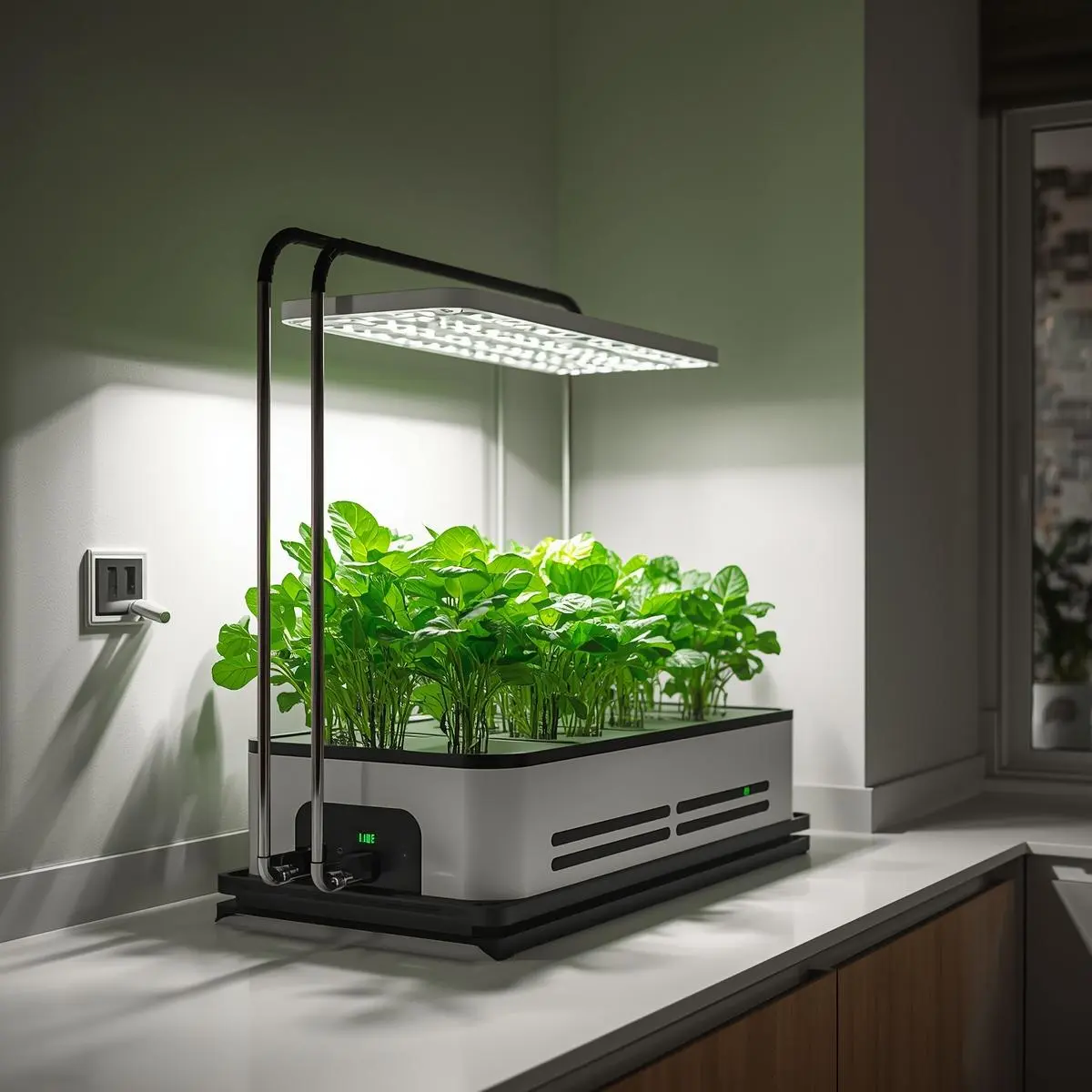
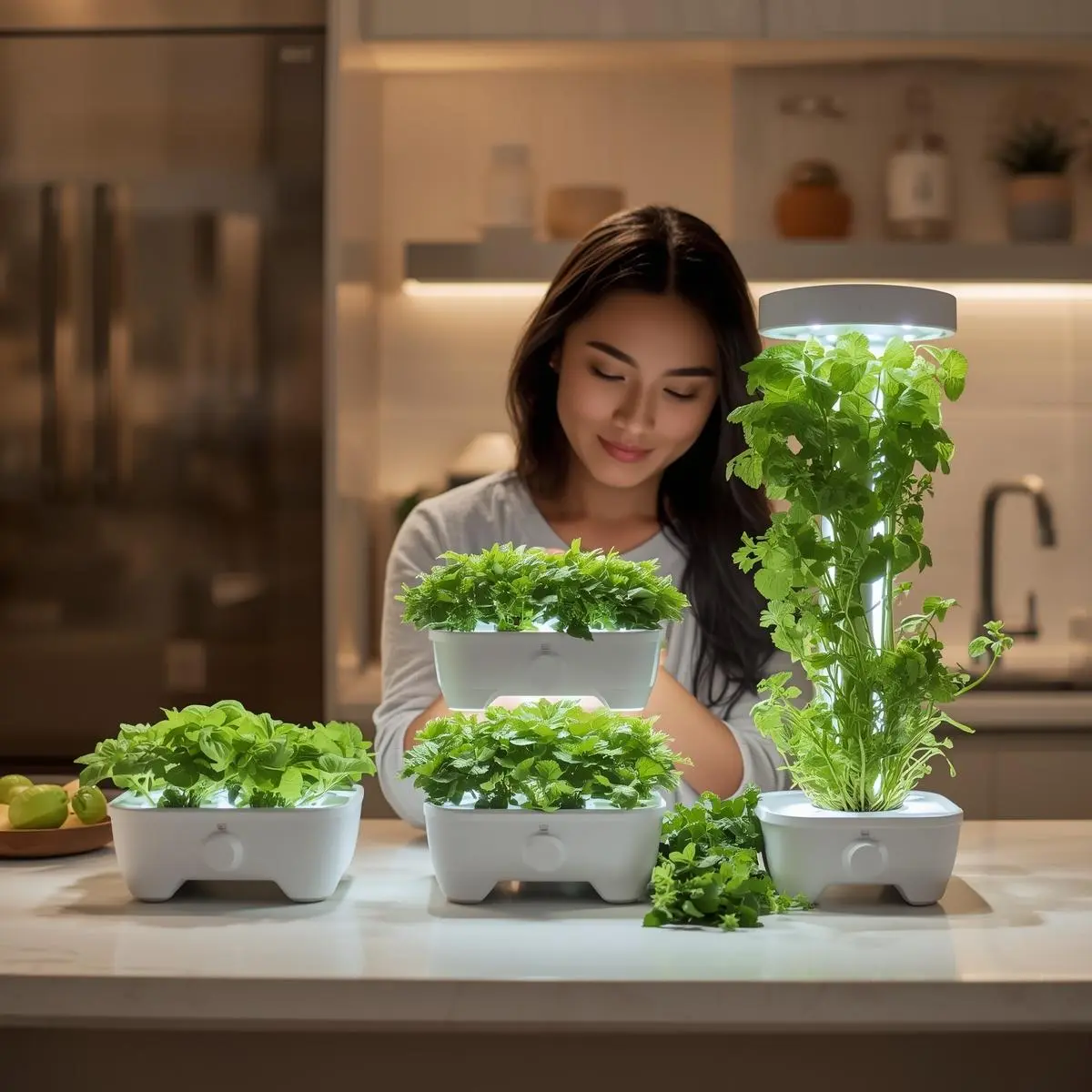
A Good Countertop Kit: The “appliance” approach. Plug and play. Perfect for the kitchen and for building confidence.
NFT or Kratky: Fine, but they demand a bit more finesse with water levels.
Here’s my advice: start with DWC or a reputable kit. Before you even buy a bucket, though, use our Grow Space Planner. Basil gets big and bushy. That cute little setup on your counter needs breathing room, or you’ll have a jungle on your hands.
The Setup: No Magic, Just Method
Start Smart: Seeds in rockwool cubes are the classic move. Keep them warm and humid until they sprout. Buying a seedling? Even easier.
Transplant Gently: Once roots peek out, nestle the cube into a net pot with some hydroton clay pebbles. It’s just for support; the roots will dive for the solution.
Mix Nutrients Like a Chemist (a Relaxed One): Basil is a light feeder. More is not better—it’s a path to bitter, burnt leaves. Use our Nutrient Calculator to mix a mild, balanced solution. Precision here prevents a dozen problems later.
Aerate: In DWC, an air stone is non-negotiable. Roots need to breathe, or they’ll drown and rot. The gentle hum of the pump is the sound of success.
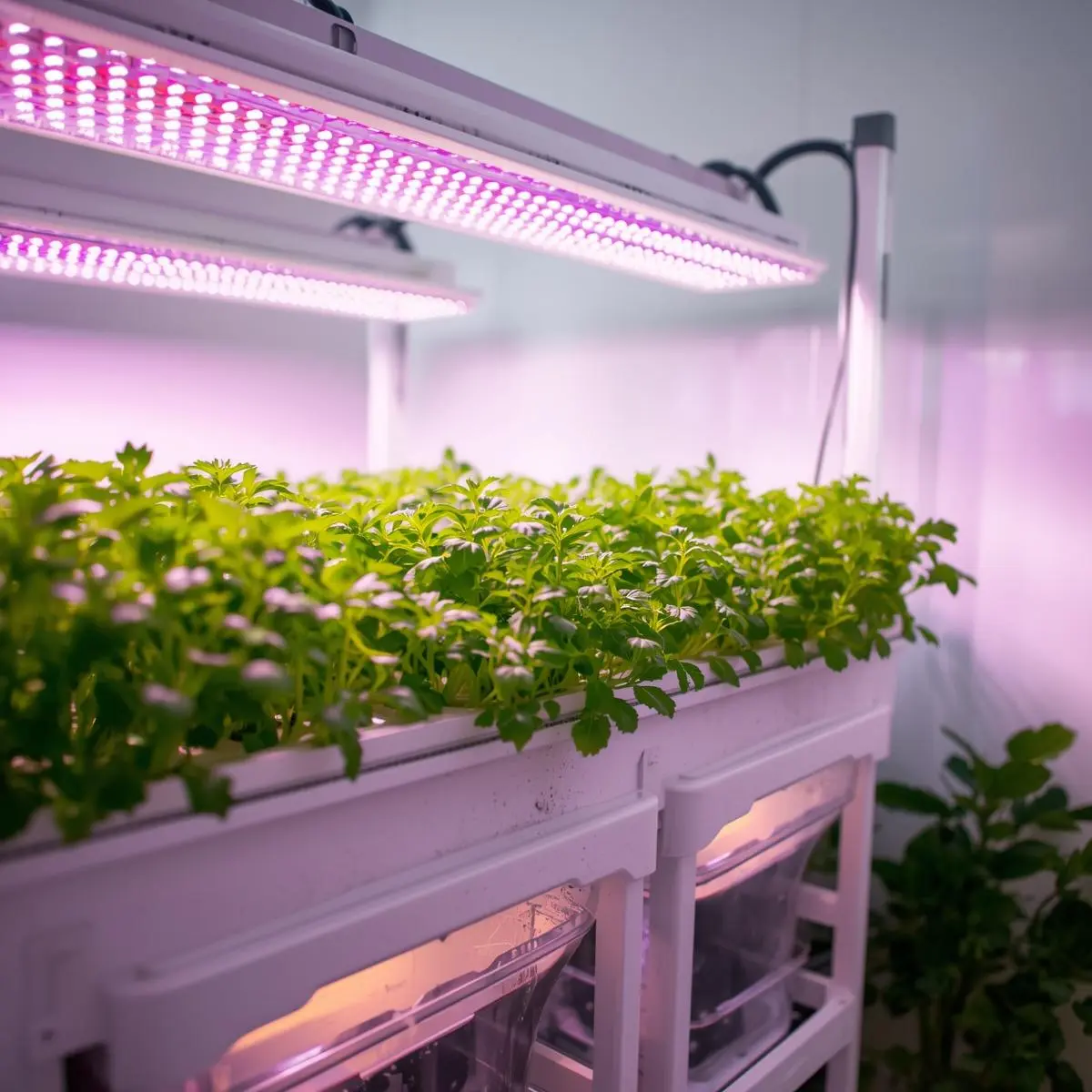
Light It Right: This is where most folks fail. Hang your LEDs 8-14 inches above the plants. But “about a foot” isn’t good enough. Use our DLI Calculator to dial in the Daily Light Integral—it tells you if your basil is getting enough photons for real growth or just putting on a sad, leggy show.
The Trinity: Light, Environment, Food
Light is the engine. Basil needs 14-18 hours of good, full-spectrum light per day. Too little, and it stretches. Too much, and it fries. It’s a balance. Our Indoor Plant Sunlight Analysis System can help you optimize your fixture’s output so every leaf gets what it needs. When you Shop Smart for lights, that DLI Calculator is your secret weapon for matching specs to plant needs.
Environment is the context. Aim for 70-80°F (21-27°C) and 50-70% humidity. Sounds simple, right? But it’s the relationship between temp and humidity that matters. Get it wrong, and you stress the plant, hardening leaves or inviting mold. Our VPD Calculator takes the guesswork out of this dance, showing you the sweet spot.
Food is the fuel. As I said, be gentle. Watch your EC/PPM. If your meter uses different units than your nutrient bottle, just use the EC ↔ PPM Converter and move on. And at the first sign of yellowing or weirdness, don’t just dump in more nutrients. Diagnose. The Deficiency Calculator is like a plant doctor in your pocket—it cross-references symptoms and tells you what to fix.
The Secret: Prune for Power, Not Just Harvest
This is the art. You don’t just pluck leaves. You shape the plant’s destiny.
Wait until it has 4-6 sets of true leaves. Then, find a nice, strong leaf node and cut the stem just above it. Don’t be sentimental. That single cut signals the plant to send energy to the two auxiliary buds at that node, turning one stem into two.
Repeat this every 7-10 days. You’ll create a bushy, productive beast and dramatically delay flowering (which turns leaves bitter). Always harvest from the top, and let the older, lower leaves do their photosynthetic job.
Picking Your Player
Not all basil is the same. For hydroponics, you want vigor and flavor.
Genovese: The classic. The pesto king.
Sweet Basil: Reliable, all-purpose.
Thai Basil: Spicy, licorice notes—incredible for curries.
Lemon or Purple Basil: For fun and flair.
Growing a few types together? Use the Multi-Crop Planner. It helps you manage their slightly different habits so one doesn’t bully the others.
For more on companion planting, see our list of the 25 Best Plants You Can Grow Without Soil.
When Things Go Wrong (They Will)
Yellow Leaves? Likely a nitrogen issue or root zone problem. Check your nutrient strength and root color.
Leggy and Pale? It’s begging for more light. Lower your fixture or get a stronger one.
Tastes Bitter? You probably let it flower, or it’s heat-stressed. Prune aggressively and check your VPD.
Roots Brown and Slimy? Root rot. Boost aeration with an air stone and ensure your water isn’t too warm.
Most problems are about imbalance. The tools I’ve mentioned aren’t crutches; they’re your navigation system.
The Final Leaf
Growing basil hydroponically changes your relationship with food. It’s immediate, it’s abundant, and the flavor is a revelation. It’s not just about having fresh herbs—it’s about having perfect herbs, on demand.
Start with one plant. Learn its rhythm. Then scale up if you want. The principles remain the same.
That’s the whole philosophy behind Grow With Hydroponics. We provide the tools and the grounded, experienced guidance to turn curiosity into confidence, and confusion into harvest. Your kitchen, and your pasta, will never be the same.
Now go get your hands wet.