

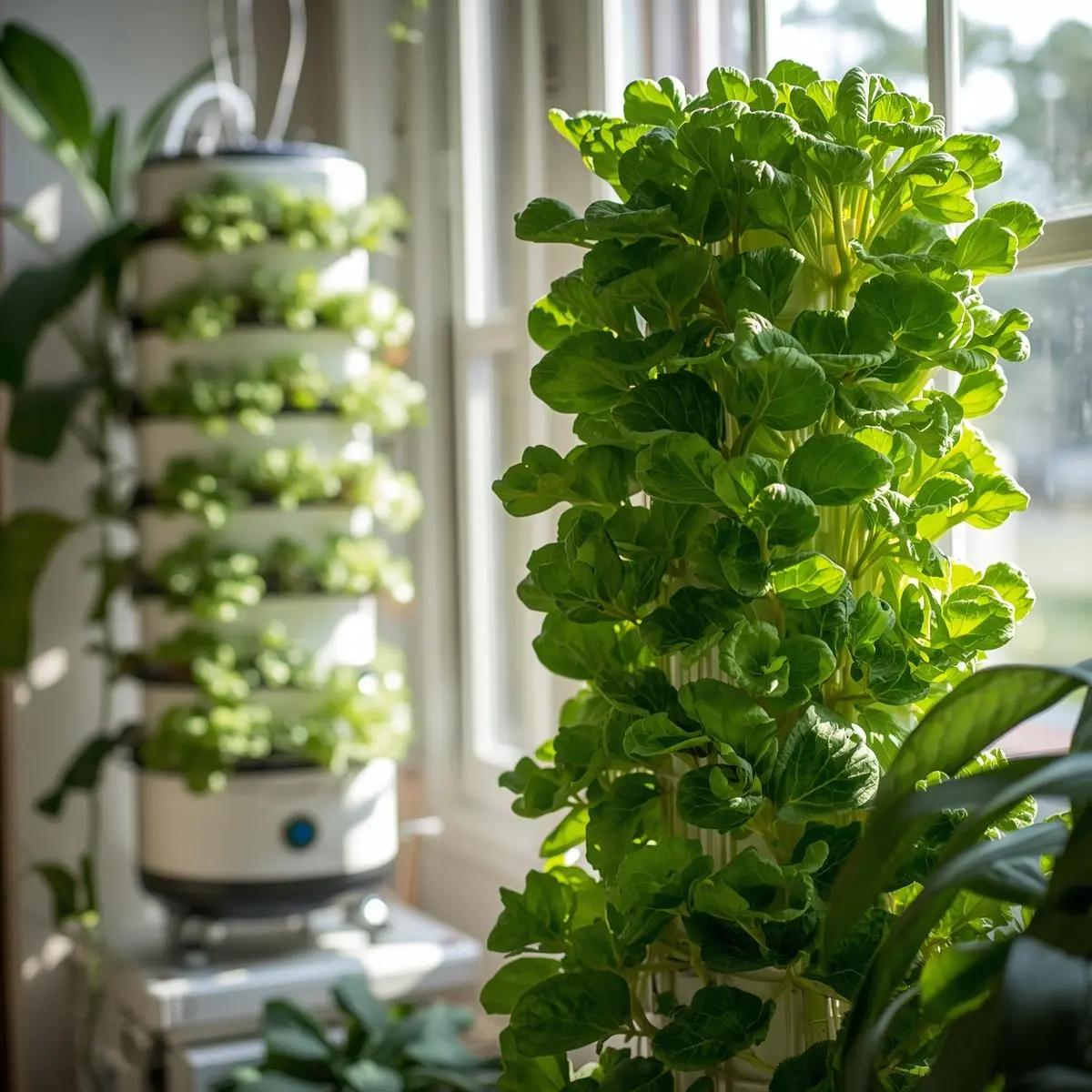
Let’s be clear from the start: vertical hydroponic systems aren’t some flash-in-the-pan gimmick dreamed up in a Silicon Valley incubator. I’ve watched ag-tech fads come and go for over a decade—from my time editing at places that shall remain nameless to now, running this blog. This is different. This is how we grow food now, when efficiency, control, and sheer spatial logic matter more than tradition. It’s the pragmatic marriage of solid horticulture and clever engineering—less “love child,” more “necessary evolution.” It works because, frankly, the old model is breaking under its own weight.
The premise is brutally simple, which is why it’s so often overcomplicated by marketers. You stack plants. You deliver water and nutrients directly to their roots with ruthless precision. You use the cubic space you actually have, not the sprawling horizontal plane you wish you owned. For a business, it’s a land-use calculator that finally spits out a profitable number. For a hobbyist in a city apartment, it’s nothing short of revolutionary—permission to turn that sun-deprived corner or blank wall into a genuine source of food. At Grow With Hydroponics, we’ve chronicled this shift not as cheerleaders, but as skeptical observers who’ve been convinced by the results. It works because it solves a fundamental problem: we need to grow more with less.
What’s a Vertical Hydroponic System, Exactly?
Let’s strip away the glossy brochures. A vertical hydroponic system is, at its core, a spatial hack. It’s a hydroponic setup—soilless, using a nutrient solution—architected to exploit the Z-axis. Soil is out not because it’s evil, but because it’s inconsistent, heavy, and a vector for problems you don’t need. A precise, recirculating nutrient solution is in because it’s controllable.
Think of it as a high-rise apartment building for plants. The goal isn’t just novelty; it’s maximizing yield per cubic foot, not per acre. The “vertical” part is what gets the headlines, but the “hydroponic” part is what does the heavy lifting. It’s not magic. It’s applied botany and fluid dynamics. And getting that balance right is where most people stumble before they even begin.
I’ve lost count of how many new growers I’ve seen dump nutrient solution into a tower without checking the pH first. The plants look great for a week—then everything locks up and you’re staring at yellowing leaves, wondering where it all went wrong.
DIY Vertical Hydroponic Systems: The Power of Personalization
Now, I see those glossy, commercial vertical farming rigs all over social media. They look like something from a sci-fi movie. They’re also massive overkill for someone who just wants a steady supply of un-pesticided herbs and salad greens. You don’t need a six-figure CapEx to grow basil. You need a plan, a free weekend, a trip to the hardware store, and a mild tolerance for the unique smell of PVC cement.
But here’s what the DIY tutorials often gloss over: the freedom to build is also the freedom to fail in spectacularly damp ways. Personalization is power, but only if you’re personalizing around sound principles.
A buddy of mine built a beautiful tower last summer—welded frame, custom gutters, the works. Looked like it belonged in a gallery. He planted 30 lettuce starts and lost half of them in two weeks because he hadn’t considered how light would hit the lower levels. The top row thrived; everything underneath stretched and died. Geometry without biology is just sculpture.
Building Your Own Hydroponic Tower: A Reality Check
Calling it a DIY hydroponic tower garden makes it sound like a craft project. It’s not. It’s a small-scale civil engineering project that involves water and electricity. It’s the perfect, forgiving entry point if you respect it. If you can follow instructions, handle a drill, and aren’t terrified of a little leak troubleshooting, you’re more than qualified.
Materials you’ll need: The list is straightforward—PVC pipes or food-grade buckets, a small submersible water pump, an inert growing medium like clay pebbles or rockwool, a quality hydroponic nutrient solution, net pots, and a simple irrigation timer. The beauty is in the lack of proprietary parts. You own the entire supply chain.
How to build it (The 30,000-foot view): Assemble the vertical frame. Stick the pump in the reservoir at the base. Run the irrigation line up the center or along the side. Pop your seedlings into their net pots filled with medium. The real trick, the one that separates a thriving tower from a moldy, algae-ridden disaster, isn’t the assembly. It’s everything that happens next.
You see, the build is just geometry. The growing is biology. And biology doesn’t care about your beautiful PVC construction. It cares about the environment you create.
This is where the DIY ethos often meets a hard wall. You’ve built the system, but is the light right? Is the nutrient mix correct for the growth stage? Is the room too humid, too dry? You’re now a climate manager, a chemist, and a lighting director. This is the moment where enthusiasm either deepens into real skill or evaporates into a pile of unused equipment in the garage.
And just like that, you’ve stumbled upon the core truth of this whole endeavor: the system is just the hardware. The data—the light, the nutrients, the climate—is the software. And you can’t wing the software.
Commercial Vertical Hydroponic Systems: Scaling the Magic
But maybe your ambitions are… operational. You’re not just feeding a family; you’re looking at a vacant warehouse, a business plan, and the relentless pressure of margins. Here, the game changes utterly. This isn’t about hobbyist satisfaction; it’s about predictability, repeatability, and return on investment. Sentiment has no place here.
The promise of vertical farming at commercial scale is tantalizingly real: significantly more calories produced per square meter, using a fraction of the water, with no pesticides, and local to market. To miss this economic and environmental logic is to willfully ignore the 21st century. But hitting that promise requires a quantum leap from DIY cleverness to industrial-grade precision and control. Your margin for error isn’t just smaller—it’s your profit line.
Key Components of a Commercial Vertical System: The Non-Negotiables
Vertical Towers or Walls: This is your structural backbone. They need to be not just durable, but accessible for planting, maintenance, and harvest. Think ergonomics for your staff. Think modularity for expansion. The shiny metal is nice, but the real design win is in reducing labor time per plant. I’ve consulted for a startup that saved 12 hours a week just by redesigning their tower height so shorter team members didn’t need step stools.
Automated Irrigation & Nutrient Delivery: Hand-mixing and watering are for seedlings and poets. At scale, you need consistency only automation can provide. We’re talking dosing pumps, EC/pH monitors with automated correction, and redundant failsafes. A pump failure in a DIY tower kills a few plants. In a commercial setup, it’s a catastrophic loss. This is where our Hydroponic Nutrient Calculator and EC ↔ PPM Converter stop being handy tools and become essential insurance policies.
Energy-Efficient Grow Lights: This is often your largest operational cost, not capital. The physics are brutal: plants need photons. How you deliver them is everything. LED technology is the only sane choice now, but not all LEDs are created equal. You’re not just buying a light; you’re buying a photon factory with a specific spectrum and efficiency rating. You need to know your Daily Light Integral (DLI) for each crop to the mole. Guessing means you’re either wasting electricity or stunting your yield. Our DLI Calculator isn’t a nice-to-have here; it’s your blueprint for one of your biggest costs.
Integrated Climate Control: This is the silent killer of commercial dreams. Temperature, humidity, airflow—this holy trinity dictates plant health, disease pressure, and transpiration rates. In a dense, stacked environment, a hot spot or stale air pocket is an invitation for powdery mildew or botrytis. It’s not enough to just heat or cool the room; you must manage the vapor pressure deficit (VPD) . VPD is the master metric that ties temperature and humidity together, telling you if your plants can actually breathe properly. Getting this wrong doesn’t just slow growth; it actively stresses plants, ruining quality and yield. Our VPD Calculator exists because this is the number one thing experienced growers geek out on and beginners tragically ignore.
Let’s talk about the elephant in the room: cost. Yes, a serious commercial vertical hydroponic system is a capital-intensive upfront investment. You’re not buying a tool; you’re building infrastructure. But for a production operation, this isn’t an expense; it’s the ticket to play in the modern agricultural landscape. The ROI isn’t in the hardware—it’s in the data-driven predictability, the year-round production cycles, the 90%+ water savings, and the premium your perfect, local produce commands.
Hydroponic Lettuce Towers: The One Crop You Can’t Ignore
Let’s cut the romanticism. You want your first commercial or serious personal win? Grow lettuce. Seriously.
It’s fast (28-35 days). It’s compliant. It has a massive, consistent market. Hydroponic lettuce towers are the training wheels that never actually come off because they work so damned well. Mastering lettuce—truly mastering its DLI, its preferred VPD range, its nutrient curve—gives you the foundational confidence, the cash flow, and the operational rhythm to experiment with the trickier, more profitable stuff later (I’m looking at you, strawberries and specialty herbs).
But here’s the trap: lettuce is easy to grow. It’s hard to grow perfectly and consistently. A bitter leaf, a tip-burn, a bolting head—these are all symptoms of a slight imbalance in your environment or nutrients. This is where a tool like our Plant Health Diagnosis Tool moves from being a diagnostic cheat-sheet to a critical quality control mechanism. It’s the difference between “marketable” and “premium.”
Indoor Hydroponic Wall Gardens: No Backyard? No Problem.
I get it. You live in an apartment. The “backyard” is a fire escape you’re not even supposed to use. This is where vertical hydroponics transforms from a cultivation method into a spatial superpower.
An indoor hydroponic wall garden is the ultimate urban adaptation. It’s a spatial hack that uses the vertical plane you were already paying for but ignoring—a blank wall in a south-facing room, the side of a kitchen cabinet, a freestanding screen that doubles as a room divider. It can be a simple series of stacked, linked NFT channels or an elegant, pre-fab aeroponic unit. The principle is identical: claim the airspace.
But—and you knew there was a but—indoor growing introduces its own unique constraints. Light pollution (for you), noise from pumps and fans, and the ever-present challenge of managing humidity in your living space. You can’t just slap a system on the wall and hope. You need to simulate, to plan. This is the exact reason we built the Grow Space Planner and Grow Space Simulator. Before you drill a single hole or buy a single light, you can model it. Will that 200-watt LED fry your herbs and make your living room feel like a sauna? The simulator helps you ask—and answer—those questions before they become expensive, frustrating realities.
The Toolbox for the Modern Grower: From Guesswork to Governance
This brings me to the heart of what we’ve learned. Vertical hydroponic systems, for all their elegance, introduce complexity. You’re managing a living system in three dimensions, with variables that interact in ways that aren’t always intuitive.
The journey from inspired beginner to proficient grower is the journey from observing problems to anticipating them. It’s the shift from “Why are my leaves yellow?” to “My VPD is drifting out of range for this stage, which will stress the plants and affect calcium uptake.”
That’s not mystical knowledge. It’s applied environmental science. And you don’t need a degree in botany to apply it. You need the right frameworks.
Check out our hydroponic tools suite. This isn’t a casual invitation. It’s the logical next step. These tools are the crystallization of the principles I’ve just outlined:
Use the DLI Calculator to buy the right light and set the perfect photoperiod. Stop guessing if it’s “bright enough.”
Live by the VPD Calculator. Dial in your temperature and humidity to create the perfect engine for plant growth and resilience.
Plan your conquest of space with the Grow Space Planner and test it risk-free in the Grow Space Simulator.
Mix your nutrients with surgical accuracy using the Hydroponic Nutrient Calculator and diagnose issues before they spiral with the Plant Health Diagnosis Tool.
For a deeper dive on lighting fundamentals, see The Ultimate LED Grow Light Guide: Science-Backed Indoor Setup (2026). This suite is what turns an exciting, stressful experiment into a predictable, rewarding practice. It’s the insight, without the 2 AM panic and the dead plants. [Internal Link Suggestion: Curious about nutrient management? Read Hydroponic Nutrient Management for Beginners.
Vertical hydroponics is the future because the old way is wasteful. It’s that simple. For the DIYer, it’s emancipation from poor soil and limited space. For the commercial grower, it’s a spreadsheet that finally makes sense.
The potential is vast, and the tools are getting smarter. But there’s a learning curve—don’t let anyone tell you otherwise. The good news? You don’t have to figure it all out from scratch. We’ve built tools to take the guesswork out of the science.
At Grow With Hydroponics, we’ve watched this space evolve from fringe experiments to legitimate food production. The technology is mature. The question isn’t whether it works—it’s whether you’re ready to stop treating it like a hobby and start treating it like a system.
Shop Smart and get your system going. The best time to start was last year. The second-best time is now, with a clear plan and the right gear.
Frequently Asked Questions About Vertical Hydroponic Systems
How much does a DIY vertical hydroponic system cost to build?
For a basic tower setup, expect to spend $100-$300 depending on materials and pump quality. You can spend less if you’re repurposing containers, but don’t skimp on the pump—a $20 pump that fails in August will cost you more in dead plants than a $50 reliable one.
What are the best plants for vertical hydroponic systems?
Leafy greens (lettuce, kale, Swiss chard) and herbs (basil, mint, cilantro) perform best. Bushier plants like tomatoes or peppers struggle unless you have serious spacing and light penetration. I’ve seen people try to grow vining crops in towers—it usually ends with plants strangling each other.
How often do you need to change the nutrient solution?
Every 2-3 weeks for most systems, or when the EC drifts outside your target range despite topping off. Some growers push longer, but you’re inviting imbalance and pathogen pressure. Think of it as fresh sheets for your plants—you can sleep on old ones, but it’s not ideal.
Do vertical systems use more electricity than horizontal ones?
Often yes, because you’re fighting gravity and light falloff. You’ll need stronger pumps and potentially more lighting to reach lower levels. The trade-off is space efficiency. Our DLI Calculator helps you find the sweet spot between energy use and yield.
Can you grow vertically without grow lights?
Technically yes, if you have a south-facing window with intense light. Realistically, indoor vertical growing without supplemental light ends in stretched, pale plants. Even a modest LED strip makes the difference between survival and thriving.

Dr. Awais Yousaf
Algorithm Specialist and Associate Professor leading R&D at Grow With Hydroponics. With 5+ years of hands-on experience in smart hydroponic systems, deep learning, and sustainable AgriTech, he is passionate about turning small spaces into high-yield indoor farms. Connect at awais.yousaf@iub.edu.pk