

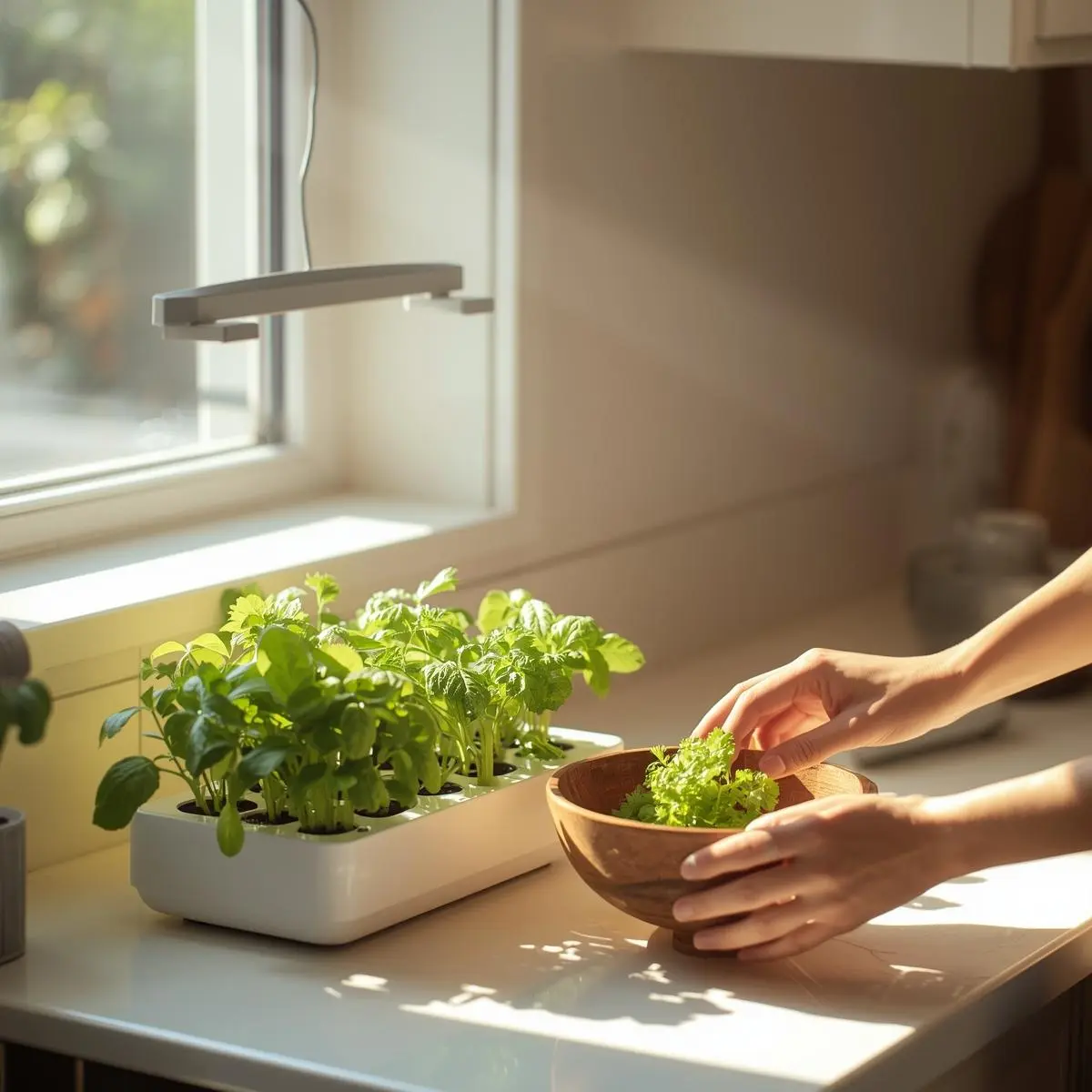
Herb gardening has always been the gateway drug of the grow-your-own movement. There’s a primal satisfaction to it—snipping aromatic basil for a caprese salad, crushing homegrown mint into a glass at midnight. It feels like a small, daily triumph.
But for years, that triumph was conditional. You needed a patch of earth, a decent season, and a willingness to battle slugs. Not anymore.
At Grow With Hydroponics, we’ve watched a massive shift over the last decade: gardeners are moving indoors and ditching soil in favor of smarter, cleaner, and more efficient systems. Hydroponic herb gardening isn’t a futuristic gimmick anymore; it’s the logical, frankly easier, choice for anyone who wants year-round flavor without the backyard.
This guide is that conversation. Whether you’re eyeing a corner of your kitchen counter or a dedicated closet, here’s how to make it work.
What Is Herb Gardening?
Traditionally, it’s cultivating plants for flavor, scent, or remedy. Basil, rosemary, thyme—the usual suspects. We used them in cooking, teas, and yes, even as companion plants to confuse pests in the tomato patch.
But the traditional part is what’s changed. Modern herb gardening can be a pot on a windowsill, a tower in a sunny corner, or a sleek countertop unit that glows like a sci-fi prop. The goal—fresh, vibrant herbs—is ancient. The method? That’s where we’ve gotten clever. For the hands-on builder, our DIY Hydroponic Herb Garden guide walks you through constructing a custom system.
Why Hydroponic Herb Gardening Is Eating Soil’s Lunch
Simple premise: swap soil for a targeted, nutrient-rich water solution. Roots sit in an inert medium like clay pebbles and get fed directly. The results aren’t just slightly better; they’re categorically different.
Growth is faster. Nutrients go straight to the source; no digging required.
You’ll save a staggering amount of water—up to 90% less than soil gardening. Try ignoring that statistic in a drought year.
Say goodbye to most soil-borne pests and diseases. No more fungus gnats as your uninvited kitchen guests.
Year-round harvests. Seasons become a suggestion, not a constraint.
For the urban dweller or the perpetually busy, hydroponic herb gardening offers control. And in a chaotic world, a bit of controlled growth is a beautiful thing.
Indoor Herb Garden Setup: No Green Thumb Required
You don’t need a degree. You need a system. A basic indoor herb garden setup breaks down into a short list: a hydroponic system (more on that below), decent LED lights, the right nutrients, some net pots, and your plants.
The trick isn’t the shopping list—it’s the balance. Light, food, air, humidity… they all talk to each other. Get one wrong, and the others suffer.
This is where smart tools save you from months of frustrating trial and error. Before you buy a single seed, use the Grow Space Planner. It’ll keep you from cramming twelve plants into a space meant for six. Pair it with the DLI Calculator to dial in your lighting perfectly—herbs need a specific “Daily Light Integral” to thrive, not just “bright light.” And for nailing the climate? The VPD Calculator is your best friend for pairing temperature and humidity to avoid stressed, stunted plants.
Can I Use Tap Water?
You can. But should you? Municipal water often contains chlorine and minerals that can throw your delicate nutrient balance out of whack. Most seasoned growers either let it sit out for a day to off-gas or use a simple filter. The key is to know what you’re starting with. Use the EC ↔ PPM Converter to check your baseline. Consistency trumps perfection every time.
Best Herbs for Hydroponic Gardens
Not every herb loves the hydroponic life. Some tolerate it; others absolutely sing in it. These are the all-stars:
Basil: The hydroponic poster child. Grows with joyful abandon. Become a basil expert with our focused guide, How to Grow Basil Hydroponically?
Mint: So hardy it’s almost a weed. Perfect for your first success.
Parsley: A slow starter, but once it gets going, it’s a steady producer.
Cilantro: Ideal for quick, successive grows if you’re a salsa fanatic.
Chives: Neat, compact, and endlessly useful.
Oregano: Loves consistent conditions and rewards you with intense flavor.
What do they have in common? Generally shallow roots, fast growth, and they don’t mind frequent haircuts. If you’re mixing fast-growers like basil with slower ones like parsley, use the Multi-Crop Planner. It’ll help you manage their different rhythms so one doesn’t shade out the others.
Hydroponic Herb Systems for Beginners
Ignore the complex rigs for now. Start simple.
Deep Water Culture (DWC): Roots dangle in oxygenated nutrient water. Stupidly simple, wildly effective for fast growth.
Wick Systems: Passive, no pumps, no power. The ultimate low-stakes learning tool.
Countertop All-in-Ones: The “appliance” route. Plug, play, and harvest. Frankly, this is where most smart beginners should look first—the best kits remove huge chunks of guesswork. When you’re ready to Shop Smart for one, don’t just pick the prettiest. Use our Indoor Plant Sunlight Analysis System to verify the built-in LEDs will deliver what your herbs demand. Compare your options in our detailed review of Hydroponic Gardening Kits for Herbs.
NFT Channels: A shallow stream of nutrients flows past roots. Great for larger, multi-plant setups.
My advice? Start with a single DWC bucket or a countertop unit. Learn its moods. Get one harvest under your belt. The Grow Space Simulator lets you model different systems in your actual space before you spend a dime—a powerful way to avoid buyer’s remorse.
Nutrients: The Lifeblood of the Operation
In soil, feeding is a slow, gentle suggestion. In hydroponics, it’s a direct intravenous drip. Accuracy is non-negotiable.
Don’t eyeball it. Use the Nutrient Calculator. Overfeeding (“nutrient burn”) will crisp your roots. Underfeeding leads to pale, sad plants. Learn the visual cues: yellowing lower leaves often scream for nitrogen; purple stems can beg for phosphorus. When you see something off, the Deficiency Calculator is a faster diagnostician than any forum deep-dive. [Internal Link Suggestion: Mix your solutions with confidence using our Nutrient Solution for Hydroponic Herbs.
Light: Your Indoor Sun
Herbs are light-hungry. Your windowsill likely won’t cut it, especially in winter. LEDs are your new best friend.
But more light isn’t always better light. You need the right amount for the right duration. This is where the DLI Calculator earns its keep. Pair it with the Indoor Plant Sunlight Analysis System to match your fixture to your plants’ exact needs. Aim for 12–18 hours of light per day for most leafy herbs. Too little, and they get leggy, reaching for a sun that isn’t there. Too much, and they get stressed, packing their leaves with bitter compounds. If your space is dim, explore our guide to Low-Light Hydroponic Herb Gardening.
Advanced Optimization: When You’re Ready to Geek Out
Once you’ve nailed the basics, you can tinker. Gentle airflow strengthens stems. Fine-tuning microclimates can boost yield. And for sealed, larger setups, CO₂ enrichment can supercharge growth—use the CO₂ Calculator to see if it makes sense for your scale. These aren’t necessities for a kitchen garden, but they’re the levers you pull when you want to max out your harvest.
But let’s be real: The biggest factor for long-term success isn’t a fancy gadget—it’s consistent care. That means knowing how to clean your reservoir, when to prune, and how to spot trouble early. Lock in your routine with our essential Hydroponic Herb Garden Maintenance.
The Future of Herb Gardening Is In Your Hands
This isn’t really about herbs. It’s about agency. It’s shortening the chain from producer to consumer to, well, you. Hydroponic herb gardening removes the old barriers: seasons, space, weather, and soil quality. Discover the perfect fit for your home among the Best Indoor Hydroponic Herb Garden Systems.
You grow what you want, when you want it. The flavor is brighter, the experience is cleaner, and the learning curve is something we’ve finally managed to flatten with the right tools.
Start small. Stay curious. Let each harvest teach you something. That first leaf of basil you didn’t buy in a plastic clamshell? That’s the beginning.
And when you’re ready to level up, you know where to find the guidance. The team at Grow With Hydroponics built this resource—and all the tools mentioned here—to turn complexity into clarity. Now go get your hands wet—metaphorically, of course. One of the best parts is how clean it all is.

Dr. Awais Yousaf
Algorithm Specialist and Associate Professor leading R&D at Grow With Hydroponics. With 5+ years of hands-on experience in smart hydroponic systems, deep learning, and sustainable AgriTech, he is passionate about turning small spaces into high-yield indoor farms. Connect at awais.yousaf@iub.edu.pk