

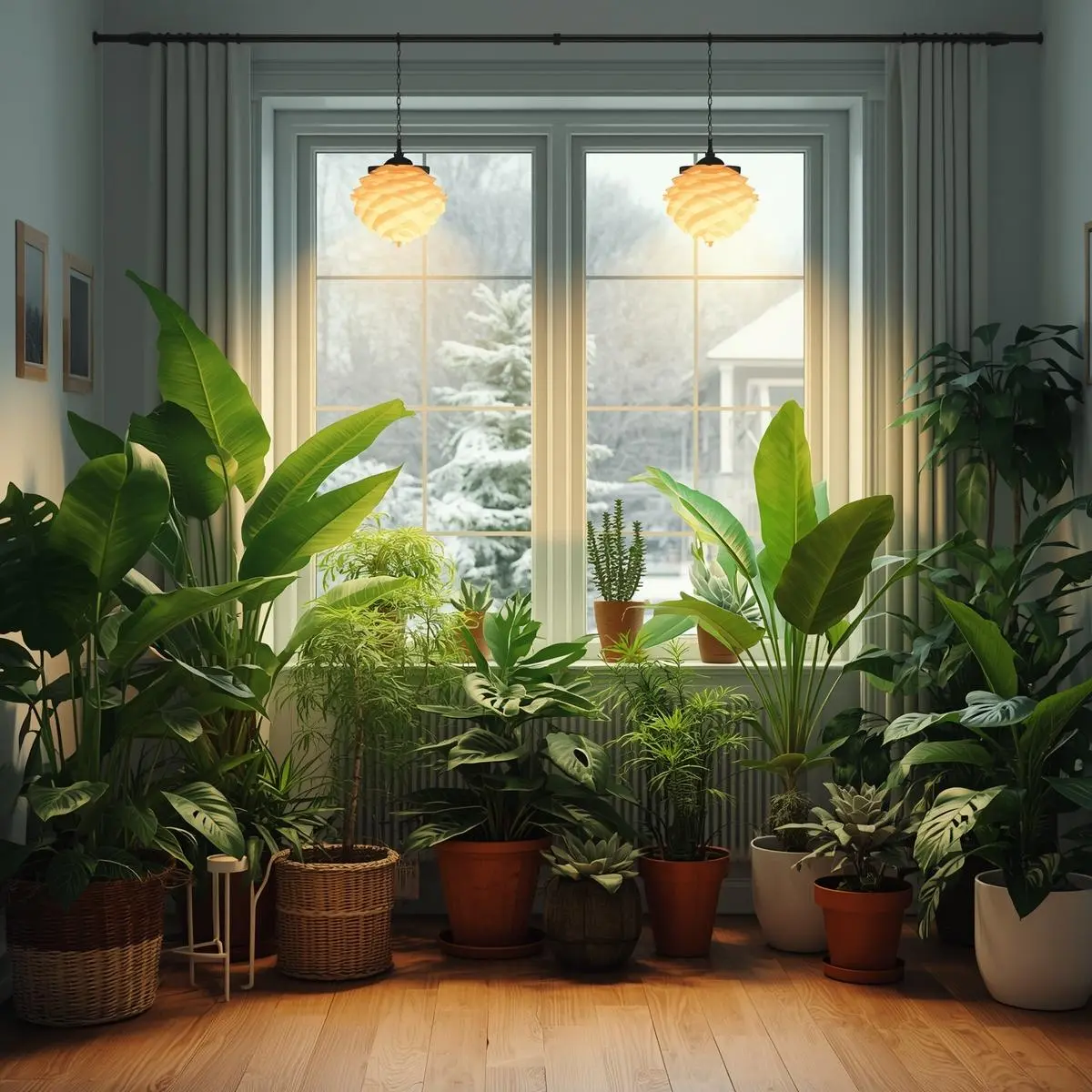
Every indoor plant owner hits this moment. Your Monstera stops growing. Your Fiddle Leaf Fig drops leaves like it’s protesting something.
Succulents stretch into pale, awkward versions of themselves—looking less like plants and more like sad green spaghetti.
Here’s the truth most people miss:
- It’s not (usually) watering.
- It’s not (always) fertilizer.
- It’s light.
What are LED grow lights for house plants?
LED grow lights for house plants are specialized lights that emit plant-usable wavelengths (PAR) to support photosynthesis indoors. More specifically: usable light. That’s exactly where LED grow lights for house plants become essential—not optional. If you’re the type who wants to geek out on every watt and spectrum down to the photon, our Ultimate LED Grow Light Guide: Science-Backed Indoor Setup (2026) has the full deep dive.
At Grow With Hydroponics, we’ve watched this pattern play out for over a decade. Someone spends three months chasing pH problems and root rot. Then they add a proper grow light, and suddenly everything clicks back into place. The plant doesn’t heal overnight, but it starts trying again.
In this guide, you’ll learn:
How LED grow lights actually work
How to choose the right one
Exactly how much light your plants need
Mistakes that quietly kill indoor plants (and how to avoid them)
What Are LED Grow Lights for House Plants (And Why Not Regular Bulbs)?
Let’s clear this up first.
A regular LED bulb lights up your room. A grow light feeds your plant.
The difference comes down to PAR (Photosynthetically Active Radiation) —the specific light spectrum plants actually use. A standard bulb throws off plenty of brightness, but most of it is in wavelengths your plant ignores.
Key Light Types Plants Need
Blue light (400–500nm) → Keeps plants compact and strong. Without it, stems get lanky.
Red light (600–700nm) → Drives growth and leaf expansion. Think of it as the engine.
Green light (500–600nm) → Penetrates deeper into foliage. Not useless—it reaches lower leaves that red and blue miss.
A good LED grow light for house plants delivers all three in balance.
Why Are Lumens Useless for LED Grow Lights for House Plants?
This is one of the biggest mistakes beginners make. And frankly, it’s an easy one to fall for—because lumens are printed right on the box.
Lumens measure brightness for human eyes—not plants.
A light can look blindingly bright to you and still starve your plant.
Instead, focus on:
PPF (Photosynthetic Photon Flux) → Total light output from the fixture. Think of it as the bucket size.
PPFD (Photosynthetic Photon Flux Density) → Light actually reaching your plant. This is what matters at the leaf level.
Here’s a real example: I’ve seen someone use a 2,000-lumen shop light and wonder why their succulents stretched.
The light looked great in the room. The plants? They disagreed.
Why LED Grow Lights Are the Best Choice for Houseplants
There’s a reason LEDs dominate modern indoor growing. It’s not hype—it’s physics.
Energy Efficiency
Uses significantly less power than fluorescent or HID
Produces more usable light per watt
Your electricity bill won’t jump dramatically
Low Heat Output
Can be placed closer to plants without cooking them
Reduces risk of leaf burn
Safer for indoor environments (no fire hazard from hot bulbs)
Spectrum Control
Engineered specifically for plant growth
Mimics natural sunlight effectively—without the midday heat spike
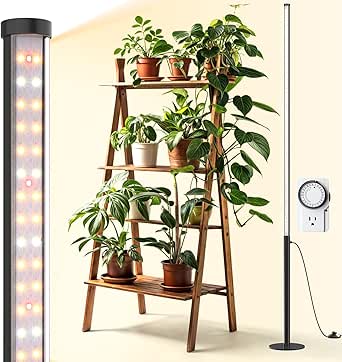
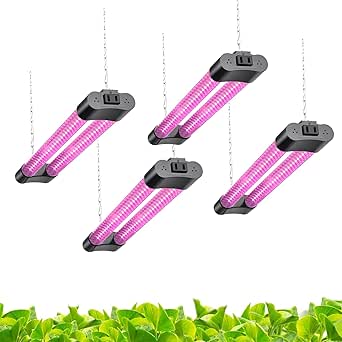
Best LED Grow Lights for House Plants (Top Picks 2026)
These are the best LED grow lights for house plants in 2026, carefully selected for performance, efficiency, and ease of use.



What Does “Full Spectrum” Mean in LED Grow Lights for House Plants?
You’ve probably seen this term everywhere. It’s become the “all-natural” of the grow light world—meaningful when used correctly, meaningless when slapped on a bad product.
Here’s what it actually means:
A full-spectrum LED grow light mimics natural daylight across all useful wavelengths. It doesn’t just blast red and blue. It gives you something that looks like white light and grows like sunlight.
Kelvin Guide for Indoor Plants
| Kelvin Range | Best For | Real-World Example |
|---|---|---|
| 3000–3500K | Flowering plants | Blooming orchids, African violets |
| 4000K | Balanced growth (ideal for homes) | Monstera, Pothos, Philodendron |
| 5000–6500K | Leafy growth and vegetative stage | Herbs, leafy greens, seedlings |
For most houseplant owners: 4000K is the sweet spot. It looks natural in a living room and keeps foliage happy.
How Much Light Do House Plants Need with LED Grow Lights?
Not all plants want the same light intensity. This is where beginners usually go wrong—they buy one light and assume it works for everything.
PPFD Requirements by Plant Type
| Plant Type | Examples | PPFD Range (µmol/m²/s) |
|---|---|---|
| Low Light | Snake plant, Pothos, ZZ plant | 50–150 |
| Medium Light | Monstera, Philodendron, Ferns | 150–350 |
| High Light | Succulents, Citrus, Ficus | 400–800+ |
This is where most setups fail—not because you chose the wrong plant, but because you chose the wrong intensity for that plant.
How Long Should You Run LED Grow Lights for House Plants?
Duration matters just as much as intensity. Run lights too long, and you stress the plant. Run them too short, and you get slow, weak growth.
Ideal Lighting Duration
Most houseplants: 12–16 hours/day
Always include a dark period (plants rest, just like you)
Avoid 24/7 lighting—it confuses biological rhythms and stresses plants
Want precision? Use the DLI Calculator from Grow With Hydroponics to dial in the exact daily light your plants need. It’s one of those tools that feels unnecessary until you use it once and realize you’ve been guessing for years.
How Close Should LED Grow Lights Be to House Plants?
Distance changes everything. And I mean everything.
Light follows the inverse square law. That sounds fancy, but here’s the practical reality:
Double the distance = one-quarter the intensity.
Move a light from 6 inches to 12 inches away, and your plant gets 75% less usable light. Most people don’t believe this until they measure it themselves.
Placement Guide
Seedlings: 4–6 inches
Succulents: 6–12 inches
Foliage plants: 12–24 inches
Always acclimate slowly. I’ve seen perfectly healthy plants go into light shock because someone moved a light from 24 inches to 8 inches overnight. Increase intensity over 5–7 days.
Best LED Grow Lights for House Plants (What to Look For Before Buying)
This is where most people waste money. The market is full of cheap fixtures with big promises and tiny actual output.
Smart Buying Checklist
✔ Real wattage (ignore “equivalent” claims—they’re marketing, not science)
✔ Metal heat sink (plastic fixtures trap heat and fail faster)
✔ Full-spectrum output (not just blurple)
✔ Safety certifications (UL, CE, ETL—don’t skip this for a cheaper price)
✔ PPFD data transparency (if a company hides their numbers, assume the worst)
Shop Smart Tip
When you Shop Smart for LED grow lights for house plants, don’t just pick the brightest option on Amazon. Bright to your eyes doesn’t mean effective for your plant.
Match the light to your plant needs using the Indoor Plant Sunlight Analysis System—it helps you understand how much light your space already gets before you add artificial lighting. You might find your south-facing window is doing more work than you thought.
Common Mistakes with LED Grow Lights for House Plants
Even with the right light, things can go wrong. Here’s what I see most often.
Overwatering After Adding Light
People add a grow light, see new growth, and immediately water more. Bad move. More light doesn’t automatically mean more water uptake. Always check soil moisture first.
Ignoring Nutrients
Plants under artificial light often grow year-round. That means they need year-round feeding—just at lower concentrations. Don’t starve a plant that’s working hard.
Placing Lights Too Far
Distance kills intensity faster than you think. That cheap light at 24 inches? It’s probably doing almost nothing.
Sudden Exposure
Going from window light to 400 PPFD overnight is like walking from a dark movie theater into noon sun. Your plant needs time to adjust.
Real example: A beginner once told me their new grow light “burned” their Monstera. The light was fine. The problem was they went from 8 hours of weak window light to 14 hours of intense LED in one day. The plant didn’t burn—it shocked.
How to Make LED Grow Lights Look Good Indoors
Good news—you don’t need a “grow room” aesthetic anymore. The old days of purple glow and aluminum reflectors are fading.
Modern Options
Screw-in grow bulbs for regular lamps (just watch the distance)
LED strips under shelves for a clean, invisible look
Minimalist halo lights that look like design objects
The goal: blend function with design. A light that works but annoys you every time you see it? You won’t use it consistently.
FAQ: LED Grow Lights for House Plants
Can I use a regular LED bulb instead?
Yes—but it’s far less efficient. A regular bulb might keep a low-light plant alive, but it won’t thrive. Grow lights are optimized for plant-useful wavelengths. Use a regular bulb in a pinch, but don’t expect miracles.
Will LED grow lights increase electricity bills?
Not significantly. A 20W light running 12 hours/day costs roughly $1–2 per month depending on your rates. Most houseplant setups cost less than a single cup of coffee monthly.
Can LED grow lights burn plants?
Yes—too much intensity can cause light bleaching (leaves turn pale or yellowish). Always adjust distance and duration gradually. Start farther away and move closer over a week.
Is purple light better than white light?
Not anymore. Old “blurple” LEDs were a compromise. Full-spectrum white LEDs are now more effective and visually appealing. Plus, you can actually see your plant’s true colors for pest and health checks.
Build a Predictable Indoor Growing System
Healthy houseplants aren’t about luck—they’re about control.
With the right LED grow lights for house plants, you’re no longer dependent on seasons, windows, or weather. A cloudy week doesn’t stall growth. A north-facing apartment doesn’t limit you. You’re creating a controlled growing environment inside your home. At Grow With Hydroponics, we believe once you understand light, everything else in plant care becomes easier—and honestly, more enjoyable. The guessing stops. The random plant deaths stop. You just… observe, adjust, and watch things grow.
Start simple. Adjust gradually. Observe closely.
Your plants will tell you the rest. Most people just aren’t listening yet.