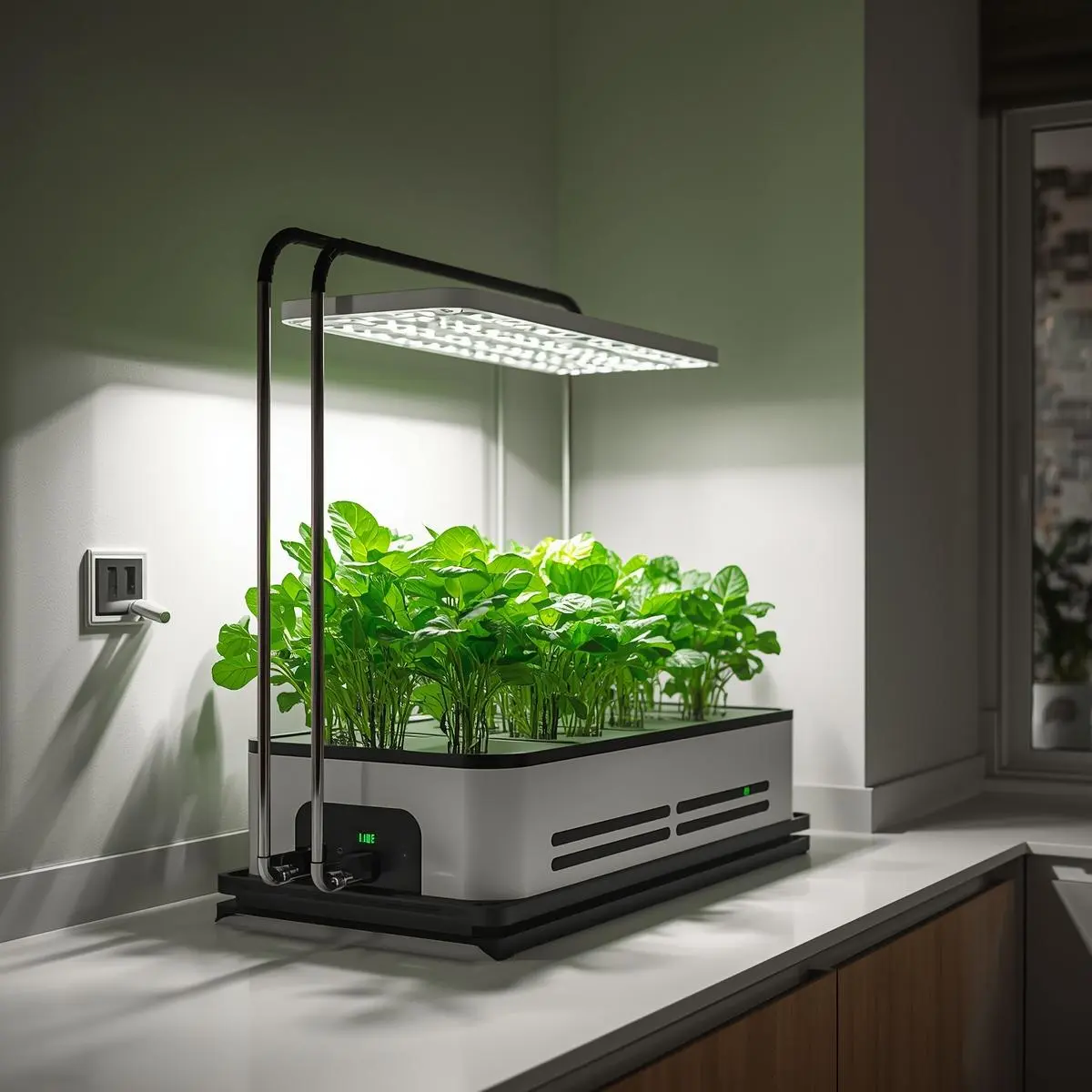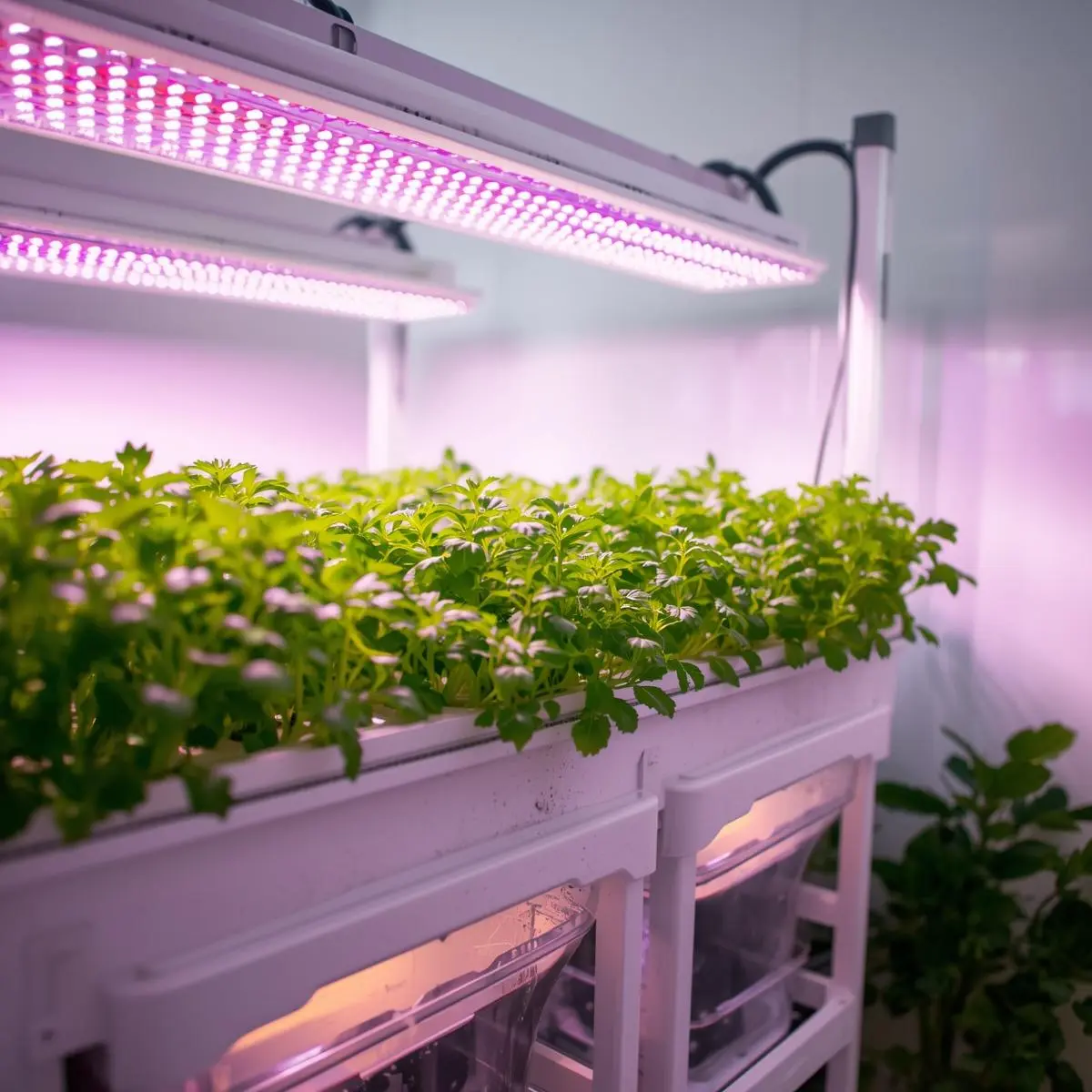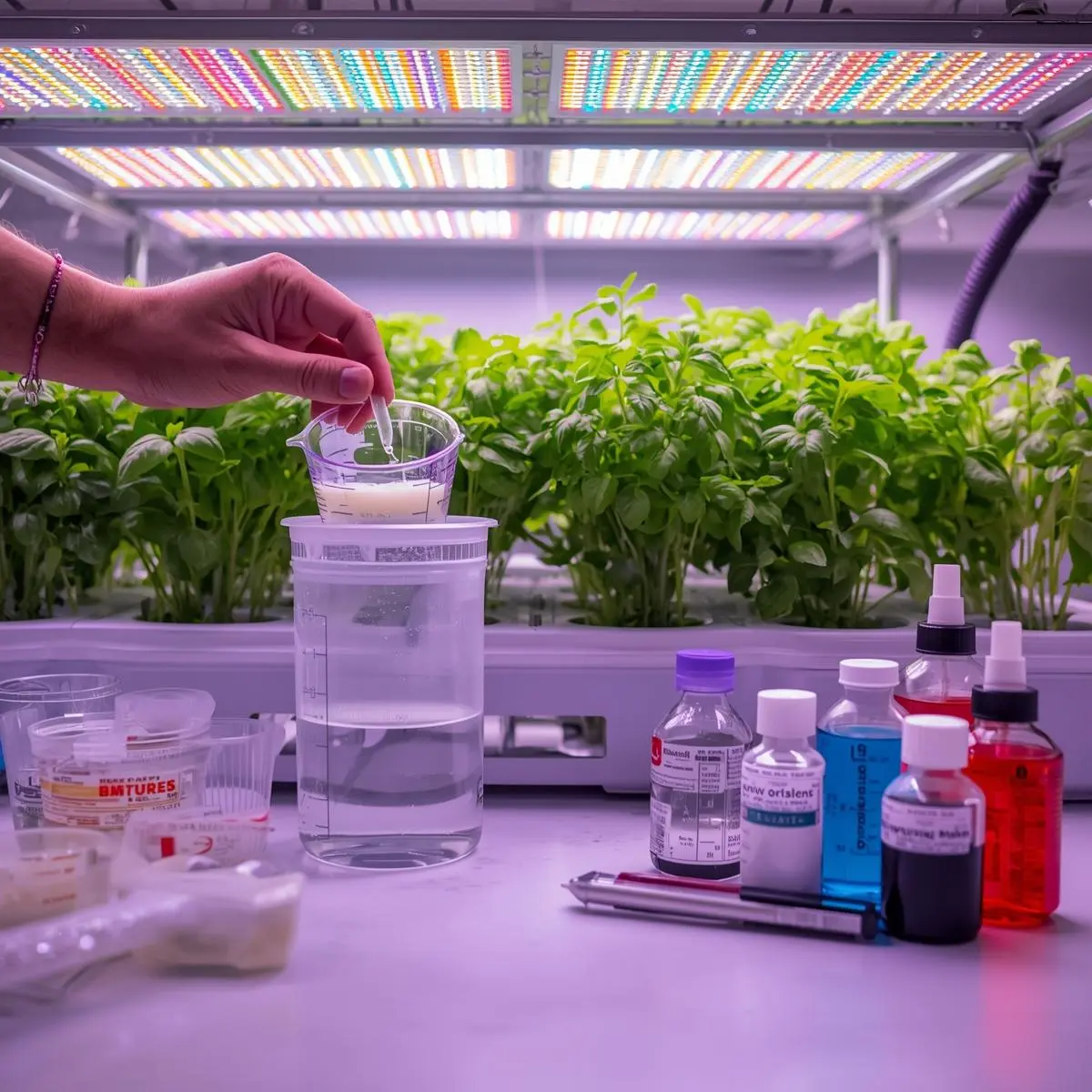
Look, you can nail the lighting, build a gorgeous system, and start with the healthiest seedlings—but if your nutrient soup is wrong, your herbs will always disappoint. They’ll be bitter, stunted, or just… sad.
In our world, the nutrient solution is the soil. It’s everything. And that makes it the single most critical variable on your bench. Over at Grow With Hydroponics, we’ve edited more troubleshooting guides than I can count. The pattern is clear: most struggles aren’t about hydroponics being rocket science. If you’re just starting this journey, see our piece on Herb Gardening Guide. They’re because nutrients feel like alchemy. The good news? Once you grasp what herbs actually crave, mixing becomes straightforward. Almost boring.
Here’s what we’re covering:
The anatomy of a hydroponic nutrient solution.
Why herbs are the vegetarians of the plant world.
A no-fuss mixing protocol.
The EC/PPM sweet spots for flavor.
How to diagnose and fix common issues.
Keeping your reservoir from turning into a science experiment.
Consider this your blueprint.
What Is a Hydroponic Nutrient Solution?
Strip away the jargon, and it’s simple: water infused with the minerals plants usually scavenge from soil. The full suite includes macronutrients (Nitrogen for leaves, Phosphorus for roots, and Potassium for vigor), secondary nutrients like calcium and magnesium, and a trace cocktail of micronutrients—iron, zinc, copper, and others.
In soil, these trickle out unpredictably. In hydroponics, you deliver them all at once, on demand. That’s power—but with great power comes the great responsibility of not throwing the balance out of whack.
Why Herbs Need a Different Formula
Herbs are leaf machines. You’re not growing fruit; you’re cultivating greenery. This fundamental truth dictates everything:
Lower overall nutrient strength. They’re light eaters.
Higher nitrogen focus. It’s all about the foliage.
Minimal phosphorus. Save the bloom boosters for your tomatoes.
Consistent, gentle feeding. Think of it as a steady drip, not a feast.
Overfeed them, and you’ll get the telltale signs: a harsh, bitter flavor, dark and brittle leaves, and roots that look like they’ve been through a war. Herbs thrive on restraint.
Choosing the Right Nutrients
Walk down any garden aisle and you’ll see two main camps. The two-part formulas (A & B) are your reliable, beginner-friendly workhorses. The three-part systems offer finer control for the tinkerers.
Shop Smart here: Always look for blends labeled for leafy greens, herbs, or vegetative growth. Actively avoid anything marketed for flowering or fruiting crops or as a “bloom booster.” Those are loaded with phosphorus and potassium your basil simply won’t use—it’s like feeding a marathoner a pure sugar diet.
How to Mix a Nutrient Solution for Herbs
The goal isn’t complexity; it’s precision. Skip the guesswork and use our Nutrient Calculator. It crunches the numbers for your reservoir size, plant type, and growth stage, spitting out exact measurements. It’s the difference between “about right” and “perfect.”
The basic workflow is timeless:
Fill your reservoir with clean water.
Add Part A. Stir.
Add Part B. Stir.
Measure your EC or PPM.
Adjust if needed.
Finally, check and set your pH (target 5.8–6.3).
A crucial pro-tip: never mix those concentrated parts together before diluting. They’ll react and lock each other out—a costly beginner’s mistake.
Ideal EC / PPM Ranges for Hydroponic Herbs
These plants are lightweights. Here’s the concise breakdown:
| Herb | EC Range | PPM Range (500 scale) |
|---|---|---|
| Basil | 1.0 – 1.6 | 500 – 800 |
| Mint | 0.8 – 1.4 | 400 – 700 |
| Parsley | 0.8 – 1.2 | 400 – 600 |
| Cilantro | 0.6 – 1.2 | 300 – 600 |
| Chives | 1.0 – 1.4 | 500 – 700 |
But here’s the rub: not all meters use the same scale. Confusing ppm-500 with ppm-700 is a fast track to overfeeding. Our EC ↔ PPM Converter is the quick fix—it translates units instantly so your measurements are always accurate.
How Often Should You Change the Solution?
Let’s be practical. For most home herb setups:
Top off with plain water every few days as it evaporates.
Do a full reservoir swap every 2-3 weeks.
Change it sooner if things get funky—a suspicious smell, slimy roots, or algae setting up shop. A fresh solution resets the balance and dissolved oxygen, which roots desperately need.
For a full schedule, see our guide on Hydroponic Herb Garden Maintenance.
Diagnosing Nutrient Problems
Even the best mixes drift. Your plants will talk to you if you learn the language.
Yellow lower leaves? Classic nitrogen plea. Nudge your strength up.
Purple stems? Could be phosphorus stress or just a cold root zone. Check temps.
Burned leaf tips? You’re overdoing it. Dilute with fresh water.
Pale, slow growth? Could be underfeeding, or more likely, insufficient light.
Don’t play the guessing game. Our Deficiency Calculator lets you input symptoms and get a targeted fix in seconds. It’s like a clinic for your plants.
Nutrients + Light = Real Growth
This is where people stumble. Nutrients and light work in concert. Provide weak light, and your herbs can’t use those salts you’ve so carefully measured. They just build up, causing stress.
First, use the DLI Calculator to ensure your herbs get enough daily light for the nutrient level you’re providing. For the truly meticulous, our Indoor Plant Sunlight Analysis System helps optimize photon distribution across every leaf. When you Shop Smart for grow lights, always pair your fixture choice with the DLI Calculator. Matching intensity to nutrient strength is the secret to avoiding stressed, bitter herbs.
Environmental Impact on Nutrient Uptake
It’s not just what’s in the water—it’s what’s happening in the air. Cold roots absorb slowly. Hot, dry air makes plants guzzle water, concentrating salts internally. The result? Lockout, where nutrients are present but unavailable.
This is a job for the VPD Calculator. It optimizes the relationship between temperature and humidity, ensuring your plants are in the perfect state to drink up their meal efficiently.
Scaling Nutrient Management
A single basil jar is one thing. A multi-tier rack with five herb varieties is another. Consistency becomes your biggest challenge.
Tools are your leverage. Use the Grow Space Planner to logically place reservoirs. The Multi-Crop Planner tracks differing appetites. Before you even mix a gallon, the Grow Space Simulator lets you test feeding strategies virtually. As you scale, get militant: label everything, keep a mix log, and schedule change days. Structure is what makes abundance repeatable.
Feed Simply, Grow Abundantly
Frankly, hydroponic herbs don’t need complexity. They crave consistency.
When you mix with accuracy, feed with a light hand, refresh your reservoir religiously, and balance light and environment, you unlock it all: explosive growth, robust leaves, vibrant flavor, and plants that just keep giving.
Your nutrient solution isn’t just plant food. It’s the foundation. And when you’re ready to strip away the last of the guesswork, the tools and deep-dive resources at Grow With Hydroponics are here to turn your precision into palpable results.
Great flavor, truly, starts at the roots.