Are Roses Even Suitable for Hydroponics?
Let’s bury the romantic anachronism right here: the notion that roses need soil is a sentimental attachment, not a botanical fact. What they need—a steady supply of specific nutrients, abundant oxygen to their roots, consistent moisture, and intense light—can be delivered with far more precision and reliability without dirt. Soil is just one delivery mechanism, and frankly, it’s a messy, inconsistent one.
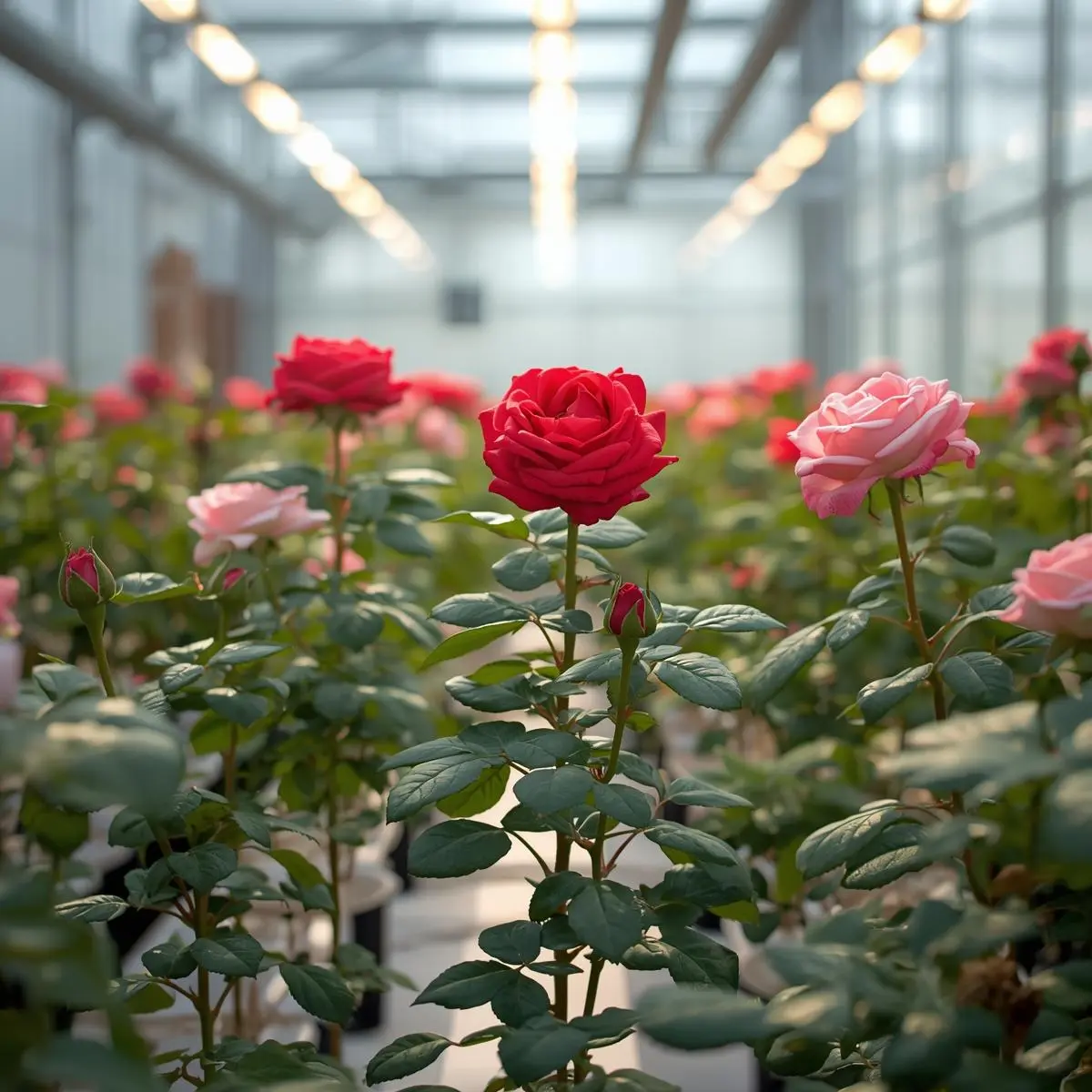
I’ve walked the endless, silent rows of Dutch greenhouse complexes where the only sound is the hum of climate control. What you see there isn’t magic; it’s applied plant physiology. The stems are unnervingly straight and long. The bloom cycles aren’t seasonal; they’re scheduled, relentless. You can spot the growers—they have the relaxed posture of people who’ve eliminated about 70% of the classic, back-breaking variables. They left the soil, and its attendant chaos, firmly outside.
This isn’t speculative futurism. It’s reproducible plant science, and it works just as effectively in a converted closet or a corner of your basement as it does in a multi-acre glasshouse. The principles don’t scale down, they concentrate.
This guide, from the desk at Grow With Hydroponics, exists to strip away the hype and the hesitation. We’re covering only the systems that hold up under the weight of a woody perennial, diagnosing the expensive mistakes you’re likely to make first, and pointing you to the tools that will save you from them. Consider this your no-fluff, soil-free manual from someone who’s made—and fixed—most of the errors already.
Why Bother? (The Soilless Advantage, Quantified)
You’re probably thinking: But roses love soil! They’re traditional. They need that earthy foundation.
Let’s reframe that. What roses “love” is not a specific medium, but a specific condition: their roots demand a constant, delicate balance of moisture and air. In nature, only perfect, loamy, well-drained soil provides that. In our gardens, that perfect soil is a fleeting miracle. More often, we give them clay that drowns them or sand that starves them.
Hydroponics doesn’t imitate imperfect soil; it bypasses it to create the ideal root environment directly. You’re giving the plant what it actually craves, not what tradition dictates.
The research—from universities like Cornell and Wageningen, and from decades of commercial floriculture data—boils the advantage down to one word: control. Not just tweaking, but absolute, dialed-in command.
Nutrient Control: In soil, a rose must expend energy sending roots out to search for food, and what it finds is a crapshoot. In hydro, nutrients are delivered in their ionic form, directly to the root zone, in the exact ratio needed for the growth stage. Need a burst of potassium for budding? You adjust the reservoir. It’s the difference between hoping your compost has the right stuff and writing a prescription.
Water & Oxygen Control: This is the quiet revolution. In a well-designed system like Dutch Buckets or aerated drip, the roots are constantly moist but never waterlogged, sitting in an oxygen-rich environment soil can’t match. This alone can reduce water use by up to 80-90% compared to traditional irrigation, because every drop is delivered to the roots and recycled. The plant never experiences drought stress, and the dreaded “wet feet” that lead to root rot are engineered out.
Disease Elimination: This is the practical game-changer. Soil-borne pathogens—Fusarium wilt, Phytophthora root rot, nematodes—simply have no vector. You start with a sterile medium. The “soil sickness” that plagues traditional rose beds isn’t just reduced; it’s erased. Your IPM strategy shifts from reactive warfare to vigilant border control.
But the real, tangible difference you’ll feel as a grower is predictability. You are no longer at the mercy of an erratic season, a weird patch of clay, or a mystery blight. You control the triggers. Flowering is initiated by adjusting the light schedule (photoperiod) and the nutrient blend, not by waiting for June. You’re not just a gardener hoping for the best. You’re a grower engineering an outcome.
It’s a fundamental shift in perspective. And it starts by choosing the right foundation—or rather, by building a better one from scratch. The next step is selecting the best system to host this controlled environment, a decision that hinges less on gadgetry and more on understanding the rose’s stubborn, perennial nature.
Hydroponic Roses vs. Soil Roses: What’s the Real Difference?
Let’s be blunt.
Factor | Soil Roses | Hydroponic Roses |
|---|---|---|
| Growth Speed | Moderate, seasonal. | 25–40% faster. Continuously. |
| Bloom Control | Hope and prayer. | Calendar-scheduled. |
| Disease Risk | High. It’s in the dirt. | Low. Sterile systems start clean. |
| Nutrient Precision | Guesswork, then runoff. | Exact, measurable, adjustable. |
| Water Use | Wasteful. | Surgical. |
Best Hydroponic Systems for Roses (Skip the Hype)
Look, let’s be blunt from the start: most hydroponic guides treat every plant like a tender, short-lived herb. They’re wrong. A rose is a woody perennial. It’s a small tree masquerading as a flower. It builds a massive, tangled, and demanding root system over years, not weeks. Forget the sleek, shallow channels designed for basil. Your system needs to be built for the long haul, prioritizing two things above all else: massive root zone volume and near-constant oxygenation.
Get this wrong, and you’ll watch a promising plant slowly suffocate or strangle itself. Get it right, and you unlock a level of vigor and bloom production that makes soil-grown roses look anemic. I’ve spent a decade testing setups from basement hobby boxes to research greenhouse benches. The results aren’t surprising—they’re just pragmatic. The best system is the one that gets out of the plant’s way.
So, let’s skip the marketing fluff. Here are the systems that actually work, ranked by real-world utility, not novelty.
Dutch Bucket System (The Obvious, Unsexy Workhorse)
If there’s a gold standard for hydroponic roses, this is it. It’s not glamorous. It involves buckets, pipes, and a drain table. But there’s a reason you’ll find this exact setup in commercial cut-flower operations from the Netherlands to Kenya. It’s ruthlessly effective.
Why it works for roses:
Think of a Dutch Bucket (or Bato Bucket) as a personal studio apartment for your rose’s root system. Each plant sits in its own container, filled with an inert, free-draining medium like expanded clay pebbles (LECA) or perlite. A drip line delivers a slow, measured nutrient feed directly to the base. The magic happens as the solution percolates down through the medium, oxygenating with every pass, before draining out a port at the bucket’s side and back to the reservoir.
This creates the perfect moisture-to-air ratio roses crave. The roots are never waterlogged, yet they’re constantly bathed in a humid, nutrient-rich environment. The large volume of medium provides the physical stability a heavy-canopied rose needs. You’re not just growing a plant; you’re building a foundation.
The Real-World Catch:
It’s a commitment. You need space for the buckets, a sturdy support structure for the plants as they mature, and a reliable drainage return. Scaling it down for a single plant on a windowsill is overkill. But if you’re serious about production—aiming for multiple, long-lived plants—this is the smartest path. It’s the system that says, “I’m here for the next five years.”
Pro Tip: Don’t just guess at spacing. Use the Grow Space Planner to lay out your bucket array, ensuring you have room for canopy spread, maintenance access, and light penetration. A cramped rose is a stressed rose.
Drip Irrigation on Coco Coir (The Smart Beginner Move)
For the gardener transitioning from soil, this is your logical—and most effective—entry point. It marries the tactile familiarity of a container with the precision of hydroponics. The star here isn’t just the drip system; it’s the medium.
Coco coir is the game-changer. This processed coconut husk fiber is more than just a dirt substitute. It has a phenomenal innate structure that holds both water and air in a near-ideal balance. More importantly, it has a high cation exchange capacity (CEC). In human terms? It acts like a nutrient battery, holding onto positively charged ions (like calcium, magnesium, and potassium) and releasing them to the plant roots over time. This provides a critical buffer against the tiny pH and EC fluctuations that can spook a sensitive rose.
Pair this buffered, forgiving medium with a simple drip kit on a timer, and you’ve created a good-enough, highly resilient system. You water deeply and infrequently, mimicking ideal soil conditions but with total control over the nutrient profile. It feels manageable. It is manageable.
Why it’s the right-fit choice:
You get the hands-in-the-medium satisfaction without the soil-borne disease risk. The setup cost is moderate. The learning curve is gentle. If a pump fails or you miss a cycle, the moisture-retentive coco gives you a grace period soil never could. For growing one to four specimen roses indoors or in a greenhouse, this is, frankly, the best place to start.
Shop Smart: When sourcing coco, buy the buffered, washed kind. The cheap bricks often come saturated with salts that will haunt your nutrient balance for months. Pair your medium with our Hydroponic Nutrient Optimizer to tailor your feed to the coco’s unique properties.
Deep Water Culture (DWC) – The Experimental Route, Not a Foundation
I can feel the online forum enthusiasts gearing up for a fight. Yes, you can start a rose cutting or a young plant in a Deep Water Culture bucket. I’ve done it myself, more out of stubborn curiosity than sound horticulture. The initial growth can be explosive—roots suspended in a perfectly oxygenated, nutrient-dense soup have nothing to do but grow.
But here’s the lived-in reality they don’t show you in the time-lapse videos: a mature rose’s root system is a beast.
Those thick, woody, lignified roots will eventually fill the reservoir, churning the water, impeding flow, and becoming a nightmare to manage. They demand exponentially more dissolved oxygen as they mass up. Your air pump becomes a single point of catastrophic failure. One overnight outage with a dense root mass in warm water, and you’re dealing with anaerobic rot that spreads in hours, not days.
So, is DWC useless? No. It’s a phenomenal research and propagation tool. Want to study root development or quickly establish a cutting? Fantastic. But as a long-term production system for a perennial like a rose, it’s a high-wire act with diminishing returns. It’s a fun experiment, not a production tool.
The Systems to Walk Right Past
Let’s save you some money and heartache. Some systems are just a bad match.
Nutrient Film Technique (NFT): The worst possible idea. NFT relies on a shallow, sloping channel where a thin film of water flows over bare roots. A rose’s roots are aggressive, hairy, and determined to fill any space. They will clog the channel in a season, creating dams, dry spots, and rot epicenters. Just don’t.
Basic Wick Systems: Entirely insufficient. The passive capillary action can’t possibly meet the transpirational pull of a mature rose, especially during bloom. You’ll get chronic underwatering and nutrient salt buildup.
Aeroponics: In theory, sublime. Roots misted in air? Maximum oxygen! In practice, with roses, a reliability nightmare. Those woody roots shed particles. Every nozzle clogs. The maintenance overhead is absurd for a plant that asks for stability over a decade.
The philosophy is simple: match the tool to the time frame and biology of the plant. For a rose, that means planning for scale and longevity from day one.
Making Your Final Choice: A Diagnostic
Stop thinking about which kit is shiniest. Start by answering these questions:
How many plants, and for how long? A single patio rose for a couple years? Drip on coco. A dedicated bloom wall for the next half-decade? Dutch Buckets.
What’s your risk tolerance? Do you enjoy tinkering and monitoring daily (leaning toward DWC experiments), or do you need a system that forgives the occasional weekend away (Dutch Buckets or drip)?
What’s your environment? In a tight indoor tent, the vertical cleanliness of Dutch Buckets wins. In a humid greenhouse, the evaporative cooling of a drip system might help manage climate.
Before you spend a dime, simulate. Our Grow Space Simulator lets you model these setups virtually—testing light placement, heat buildup from reservoirs, and access paths. It’s the cheapest insurance you’ll ever buy.
Your system is the stage. The rose is the performer. Don’t ask a ballerina to perform in a phone booth. Give it the space and support it evolved to use, and the results will speak for themselves—no hype required.
The Right Stuff: Medium, Food, and Environment
- Growing Medium: coco coir is in a league of its own for roses, but a 70/30 mix with perlite is the prudent move for perfect drainage.
- Nutrient Solution: They’re heavy feeders, especially for potassium during flowering. Don’t cheap out with a lettuce formula. Use a complete, flowering-specific hydroponic nutrient. This is where most beginners go wrong—they underfeed at the critical moment.
- pH & EC: This isn’t negotiable. Keep your pH between 5.8 and 6.2. Your EC should ride at 1.6–2.0 in veg and push to 2.0–2.5 for flowering. If these numbers feel abstract, they won’t after your first case of iron deficiency.
A helpful nudge: Our Hydroponic Nutrient Calculator and EC ↔ PPM Converter cut through the unit confusion and tell you exactly what to add.
- Lighting: They’re sun-worshippers. Aim for a DLI of 20–30 mol/m²/day. That usually means a quality full-spectrum LED providing 500–700 PPFD for 14-16 hours. Want bigger blooms? Lean into the red spectrum (660nm).
- Climate: Roses appreciate a good day/night). 22–26°C day, 16–18°C night. Humidity at 55-70%. Getting the VPD (vapor pressure deficit) right in that 0.8–1.2 kPa range is the secret to preventing bud drop and strengthening stems. It’s not magic; it’s physics.
Another nudge: Guessing VPD is a rookie move. Use a VPD Calculator. It turns climate guesswork into a simple recipe.
The Nuts and Bolts: Propagation, Pruning, and Problems
Start from cuttings. It’s easier, genetically true, and avoids disease. Semi-hardwood cutting, a dab of rooting hormone, into a rockwool cube. High humidity dome. Roots in two weeks. Done.
Prune aggressively. Hydroponic roses are vigorous. They’ll reward hard pruning after each bloom cycle. Keep 3-5 main canes, strip the weak laterals. You’re growing flowers, not a thicket.
Common Problems:
Yellow leaves? Likely iron (new growth) or nitrogen (old growth). Don’t just guess—diagnose.
Bud drop? Check your VPD or see if your EC spiked too high.
Brown, slimy roots? Your oxygen is too low or water temp too high. Root zone health is everything.
Are hydroponic roses worth it?
For predictable, high-quality, year-round flowers with fewer chemicals—absolutely. They’re not a futuristic fantasy; they’re being grown profitably in warehouses right now.
This is the core of what we do at Grow With Hydroponics: replacing tradition with effective, controllable biology. It turns a finicky art into a repeatable process.
Grow smarter. Grow cleaner. Grow roses—without the dirt.
Explore More About Hydroponic Rose Gardening
We’ve assembled a library of articles that go deep on hydroponic rose cultivation. Consider this your table of contents for the journey ahead—whether you’re trying to keep your first mini rose alive or planning a commercial-scale bloom operation. Every piece is built on the same principle we started with: replacing hype with repeatable process.
Click on any category below to get the specific, actionable insight you need.
Hydroponic Rose Basics
Can Roses Really Grow Without Soil? – It’s the fundamental leap of faith. We’ll start with the basic biology that makes it not just possible, but advantageous.
Rose Growth Stages Explained (From Cutting to Bloom). – This is your roadmap. Knowing the stages means you know what to expect and when to intervene.
Best Rose Varieties for Hydroponic & Indoor Growing. – Genetics are destiny. Pick the wrong variety, and you’re fighting an uphill battle from day one.
Why Most Indoor Roses Fail (And How to Fix It). – Let’s diagnose the top three pitfalls upfront, so your timeline isn’t derailed by a rookie mistake.
Ideal Temperature, Humidity & Light for Roses. – The non-negotiable trifecta. Master this, and you’ve won 90% of the war.
Indoor vs Greenhouse Roses: Which Grows Better? – It’s not about “better.” It’s about honest trade-offs between control, cost, and yield.
Common Myths About Hydroponic Roses (Debunked). – We’ll clear the air of overpromises and misinformation, so your expectations are grounded in reality.
And finally: How Long Do Roses Take to Flower Hydroponically? – The answer emerges from all of the above. We’ll set realistic timelines based on the variables you can actually control.
Are Hydroponic Roses Safe, Natural & Sustainable? – We’ll ground the timeline in an evidence-based look at the ethics, because growing faster shouldn’t mean cutting corners.
Can Roses Grow Under LED Lights Alone? – Absolutely. This is the single biggest factor in your flowering speed, and we’ll detail exactly how to do it right.
Signs Your Rose Is Growing Healthy (Visual Guide). – How to read the plant’s cues week-by-week, so you’re reacting, not guessing.
Rose Plant Anatomy Every Grower Should Know. – Knowing a node from an auxiliary bud changes how you prune and train for faster flowers.
Beginner Mistakes That Kill Hydroponic Roses. – The pitfalls that derail timelines, learned the hard way.
Hydroponic Systems & Nutrition
Best Hydroponic Systems for Roses (Ranked) – From Dutch Buckets to DWC, a no-nonsense comparison.
Coco Coir vs Rockwool for Roses: Tested Results – What we’ve seen in side-by-side grows.
Designing a Drip System for Hydroponic Roses – A layout that won’t clog in a month.
pH & EC Levels That Make Roses Bloom Bigger – The narrow windows that matter.
Complete Nutrient Formula for Roses (Veg + Bloom) – Ratios that actually work.
Micro-nutrients Roses Need But Growers Ignore – The tiny details that make big blooms.
How Water Quality Affects Rose Flower Size – Your starting water is half the battle.
Nutrient Toxicity in Roses: Signs & Recovery – More food isn’t always better.
How Often Should You Feed Roses Hydroponically? – It’s about cycles, not a calendar.
Growth, Flowering & Quality
How to Prune Roses in Hydroponics (Step-by-Step) – Encouraging growth, not shocking it.
How to Trigger Flowering in Roses Naturally – Manipulating light and stress.
What Makes Rose Flowers Bigger & More Fragrant – Genetics meet environment.
Light Intensity That Improves Rose Color – Getting those pigments to pop.
Preventing Bud Drop in Hydroponic Roses – Usually a VPD or root-zone issue.
Extending Bloom Duration in Roses – For the grower and the vase.
Why Roses Stop Flowering Suddenly – The checklist to run through.
Managing Heat Stress in Roses – Before the leaves crisp.
How Many Flowers Can One Rose Plant Produce? – Realistic yield expectations.
Rose Growth Speed: What’s Normal vs Slow – Is your plant thriving or just surviving?
Pests, Diseases & Troubleshooting
Common Pests in Hydroponic Roses (With Images) – Identify, then eliminate.
Root Rot in Roses: Hydroponic vs Soil – Prevention is everything. Cure is unlikely.
IPM Strategy for Hydroponic Roses – A systematic plan, not panic spraying.
Why Rose Leaves Turn Yellow in Hydroponics – The diagnostic flowchart.
White Spots, Black Spots & Fungal Issues – Managing moisture in the canopy.
Aphids, Thrips & Spider Mites Control – The usual suspects, and how to break their cycle.
How to Sterilize Hydroponic Systems for Roses – Between cycles and during crises.
Stress Recovery Plan for Dying Rose Plants – Triage protocol.
Calcium Deficiency in Roses Explained – Why it happens even when it’s in the tank.
Magnesium Deficiency in Roses Explained – The classic interveinal yellowing.
Advanced Techniques & Research
Best Time to Harvest Roses for Vase Life – It’s not when they’re fully open.
Post-Harvest Handling of Hydroponic Roses – From cut to vase.
Vase Life Comparison: Soil vs Hydroponic Roses – Data from our own tests.
How Many Roses Per Square Meter? – Planning for density without disaster.
Cost of Growing Roses Hydroponically – A transparent breakdown.
Is Hydroponic Rose Farming Profitable? – The hard numbers for small-scale ops.
Commercial Greenhouse Rose Production – How the big players do it.
Rose Yield per Plant: Research Data – What academic trials show.
GI Research Design for Hydroponic Roses – Setting up a valid experiment.
EC Level Experiment on Roses (Methodology) – How to test for yourself.
Sustainability & Future of Hydroponic Roses
Water Use Efficiency in Hydroponic Roses – The real conservation story.
Statistical Analysis for Rose Experiments – Making sense of your data.
Publishable Research Topics on Roses – Where the knowledge gaps are.
Future of Controlled-Environment Rose Farming – Beyond the hobbyist scale.
Why Hydroponic Roses Are Climate-Smart – Resilience in a shifting climate.
This is the archive. The work is never finished—new data, new tools, new varieties. Our job at Grow With Hydroponics is to keep sorting the signal from the noise, so you can focus on the growing. Pick a topic that’s your current bottleneck. Start there.
FAQ: Growing Hydroponic Roses
Q: Is it really possible to grow roses without soil?
A: Absolutely—and it’s not some futuristic fantasy. Modern hydroponic systems in greenhouses and research facilities have been doing it successfully for years. Roses adapt remarkably well to a soil-less, oxygen-rich root environment. The science is settled on this one.
Q: What’s the single biggest advantage of growing roses hydroponically?
A: Control. It sounds simple, but it’s revolutionary. You gain exact command over nutrients, water, and root-zone oxygen. This translates directly to fewer diseases, predictable bloom cycles, and consistently higher-quality flowers compared to battling the variables of soil.
Q: I’m a beginner. What’s the easiest system to start with?
A: For someone transitioning from soil gardening, a Drip Irrigation system using Coco Coir is your best bet. It mimics the feel of soil but gives you the precision of hydroponics. It’s forgiving and lets you learn the nuances of pH and EC management without the steep learning curve of more complex systems.
Q: Are hydroponic roses more expensive to grow?
A: There’s a higher initial investment for a quality system, LED lights, and nutrients—there’s no sugar-coating that. But in the long run, you save significantly on water (up to 80% less), pesticides, and mitigate the risk of total crop loss from soil disease. For commercial growers, the math on pricing almost always favors hydroponics due to year-round, premium yields.
Q: Can I use the same nutrients for roses as I do for my herbs and lettuce?
A: I wouldn’t recommend it. Roses are heavy feeders with specific, high demands for potassium, calcium, and especially iron during flowering. A generic “leafy-green” nutrient formula will leave them deficient. You need a complete, bloom-focused formula. Shop Smart for nutrients designed for flowering/fruiting plants.
Q: How often do I need to check the nutrient solution?
A: At a minimum, check pH and EC daily. Roses are sensitive to fluctuations. The solution should be changed completely every 1-2 weeks, depending on plant size and system volume. Get a reliable digital pH pen—it’s the most important tool on your bench.
Q: What’s the most common mistake beginners make?
A: Over complicating things at the start. Or, conversely, neglecting fundamentals. The classic error is focusing on fancy equipment while ignoring the basics of environment (temperature, humidity/VPD) and solution management (pH/EC). Dial in your fundamentals first. The team at Grow With Hydroponics always says: master your climate and your reservoir, and the plants will follow.
Q: Do hydroponic roses smell and taste as good as soil-grown roses?
A: For fragrance, the evidence suggests it’s comparable or even enhanced, as stress from pests/disease can diminish scent production. The aromatic compounds are tied to the plant’s genetics and health, which optimal hydroponic conditions support. “Taste” isn’t typically a factor, but for edible roses, the clean growth method is a significant food-safety advantage.
Q: Can I grow long-stemmed rose varieties hydroponically?
A: Yes, and you can actually achieve better stem length and strength. In soil, stem quality can be inconsistent. Hydroponically, by precisely managing light intensity (preventing stretch) and ensuring ample calcium and silica in the nutrient solution, you can produce remarkably strong, long, and straight stems—the kind that command top buyer prices.
Q: Where can I find reliable supplies and more detailed guides?
A: For vetted equipment and deeper dives, your next stop should be our Shop Smart storefront and the Grow With Hydroponics blog. We cut through the hype to compare only the best tools and kits we’d use ourselves, based on hard-won experience. No fluff, just what works.