

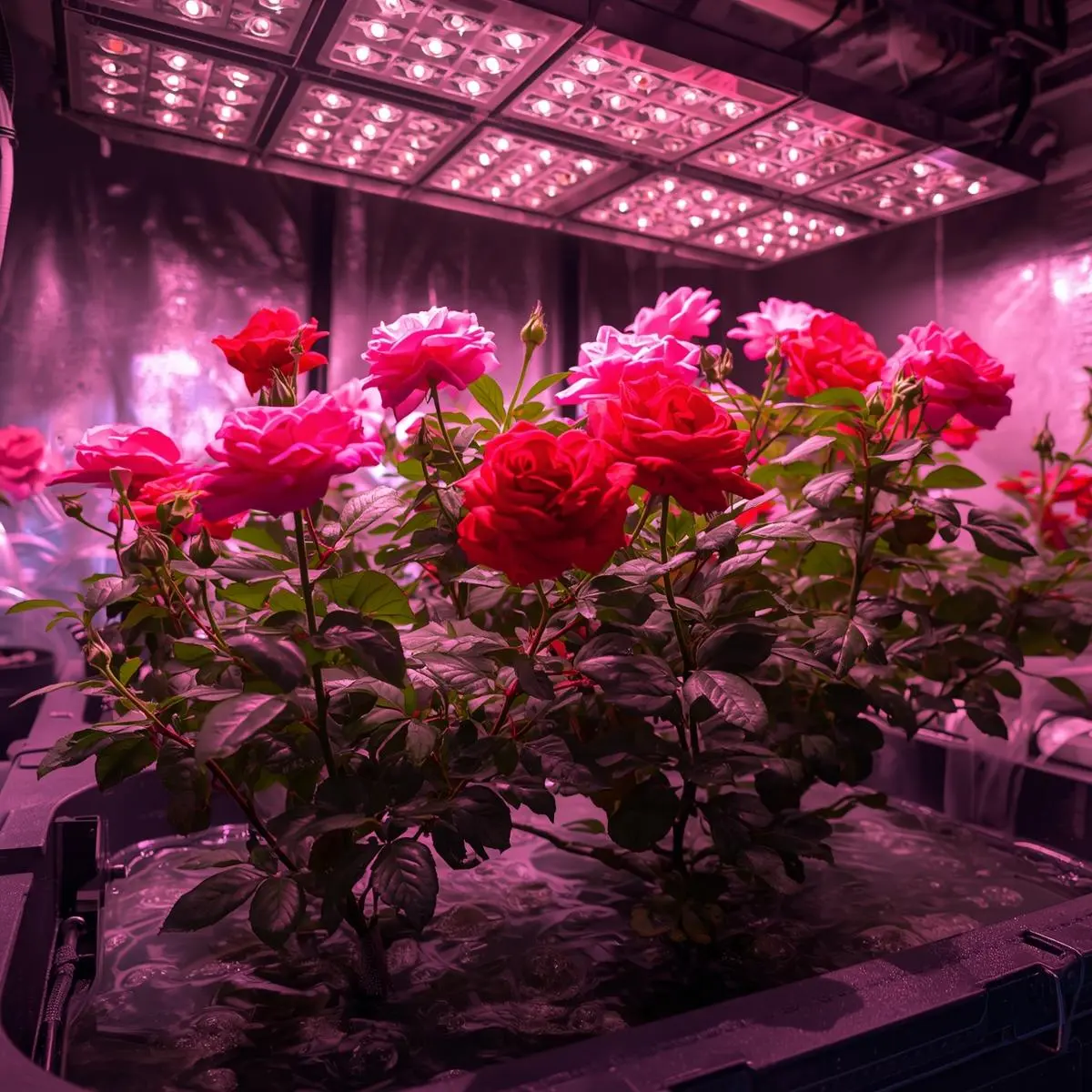
There’s a peculiar magic to growing roses indoors—until there isn’t. You know the drill: yellowing leaves on your prize hybrid tea, buds that abort before opening, that sickly sweet smell of roots going soft. It’s enough to make you wonder if roses are simply testing your character.
Here’s what I’ve learned after a decade of watching growers (and myself) stumble: when you match roses with the best hydroponic systems for roses, the script flips. Healthier roots. Bigger blooms. Faster growth. And suddenly, you’re not fighting the plant—you’re collaborating with it.
At Grow With Hydroponics, we’ve watched talented people struggle with roses for one reason. It’s not that roses are “difficult.” It’s that they’re growing them in systems designed for lettuce.
Roses aren’t salad. They’re temperamental royalty with deep roots, oxygen demands, and strong opinions about nutrient stability.
In this guide, we’ll cover:
Which hydroponic system works best for roses?
Why some popular systems crash and burn with flowering plants?
How to implement each setup without the usual beginner pitfalls?
Advanced tips to maximize bloom size and plant longevity
Let’s get into it.
The Problem: Why Roses Fail in Hydroponics
Roses are heavy feeders with deep root systems. Unlike leafy greens, they:
Demand consistent nutrient concentration—swings of 0.2 EC can trigger deficiencies
Require strong oxygenation at the root zone—stagnant water is a death sentence
React quickly to EC and pH fluctuations—you’ll see it in leaf margins within 24 hours
Need proper light intensity for bud formation—shade leaves, no flowers
When the system can’t handle these variables, you’ll spot the telltales:
Drooping stems despite moist roots (poor oxygenation)
Nutrient burn on leaf edges (EC spikes from small reservoirs)
Weak or delayed flowering (inadequate light or root stress)
Root rot in stagnant solutions (the classic NFT mistake)
Frankly, this is where most beginners go wrong. They buy a system that works beautifully for basil and wonder why their roses look miserable.
The Solution: Choosing the Best Hydroponic Systems for Roses
Below are the best hydroponic systems for roses, ranked from most effective to least ideal. This isn’t about what’s trendy—it’s about what actually delivers blooms worth cutting.
1. Deep Water Culture (DWC) – Best Overall for Roses
Why it ranks #1: Maximum oxygenation + stable nutrient reservoir.
DWC lets rose roots suspend directly in a highly oxygenated nutrient solution. With an air stone constantly delivering bubbles, root growth becomes almost aggressive.
Why DWC Works for Roses
Oxygen-rich environment prevents root disease before it starts
Large reservoir (5–10 gallons per plant) stabilizes pH and EC swings
Easy to monitor nutrient strength with a simple ppm pen
Excellent for long-term flowering plants—roses can thrive for years in DWC
Can DWC Support Large Rose Varieties?
Yes—especially hybrid tea or floribunda varieties. Just use:
A 5–10 gallon reservoir per plant (don’t crowd them)
Strong air pump with dual air stones (one stone fails, you’ve got backup)
Stable EC between 1.8–2.5, adjusted for growth stage
If you’re unsure about mixing nutrient concentrations correctly, our Hydroponic Nutrient Calculator inside Grow With Hydroponics ensures accurate ratios for vegetative vs. bloom stages. It’s basically a cheat sheet for not burning your plants. How to Grow Roses Hydroponically: Science-Backed Complete Guide (2026).
2. Ebb and Flow (Flood & Drain) – Best for Multiple Roses
Why it ranks #2: Great balance between oxygen and moisture.
Ebb and Flow systems periodically flood the root zone, then drain completely. This creates a wet-dry cycle that roses actually evolved to appreciate—think heavy rain followed by drying.
Benefits for Rose Growers
Encourages stronger root structure—roots search for moisture during drain cycles
Allows growing multiple plants in one tray efficiently
Works well with clay pebbles or coco-perlite mix (both provide excellent drainage)
Reduces risk of constant saturation that plagues other systems
Is Ebb and Flow Better Than DWC?
It depends on your goals.
Choose DWC for maximum individual bloom size and show-quality specimens.
Choose Ebb and Flow for multi-plant efficiency and variety trials.
If you’re managing different rose varieties in one setup—say, a hybrid tea next to a floribunda—the Multi-Crop Planner can help you adjust feeding schedules and growth stages side-by-side. Because they won’t want the same thing at the same time.
3. Drip Irrigation System – Best for Controlled Feeding
Why it ranks #3: Precision nutrient delivery.
Drip systems allow targeted feeding at the base of each plant. This matters more for roses than most growers realize—they hate wet foliage but need consistent root moisture.
Why Some Rose Growers Prefer Drip Systems
Adjustable feeding intervals—from multiple daily shots to heavier periodic feeds
Reduced nutrient waste compared to recirculating systems
Excellent for greenhouse production at larger scale
Compatible with rockwool or coco substrate (both hold oxygen well)
However, you must monitor runoff EC carefully. Salt buildup in substrate will cook roots slowly.
How Do I Convert EC to PPM for Monitoring?
If your meter uses different measurement units—and they all seem to—our EC ↔ PPM Converter makes quick conversions effortless. This avoids the classic mistake of overfeeding because your meter reads differently than the nutrient chart.
4. Nutrient Film Technique (NFT) – Not Ideal for Roses
NFT works beautifully for lettuce, herbs, and leafy greens. Roses have thicker, more complex root systems that don’t play well with shallow nutrient films.
Why NFT Falls Short
Limited root support for heavy flowering plants
Higher risk of nutrient interruption—pump fails, roots dry in hours
Not suited for large flowering plants with high oxygen demands
If power fails, roots in NFT dry frighteningly fast. Roses won’t tolerate that stress. A single interruption can set bloom development back weeks.
5. Kratky Method – Only for Short-Term Experiments
Kratky is passive and simple—fill a container, add plant, walk away. It’s brilliant for greens. For roses? Not so much.
No active oxygenation means roots eventually drown in stagnant solution
Hard to maintain bloom cycles without nutrient adjustment
Limited nutrient stability as solution depletes
It’s fine for basil. It’s fine for a quick lettuce crop. It is not ideal for prize-winning roses that take months to mature.
Implementation: How to Set Up the Best Hydroponic System for Roses
Rankings are useful. Implementation is where most people stumble. Here’s how to execute cleanly.
Step 1: Design an Efficient Layout
Roses need airflow and spacing. Crowd them, and you invite powdery mildew and weak stems.
Before building, use the Grow Space Planner to:
Map plant spacing (18–24 inches minimum for most varieties)
Calculate light coverage so edges aren’t shaded
Prevent overcrowding before it happens
Plan ventilation paths for consistent air movement
This saves money and prevents redesign later. Measure twice, cut once still applies.
Step 2: Dial in Lighting for Maximum Blooms
Roses need high light intensity to trigger flowering. This isn’t optional—low light = no flowers, period.
How Much Light Do Roses Need?
12–16 hours daily
DLI target between 20–30 mol/m²/day (most LED specs tell you this)
Full-spectrum LED grow lights with red-heavy spectrum for bloom support
When you Shop Smart for grow lights, use our DLI Calculator to match fixture output to your rose variety’s exact needs. This ensures you’re buying the right tool for the job—not just the brightest one on the shelf.
For growers who want extreme precision—and if you’re chasing exhibition blooms, you might—the Indoor Plant Sunlight Analysis System optimizes light exposure at the photon level, ensuring uniform canopy development without hotspots. Choosing the right grow lights for flowering plants.
Step 3: Master Nutrients & Water Quality
Roses are heavy feeders. They’re also sensitive to poor water quality.
Can I Use Tap Water for Hydroponics?
It depends entirely on your tap water.
Low-mineral tap water (under 200 ppm) may work with adjustment
Hard water raises baseline EC and can lock out calcium
Chlorine must be removed—let it sit 24 hours or use a filter
Always:
Check starting EC before adding nutrients
Adjust pH to 5.8–6.2 (roses prefer slightly acidic)
Use bloom-specific nutrient formulas with higher phosphorus and potassium during flowering
For diagnosing leaf discoloration or nutrient imbalance—and you will see it at some point—the Hydroponics Nutrient Optimizer helps pinpoint whether you’re dealing with magnesium deficiency, nitrogen excess, or simple pH lockout. It beats guessing.
Step 4: Control Temperature, Humidity & CO₂
Flowering isn’t just about nutrients and light. Environment matters more than most hobbyists realize.
What’s the Ideal Environment for Roses?
Temperature: 65–75°F (18–24°C) —above 80°F, buds may abort
Humidity: 50–60% —lower invites spider mites, higher invites botrytis
Strong air circulation—oscillating fans, always
Use the VPD Calculator to balance temperature and humidity together. Roses respond dramatically when vapor pressure deficit is optimized. Too dry, they close stomata and stop growing. Too humid, they can’t transpire nutrients.
If you’re enriching CO₂ for faster growth—and at 1200–1500 ppm, growth really does accelerate—the CO₂ Calculator ensures you’re not wasting gas or stressing plants with excessive levels.
Advanced Tips for Bigger, Healthier Blooms
Once your system is stable, here’s how to push results further.
Prune Strategically
Remove weak shoots early. This redirects energy toward stronger stems and larger flowers. Roses are generous—they’ll try to grow everything. You need to be ruthless about what stays.
Rotate Plants Slightly
Subtle repositioning every few days ensures even light exposure. This matters more in indoor setups than greenhouses.
Flush Monthly
Prevent salt buildup by flushing with pH-balanced water for 24 hours. Then return to nutrient solution. Roots appreciate the reset.
Monitor Root Health Weekly
Healthy roots should be:
White or cream colored (not brown or translucent)
Firm to the touch (not mushy)
Odor-free (no rotten smell)
If roots turn brown and slimy, increase oxygenation immediately. That’s the first sign of anaerobic conditions.
Comparing the Best Hydroponic Systems for Roses
Let’s simplify the ranking into something you can act on:
| System | Best For | Watch Out For |
|---|---|---|
| DWC | Maximum bloom size, show plants | Reservoir temperature in summer |
| Ebb and Flow | Multiple plants, variety trials | Medium drying out between cycles |
| Drip System | Precision feeding, larger setups | Clogged emitters, salt buildup |
| NFT | Not recommended for roses | Power failure = dead roots |
| Kratky | Experiments only | No bloom-stage stability |
If your goal is exhibition-quality roses, DWC remains the gold standard. It’s the most forgiving of the high-performance options and the easiest to monitor daily.
Growing Roses Hydroponically Is Easier Than You Think
Choosing the best hydroponic systems for roses isn’t about complexity—it’s about alignment. When you match the plant’s biological needs with the right system, roses reward you with dramatic blooms and vigorous growth that soil growers envy.
Remember:
Prioritize oxygen-rich roots—stagnant water kills roses faster than any deficiency
Maintain stable nutrient levels—roses hate swings
Optimize light intensity—20–30 DLI or don’t bother flowering
Control environmental variables—VPD matters as much as nutrients
At Grow With Hydroponics, we believe indoor gardening should feel empowering—not overwhelming. With the right system and smart tools, you’re not just growing roses. You’re mastering them.
Ready to design your ideal setup? Explore our calculators and planners to take the guesswork out of growing—and start building your most beautiful blooms yet.
This won’t be perfect for everyone. That’s fine. Gardening never is.