

Are Hydroponic Roses Safe, Natural & Sustainable?
Tell someone you grow roses in water, and you’ll get the look. It’s a familiar blend of curiosity and vague suspicion. “Aren’t they… artificial?”
Frankly, it’s a fair question. Roses carry weight. They’re not just another plant; they’re emotion made floral. So when we grow them in a system that seems clinical, people worry. They wonder about safety, chemicals, and whether it’s just another form of tech-bro greenwashing.
Let’s settle this. No marketing fluff, no evasion.
In this Hydroponic Rose Basics pillar guide, we’re cutting straight to the core: are hydroponic roses actually safe, can they be called natural, and is the method truly sustainable? We’ll stack them up against their soil-grown cousins with clear eyes.
Over a decade editing for publications from Wired to horticulture journals taught me one thing: hype is useless. What matters are the results on the bench. At Grow With Hydroponics, we deal in plant science and transparent systems—whether you’re growing for a vase, a lab, or a commercial contract.
What Does “Hydroponic Roses” Actually Mean?
Let’s define our terms before we pass judgment. This is where most misunderstandings start.
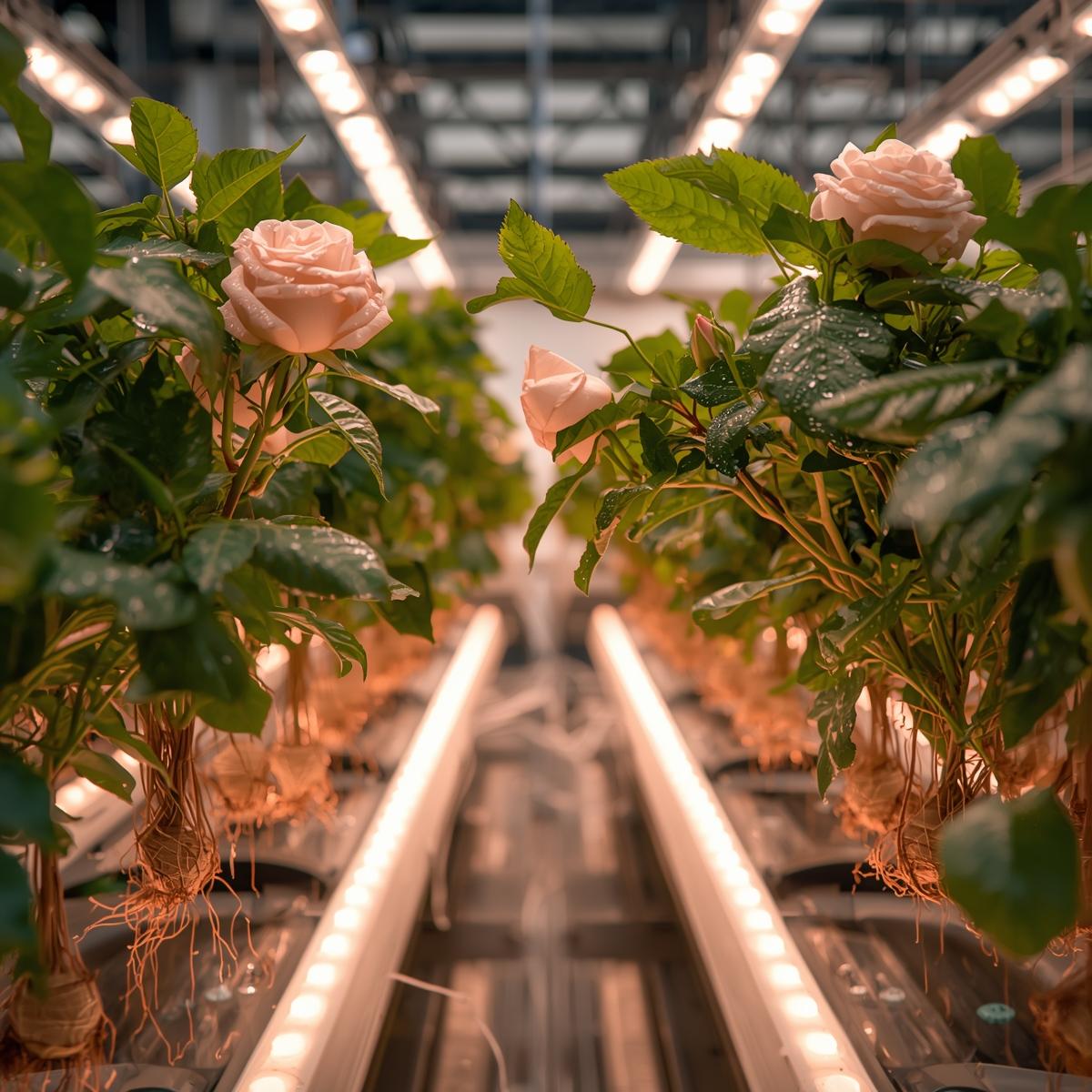
Hydroponic roses are roses grown without soil. That’s the entire revolution. In practice, it means:
Roots are fed by a water-based nutrient solution.
Oxygen is delivered directly to the root zone (arguably better than in soggy soil).
Environmental factors—light, temperature, and humidity—are managed with precision.
That’s it. No genetic tinkering. No 3D-printed petals. It’s the same plant, just with a different—and arguably more direct—delivery system for its needs.
Are Hydroponic Roses Safe?
Short answer: Yes. When grown correctly, they are as safe as any rose you’d buy from a nursery. But let’s dissect the real concerns lurking behind that polite question.
Are Hydroponic Roses Grown With Chemicals?
Here’s the truth most articles gloss over: All plants run on chemicals. They’re called mineral nutrients.
The difference is visibility. In soil, those nutrients are hidden, bound up in a complex medium. In hydroponics, they’re dissolved in water and measured in plain sight. That doesn’t make them more dangerous; it makes them more accountable.
In fact, a well-run hydroponic system often uses:
Fewer pesticides (many common pests are soil-borne).
No residual herbicides (there are no weeds to kill).
A fundamentally cleaner root environment.
This is where a tool like our Nutrient Calculator becomes indispensable. It lets you mix a precise, crop-specific solution. You avoid the guesswork and overfeeding that leads to nutrient runoff in traditional farming—a silent safety and environmental issue.
Are They Safe to Touch or Keep Indoors?
Absolutely. You’ll find them in homes, high-end florists, and sterile research facilities.
The conditions are simple:
Nutrients are mixed to appropriate strengths.
EC and pH are monitored (our EC ↔ PPM Converter cuts through unit confusion for accuracy).
You’re not spraying unapproved foliar chemicals on the leaves.
Meet those basics, and the plant is as safe as any other houseplant—arguably safer, since you’ve eliminated unknown soil contaminants.
Do Hydroponic Roses Absorb Toxins?
Plants absorb what’s in their reach. This is actually hydroponics’ hidden strength.
You control the inputs: the water source, the nutrient brand, and the environment. You eliminate the risk of:
Heavy metals in urban or contaminated soil.
Persistent legacy pesticides from previous land use.
Runoff pollutants.
Clean inputs mean a cleaner plant. It’s that straightforward.
Are Hydroponic Roses “Natural”?
Now we enter philosophical territory. What does “natural” even mean?
If by natural you mean a plant that grows from a seed or cutting, undergoes photosynthesis, and builds its structure from mineral ions found in the earth… then yes, hydroponic roses are 100% natural.
The plant doesn’t know or care if its potassium came from dissolved salts in water or from decomposing matter in soil. It only recognizes the ion.
What it does respond to is:
Photons of light.
Available water and oxygen.
The balance of temperature and humidity.
Hydroponics simply removes the middleman—soil—and provides those essentials directly. Is using a tool like our Indoor Plant Sunlight Analysis System to optimize photons “unnatural”? Or is it just applying a deeper understanding of the plant’s needs? I know which side a higher-yielding, healthier rose would pick.
Are Hydroponic Roses Sustainable?
This is where hydroponics moves from being a neat alternative to a genuinely compelling choice. Let’s break down the real environmental ledger.
Water Use: Dramatically Lower
Traditional rose farming is notoriously thirsty. Hydroponics recirculates water. Studies and real-world grows consistently show systems use 80–90% less water than soil agriculture. In a world of increasing scarcity, that’s not just a feature; it’s a moral advantage.
Land & Soil Conservation
Soil-grown roses require arable land, which often leads to soil depletion and, in commercial settings, pre-plant chemical fumigation.
Hydroponics needs zero arable land. It can be stacked vertically in warehouses or urban basements. Our Grow Space Planner tool exists because maximizing yield per square foot is a core tenet of sustainability. You can grow a rose garden in a spare bedroom.
Reduced Chemical Load
No soil often means no soil-borne diseases or pests. This translates to a drastically reduced need for pesticides and fungicides. When issues arise, they’re often visible sooner—a tool like the Deficiency Calculator helps diagnose problems before they spiral, enabling targeted correction instead of blanket spraying.
Energy Use: The Trade-Off
Let’s not be naive. Indoor controlled-environment agriculture uses energy, primarily for light and climate control. This is the legitimate trade-off.
The counter is efficiency and precision. Modern LEDs are profoundly more efficient than old tech. More importantly, you only provide what the plant needs. Our DLI Calculator is critical here—it ensures you’re delivering the exact Daily Light Integral for optimal flowering, not just blasting photons and watts 18 hours a day.
Shop Smart Tip:
When you shop smart for grow lights, pair the purchase with our DLI Calculator. You’re buying the right fixture for your roses and space—not just the brightest one marketed to you.
Environmental Control = Less Waste
Predictability is a form of sustainability. Hydroponics allows for precise flowering cycles and drastically lower crop failure rates. Want to test a new layout or climate setting without wasting months and resources? That’s what our Grow Space Simulator is for. Less trial-and-error means less wasted water, nutrients, and time.
What About CO₂ Enrichment?
In sealed environments, boosting CO₂ can accelerate growth and improve bloom quality. The key is control—too much is wasteful and pointless. A CO₂ Calculator removes the guesswork, keeping enrichment within optimal, safe bounds for both plant and grower. Again, precision begets responsibility.
Common Myths About Hydroponic Roses
Let’s fire through these fast.
Myth: “They’re full of chemicals.”
Reality: They often require fewer chemical interventions than a field-grown rose battling pests and fungi.Myth: “They’re not real roses.”
Reality: They are genetically identical. The delivery method for food and water isn’t part of its DNA.Myth: “They harm the environment.”
Reality: A well-designed system conserves water, reduces land pressure, and minimizes chemical runoff. The footprint is often significantly lighter.
When Are Hydroponic Roses NOT Sustainable?
I’d be a poor editor if I didn’t show the other side of the ledger. This model fails when it’s done poorly.
Hydroponic roses lose their sustainable edge when:
Systems leak or are designed inefficiently.
Lights burn unnecessarily long schedules.
Nutrient solution is dumped instead of monitored and recycled.
Climate control is ignored, stressing plants and wasting energy.
This last point is crucial. Stressed plants are inefficient plants. That’s why managing your Vapor Pressure Deficit (VPD)—the relationship between temperature and humidity—is non-negotiable. A VPD Calculator isn’t just for experts; it’s the fastest way to ensure your roses aren’t working against a climate that’s too dry or too muggy for them.
For a deeper dive into the entire process, from cutting to bloom, see our pillar guide: How to Grow Roses Hydroponically: Science-Backed Complete Guide (2026). Wondering about the timeline? It’s covered in How Long Do Roses Take to Flower Hydroponically?
Safe, Natural, and Sustainable—But Only If You Do This Right
So, what’s the verdict?
Yes. Hydroponic roses can be profoundly safe, authentically natural, and genuinely sustainable. The caveat is the human factor: intention, knowledge, and the right tools.
This isn’t about replacing nature. It’s about supporting it with precision. For the grower who values clean production, resource efficiency, and predictable quality, hydroponics isn’t a compromise—it’s an elegant upgrade.
The community at Grow With Hydroponics is built on this principle: growing responsibly. When you see that first flawless bloom open under a perfectly tuned environment, you’ll understand. It’s still nature’s miracle.

Dr. Awais Yousaf
Algorithm Specialist and Associate Professor leading R&D at Grow With Hydroponics. With 5+ years of hands-on experience in smart hydroponic systems, deep learning, and sustainable AgriTech, he is passionate about turning small spaces into high-yield indoor farms. Connect at awais.yousaf@iub.edu.pk