

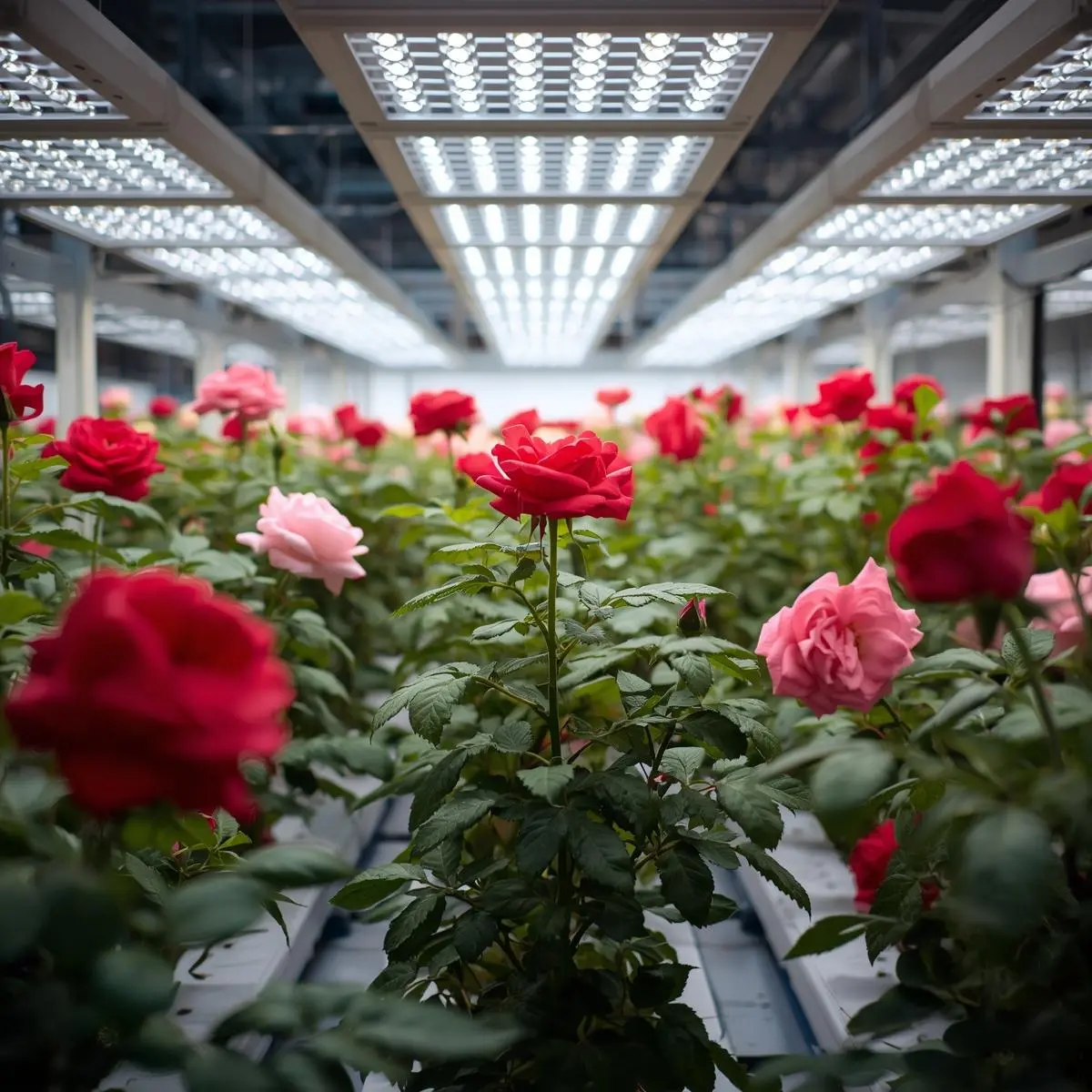
Hydroponic Roses Flowering Time Explained
Let’s be honest. Growing roses hydroponically feels like a horticultural hack—a brilliant, slightly smug workaround. You sidestep the soil-borne dramas, you tweak variables with a precision that borders on control-freakery, and yes, you get flowers faster.
But how much faster? That’s the real question, and anyone selling you a dream of blooms in three weeks is probably also selling magic beans. Based on a decade of editing for the likes of Wired and top horticulture journals—and more failed grows than I care to admit—I can tell you this: The timeline isn’t a fantasy. It’s a negotiation between your setup and a plant’s ancient wiring.
Here at Grow With Hydroponics, we’ve run the experiments so you don’t have to. When you dial it in, shaving weeks off a soil-grown schedule isn’t just possible; it’s predictable. Let’s cut through the hype and talk real calendars.
The Short Answer (No Fluff, Just Realism)
Under a truly optimal hydroponic regime, figure 6 to 8 weeks from a solid cutting or young transplant to open bloom.
That’s the target. Frankly, this is where most beginners go wrong—they hear the low end and ignore the asterisks. Your actual wait depends entirely on:
The rose’s pedigree (A dainty miniature is a sprinter; a grandiflora is a marathoner).
How it started (A rooted cutting versus a dormant bare-root plant is night and day).
The light you give it (This is 70% of the battle).
The delicate dance of temperature and humidity (VPD isn’t jargon; it’s your secret lever).
What’s in that nutrient tank (More nitrogen does not mean more flowers).
We’ll pull each lever. Because trimming 7-10 days off your timeline is absolutely achievable. Chasing more than that usually ends in stress—for you and the plant.
Why Roses Flower Faster in Hydroponics (The Root of It All)
It’s not magic. It’s logistics. In soil, roots are explorers—expending energy to hunt for food and air. In a clean hydroponic system, they’re pampered VIPs with everything delivered to the door.
That means:
Faster root establishment. No struggling through clay or sand.
Ridiculously efficient nutrient uptake. What you mix is what they get.
Energy is redirected. Less spent on survival, more on building stems, leaves, and critically, flower buds.
The result isn’t just earlier flowers. It’s a plant working on your schedule.
Typical Hydroponic Rose Flowering Timeline
Here’s what you can realistically expect, week by week, if your system isn’t fighting you.
Weeks 1–2: The Settling-In Period
The roots are adapting to their new, liquid world. Above deck, you’ll see leaf growth kick in. Don’t expect buds. Don’t even look for them. Your job is to not drown them with love—keep your EC slightly lower to avoid shocking those tender new roots.
Weeks 3–4: The Growth Spurt
Now we’re talking. Stems elongate, new leaf nodes pop everywhere, and the plant starts to bulk up. This is where light moves from being important to being critical. Too little, and the plant stretches, weak and bud-shy. Too much, and you cause photoinhibition—a fancy term for “light stress.”
This is the perfect moment to stop guessing. Use a DLI Calculator to plan your lighting schedule with precision. It tells you the total daily light dose your roses need, which is far smarter than just counting hours.
Weeks 5–6: The First Hint of Promise
Here’s your payoff. Tiny, hard flower buds become visible at the nodes. The vegetative chaos stabilizes, and the plant’s appetite shifts—it starts craving more phosphorus and potassium to build those blooms.
This phase is also a VPD minefield. Get your temperature and humidity balance wrong, and those promising buds will stall or abort. A VPD Calculator removes the guesswork, helping you maintain the perfect pressure that drives nutrients up through the stems.
Weeks 7–8: Showtime
The buds swell, color up, and finally unfurl. Your first perfect hydroponic rose. Under laboratory-grade conditions, some fast varieties might peek at week 5. But for the rest of us in the real world, weeks 7-8 is a roaring success.
Does Rose Variety Affect Flowering Time?
Of course. Genetics are the unchangeable bedrock. You can’t make an oak tree grow like bamboo.
The Speed Demons: Miniature roses, Floribundas, Patio types. These are your best bet for a quick first bloom, often 1-2 weeks ahead of the others.
The Divas: Hybrid Teas, Grandifloras. They take their sweet time. The wait is longer, but the reward is those classic, exhibition-quality blooms.
Managing a mix? It’s a nutrient-tuning headache. A Multi-Crop Planner can help you stagger feeds and schedules so your speedy miniatures aren’t held back by your demanding Hybrid Tea.
Light: The Throttle for Flowering Speed
This is the biggest lever you have. Roses are solar-powered factories. For flowering, they need a lot of high-quality photons.
DLI Target: 20–30 mol/m²/day
Photoperiod: 14-16 hours
PPFD at Canopy: 400–600 μmol/m²/s
If those numbers seem abstract, they are—until you measure. An Indoor Plant Sunlight Analysis System moves you from “bright enough” to photon-level optimization. Before you rearrange your entire tent, a Grow Space Simulator lets you test layout changes virtually.
Shop Smart Tip: When you Shop Smart for grow lights, pair the purchase with our DLI Calculator. You’re buying the right fixture for your space—not just the brightest one on Amazon.
Nutrients and Flower Timing: A Delicate Dance
Can nutrients speed things up? Indirectly, yes. But an imbalanced diet will delay flowers faster than anything.
The rookie mistake is drowning them in nitrogen for lush, green growth. What you get is a beautiful, bud-less bush. For flowering, you need to pivot: ample phosphorus for bud initiation, sufficient potassium for bloom quality and color.
This isn’t about following a bottle’s generic schedule. Use a Nutrient Calculator to tailor your mix to the plant’s week-by-week needs. And for heaven’s sake, know your units—an EC ↔ PPM Converter is essential for translating any feeding chart without error.
See a weird leaf discoloration as buds are forming? Don’t panic—diagnose. A Deficiency Calculator can help you pinpoint the missing piece before it costs you a flowering cycle.
Temperature, Humidity, and VPD: The Invisible Framework
You can have perfect light and food, but if your air is wrong, the plant slams on the brakes.
Day Temp: 22–26°C (72–79°F)
Night Temp: 18–20°C (64–68°F)
Relative Humidity: 55–65%
Managing temp and RH separately is a frustrating game of whack-a-mole. VPD (Vapor Pressure Deficit) combines them into one golden number (aim for 0.8–1.2 kPa). Use a VPD Calculator. It tells you if your rose is transpiring and drinking nutrients efficiently, which is the engine of growth.
Can CO₂ Reduce Time to Flower?
If your light is already maxed out, yes. In a sealed, high-light environment, CO₂ enrichment can boost photosynthesis, building biomass and bud structure faster. It’s the final 5% optimization. A CO₂ Calculator helps you enrich effectively without venting your wallet into the atmosphere.
Common Reasons Roses Take Longer to Flower (The Usual Suspects)
If your roses are healthy but stubborn, run down this checklist:
The light is weak or inconsistent. It’s almost always this.
You’re still pumping them with nitrogen. Time to switch formulas.
Your VPD is out of whack, stifling transpiration.
Your photoperiod is flickering because of a faulty timer.
The root zone is too warm, holding less oxygen.
Sometimes the problem is spatial. A quick review in a Grow Space Planner can reveal a fan blocking light or a heat pocket you never noticed.
Frequently Asked Questions
Can I Grow Roses Hydroponically Year-Round?
Absolutely. That’s one of the main attractions. With controlled lights and climate, seasons are irrelevant. You call the shots.
Do Hydroponic Roses Bloom More Than Once?
They do. After that first glorious flush, prune correctly, reset your nutrients, and most varieties will cycle again in 4-6 weeks. For a deep dive into the pruning and feeding cadence of perpetual blooms, see our complete guide: How to Grow Roses Hydroponically: Science-Backed Complete Guide (2026).
Are Hydroponic Rose Blooms Smaller?
Quite the opposite. When dialed in, the blooms are often more vibrant, with cleaner petals and stronger stems. The plant isn’t wasting resources—it’s channeling everything into the show.
The journey from cutting to bloom is a conversation with the plant. It tells you what it needs if you know how to listen. Stick with it, use the right tools, and that first pristine, water-grown rose will make every minute of tuning and tweaking worth it. For more nuanced discussions and community insights, the collective wisdom at Grow With Hydroponics is your next stop.

Dr. Awais Yousaf
Algorithm Specialist and Associate Professor leading R&D at Grow With Hydroponics. With 5+ years of hands-on experience in smart hydroponic systems, deep learning, and sustainable AgriTech, he is passionate about turning small spaces into high-yield indoor farms. Connect at awais.yousaf@iub.edu.pk