

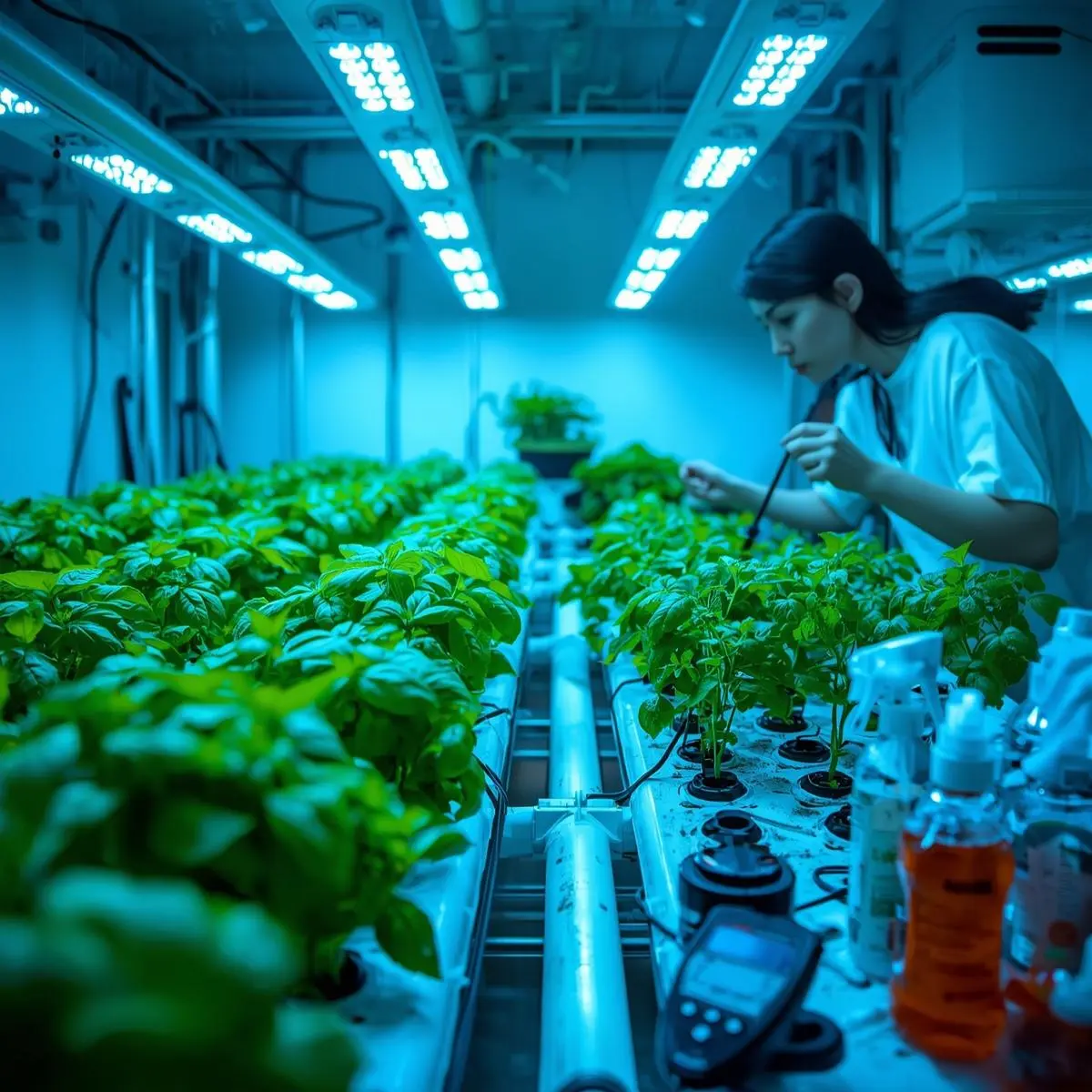
Here’s the unglamorous truth they don’t put in the brochure: the magic of a hydroponic herb garden doesn’t come from the shiny kit you buy. It comes from the five minutes you spend with it every few days. That’s the difference between a system that sputters out in a slimy mess and one that hums along for years, producing more flavor than you know what to do with.
I’ve seen it a hundred times. The initial excitement, the explosive growth… then the slow decline because “maintenance” felt like a mysterious, daunting chore. It isn’t. At Grow With Hydroponics, we frame it differently: maintenance is just conversation. Your plants are talking. You just need to learn the language.
This is that translation guide. It’s not about daily toil; it’s about structured, simple observation that becomes second nature.
Why Bother? Because You’re the Ecosystem Now
In soil, a plant’s roots go hunting. They navigate, they buffer mistakes, and they find pockets of what they need. In hydroponics, you strip all that away. You are the soil. You are the rain. You are the nutrient cycle.
That’s a terrifying responsibility—until you realize the control it gives you.
Problems show up fast. A nutrient lockout in soil might take weeks to manifest. In your reservoir, it shows up in days.
Fixes are instant. Adjust the pH, and the plant responds almost overnight.
Growth is unhindered. When you get the basics right, the results are frankly absurd.
The upside is a garden that’s more responsive and productive than any dirt patch. The requirement is a little awareness.
If you’re just starting this journey, our piece on Herb Gardening Guide.
The Rhythm: Your Maintenance Schedule
Forget hourly care. Think in terms of glances, check-ins, and resets.
Daily (The 60-Second Glance)
You’re walking by anyway. Look.
Is the water level okay?
Are the lights on? (You’d be surprised.)
Is the pump or air stone humming? (Quiet is bad.)
Any dramatic wilting or discoloration? (Spoiler: there shouldn’t be.)
Weekly (The 15-Minute Check-In)
This is your core habit. Block the time.
Top off the reservoir with fresh, pH-balanced water. Evaporation concentrates nutrients, so refilling dilutes them back to the target.
Check your numbers. pH and EC/PPM. Don’t guess. This is the vital sign reading. Jot it down.
Harvest and trim. This isn’t just for your dinner; it’s plant encouragement. A snip here tells the plant to bush out there.
Wipe down light fixtures and any damp surfaces to discourage algae and pests.
Monthly (The Reset)
Every 2-4 weeks, depending on your system size.
Dump and refresh the entire nutrient solution. No matter how clean it looks, it’s a cocktail of spent nutrients and root exudates. Start fresh. Use our Nutrient Calculator every single time for a perfectly balanced mix. Consistency here prevents 80% of problems.
Clean the reservoir. Scrub it. Really. A mild hydrogen peroxide solution is your friend. Rinse the tubes, the pump, and the net pots.
Inspect the roots. They should be creamy-white and smell like fresh lettuce. Brown and slimy? Time to troubleshoot oxygenation.
Calibrate your meters. A $20 pH meter lying to you is worse than having no meter at all.
The Core Pillars: What You’re Actually Managing
1. Water & Nutrients: The Lifeblood
You’re not just adding water; you’re managing a chemical soup. Herbs are light feeders—overdoing it burns roots and creates harsh flavors. The goal is stability, not strength.
Different nutrient brands speak different measurement languages (EC or PPM). If you’re trying to follow a guide that uses one while your meter reads the other, just use the EC ↔ PPM Converter. It’s not cheating; it’s speaking the local dialect.
2. Light: The Engine
LEDs are long-lived, but they get dusty, and plants grow. Light intensity follows the inverse-square law—a few inches of plant growth can drastically reduce the photons hitting those lower leaves.
Keep fixtures clean.
Adjust height as plants grow (that 8-14 inch range is a starting point, not a rule).
Use our DLI Calculator to move beyond “looks bright” to knowing your basil is actually getting the daily light integral it needs for robust growth, not just survival.
When you Shop Smart for replacement or upgraded lights, that DLI Calculator is your best friend for cutting through marketing lumens and matching a fixture’s real output to your garden’s needs.
3. Environment: The Context
65–80°F. 50–70% humidity. Easy to remember, hard to balance. Dry air makes leaves tough. Cold air stalls growth. Stagnant, humid air invites powdery mildew.
The killer insight isn’t the individual numbers, but their relationship—the Vapor Pressure Deficit (VPD). Our VPD Calculator shows you how temp and humidity interact to either stress your plants or keep them in the “sweet spot” for tender, aromatic growth. It’s the difference between reacting to mold and preventing it.
4. Roots: The Hidden Report Card
Clear cups aren’t just for aesthetics. They’re a window. Peek often. White and fuzzy (good fuzz!) is ideal. Brown and slimy is a five-alarm fire, usually from warm, stagnant water. The fix is almost always more oxygen (check that air stone) and a cooler reservoir.
Pruning: The Productive Habit
Don’t think “harvest.” Think “architecture.” You’re not taking leaves; you’re directing traffic. Cutting just above a leaf node sends a hormonal signal: “Grow outward, not just upward.” Do this every 7-10 days, and you build a bushy, productive plant that delays flowering (and the ensuing bitterness) for months.
When Things Go Sideways (A Quick Field Guide)
Yellow Leaves: Likely nitrogen. Could also be cold roots. Check nutrients with the Deficiency Calculator—it’s faster than forum diving—then check your reservoir temp.
Leggy, Stretched Growth: It’s begging for more light. Lower the fixture or get a stronger one.
Algae on Surfaces: Light is hitting a damp, nutrient-rich surface. Block it. Use opaque materials, cover net pots, and clean it promptly.
Sudden Wilting with Wet Roots: That’s root rot or oxygenation failure. Immediate action required: refresh solution, boost aeration.
Scaling Without Sinking
A three-pod kit is intuitive. A multi-tier tower is a different beast. As you scale, your brain can’t track it all.
Use the Grow Space Planner to map light falloff and airflow paths before you cram plants in.
The Multi-Crop Planner is essential for managing herbs with different growth rates so your mint doesn’t become a light-blocking tyrant.
Before a major reshuffle, test it in the Grow Space Simulator. It saves you from back-breaking trial and error.
Maintenance is Mastery
This isn’t about achieving sterile, laboratory perfection. It’s about developing a rhythm. It’s the quiet satisfaction of spotting a slight pH drift before the plant shows a single symptom. It’s the confidence that comes from knowing why your basil is thriving.
That confidence is what we build at Grow With Hydroponics. Our tools—from the calculators to the planners—aren’t meant to complicate things. They’re meant to replace anxiety with data and guesswork with understanding.
A thriving hydroponic garden isn’t maintained by luck. It’s maintained by a grower who’s learned to listen. Now you know how to hear it.

Dr. Awais Yousaf
Algorithm Specialist and Associate Professor leading R&D at Grow With Hydroponics. With 5+ years of hands-on experience in smart hydroponic systems, deep learning, and sustainable AgriTech, he is passionate about turning small spaces into high-yield indoor farms. Connect at awais.yousaf@iub.edu.pk