

Ever open your fridge to find a plastic clamshell of cilantro, already turning to sludge? Me too. It’s a small, modern annoyance that feels utterly avoidable.
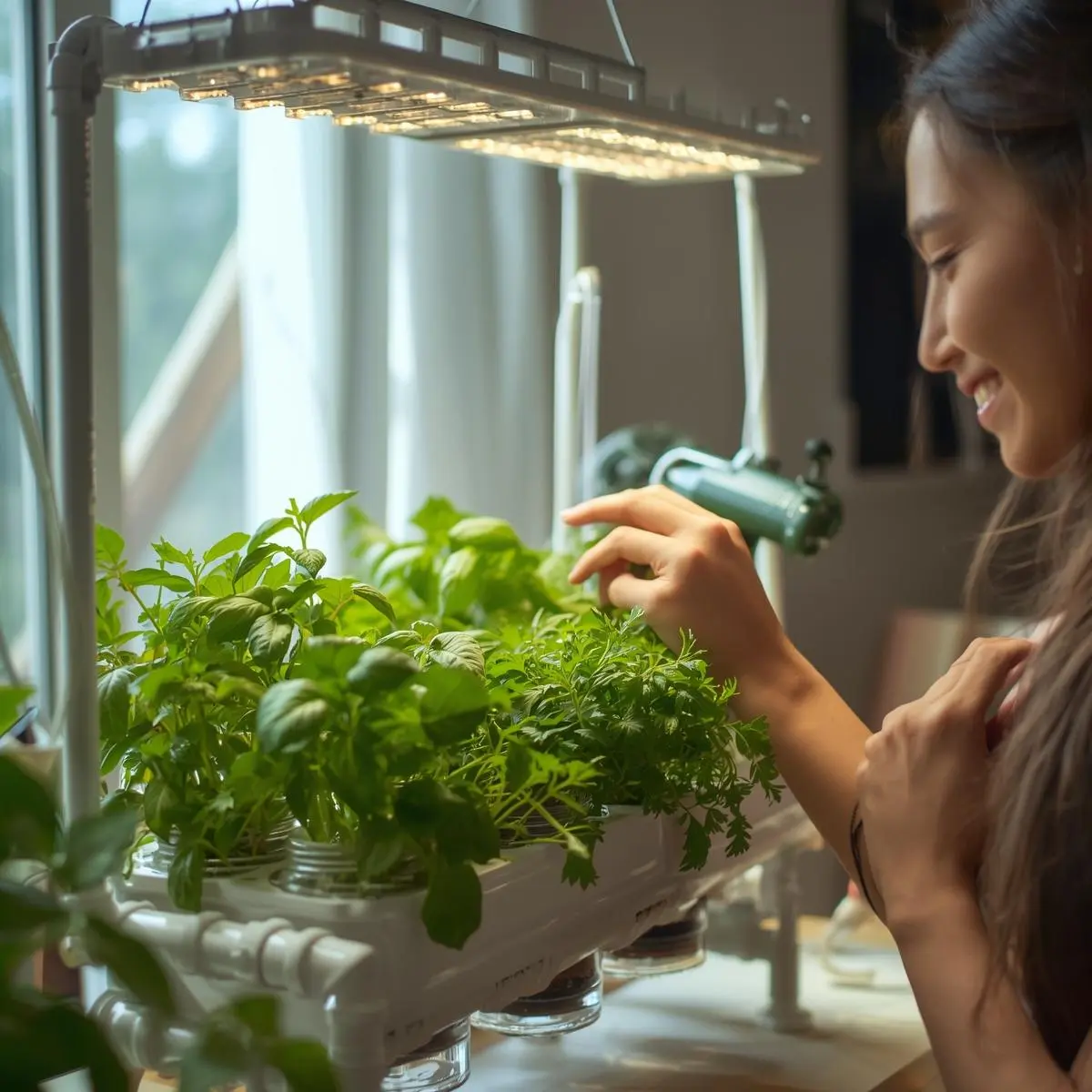
What if you could reach over to your kitchen counter instead—to a living, thriving DIY hydroponic herb garden—and snip exactly what you need? No soil under your nails, no dead plants from a weekend away. Just flavor, on demand.
At Grow With Hydroponics, we’ve seen thousands of growers discover that building your own system isn’t just cheaper—it’s empowering. You control the layout, the plants, the lighting, and the experience. And best of all? You don’t need an engineering degree to make it work.
This isn’t a spec sheet. It’s the condensed know-how from helping countless beginners sidestep the common pitfalls. Let’s get into it.
What Makes a DIY Hydroponic Herb Garden Different?
Forget soil. It’s an inconsistent medium—sometimes too wet, sometimes too dry, always a mystery. Hydroponics Herb Garden cuts out the middleman. You deliver water, nutrients, and oxygen directly to the roots in a controlled loop.
The DIY part means you’re not buying a glossy, locked-down appliance. You’re assembling components you understand. The payoff?
Growth so fast it feels like a time-lapse.
Water use that’s a fraction of traditional gardening.
Zero weeds. Frankly, zero dirt.
The ability to grow a thriving indoor system on a bookshelf, in a closet, anywhere.
You trade the unpredictability of nature for the responsibility of control. It’s a good trade.
Choosing Your DIY System Type (Start Simple, Seriously)
The allure of complex rigs is strong. Resist it. Your goal for the first build is success, not scalability. These are your reliable starting blocks:
Deep Water Culture (DWC): The workhorse. Plants sit in net pots, their roots dangling into an oxygenated nutrient bath. It’s cheap, effective, and forgiving. Perfect for herbs like basil and mint that drink heavily and grow fast.
The Mason Jar Kratky Method: The elegant, pump-free hack. A plant sits in a net lid, its roots partly submerged in a static nutrient solution. As the plant drinks, the water level drops, creating an air gap for the roots. It’s brilliant for a single, low-maintenance herb on a sunny windowsill. No plugs, no noise.
A Simple NFT Rail: A bit more advanced. A shallow stream of nutrient solution flows through a gutter, wetting the roots in a channel. It’s sleek and expandable, but it demands a bit more setup and vigilance with pump timing.
My unequivocal advice? Start with a DWC bucket. It teaches you all the core principles—aeration, nutrient mixing, and root care—without any single point of catastrophic failure. Master one bucket, then think about a rail.
Materials Checklist
You don’t need the pro-grade gear yet. For a basic DWC system, you need:
A 5-gallon bucket (paint it or get a black one—light is algae’s best friend).
An aquarium air pump and stone (the bubbler).
3-inch net pots.
Growing media (clay pebbles are reusable and foolproof).
A basic hydroponic nutrient set (look for a “grow” formula).
An LED grow light (a panel is fine; you don’t need branded “plant” lights yet).
Your seeds or seedlings.
Before you buy a single item, use the Grow Space Planner. Sketching your corner on screen is free; realizing your light won’t fit over your bucket is frustrating and expensive.
Assembly: Where Theory Meets Countertop
1. The Reservoir: Drill holes for your net pots in the bucket lid. Lightproofing is non-negotiable. Algae isn’t just ugly; it’s a nutrient-hogging competitor.
2. Aeration: Drop the air stone in, run the tube out, and plug in the pump. The constant bubbles are what keep the roots from drowning. This is your system’s heartbeat.
3. Planting: Nestle your seedling—or a germinated seed in a rockwool cube—into the clay pebbles in the net pot. The roots should just kiss the water surface when the lid is on.
4. The Nutrient Bath: Follow the Nutrient Calculator. More is not better. It’s poison. Start at half-strength for young plants.
5. The Lights: Hang your LED. Use the DLI Calculator to figure out how long to run it. “Bright” is subjective; herbs need a specific daily dose of photons. Start with 14-16 hours on.
6. The Environment: Herbs like the same air you do. 65-75°F, moderate humidity. A small fan for a gentle breeze strengthens stems immensely. Use the VPD Calculator to balance temp and humidity—it prevents a world of fungal grief.
Best Herbs for Your First DIY System
Some herbs are divas. Start with the Stoics:
Basil: The hydroponic champion. It will grow so vigorously you’ll feel like a genius.
Mint: Indestructible. Almost too much so—keep it in its own container.
Parsley: Slow to start, but then becomes a steady, reliable producer.
Cilantro: Do successive sowings. It bolts fast, but in a controlled system, you can manage it.
Chives: Neat, compact, and endlessly useful.
These plants share a tolerance for frequent harvesting and don’t develop massive, system-clogging roots. If you mix them, use the Multi-Crop Planner. It’ll help you schedule so your towering basil doesn’t starve the low-growing parsley of light.
The Two Things You Can’t Ignore: Light & Food
Light is your engine. Without enough, plants get leggy and weak. With too much, they get stressed and bitter. Don’t guess. Use the Indoor Plant Sunlight Analysis System and the DLI Calculator. This removes the “is this enough?” anxiety permanently.
Nutrients are the meal. In soil, a plant forages. Here, you’re serving a plate. Accuracy is everything.
Pale, yellowing older leaves? Probably needs more nitrogen.
Burnt-looking leaf tips? You’re overfeeding. Flush and dilute.
Purple stems? Often a cry for phosphorus.
When you see a problem, don’t panic. Use the Deficiency Calculator. It’s a faster diagnostician than any Google rabbit hole. And keep your units straight with the EC ↔ PPM Converter.
Common DIY Mistakes (I’ve Made Most of These)
Using a clear container → Algae bloom. Paint it or tape it.
Overcrowding: One happy plant is better than three stunted ones fighting for light and air.
Skipping the fan: weak stems, poor gas exchange, and mold invitations.
“Eyeballing” nutrients → Root burn or starvation. Measure.
Assuming the window is enough. → Even a south-facing window rarely provides consistent, full-spectrum light for 14 hours a day. Get the LED.
The single best tool to avoid these? The Grow Space Simulator. Model your setup virtually. It’s cheaper than buying the wrong thing.
When You’re Ready to Level Up
Your single bucket is thriving. Now what?
Go vertical with a shelf system.
Try an NFT rail for a cleaner, multi-plant look.
Introduce new, more finicky herbs like rosemary.
Experiment with CO₂ enrichment in a sealed tent—the CO₂ Calculator will tell you if it’s worth it for your space.
A DIY hydroponic herb garden is a functional project. Its success isn’t measured when you finish building it, but weeks later, when you’re garnishing dinner with something you grew.
You built the environment. You control the variables. That knowledge—and the fresh pesto it provides—is the real reward. Start with one bucket. Learn its rhythms. Then build your second one knowing exactly what you’re doing.
And when you’re ready to optimize, we’ve built the tools to help you do it with confidence. Now go drill some holes in a bucket. It’s the most satisfying step.

Dr. Awais Yousaf
Algorithm Specialist and Associate Professor leading R&D at Grow With Hydroponics. With 5+ years of hands-on experience in smart hydroponic systems, deep learning, and sustainable AgriTech, he is passionate about turning small spaces into high-yield indoor farms. Connect at awais.yousaf@iub.edu.pk